Applying math skills Worksheets for Ages 4-9
3 filtered results
-
From - To
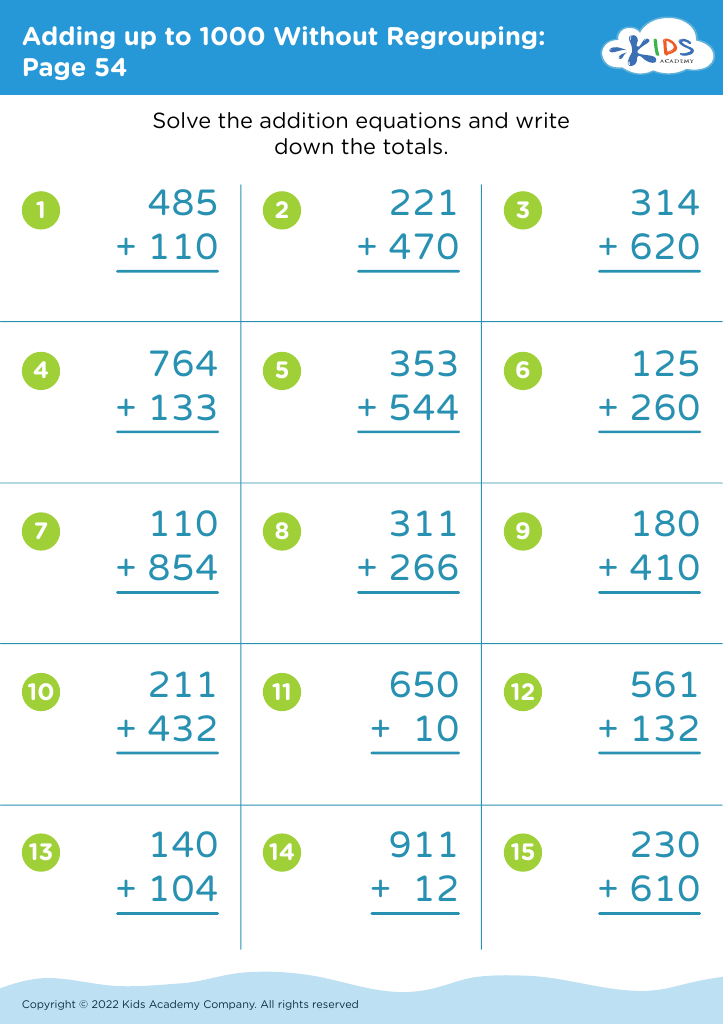
Discover the perfect tool to enhance your child's math abilities with our "Applying Math Skills Worksheets for Ages 4-9." Tailored to spark curiosity and build a strong mathematical foundation, these engaging and interactive worksheets cover essential topics such as counting, basic arithmetic, and problem-solving. Each worksheet is thoughtfully designed to make learning fun and accessible, helping young learners develop critical thinking and self-confidence in mathematics. Dive into our expansive collection and watch as your child masters key math skills, turning complex concepts into exciting learning adventures. Empower your child today with these invaluable resources!
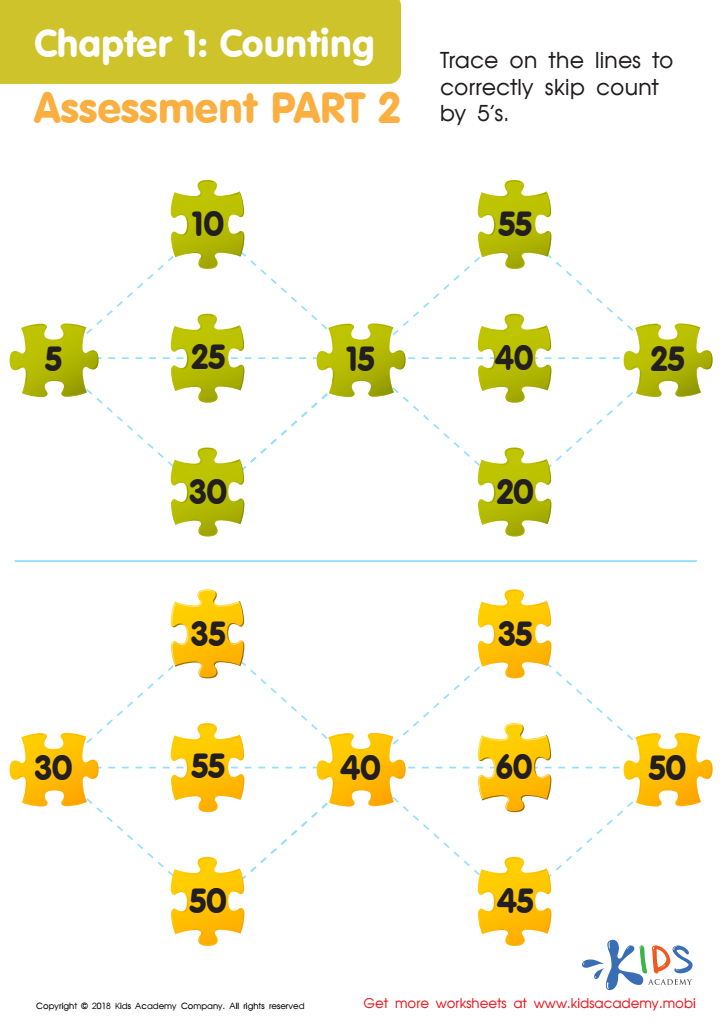
Counting: Assessment 2 Worksheet
 Assign to My Students
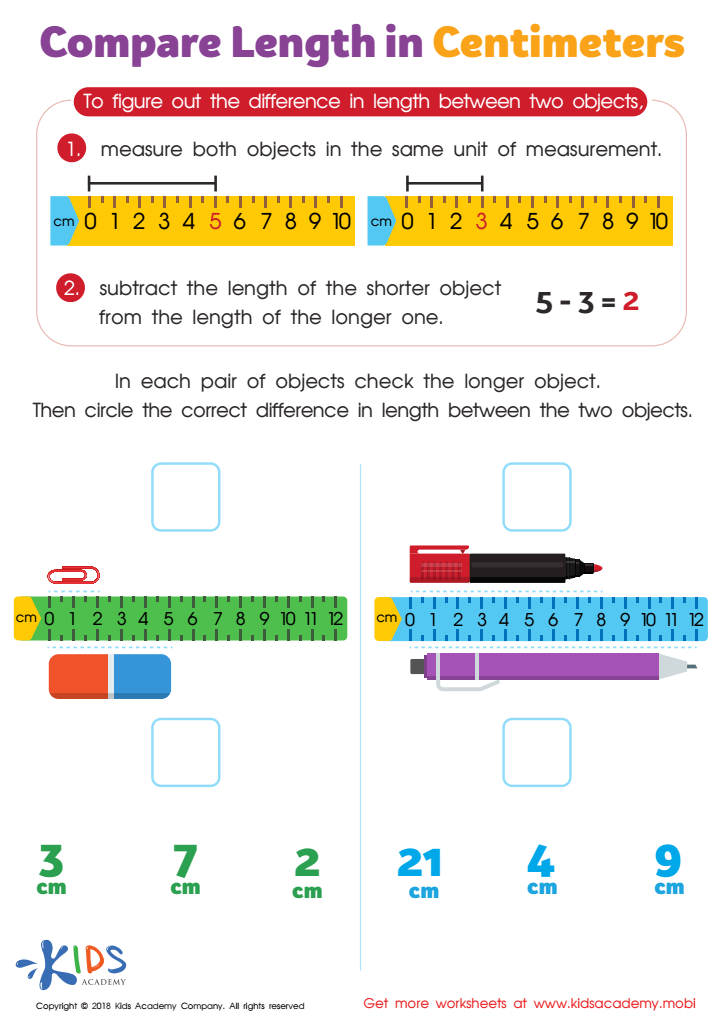
Compare Length in Centimeters Worksheet








Applying math skills for children aged 4-9 is crucial as it lays the foundation for their future academic success and everyday life. During these formative years, children's brains are highly receptive to learning, and introducing math concepts early helps to solidify understanding. Foundational math skills, such as counting, basic arithmetic, and recognizing shapes, are not only instrumental for advanced math learning but also play a significant role in developing logical thinking and problem-solving abilities.
Furthermore, math skills promote confidence and independence. When children successfully navigate math problems, they experience a sense of achievement that boosts their self-esteem. This early confidence can foster a positive attitude towards learning in general, urging them to face academic challenges with resilience.
Practically, math is interwoven into daily activities. Measuring ingredients while cooking, telling time, or managing an allowance are tasks that leverage basic math. Assisting children to effortlessly apply these skills ensures they grow up equipped to handle everyday tasks.
Therefore, parents and teachers should prioritize embedding math learning in a child-centered, enjoyable, and practical manner, ensuring that concepts are not daunting but instead, an integral and familiar part of their lives. This commitment will empower children with essential tools for lifelong learning and problem-solving.








