Basic addition practice Worksheets for Ages 4-9 - Page 2
26 filtered results
-
From - To
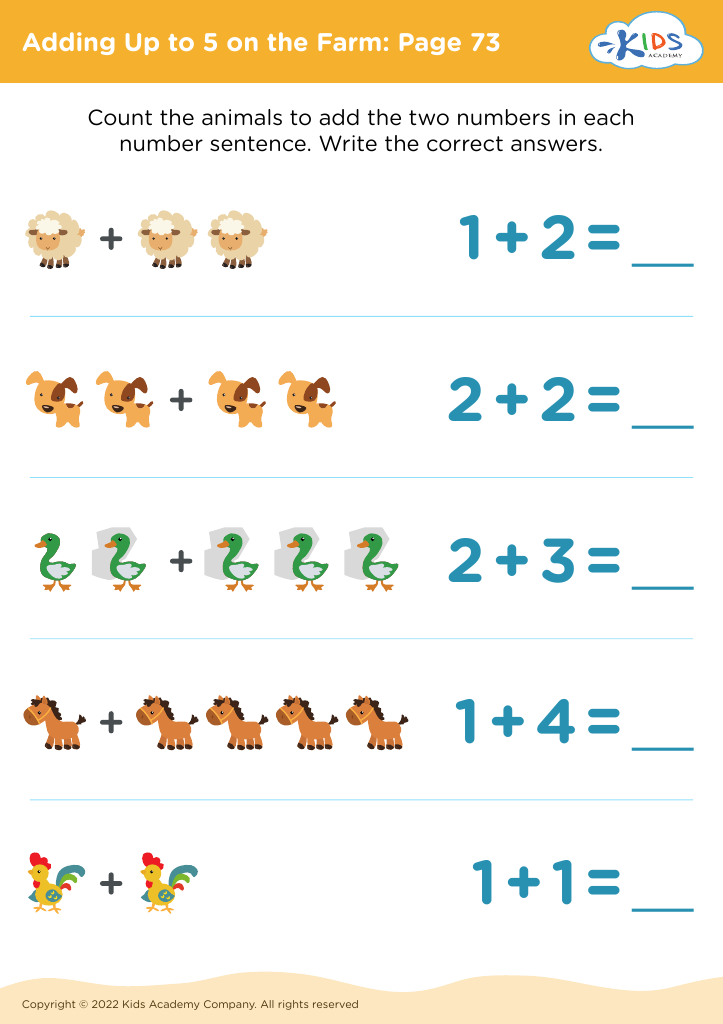








Basic addition practice is crucial for children aged 4 to 9, as it forms the foundation for their mathematical understanding and overall cognitive development. At this stage, children are beginning to grasp essential number concepts and practice makes these concepts more concrete. Regular engagement in addition helps enhance their number sense, allowing them to recognize patterns and relationships between numbers, which is essential for problem-solving skills in later life.
For parents and teachers, promoting basic addition is an opportunity to instill confidence and a positive attitude toward math. Early successes in addition can help mitigate math anxiety and build a strong self-esteem that propels further learning. Furthermore, mastering basic addition paves the way for more advanced mathematical concepts, as early competencies are often cumulative.
Additionally, practicing addition also fosters critical thinking and social skills when done in group settings, encouraging collaboration and communication among peers. Utilizing fun, interactive methods such as games or visual aids can transform learning into an enjoyable experience, making it more likely that children will engage effectively. This foundational skill not only prepares children academically but also augments their overall developmental progress, promoting lifelong learning habits.








