Character recognition Worksheets for Ages 4-9
4 filtered results
-
From - To
Enhance your child's learning with our engaging Character Recognition Worksheets, designed specifically for ages 4-9. These interactive activities cater to early learners, promoting essential skills in letter recognition and phonetics. Our user-friendly sheets offer various exercises that make reading fun while helping children identify letters, sounds, and their corresponding words. By providing colorful illustrations and playful designs, kids are encouraged to explore letters in an enjoyable way. Perfect for home or classroom use, these worksheets support cognitive development and literacy skills, ensuring a solid foundation for future learning. Download today and watch your child's confidence grow as they master character recognition!
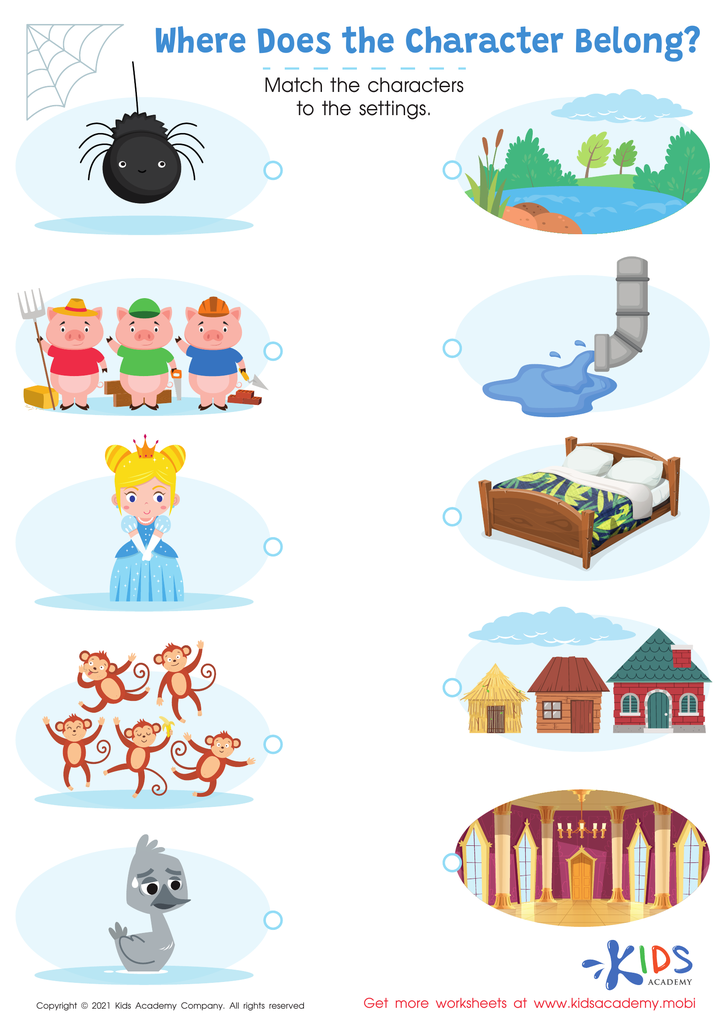
Where Does the Character Belong? Worksheet
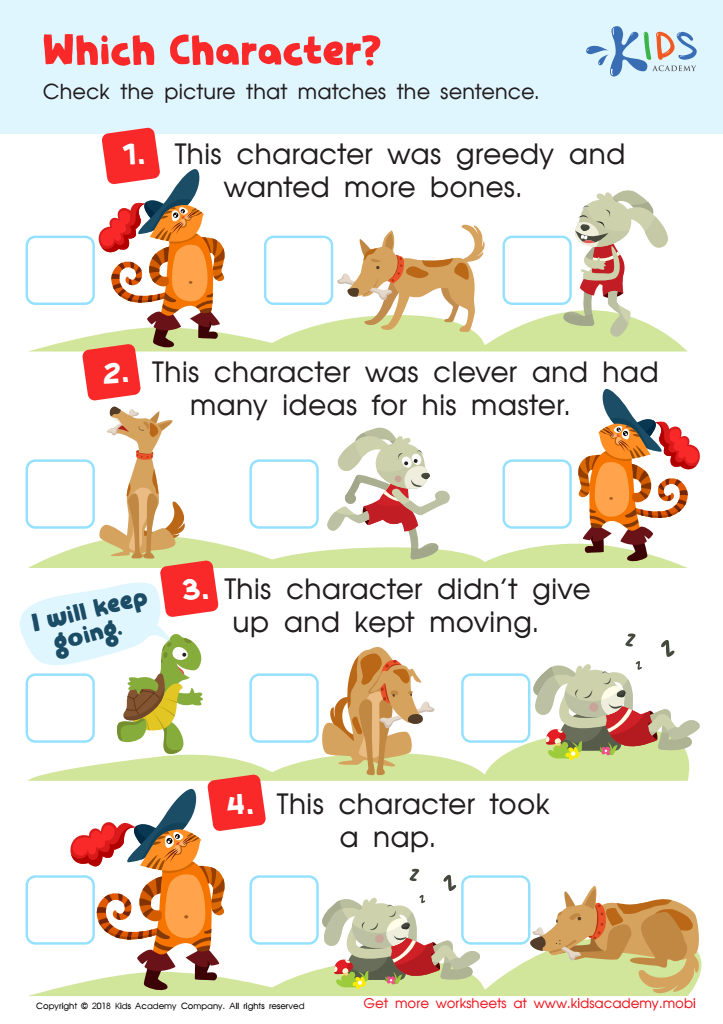
Which Character Worksheet
 Assign to My Students
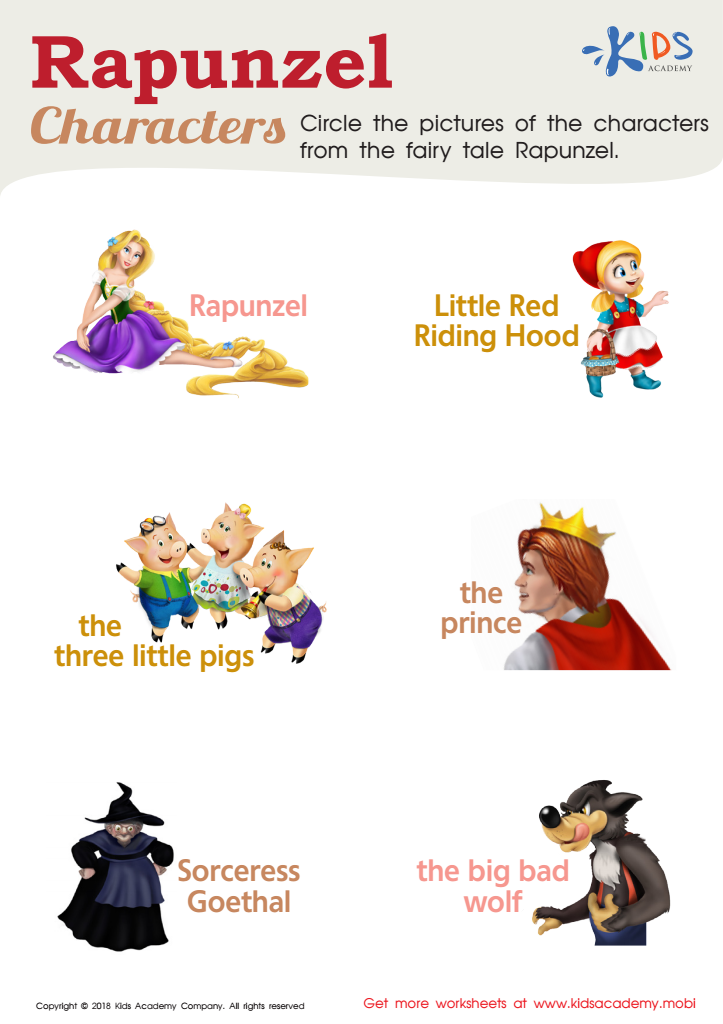
Rapunzel Characters Worksheet
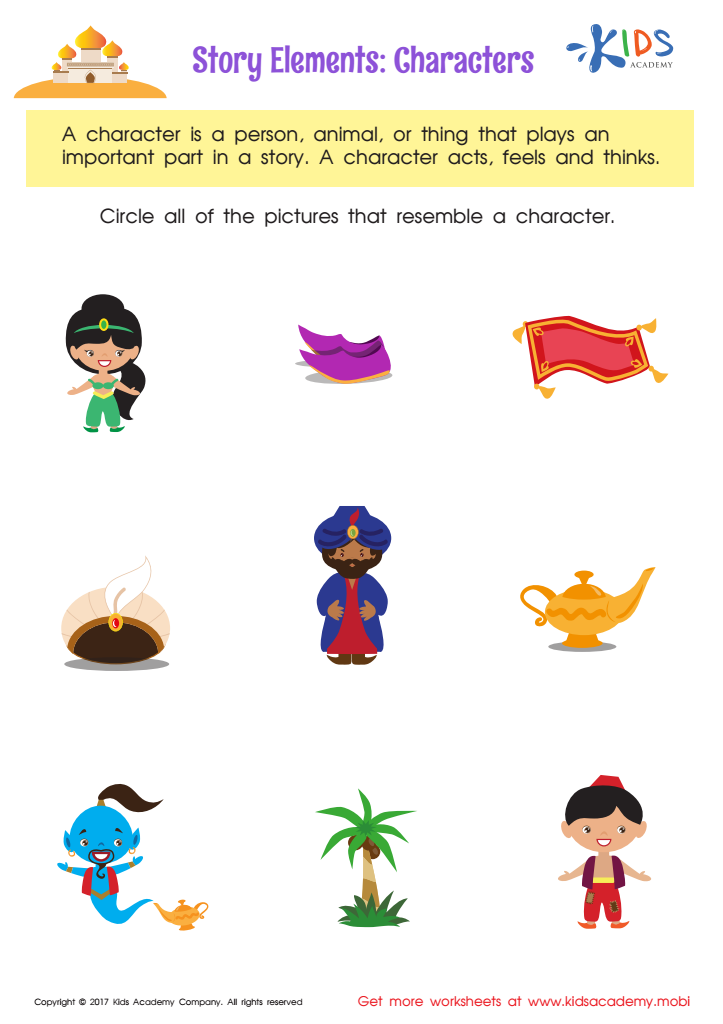
Story Elements Printable







Character recognition is a fundamental skill for children aged 4-9, laying the groundwork for their literacy and overall cognitive development. During this critical period, children develop the ability to identify and understand letters and their corresponding sounds, which is essential for reading and writing. Effective character recognition enhances language skills, encouraging children to engage with stories, enhance their vocabulary, and develop a love for reading.
Moreover, strong character recognition aids in building confidence in young learners. When children can recognize letters and words, they feel more empowered to participate in school activities and share their thoughts, contributing to their social and emotional growth. Additionally, character recognition fosters critical thinking and problem-solving skills. Children learn to decipher words, which improves their ability to make connections and understand context, essential aspects of learning across all subjects.
For parents and teachers, prioritizing character recognition ensures that children are adequately supported during an essential developmental phase. It allows for a smoother transition to more complex literacy tasks, paving the way for future academic success. Ultimately, nurturing character recognition is not just about teaching letters; it is about equipping children with essential skills for life-long learning.








