Cultural Understanding Worksheets for Ages 4-9
3 filtered results
-
From - To
Explore our engaging "Cultural Understanding Worksheets for Ages 4-9" designed to foster empathy, appreciation, and curiosity about diverse cultures. These worksheets provide young learners with fun activities and important lessons that lay the foundation for global citizenship. Through vibrant illustrations and captivating prompts, children will explore traditions, food, languages, and holidays from around the world. Each worksheet encourages critical thinking and discussion, helping kids to understand and celebrate differences among people. Perfect for educators and parents alike, these resources aim to enrich learners' cultural awareness and promote inclusivity, making them a valuable addition to any classroom or home learning environment.
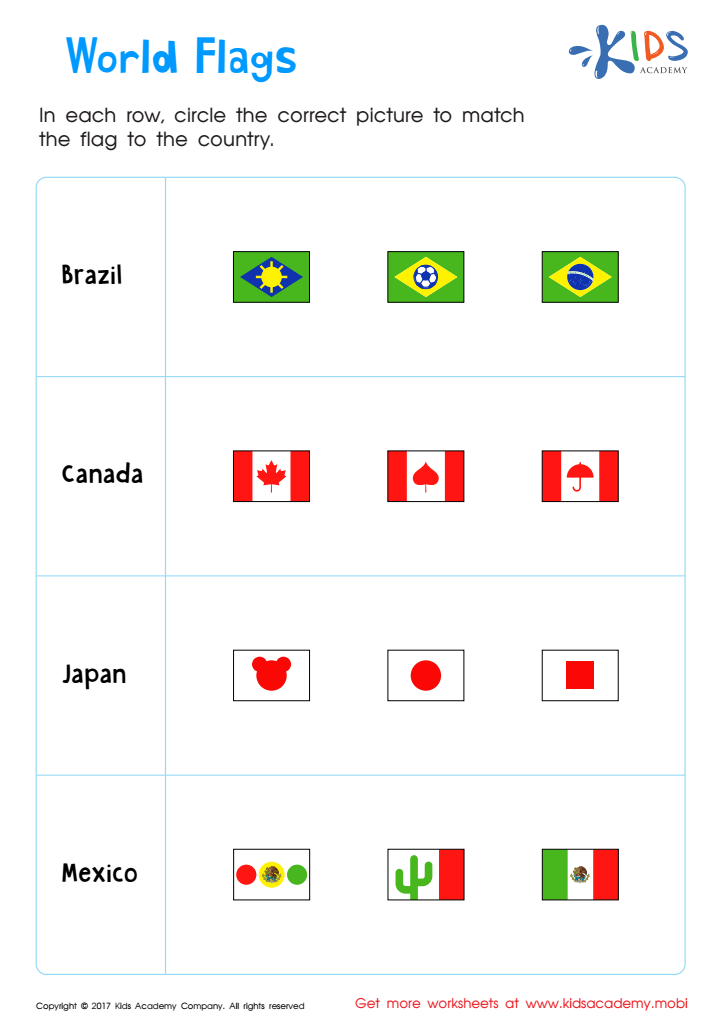
World Flags Printable
 Assign to My Students
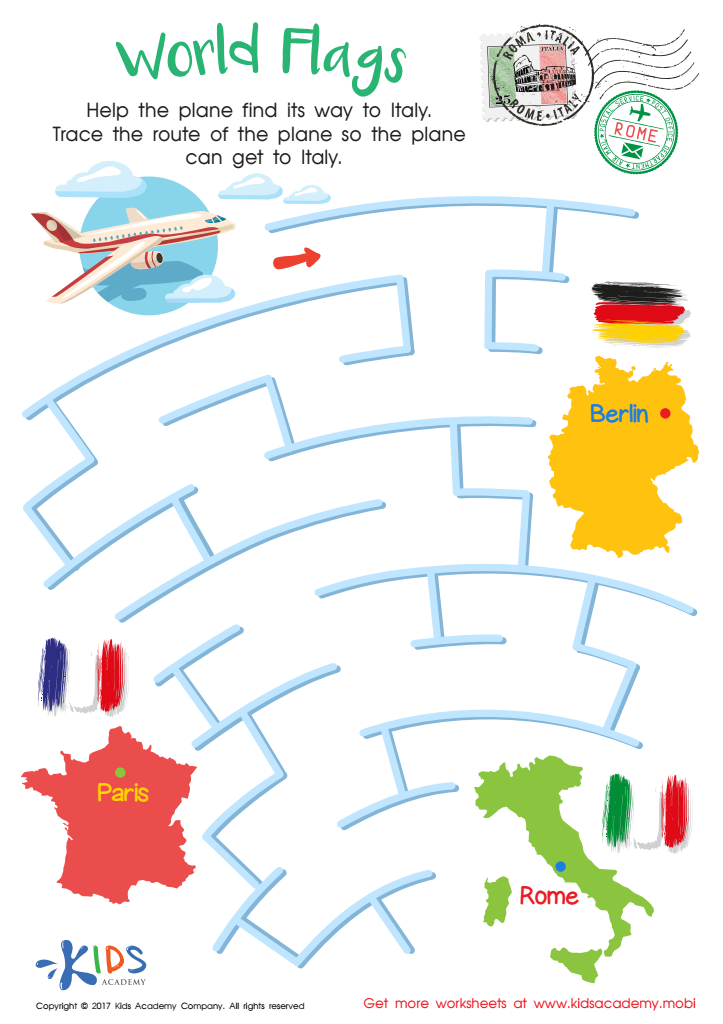
World Flags Maze Worksheet






Cultural understanding for children aged 4-9 is essential to their social, emotional, and intellectual development. This formative period is crucial as children start to form their identities, attitudes, and interactions with others. By fostering cultural understanding, parents and teachers equip children with the skills necessary for empathy and respect towards diverse experiences and backgrounds.
Exposure to different cultures helps children appreciate individuality and diversity, promoting inclusivity from a young age—an essential foundation for building a harmonious society. Through stories, crafts, and discussions that incorporate various cultural perspectives, students learn to embrace similarities and celebrate differences.
Moreover, cultivating cultural awareness nurtures critical thinking and curiosity. When children understand multicultural perspectives, they become more open-minded and adaptable, preparing them for an increasingly interconnected world.
For academic success, cultural understanding can enhance children's communication and collaborative skills, equipping them for future classrooms and workplaces that value diversity.
In a globalized society, parents and teachers must partner in safeguarding children's future by ensuring they appreciate and respect cultural differences. This prepares them to be compassionate citizens who contribute positively to their communities. Cultivating cultural understanding in young learners sets the groundwork for a more inclusive and equitable world.








