
Develop subtraction skills Worksheets for Ages 4-9
3 filtered results
Difficulty Level
Grade
Age
-
From - To
Subject
Activity
Standards
Enhance your child’s math skills with our engaging subtraction worksheets designed specifically for ages 4-9. These interactive resources aim to build a solid foundation for subtraction, making learning fun and effective. Filled with colorful graphics and relatable examples, our worksheets encourage children to practice essential subtraction concepts through various activities. From simple problems to more complex exercises, each worksheet caters to different developmental levels. Perfect for classroom use or home practice, these resources promote confidence and competency in mathematics. Discover the joy of learning subtraction skills and watch your child thrive in their mathematical abilities with Kids Academy.
Favorites
With answer key
Interactive
Rainforest Math Worksheet
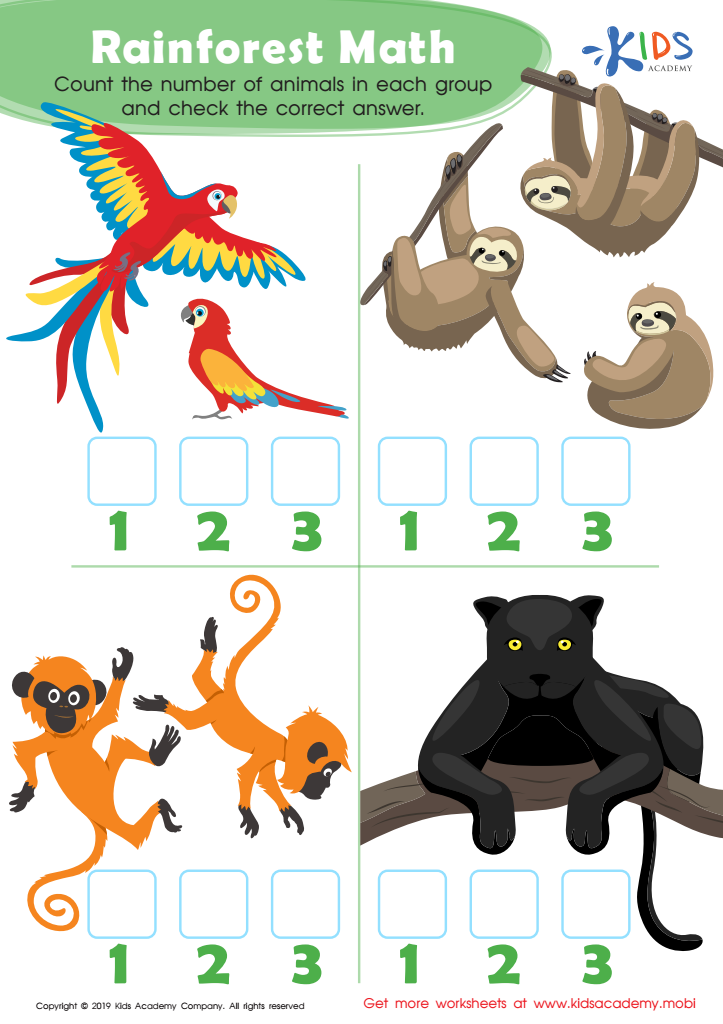
Kids love learning about rainforest animals! This worksheet helps them with counting and number sense. It features recognizable rainforest animals and asks children to choose the correct number from the answer choices. It's a fun way for children to build their skills - without even knowing it!
 Assign to My Students
Rainforest Math Worksheet
Worksheet
Join Kids Academy for Free
Who is primarily going to use this learning content?






.jpg)
Developing subtraction skills in children aged 4-9 is crucial for several reasons. First, subtraction forms the foundation for more advanced mathematical concepts, including addition, multiplication, and division. By mastering subtraction early on, children can approach complex math with confidence, leading to greater academic success in the future.
Moreover, subtraction is a key skill used in everyday life. Whether calculating change while shopping or determining how much time is left until an event, children need to feel comfortable with this concept to navigate real-world situations effectively. Early mastery fosters analytical thinking and enhances problem-solving abilities, skills essential in various life scenarios.
Additionally, engaging in subtraction activities can support cognitive development. Learning through interactive methods like games or manipulatives helps children grasp concepts better while making learning enjoyable. Parents and teachers play a vital role in creating supportive environments where subtraction skills can be nurtured.
Finally, fostering these skills promotes self-esteem and a positive attitude toward math. Children who feel competent in their ability to subtract are more likely to embrace challenges in math-related subjects, fostering a lifelong appreciation for learning. Hence, prioritizing subtraction skills during these formative years lays a strong educational foundation and equips children with essential tools for the future.








