Enhance your child's learning journey with our "Developing Observation Skills Worksheets" designed for ages 4-9. These engaging, printable worksheets encourage young learners to notice details, make comparisons, and draw connections, fostering critical thinking and analytical skills. Each activity is crafted to be fun and interactive, keeping children motivated while they explore their surroundings and refine their observational abilities. Ideal for home or classroom use, our worksheets promote independence, creativity, and problem-solving. Equip your child with the essential skill of keen observation and watch their confidence soar as they master the art of noticing the world around them.

Check out this FREE "Developing observation skills" Trial Lesson for age 4-9!

Compare Numbers with 2 digits

Favorites
With answer key
Interactive
  • 4-9
  • Developing observation skills
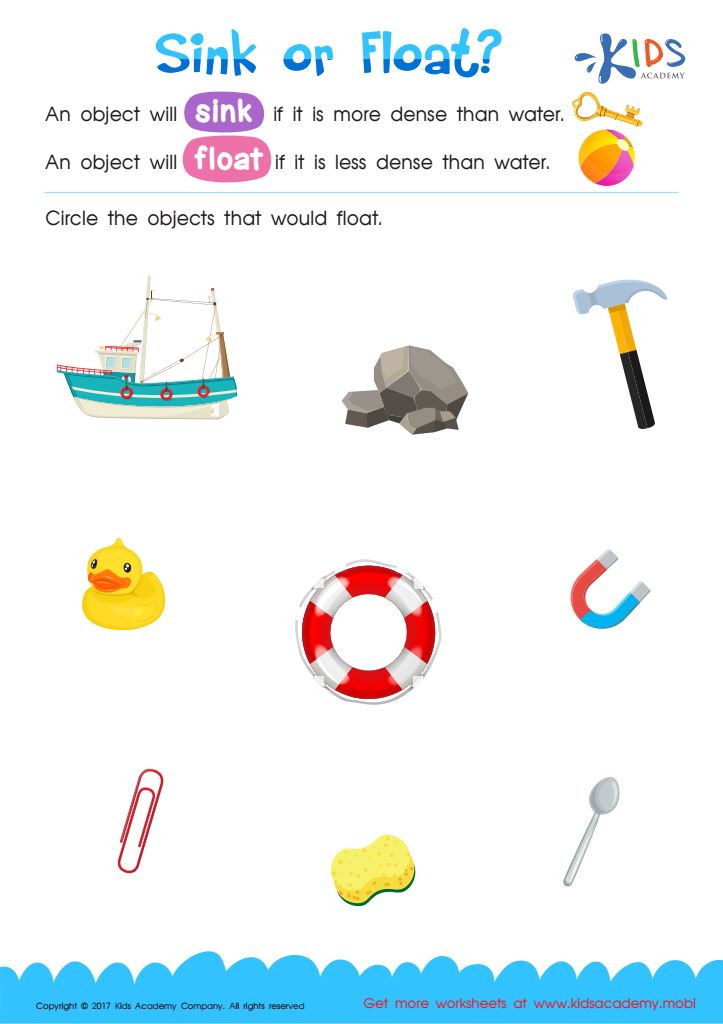
Worksheet: Sink or Float

Sink or Float Printable

They'll learn why some things stay on the surface and others sink to the bottom. (80 words)
Sink or Float Printable
Worksheet
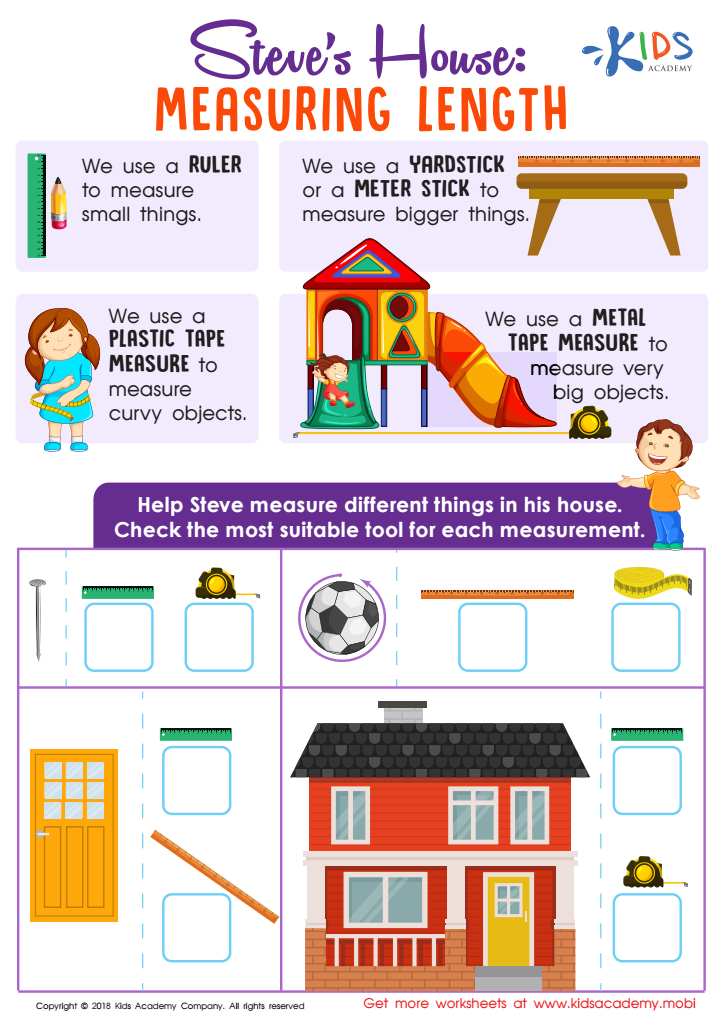
Steve's House: Measuring Length Worksheet

Steve's House: Measuring Length Worksheet

Introduce your kids to the various measuring tools and their uses. Explain how a ruler, plastic tape, yard stick, and metal tape measure are used to measure different objects. Guide them as they help Steve measure things in his home with the correct tool.
Steve's House: Measuring Length Worksheet
Worksheet
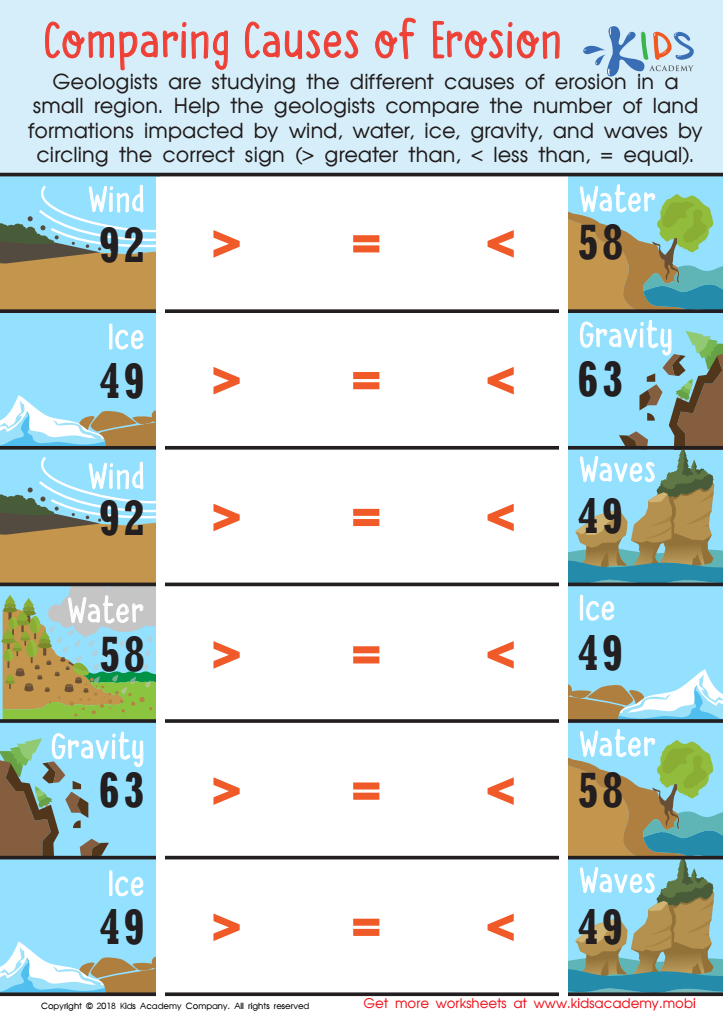
Comparing Causes of Erosion Worksheet
Comparing Causes of Erosion Worksheet

This free PDF worksheet combines science, number sense and comparing numbers to teach kids about the causes of erosion. They'll compare numbers related to ice, wind, water, gravity and waves and decide if each cause is greater, less than or equal to another. It's an interdisciplinary and meaningful way to learn that kids will enjoy.
Comparing Causes of Erosion Worksheet
Worksheet
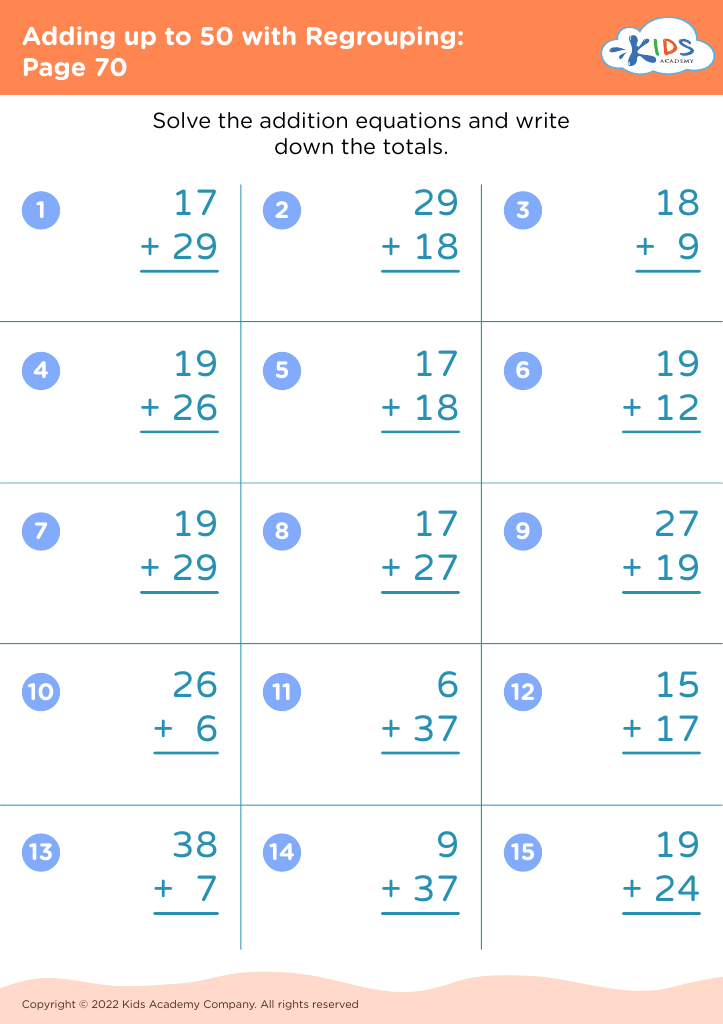
Adding up to 50 with Regrouping: Page 70
Worksheet
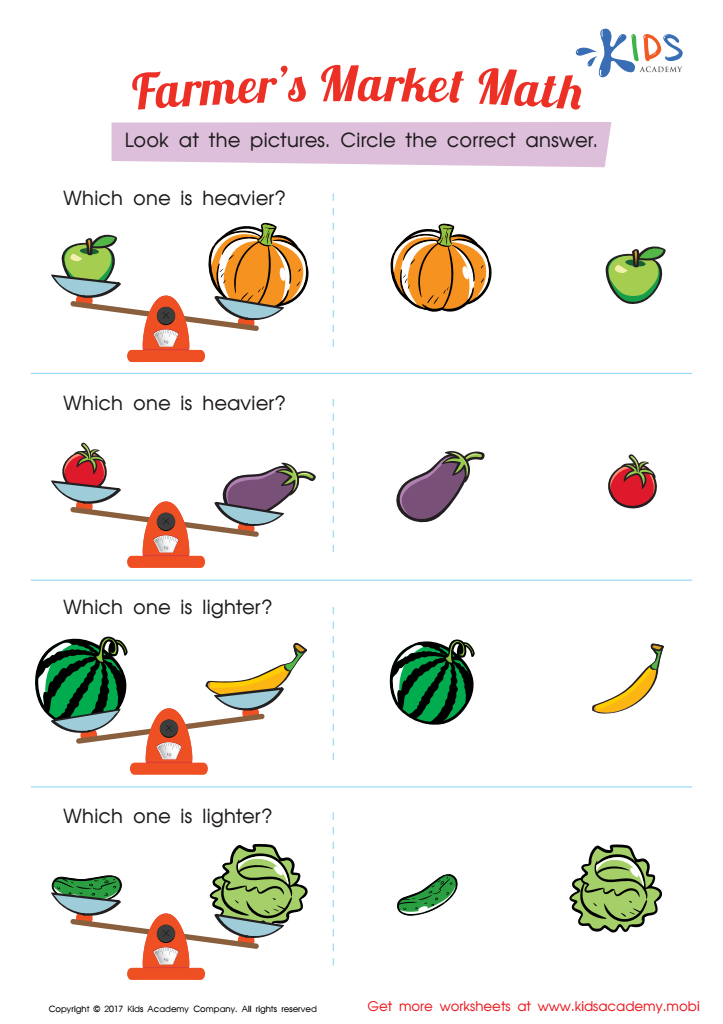
Which one is heavier worksheet

Which One Is Heavier Worksheet
Kindergartners can learn weight easily with this worksheet, featuring images of familiar fruits and veggies. Comparing which one is heavier helps them understand the concept better.
Which One Is Heavier Worksheet
Worksheet
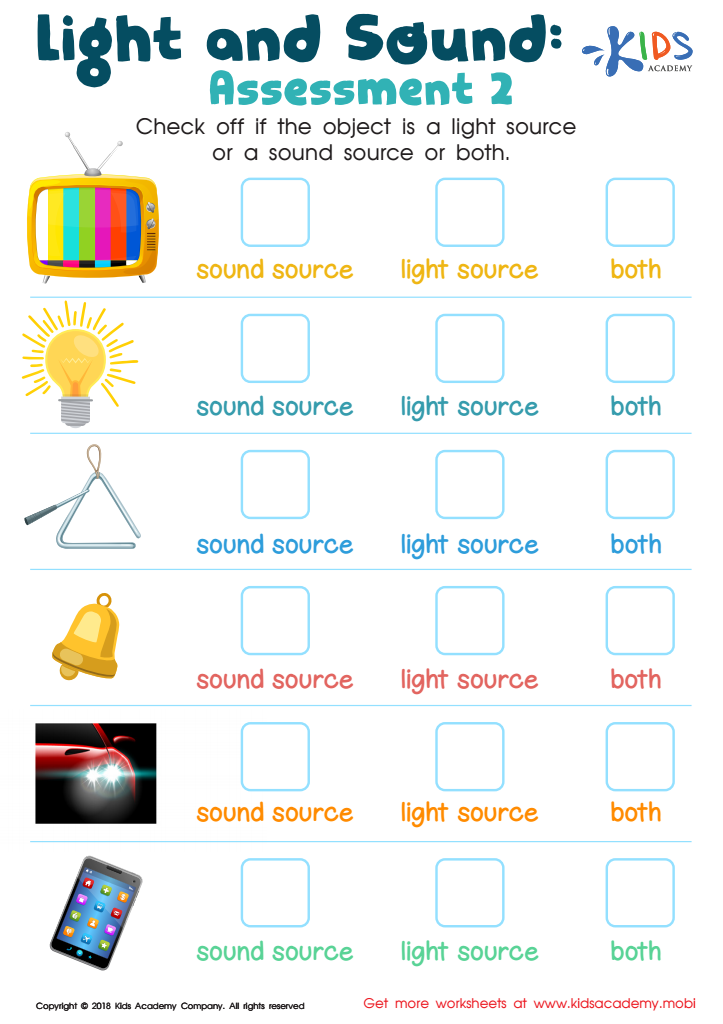
Light and Sound: Assessment 2 Worksheet

Light and Sound: Assessment 2 Worksheet

This worksheet introduces your kids to light and sound, with common sources of each. Identify the objects and help them check if it's a light source, a sound source, or both. Colourful and simple, it's a great way to teach your little ones! (80 words)
Light and Sound: Assessment 2 Worksheet
Worksheet
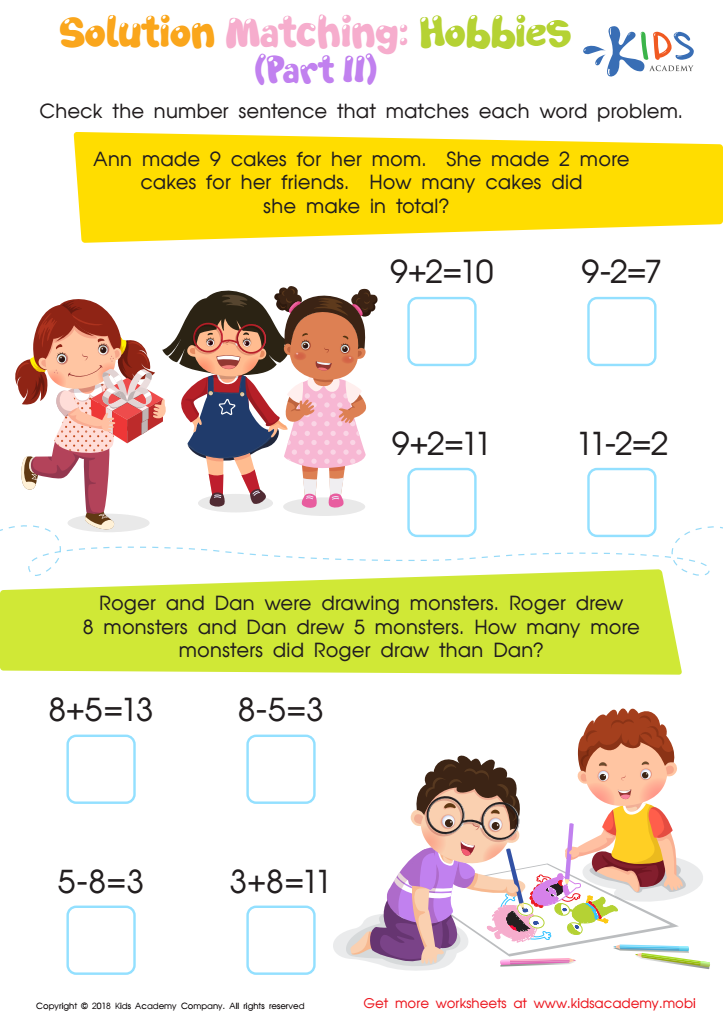
Solution Matching: Hobbies. Part 2 Worksheet

Solution Matching: Hobbies. Part 2 Worksheet

This fun printable worksheet has word problems featuring hobbies your children enjoy! With your child, read through each problem, understanding the numbers and key phrases indicating addition or subtraction. Then, match the correct equation with the solution by checking the box. Math problems are more enjoyable to solve when they’re realistic and engaging!
Solution Matching: Hobbies. Part 2 Worksheet
Worksheet
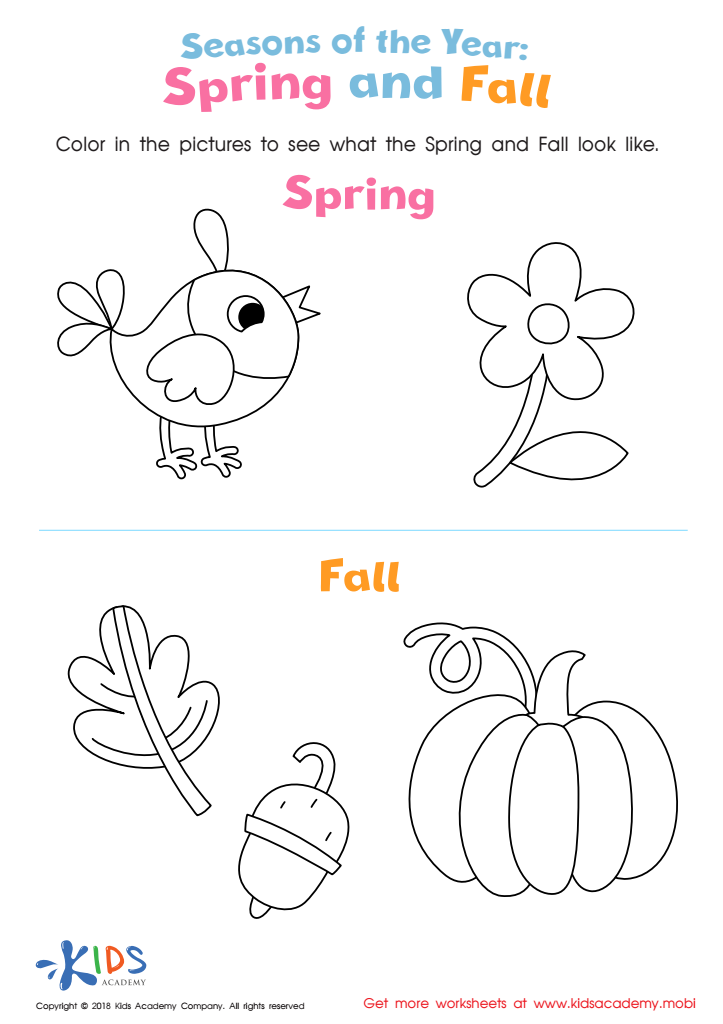
Spring and Fall Worksheet

Spring and Fall Worksheet

This coloring sheet is great fun for kids. It features animals, shapes, and asks kids to identify spring and fall. Ask them to name the things in the sheet, and then help choose colors that fit each season. Let their imaginations run wild!
Download (PDF)
Assign to My Students
Spring and Fall Worksheet
Worksheet
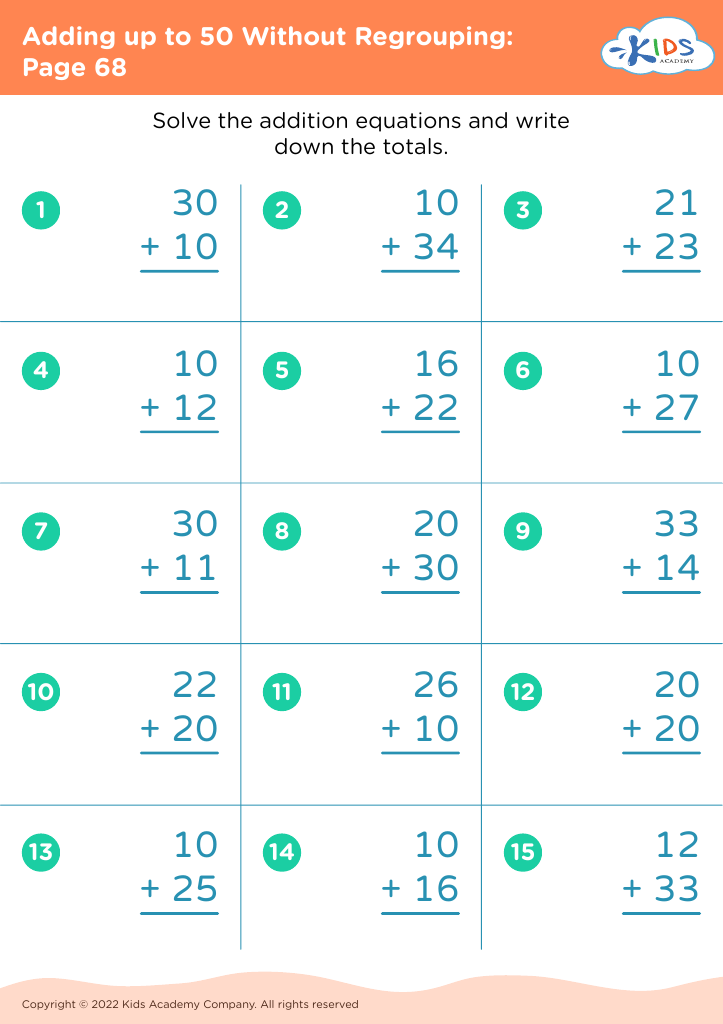
Adding up to 50 Without Regrouping: Page 68
Worksheet


Developing observation skills in children aged 4-9 is crucial for their overall cognitive and social development. During this formative stage, children are naturally curious about their surroundings. By fostering their ability to observe, parents and teachers can facilitate deeper learning and critical thinking. Observational skills help children make sense of the world around them, allowing them to notice patterns, draw conclusions, and build problem-solving abilities.

These skills also enhance social interactions. As children learn to observe emotions and body language, they become more empathetic and socially aware. This leads to healthier relationships with peers and adults, as they can better interpret and respond to various social cues. Furthermore, strong observation skills are foundational for effective communication, as they help children articulate their thoughts and feelings more clearly.

Teachers can integrate observation into daily activities by encouraging students to describe what they see in nature, in a story, or during playtime. Parents can reinforce these skills at home by engaging in conversations about daily experiences. Ultimately, nurturing observation skills not only prepares children for academic success but also equips them with life skills essential for navigating complex social environments. Investing in these skills now will benefit children throughout their lives.