Developing spatial awareness Worksheets for Ages 4-9
3 filtered results
-
From - To
Enhance your child's spatial awareness with our engaging worksheets designed for ages 4-9! These specially crafted activities encourage young learners to explore shapes, patterns, and spatial relationships through fun and interactive exercises. By developing key skills such as problem-solving and critical thinking, these worksheets promote cognitive growth while keeping learning enjoyable. Perfect for at-home practice or classroom use, our resources include various topics tailored to different learning levels. Help your child build a strong foundation in spatial awareness, essential for math and everyday life skills, and watch their confidence soar! Discover our creative worksheets and inspire a love for learning today!
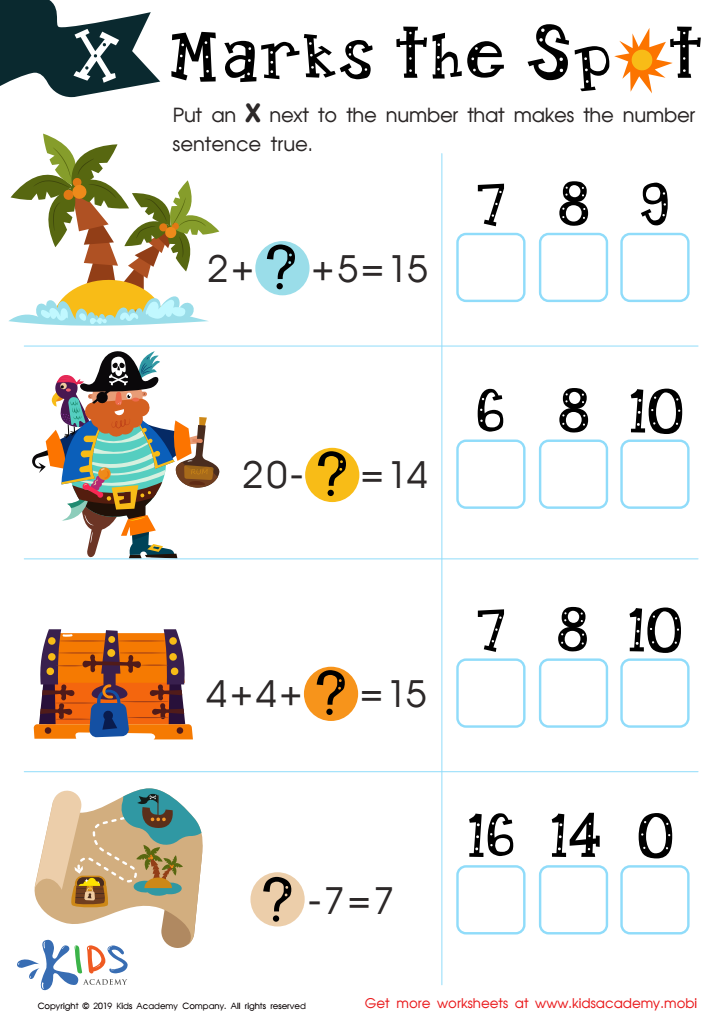
X Marks the Spot Worksheet
 Assign to My Students
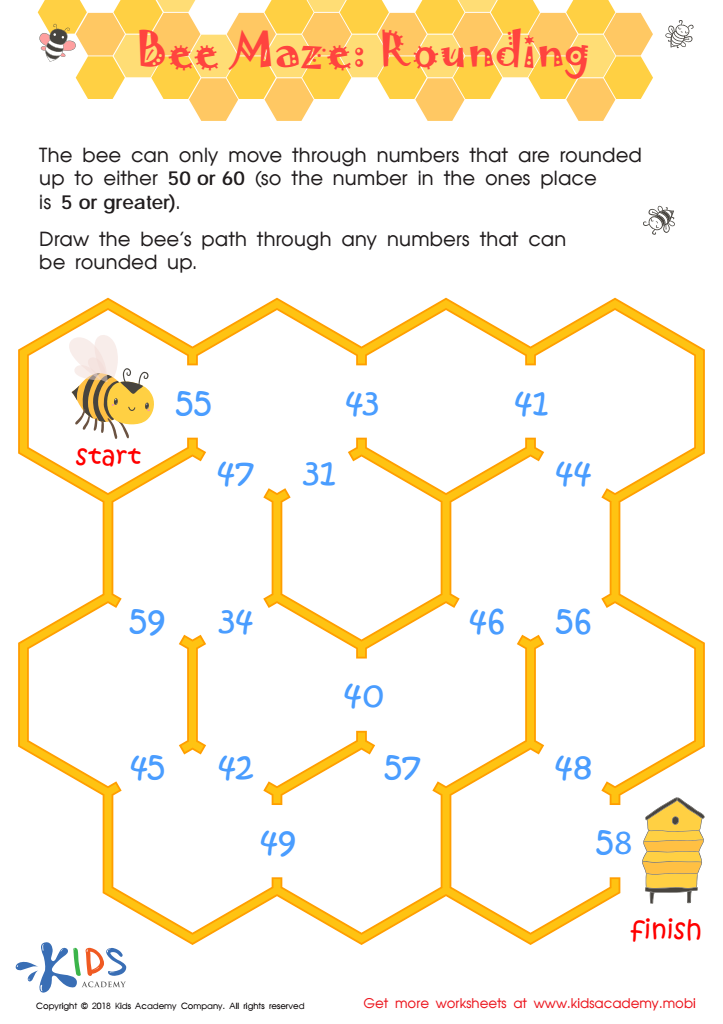
Bee Maze Rounding Worksheet






Developing spatial awareness in children aged 4-9 is crucial for their overall cognitive development and future learning success. Spatial awareness refers to the ability to understand and interact with the different spaces around us. It encompasses skills such as understanding shapes, recognizing patterns, and grasping the relationship between objects in space.
For parents and teachers, fostering this skill can significantly enhance a child's math, science, and reasoning abilities. Children with strong spatial awareness are often better equipped to solve problems, visualize concepts, and perform tasks that require measurement and geometry. This skill also lays the foundation for success in areas like engineering, architecture, and art.
Additionally, engaging activities that promote spatial awareness—such as puzzles, building blocks, and outdoor games—encourage creativity, critical thinking, and collaboration. These experiences help children develop confidence and social skills while having fun. Furthermore, by supporting spatial awareness development, parents and teachers can address potential learning difficulties early, providing the necessary foundational skills that will benefit children throughout their educational journey and beyond. Investing time in nurturing spatial awareness enriches children's learning experiences and sets the stage for lifelong learning and exploration.








