Event sequencing Worksheets for Ages 4-9
3 filtered results
-
From - To
Welcome to our collection of Event Sequencing Worksheets, designed specifically for children ages 4-9! These engaging and interactive worksheets help young learners develop essential skills in understanding the order of events, improving their reading comprehension and critical thinking abilities. Featuring colorful illustrations and age-appropriate content, our worksheets guide children in sequencing stories, daily routines, and building narratives. Perfect for home or classroom use, these resources make learning fun while nurturing your child's cognitive development. Explore our wide variety of worksheets to enhance storytelling skills and foster imaginative thinking. Empower your child’s learning journey with our Event Sequencing Worksheets today!
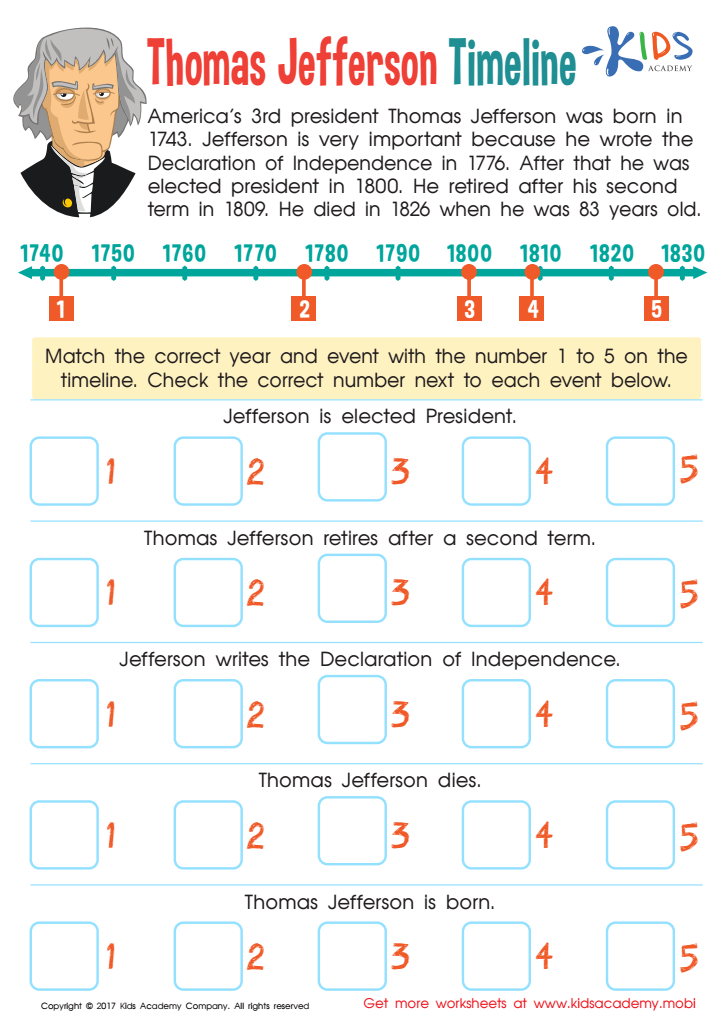
Thomas Jefferson Timeline Worksheet
 Assign to My Students
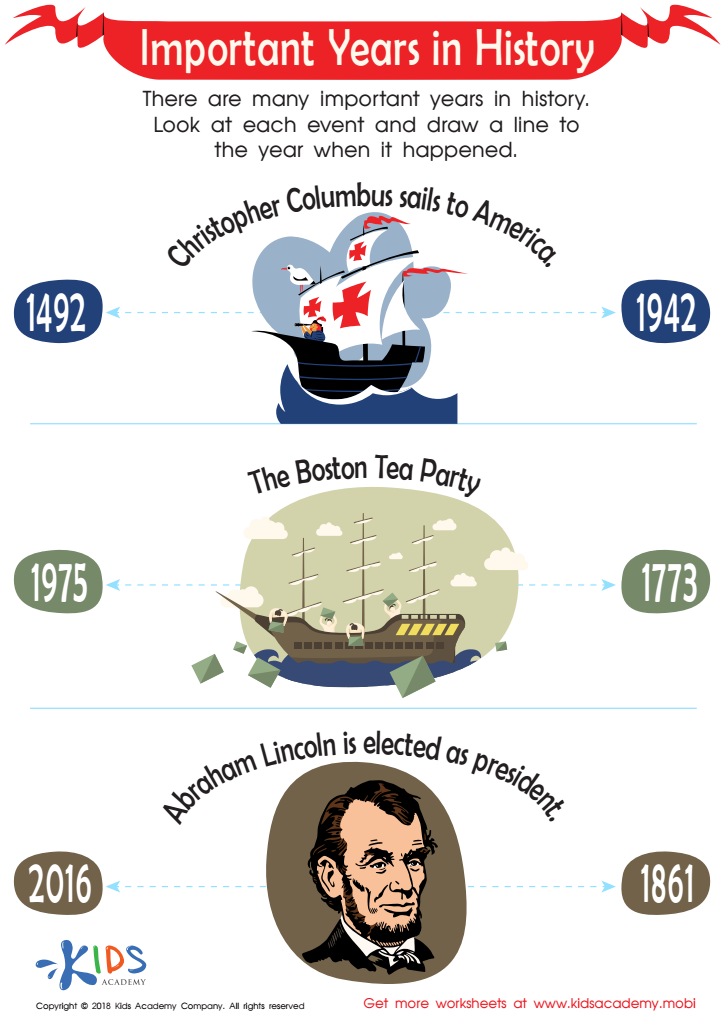
Important Years in History Worksheet
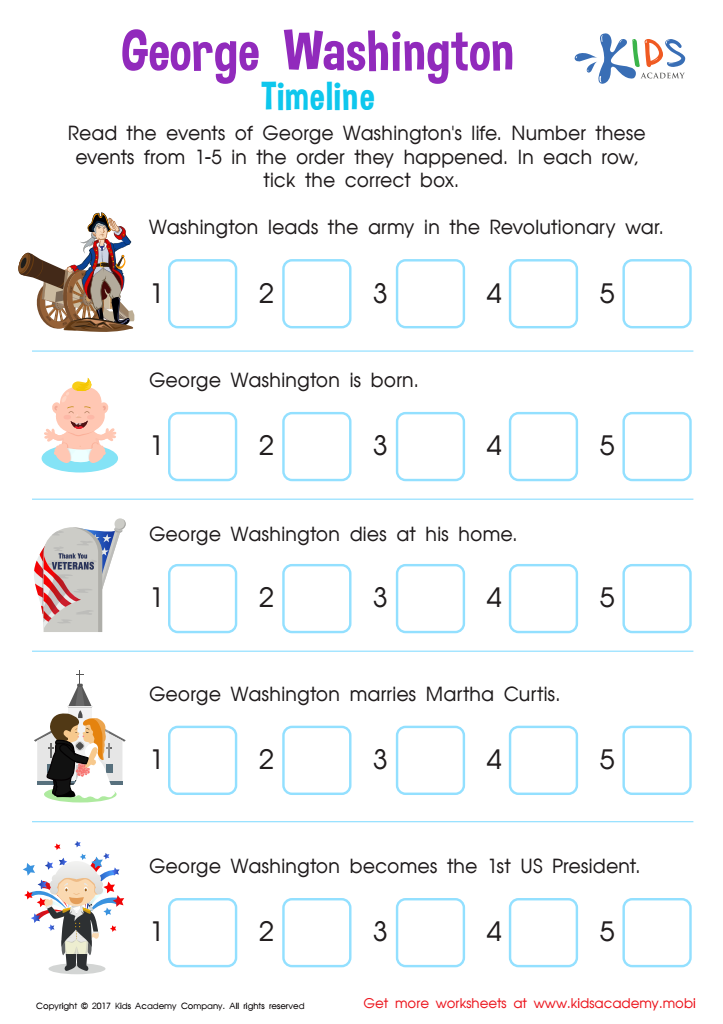
George Washington Timeline Worksheet





Event sequencing is crucial for children aged 4-9 as it fosters critical cognitive skills important for their overall development. This process involves organizing events in the order they occur, which helps children understand cause and effect, enhances their ability to anticipate what happens next, and improves their storytelling skills. For parents and teachers, recognizing the significance of event sequencing is essential because it lays the foundation for effective reading comprehension, writing, and problem-solving abilities.
Engaging in activities that promote event sequencing, such as storytelling, sequencing games, and picture cards, can facilitate children's understanding of narratives and improve their memory. Moreover, these activities encourage communication skills, as children learn to express their thoughts and ideas in a coherent manner.
Additionally, mastering event sequencing supports academic success in later grades. Children who can effectively sequence events often excel in school tasks, where organization is key. Parents and teachers can also use event sequencing to enhance social skills, enabling children to share their experiences with peers in a thoughtful way. Overall, by focusing on event sequencing, caregivers can significantly contribute to a child's cognitive, social, and linguistic development, ensuring they are well-prepared for future learning experiences.








