Fine motor skills development Worksheets for Ages 4-9 - Page 2
27 filtered results
-
From - To
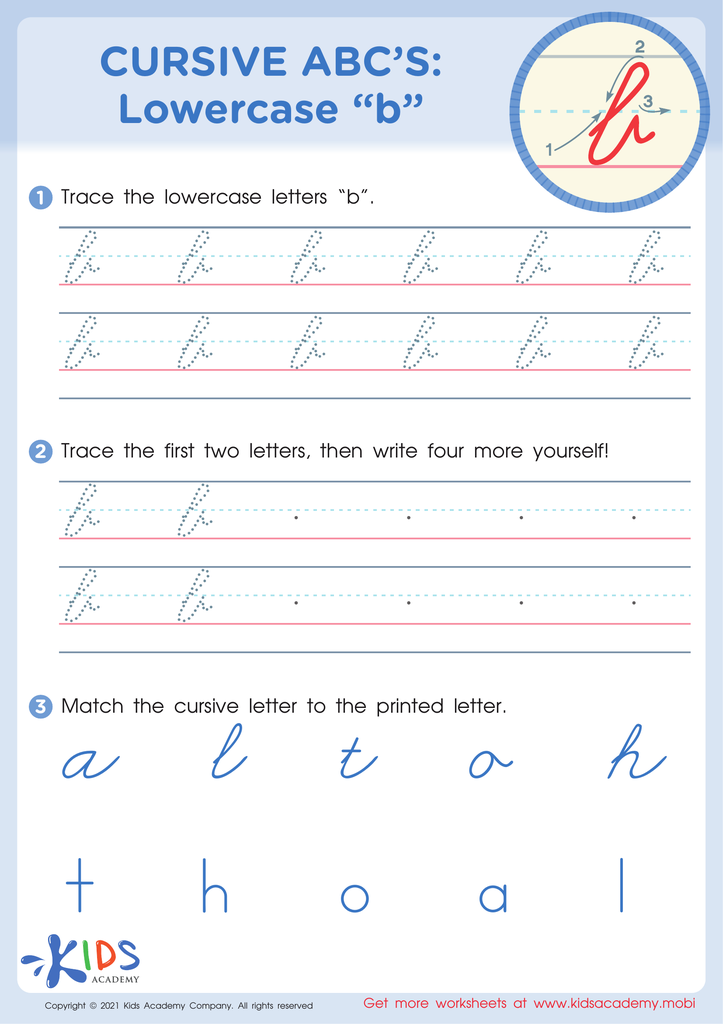
Cursive ABCs: Lowercase b
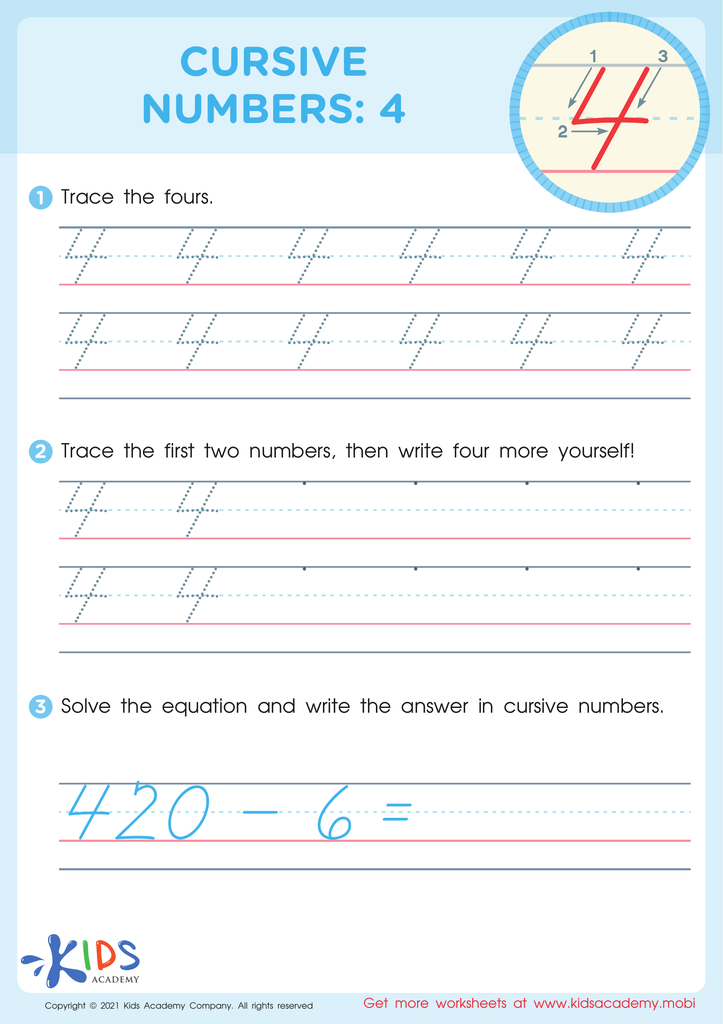
Cursive Numbers: 4 Worksheet






Fine motor skills involve the coordination of small muscles, especially those in the hands and fingers, with the eyes. For children aged 4-9, the development of these skills is crucial as they play a fundamental role in daily activities. By caring about fine motor skills development, parents and teachers can help children perform essential functions such as writing, buttoning clothes, and tying shoes. These skills foster independence, enhancing a child’s confidence and ability to take on new tasks.
Additionally, fine motor skills are closely tied to academic achievement. Holding a pencil, cutting with scissors, and manipulating small objects are routine classroom activities that require refined motor abilities. Strong fine motor skills facilitate better handwriting, art and craft competency, and efficient task completion, laying a foundation for academic success.
Poor fine motor skill development can lead to frustration, negatively impacting a child's emotional and social well-being. Children struggling with these skills may avoid tasks, fall behind in school, and experience diminished self-esteem. Early intervention and consistent practices such as playing with building blocks, drawing, or using playdough can significantly boost these skills.
Therefore, a focus on fine motor skill development prepares children for an array of lifelong tasks and fosters a positive, confident approach to learning and social interactions.








