
History knowledge Worksheets for Ages 4-9
5 filtered results
Difficulty Level
Grade
Age
-
From - To
Subject
Activity
Standards
Explore our engaging History Knowledge Worksheets for children aged 4-9, designed to spark curiosity and foster a love for history! These fun and educational resources introduce young learners to important historical events, figures, and concepts in a playful way. Each worksheet features colorful illustrations and age-appropriate activities that make learning history accessible and enjoyable. Perfect for parents and educators, our worksheets can enhance classroom lessons or be used for at-home learning. Encourage your child's imaginative journey through time while reinforcing critical thinking and comprehension skills. Dive into the past with fun worksheets that make history come alive!
Favorites
With answer key
Interactive
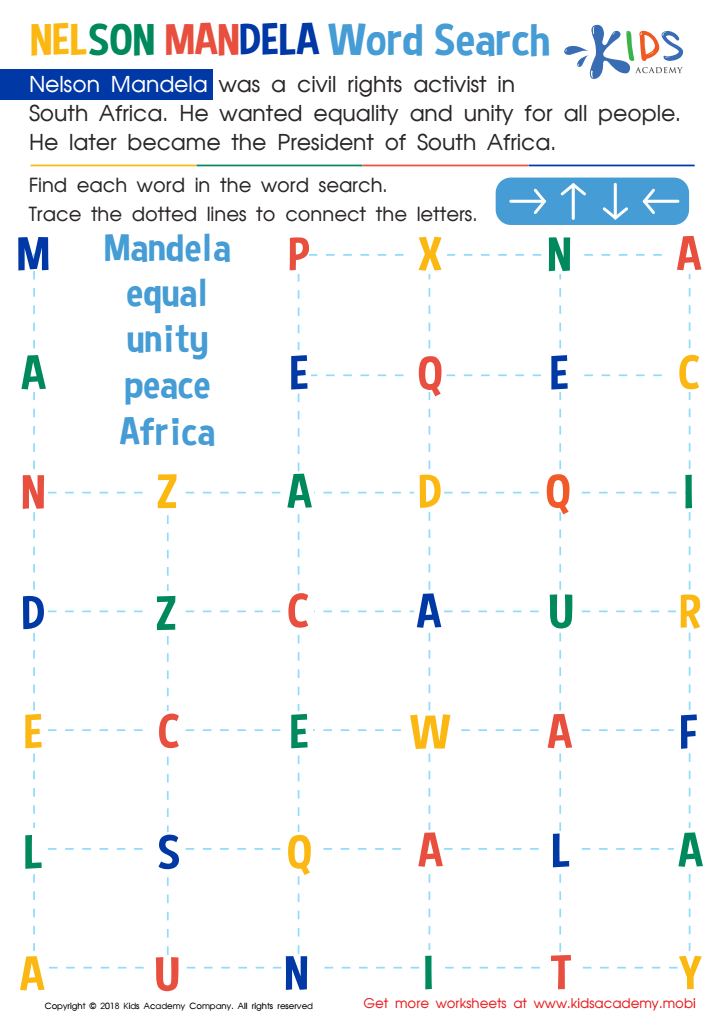
Nelson Mandela Word Search Worksheet
Kids love word searches! This fun, free worksheet teaches about the civil rights activist Nelson Mandela. It includes traceable lines and words related to him, helping improve fine motor skills. A great way to learn about a great man!
 Assign to My Students
Nelson Mandela Word Search Worksheet
Worksheet
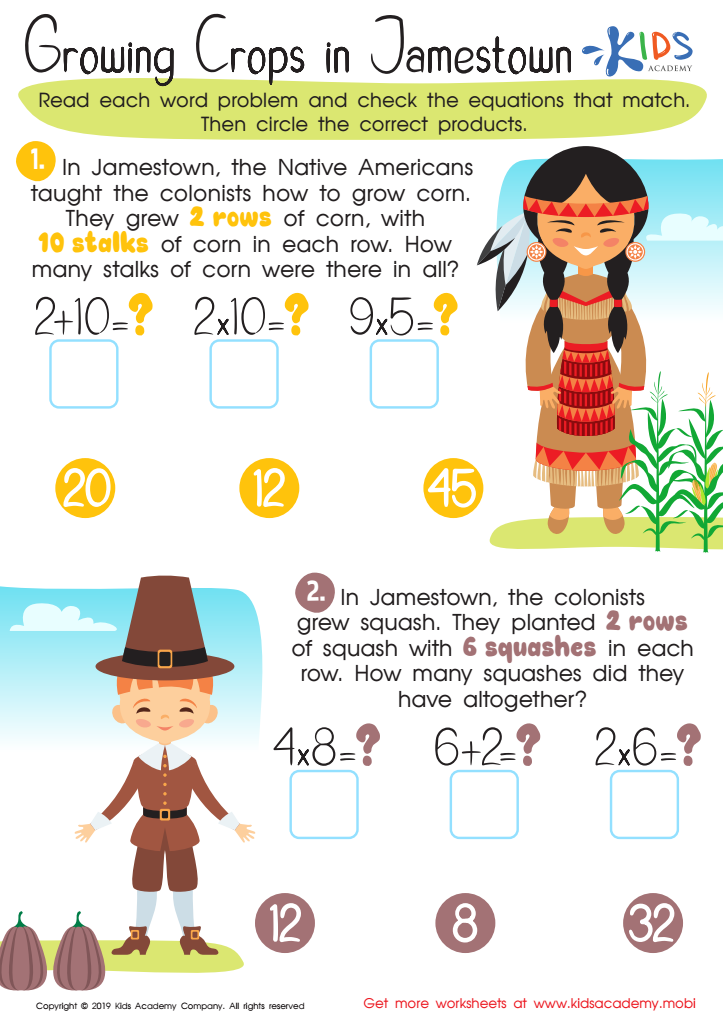
Growing Jamestown Worksheet
This exciting multiplication worksheet from Kids Academy uses American history facts as its theme. Kids learn about Native Americans helping early Americans at Jamestown, then read the word problems, match the equations and solve for the product. Finally, circle the correct answer!
Growing Jamestown Worksheet
Worksheet
Join Kids Academy for Free
Who is primarily going to use this learning content?


.jpg)





Understanding history is crucial for children aged 4-9, as it lays the foundation for their identity and understanding of the world. In these formative years, children begin to develop a sense of self and place in a larger community. By introducing them to historical events, figures, and cultures, parents and teachers help foster curiosity and critical thinking skills.
Learning history encourages empathy, as children explore diverse perspectives and experiences. It develops their ability to understand differences and similarities among people, fostering inclusivity and respect in an increasingly interconnected society. Knowledge of history also nurtures a sense of belonging; children learn about their heritage and the contributions of various groups to the world around them.
Furthermore, historical narratives can inspire creativity and imagination. Children enchanted by tales of the past may become more engaged, thriving in storytelling, role-play, and discussions. Additionally, grasping basic historical concepts promotes cognitive skills like sequencing, time management, and chronological thinking.
Thus, teaching history to young learners nurtures their intellectual, social, and emotional growth, equipping them with essential skills and values to navigate their future and contribute positively to society. Parents and teachers play a pivotal role in guiding children through this exciting journey of historical exploration.








