Improving drawing skills Worksheets for Ages 4-9
3 filtered results
-
From - To
Boost creativity and enhance artistic talent with our “Improving Drawing Skills Worksheets for Ages 4-9.” Designed with engaging activities, these worksheets help young artists build foundational drawing skills while having fun. Suitable for children in early learning stages, the exercises focus on enhancing fine motor skills, understanding shapes, patterns, and details. Whether at home or in the classroom, our worksheets support imaginative growth and artistic confidence. Watch your child turn scribbles into masterpieces with guided step-by-step instructions and creative prompts. Perfect for beginners and budding artists alike. Bring out the little Picasso in your child today!
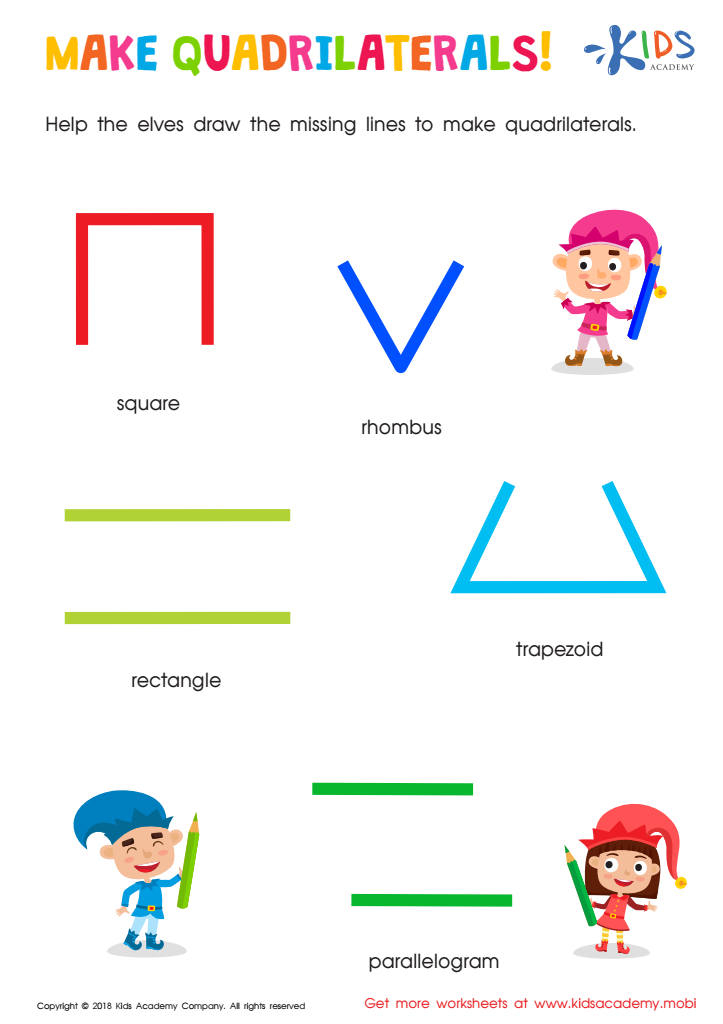
Make Quadrilaterals Worksheet
 Assign to My Students
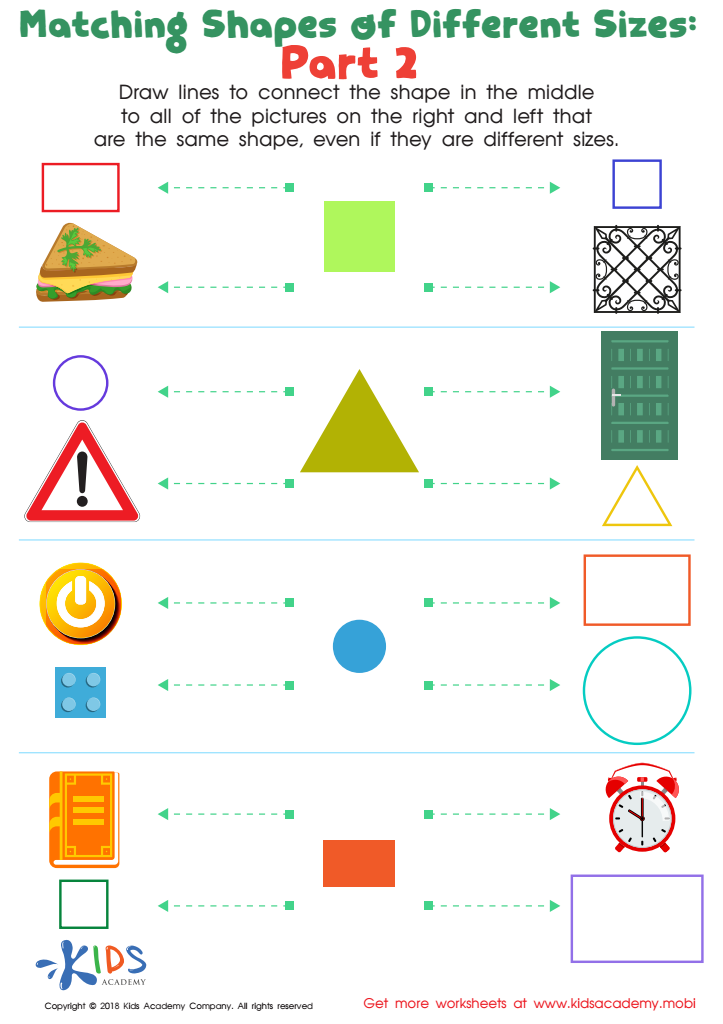
Geometry: Part 2 Worksheet
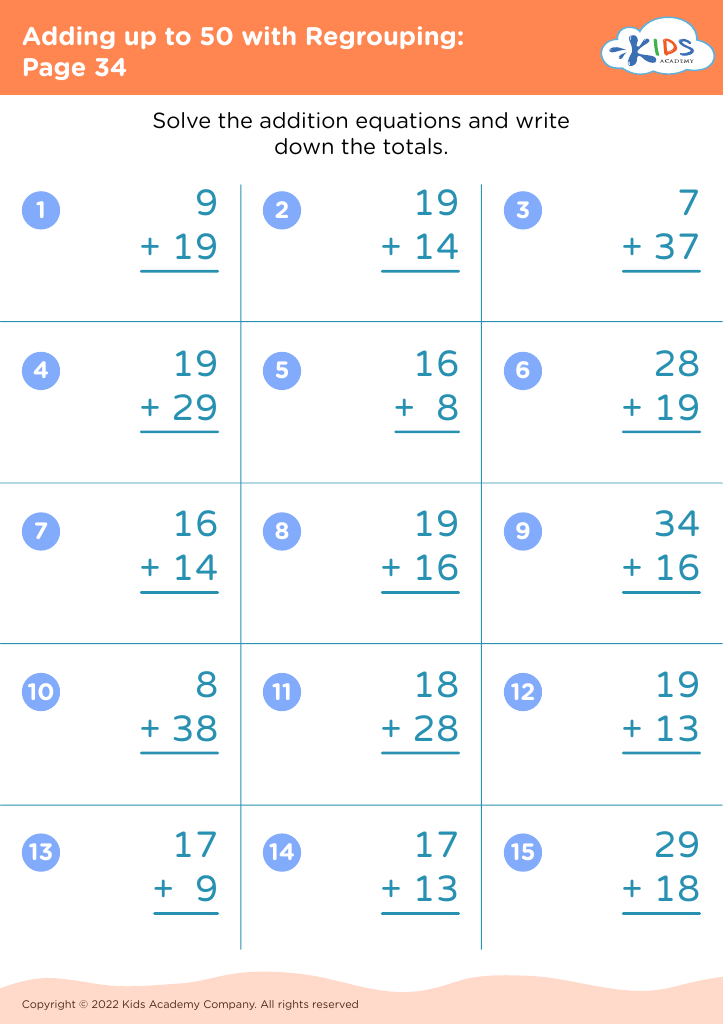







Improving drawing skills in children ages 4-9 is crucial for their overall development, making it an area parents and teachers should focus on. Firstly, drawing enhances fine motor skills. These are essential for various daily activities, such as writing, using utensils, and dressing. By practicing drawing, children gain better control over their hand movements, strengthening their muscle coordination.
Secondly, drawing plays a significant role in cognitive development. When children draw, they translate their thoughts into visual forms, which helps develop their interpretation and problem-solving skills. For example, deciding on the colors to use or the shapes to create requires thinking and planning. Creating scenes and characters stimulates their imagination and helps in the organization and expression of ideas.
Emotionally, drawing offers children a way to express feelings they might otherwise struggle to articulate. It can serve as a calming activity that reduces stress and anxiety. Socially, sharing their artwork with peers or family fosters communication skills and boosts self-esteem as they receive recognition and appreciation.
Finally, drawing can enhance learning in other subjects. Visualizing stories, depicting historical events, or illustrating scientific concepts can reinforce understanding and memory. By fostering drawing skills, parents and teachers support a well-rounded development, equipping children with the tools they need for both academic and personal success.








