
Language skills development Worksheets for Ages 4-9
3 filtered results
Difficulty Level
Grade
Age
-
From - To
Subject
Activity
Standards
Unlock your child's language potential with our engaging Language Skills Development Worksheets, designed for ages 4 to 9. These printable resources offer a variety of activities that foster essential language skills, including vocabulary building, phonics, reading comprehension, and sentence structure. Each worksheet is created to be fun and interactive, helping young learners enhance their communication abilities while enjoying the learning process. With vibrant illustrations and age-appropriate content, these worksheets cater to diverse learning styles and promote confidence in young readers and writers. Explore our collection today and give your child the tools they need to communicate effectively and creatively!
Favorites
With answer key
Interactive
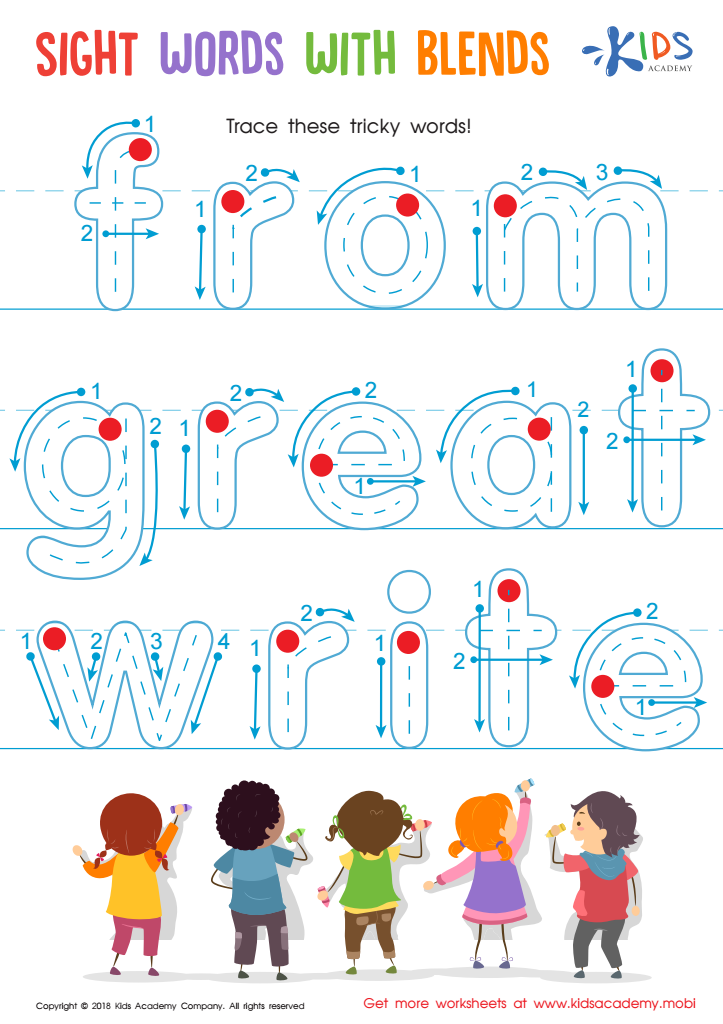
Sight Words with Blends Worksheet
This free PDF lets your children trace and write sight words with tricky blends. The guide numbers help them start from the top, building fine motor skills and enhancing sight word vocab. It's a great way to give your kids a solid foundation for reading!
 Assign to My Students
Sight Words with Blends Worksheet
Worksheet
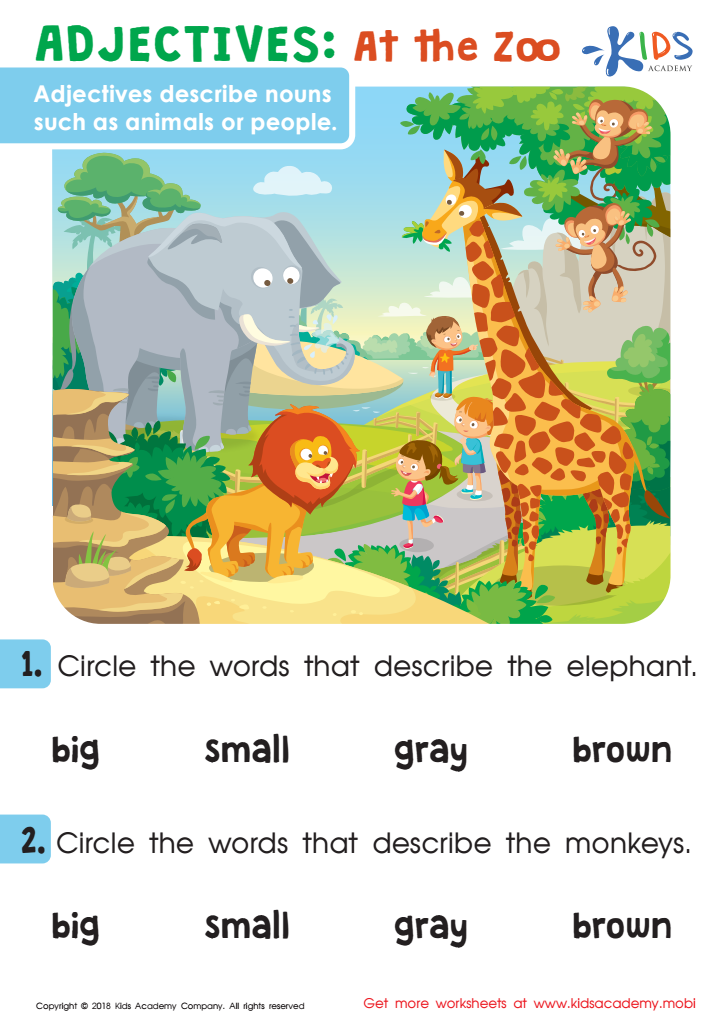
Adjectives: At The Zoo Worksheet
Take your kids to the zoo and ask them about their favorite activities and animals. This worksheet is a great way for kids to learn about adjectives. Explain that adjectives describe nouns like people or animals (e.g. big, tall, dark). Look at the printout with your kids and help them circle words that describe the animals in the picture.
Adjectives: At The Zoo Worksheet
Worksheet
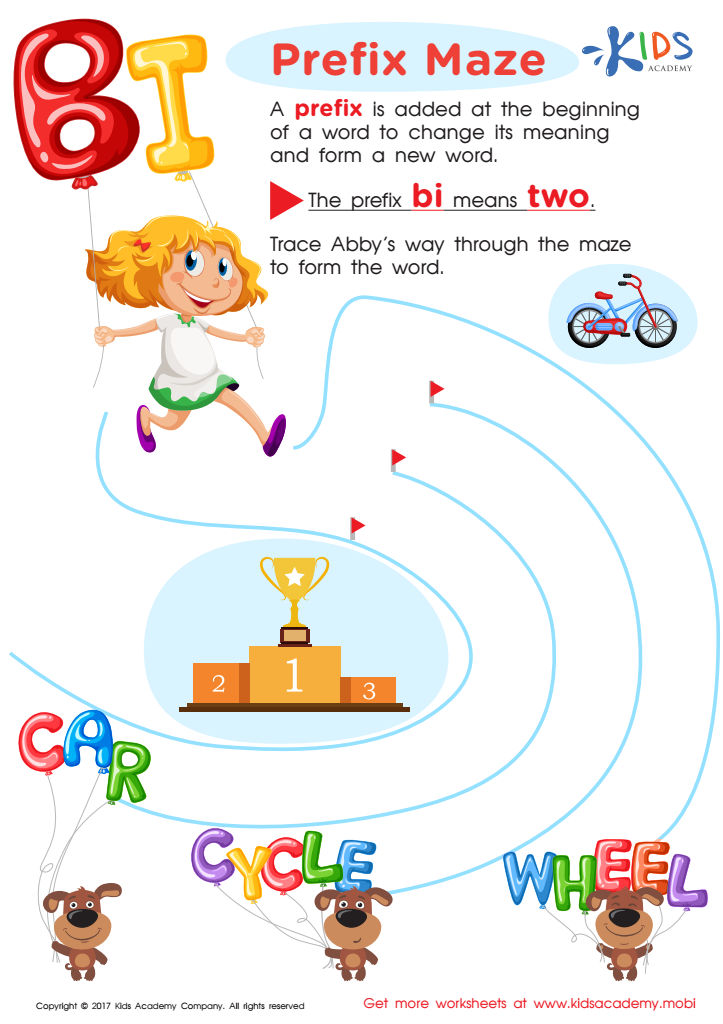
Prefix Bi Words Worksheet
Help "bi" find its root word in this fun and colorful prefix worksheet! Your child will learn how words are built while having a great time!
Prefix Bi Words Worksheet
Worksheet
Join Kids Academy for Free
Who is primarily going to use this learning content?








Language skills development for children aged 4-9 is crucial for their overall growth and success. During these formative years, children experience rapid cognitive, social, and emotional development, making it an ideal time to foster strong language abilities. Mastering language skills enhances their communication, enabling them to express thoughts, feelings, and needs effectively. This, in turn, contributes to building healthy relationships with peers and adults.
Language proficiency is closely linked to literacy skills; strong verbal skills lay the foundation for reading and writing. Children who develop robust language skills early on are more likely to excel academically, as they can understand instructions, participate in discussions, and share ideas confidently. Furthermore, language development supports critical thinking and problem-solving, vital skills in today’s world.
For parents and teachers, nurturing language skills can improve classroom engagement and behavior. Children who can articulate their needs are less likely to feel frustrated or misunderstood, fostering a positive learning environment. In a broader context, language skills are vital for cultural inclusion and participation in society. Investing time and effort into language development not only benefits individual children but also contributes to stronger, more engaged communities. Thus, supporting language growth during these years is essential for a child’s future success.








