Learn addition Worksheets for Ages 4-9
4 filtered results
-
From - To
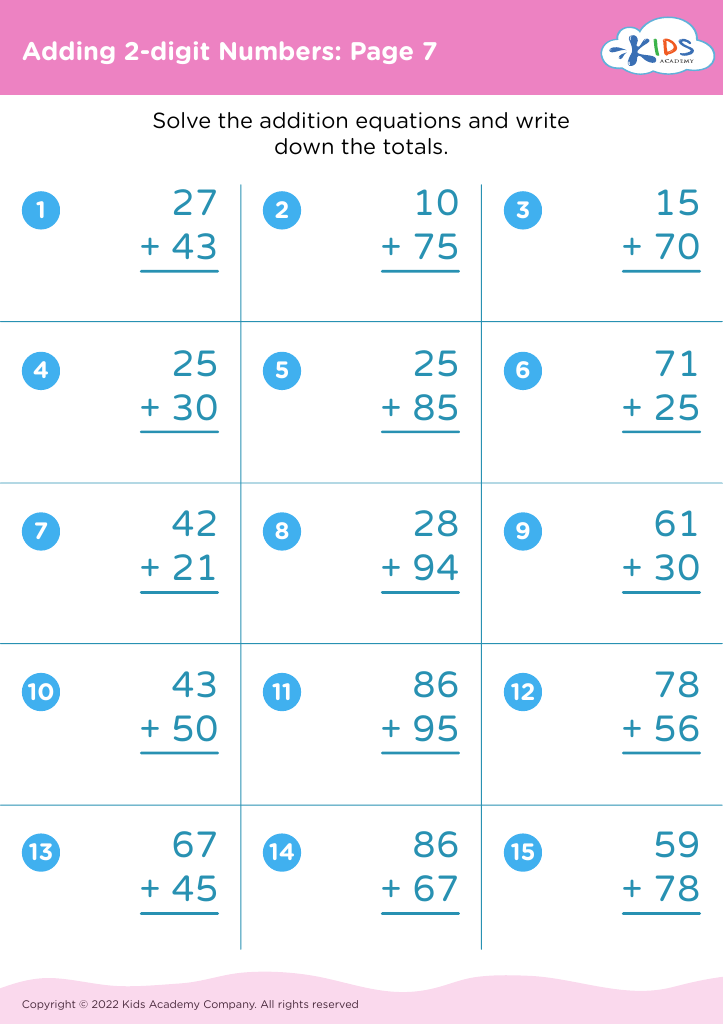
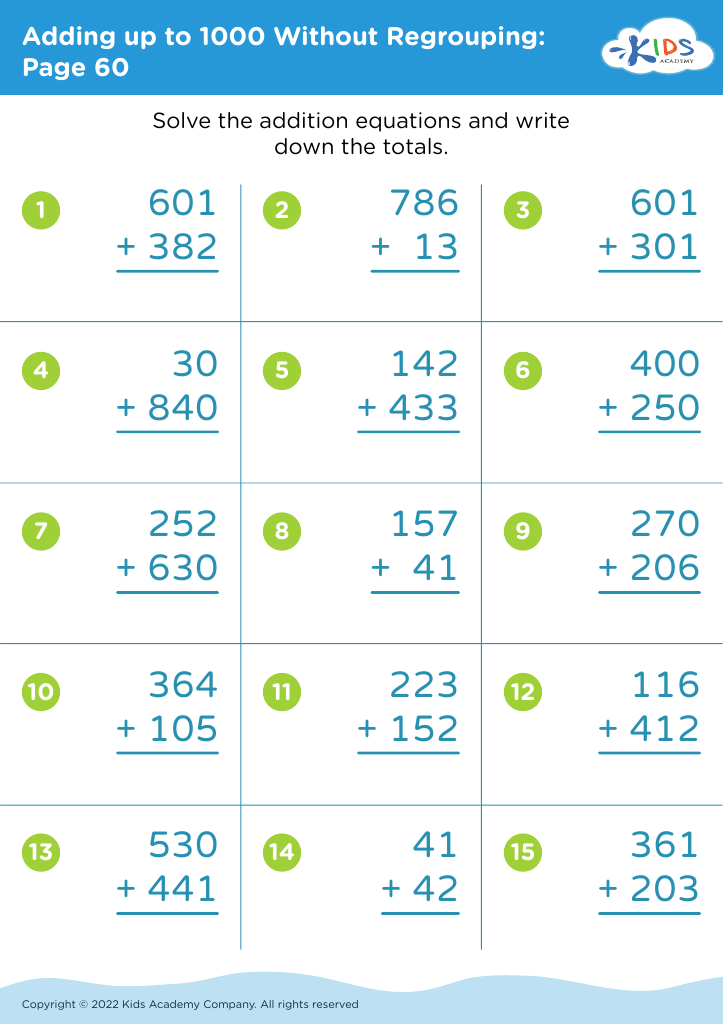
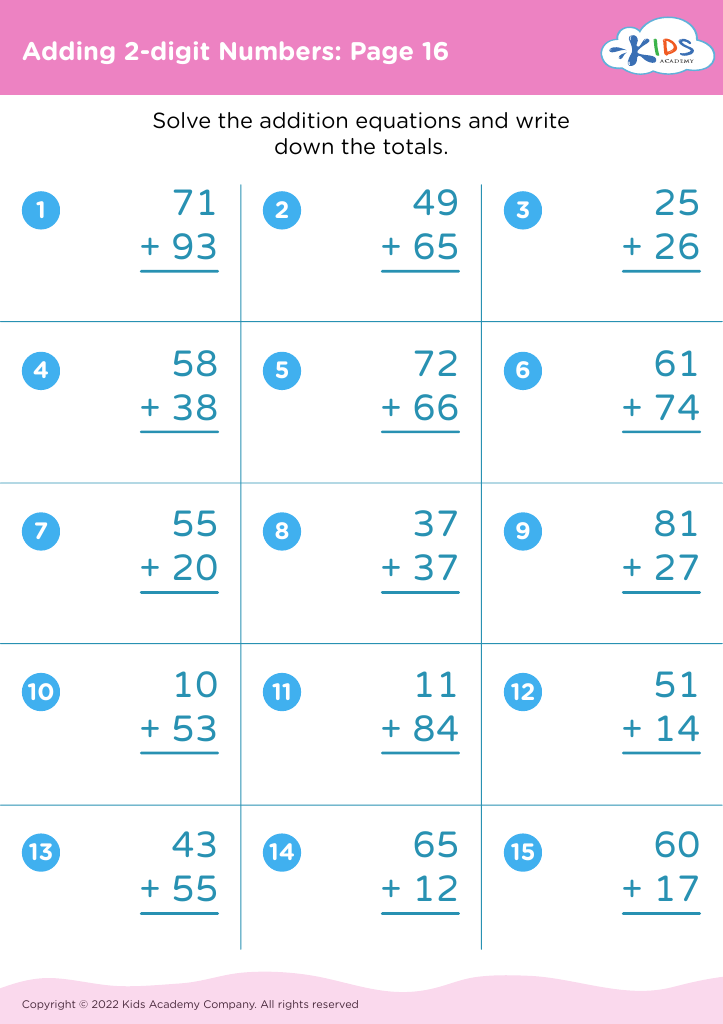
Discover our engaging Learn Addition Worksheets designed for ages 4-9, exclusively at Kids Academy. These printable worksheets make learning addition fun and interactive for young minds. Each worksheet is crafted to enhance problem-solving skills and build a strong mathematical foundation. Through colorful designs and kid-friendly problems, children will enjoy mastering basic addition, practicing their counting skills, and developing mathematical fluency. Whether at home or in the classroom, our worksheets are perfect for enhancing a child’s learning journey. Join Kids Academy to empower your child’s math skills and create a love for learning!





.jpg)
Learning addition for children aged 4-9 is crucial for several key reasons related to their cognitive and academic development. At this stage, children's brains are highly receptive to new information, making it the ideal time to introduce foundational math concepts like addition. Understanding addition prepares children for more complex mathematical operations, as it is a building block for skills such as subtraction, multiplication, and division. Early proficiency in addition can boost children's confidence in math, setting a positive tone for future learning experiences.
Moreover, addition isn't just about numbers; it helps children develop logical thinking, problem-solving skills, and the ability to follow sequential steps. These skills are essential not only for mathematics but for other subjects and everyday life tasks. When children practice addition, they learn to recognize patterns, increase their memory capacity, and enhance their ability to concentrate and focus.
For parents and teachers, fostering a child's ability to add early on is an investment in their academic success. It paves the way for higher achievement in school and can open doors to more advanced STEM fields later in life. Encouraging a love and understanding of math from an early age nurtures a child's overall intellectual development and curiosity, setting a strong foundation for lifelong learning.








