
Mathematical thinking Worksheets for Ages 4-9
7 filtered results
Difficulty Level
Grade
Age
-
From - To
Subject
Activity
Standards
Unlock your child's potential with our engaging Mathematical Thinking Worksheets for ages 4-9! Designed to foster creativity and critical problem-solving skills, these worksheets provide a variety of activities that make math enjoyable. Featuring colorful images and interactive challenges, kids will explore essential concepts like counting, number recognition, basic operations, and shapes. Tailored to meet diverse learning needs, our worksheets encourage independent learning and reinforce classroom concepts at home. Perfect for parents and educators alike, these resources can help young learners build a strong foundation in mathematics while having fun. Start your child on a path to mathematical success today!
Favorites
With answer key
Interactive
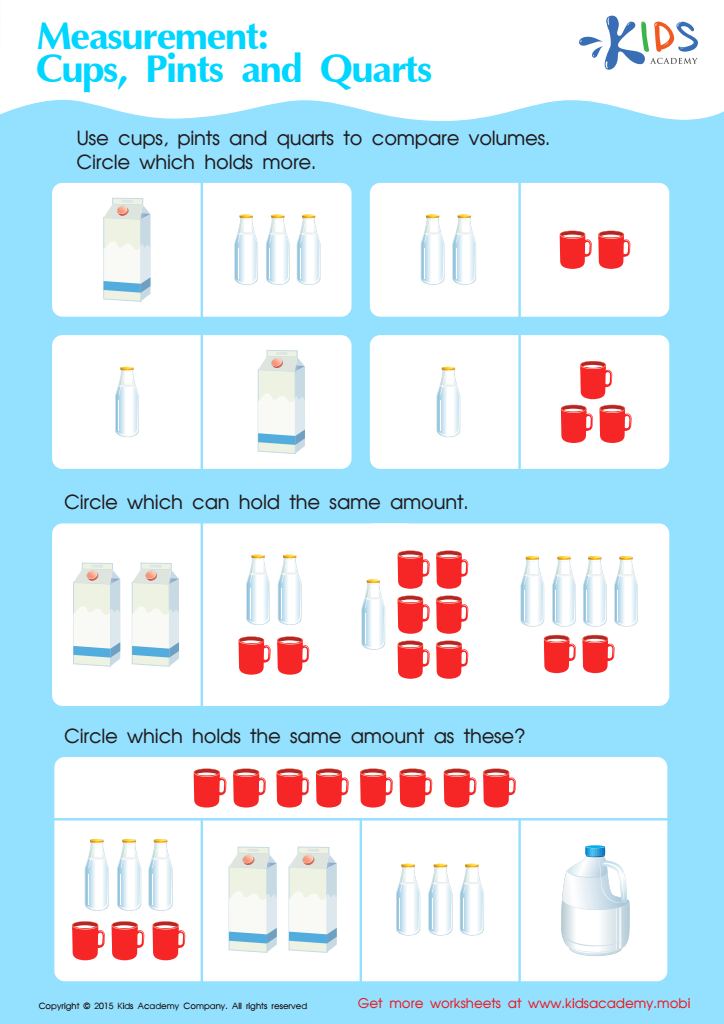
Measurement: Compare Volumes Worksheet
Compare volumes with Kids Academy and have fun! (80 words)
Practice measuring with Kids Academy and have fun! Compare volumes in pictures and circle which holds more. Keep learning with free math worksheets available on our website. Enjoy the process and have fun!
 Assign to My Students
Measurement: Compare Volumes Worksheet
Worksheet
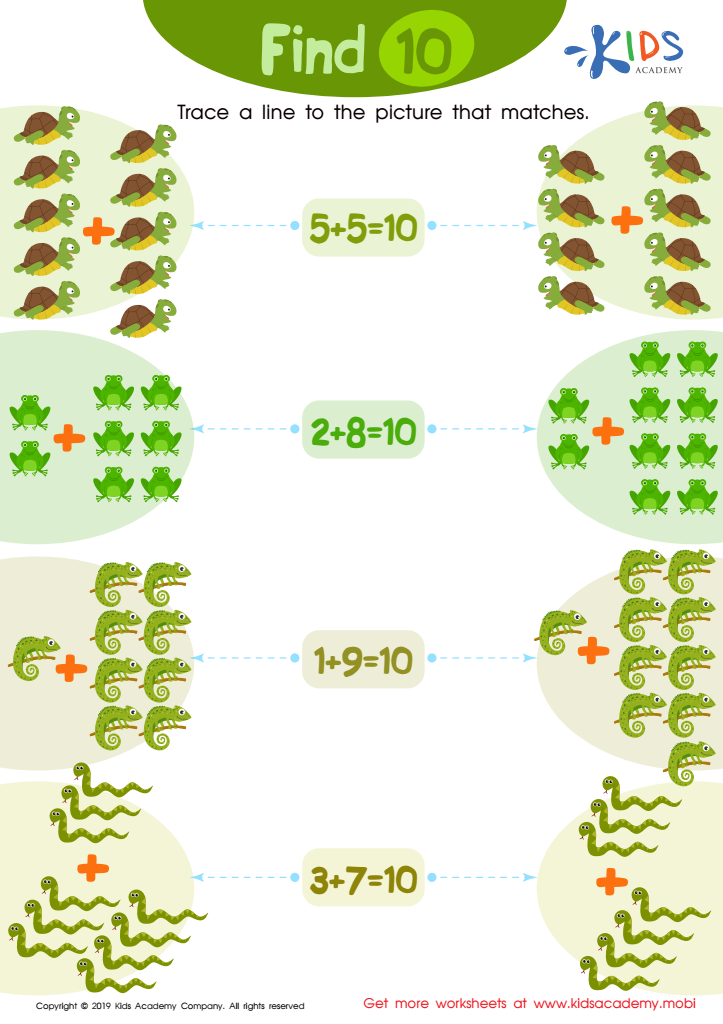
Find 10 Worksheet
Counting can be tricky, but your kids can master it with regular practice. Here's a fun activity to help: count the animals, then trace a line to the pictures that matches. With these tips, math will be an easy walk in the park.
Find 10 Worksheet
Worksheet
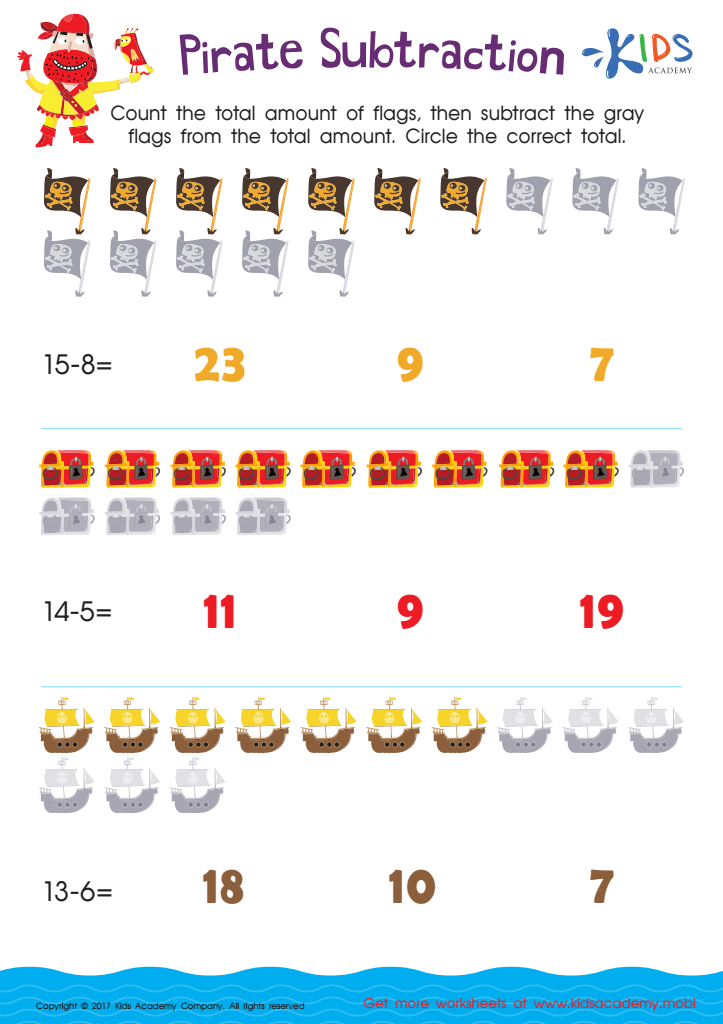
Pirate Subtraction Substraction Worksheet
Ahoy! Learn to subtract with pirate-themed math fun! This worksheet has ships and treasure chests to help your little one understand subtraction using a helpful strategy. Colorful illustrations make it a great learning experience.
Pirate Subtraction Substraction Worksheet
Worksheet
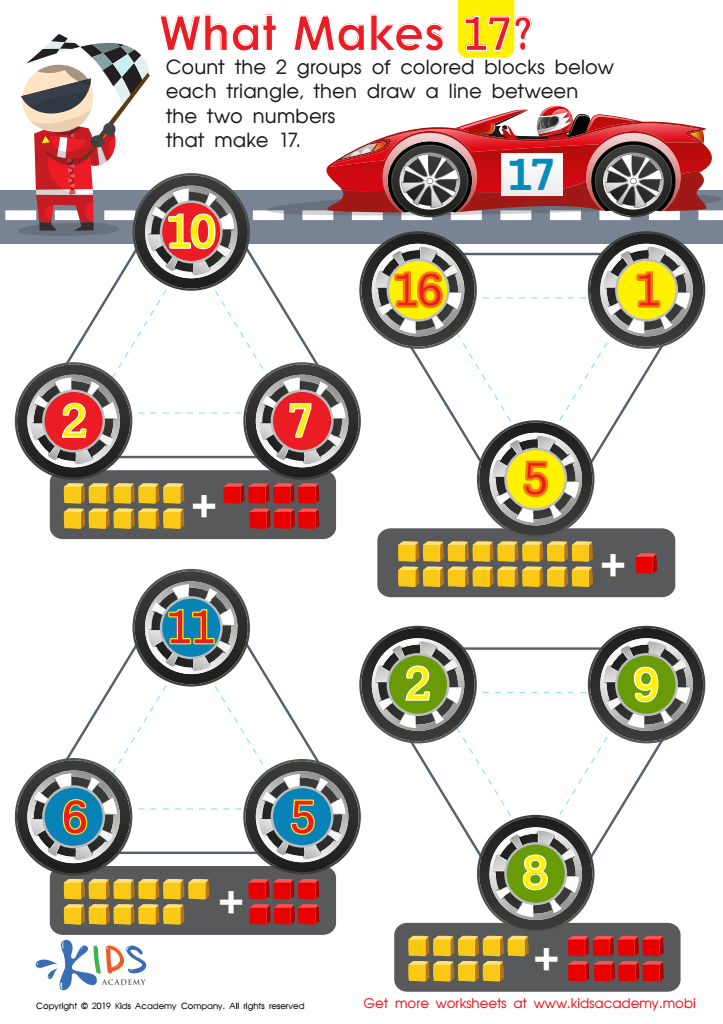
What Makes 17 Worksheet
Practice makes perfect! Let your kindergartners explore addition using this worksheet. Count the blocks in each triangle to reach the same total of 17, and draw a line between the two numbers. Once they get the hang of it, nothing will be too difficult!
What Makes 17 Worksheet
Worksheet
Join Kids Academy for Free
Who is primarily going to use this learning content?








Mathematical thinking is foundational for young learners aged 4-9, influencing their cognitive development and future academic success. During these pivotal years, children begin to grasp essential concepts like counting, number recognition, and basic operations. Developing these skills enables them to solve problems creatively and critically, fostering a mindset that thrives on exploration and understanding.
Parents and teachers should prioritize mathematical thinking because it enhances not only math skills but also social-emotional growth. Engaging in math activities nurtures perseverance, encourages collaboration, and builds confidence as children navigate challenges and discover solutions. Furthermore, strong mathematical abilities correlate with proficiency in other subjects, making it a keystone of overall education.
Additionally, instilling a positive attitude towards math early on helps reduce anxiety and phobias associated with the subject later in life. By intertwining math with everyday experiences through play, stories, and practical activities, parents and teachers can spark enthusiasm for learning. Emphasizing the relevance of mathematical thinking not only prepares children for higher-level concepts but also empowers them to be critical thinkers, capable of making informed decisions in their daily lives. Thus, the encouragement of mathematical thinking at a young age lays the groundwork for future learning and problem-solving skills.








