Nature appreciation Worksheets for Ages 4-9
6 filtered results
-
From - To
Explore the wonders of the natural world with our Nature Appreciation Worksheets for ages 4-9! Specially designed for curious young minds, these engaging worksheets encourage kids to observe, learn about, and appreciate nature. Activities include fun games, creative arts, exciting puzzles, and educational exercises that cover a variety of topics related to the environment, animals, and plants. Perfect for early learners, our resources foster a love for nature while boosting critical thinking and environmental awareness. Make outdoor learning an adventure with our beautifully crafted worksheets, and watch your child's appreciation for our planet blossom!
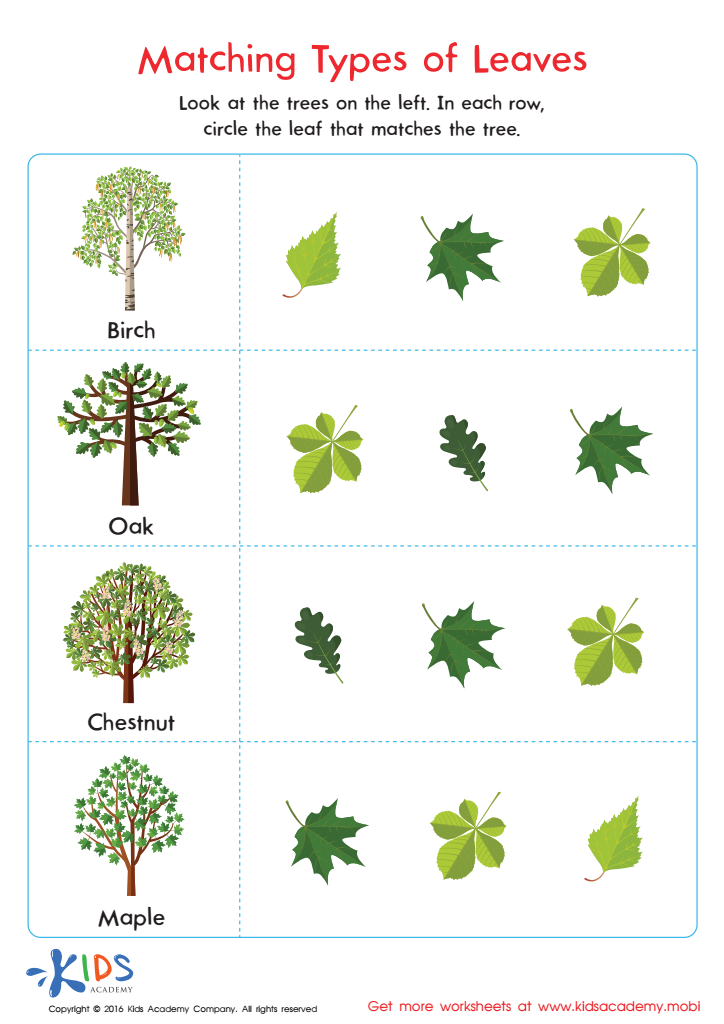
Matching Types of Leaves Printable
 Assign to My Students








Nature appreciation for children aged 4-9 is crucial for several reasons. Firstly, spending time in nature fosters physical health. Outdoor activities like hiking, playing, or even observing insects and plants promote physical activity, which is essential for gross motor skills development and overall well-being.
Secondly, nature encourages curiosity and learning. Kids who explore natural environments, whether parks, gardens, or forests, engage all their senses. They develop observational skills by asking questions about what they see, smell, hear, and touch. This can kickstart an enduring love for science and environmental stewardship.
Thirdly, nature exposure benefits mental health. Natural settings offer a calming effect, reducing stress and promoting mindfulness. Children in these environments often exhibit improved concentration and creativity, benefits that translate to better performance in other learning contexts.
Additionally, teaching kids to appreciate nature nurtures empathy and respect for living things. Understanding ecosystems and the interdependence of life forms can instill a sense of responsibility for the environment, encouraging sustainable habits from a young age.
Lastly, these early interactions with nature lay the groundwork for future attitudes and behaviors. Fostered early, a deep appreciation for the outdoors becomes a lifelong value, guiding healthier, more ecologically mindful choices as they grow. By valuing nature, we develop balanced, well-rounded individuals who cherish and protect our planet.








