Number comparison skills Worksheets for Ages 4-9
3 filtered results
-
From - To
Discover our engaging "Number Comparison Skills Worksheets" designed for children aged 4 to 9! These worksheets help young learners develop essential math skills by comparing quantities, identifying greater and lesser numbers, and understanding equal values. Featuring vibrant illustrations and interactive activities, our resources make learning fun and accessible. Perfect for both classroom and home use, these worksheets encourage critical thinking and foster a love for mathematics. Whether your child is just starting with numbers or looking to refine their skills, our collection caters to all levels. Boost your child’s confidence in math and watch them excel with our tailored worksheets!
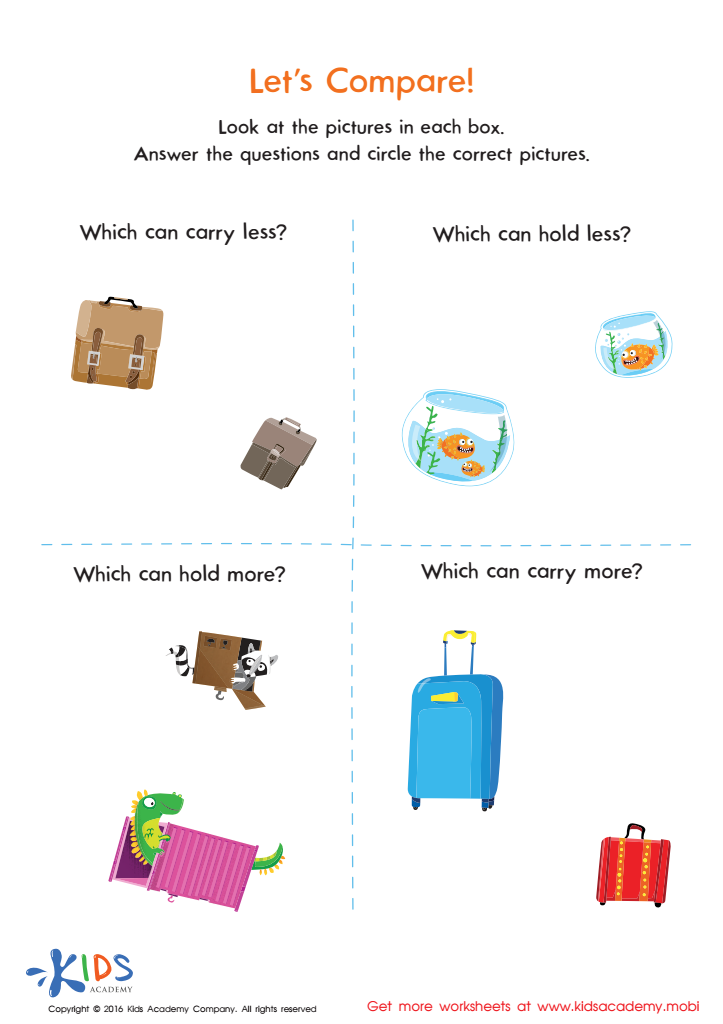
Let's Compare Worksheet: Big or Small
 Assign to My Students
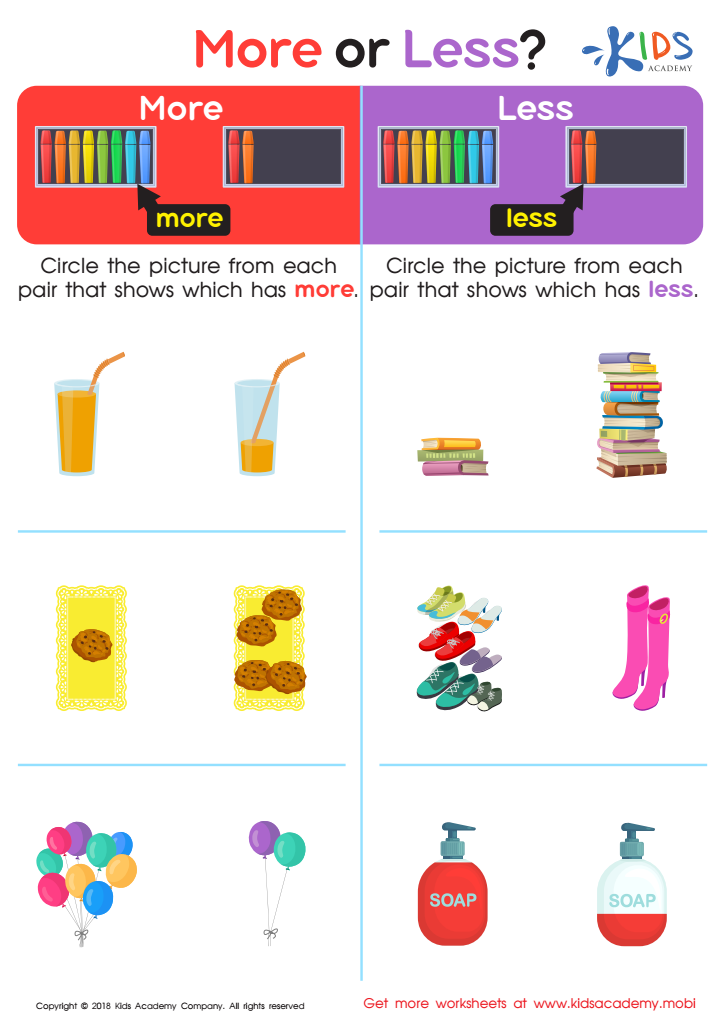
More or Less? Worksheet
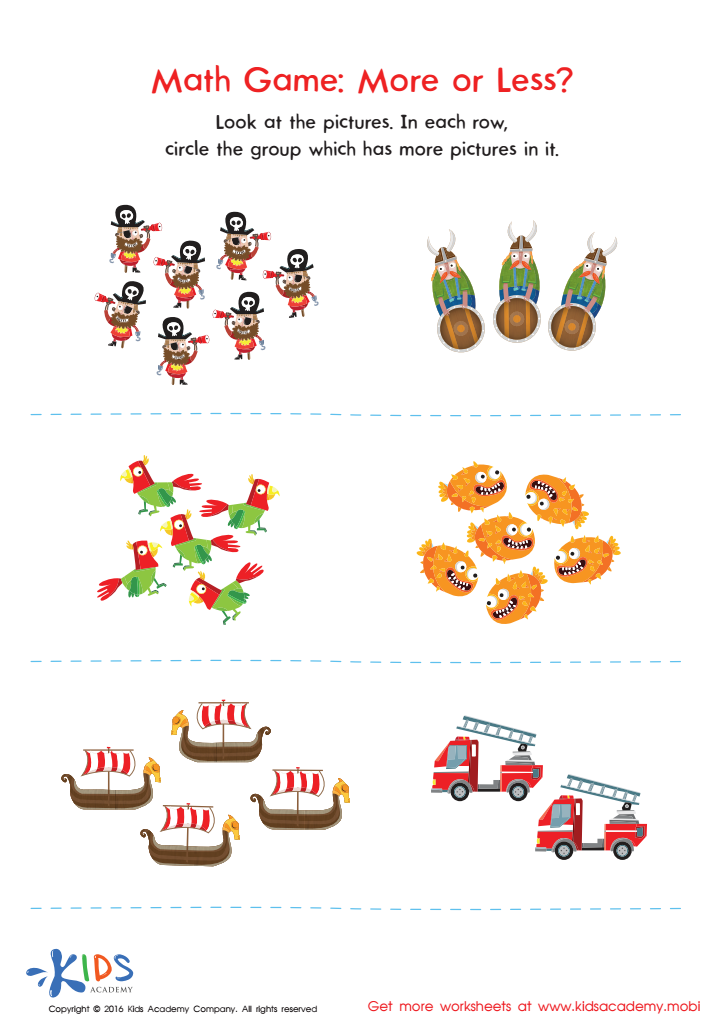
More or Less Worksheet








Number comparison skills are crucial for children aged 4-9 because they form the foundation for early mathematics learning and cognitive development. Mastering these skills helps children understand the concept of quantity, which is vital for later mathematical operations such as addition and subtraction. When children learn to compare numbers, they not only develop an appreciation for numerical value but also enhance their critical thinking and problem-solving abilities.
Additionally, strong number comparison skills contribute to children's confidence in math. When students feel competent in understanding which numbers are larger or smaller, it fosters a positive attitude toward math, reducing math anxiety and encouraging engagement. This confidence is essential for tackling more complex mathematical concepts in later grades.
Parents and teachers play a key role in building these skills through activities that promote reasoning and comparison. Simple games, visual aids, and everyday conversations about numbers can create a rich learning environment. These strategies can effectively support children's ability to recognize patterns, engage in logical reasoning, and develop a broader understanding of math.
In summary, number comparison skills are foundational for mathematical success, foster critical thinking, and build confidence—making them essential areas of focus for parents and teachers during these formative years.








