Plant identification Worksheets for Ages 4-9
5 filtered results
-
From - To
Discover the exciting world of nature with our "Plant Identification Worksheets for Ages 4-9"! Designed to engage young learners, these worksheets help children explore various plants, from flowers to trees. Each activity promotes observation skills and fun facts about plants, enhancing kids' appreciation for the environment. With colorful images and easy-to-follow instructions, these worksheets make plant identification enjoyable and interactive. Perfect for parents and educators, our resources support early science education while fostering curiosity about the natural world. Download these printable worksheets today to inspire a lifetime love for botany in your little explorers!
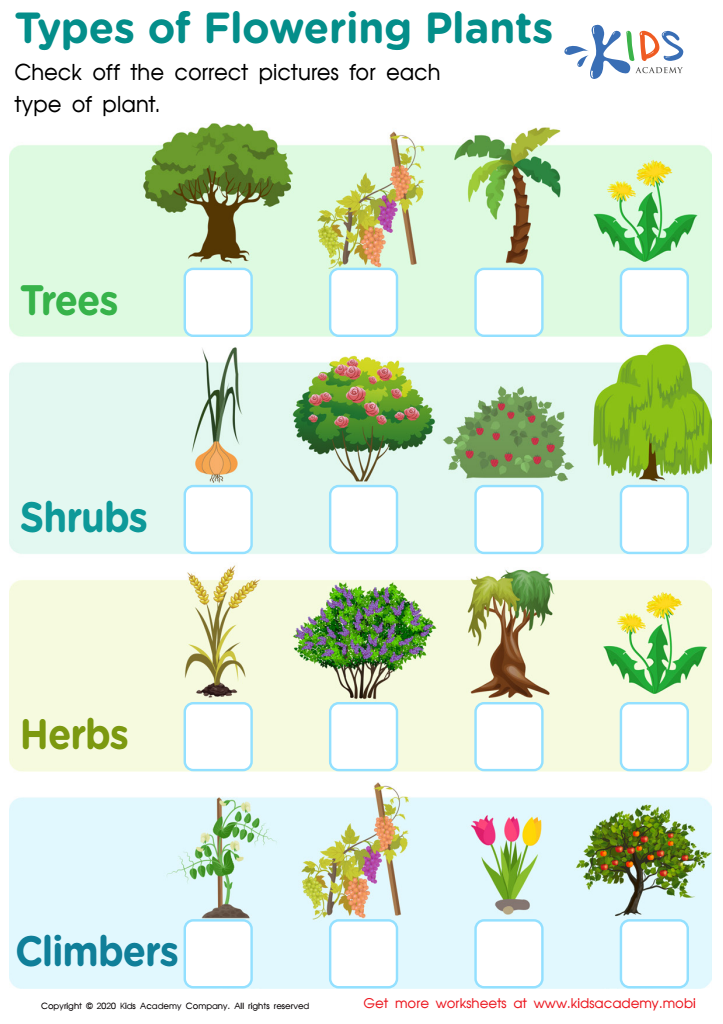
Types of Flowering Plants Worksheet
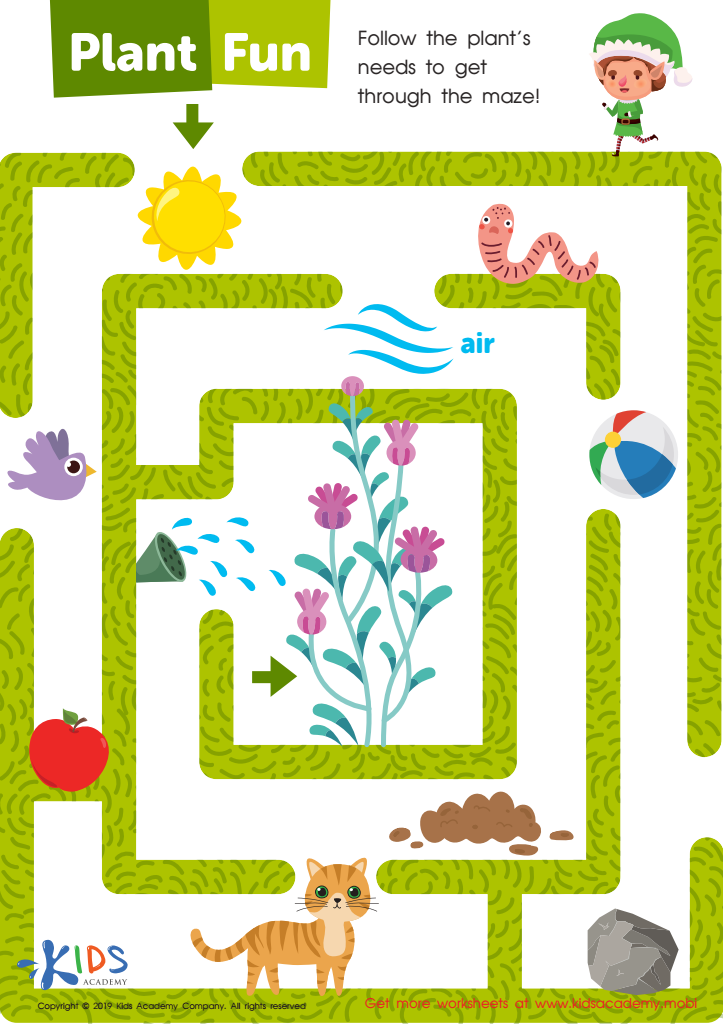
Plant Fun Worksheet
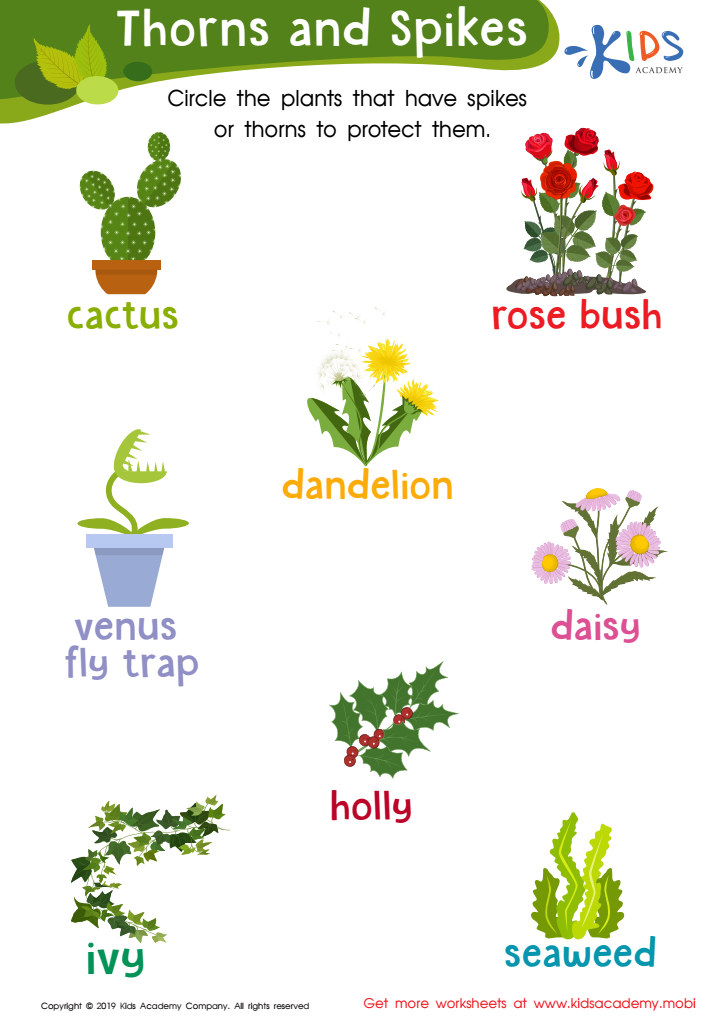
Thorns and Spikes Worksheet
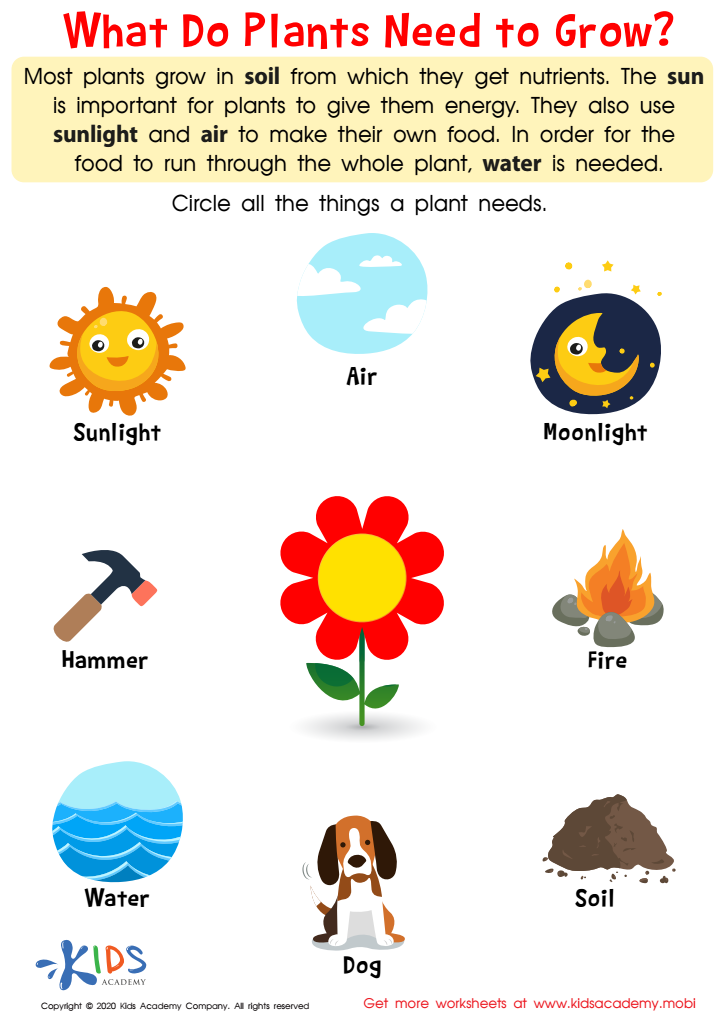
What Do Plants Need to Grow Worksheet
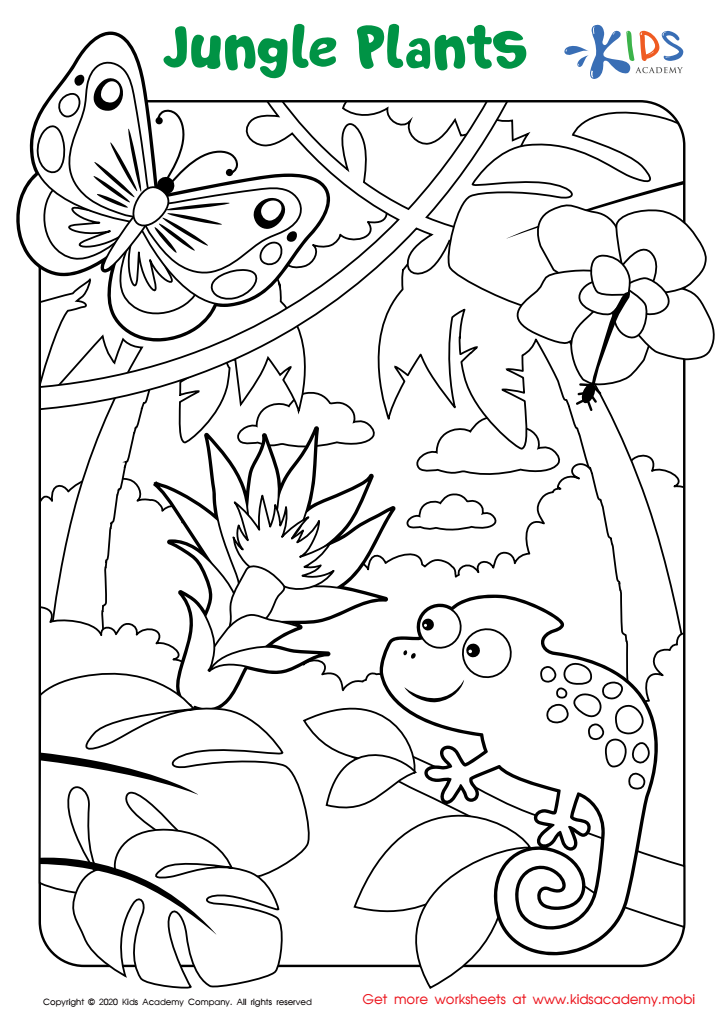
Jungle Plants Worksheet
 Assign to My Students




.jpg)
.jpg)


Plant identification is crucial for children aged 4-9 for several reasons. First, it fosters a connection with nature, helping children develop an appreciation for the environment and its biodiversity. Recognizing different plants enhances their observational skills, as children learn to notice details, colors, shapes, and textures. This foundation supports critical thinking and inquiry-based learning, which are integral parts of early education.
Second, plant identification is linked to health and nutrition. Understanding which plants are edible, poisonous, or medicinal will aid children in developing healthy eating habits—encouraging them to consume a wider range of fruits and vegetables. Educating them about local flora also promotes safety and environmental awareness.
Furthermore, plant identification can serve as an engaging and interactive activity that enhances learning through play. Activities like scavenger hunts, gardening, or simply exploring local parks make learning fun while promoting teamwork and social skills.
By cultivating an interest in plants, parents and teachers equip children with knowledge that enhances their curiosity and respect for the natural world. This early education lays the groundwork for environmentally responsible behavior as they grow, ensuring they understand the importance of preserving ecosystems for future generations.








