
Prefix understanding Worksheets for Ages 4-9
3 filtered results
Difficulty Level
Grade
Age
-
From - To
Subject
Activity
Standards
Discover our engaging Prefix Understanding Worksheets designed specifically for children ages 4-9! These expertly crafted resources help young learners explore and master prefixes, enhancing their vocabulary and reading skills. Through fun activities and exercises, kids will learn how prefixes alter word meanings and build foundational language skills. Our worksheets are colorful, interactive, and suitable for various learning styles, making them perfect for classrooms or home study. Foster a love for language in your child while boosting their confidence in reading and writing. Explore our collection today and watch your child’s understanding of prefixes grow!
Favorites
With answer key
Interactive
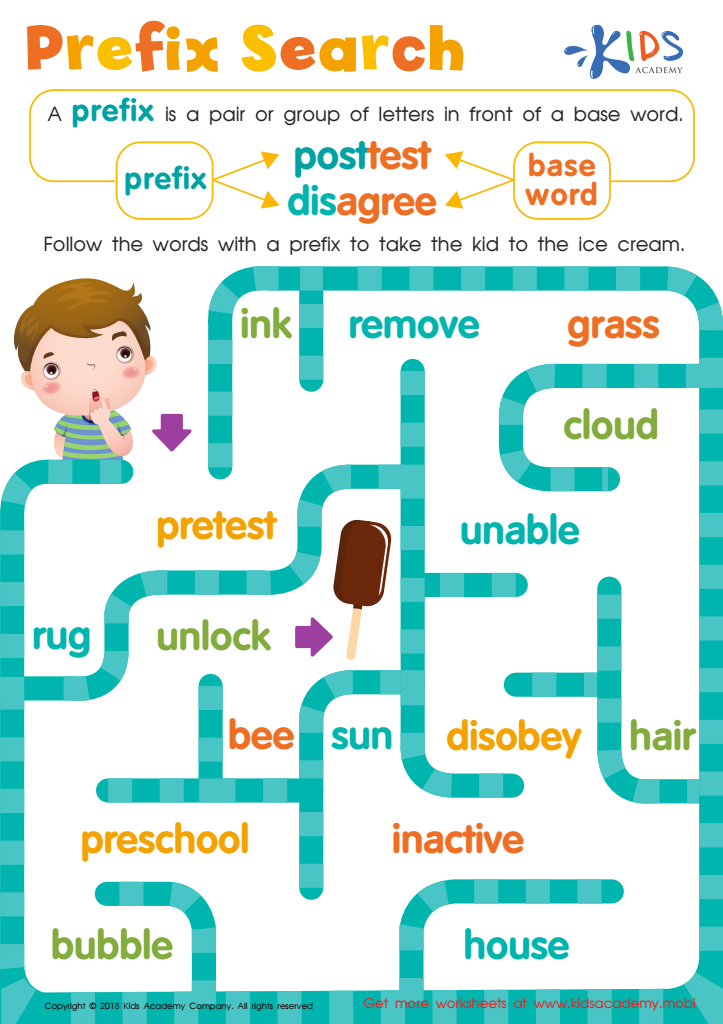
Reading: Prefix Search Worksheet
Maze your way through prefixes! This worksheet helps students practice reading new words with a prefix and figuring out the base word. An understanding of prefixes gives students the skills to comprehend new words. A fun and useful activity for the reading classroom!
 Assign to My Students
Reading: Prefix Search Worksheet
Worksheet
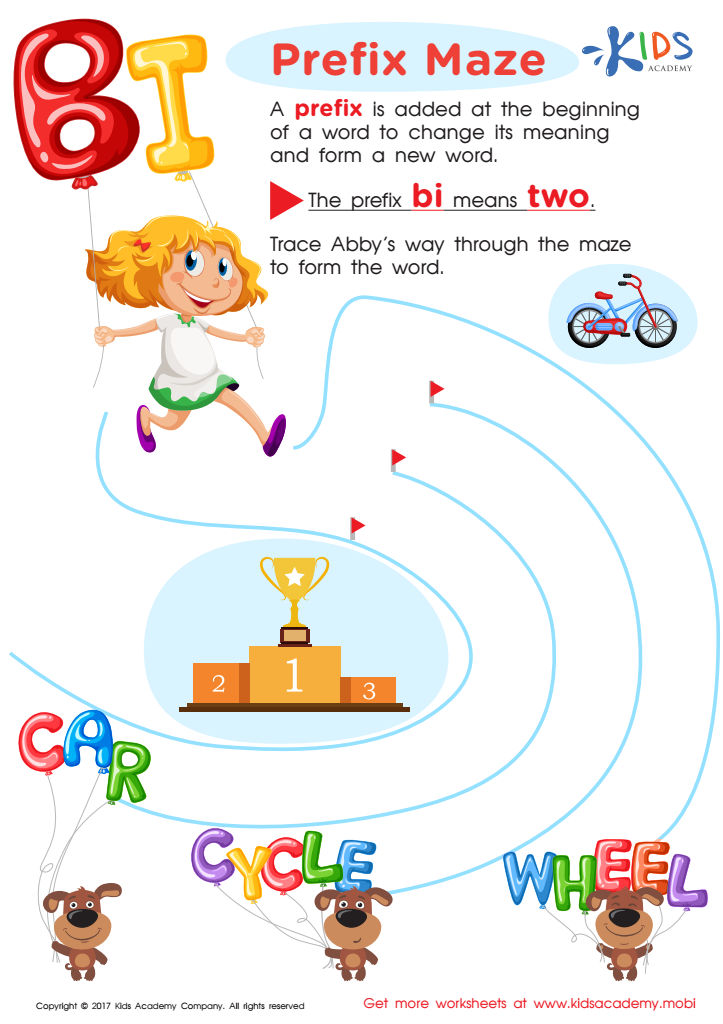
Prefix Bi Words Worksheet
Help "bi" find its root word in this fun and colorful prefix worksheet! Your child will learn how words are built while having a great time!
Prefix Bi Words Worksheet
Worksheet
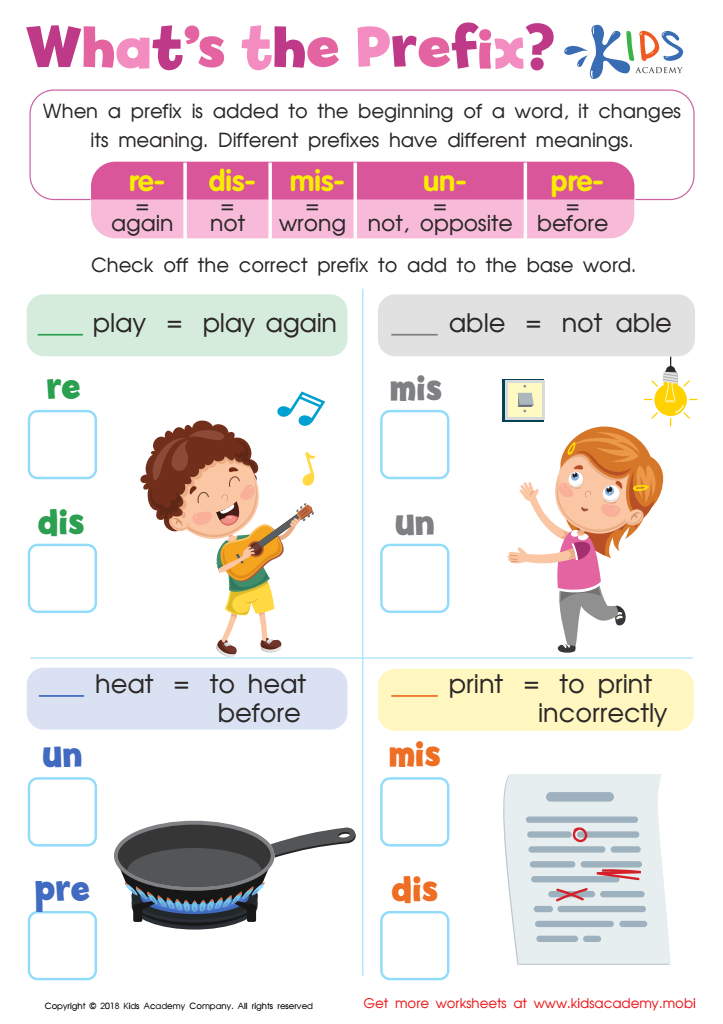
Reading: What Is the Prefix Worksheet
This worksheet helps children learn about prefixes by matching pictures and base words with the correct prefix. Learning these prefixes and their meanings is essential for reading and vocabulary comprehension. Use this free download to check your students' understanding.
Reading: What Is the Prefix Worksheet
Worksheet
Join Kids Academy for Free
Who is primarily going to use this learning content?


.jpg)
.jpg)




Understanding prefixes is crucial for children aged 4-9 as it lays the groundwork for vocabulary development and reading comprehension. Prefixes, which are added to the beginning of words to alter their meanings, encourage children to think critically about language. By learning common prefixes like “un-,” “re-,” and “pre-,” children expand their word recognition and decoding skills, which are foundational for reading fluency.
For parents and teachers, focusing on prefixes can facilitate meaningful conversations about word meaning, promoting an engaging learning experience. When children grasp the concept that prefixes can change meanings—such as understanding "happy" versus "unhappy"—it enhances their ability to infer meanings and strengthens their linguistic abilities. This not only boosts vocabulary but also encourages independent reading, as children may feel more confident tackling unfamiliar words.
Moreover, building a strong foundation in language arts improves overall academic performance. Exposure to prefixes can enhance critical thinking and analytical skills, essential for problem-solving in different contexts. Therefore, prioritizing prefix understanding in early education fosters essential literacy skills, making it imperative for both parents and teachers to support this learning journey. Encouraging play, exploration, and discussion around prefixes at this age can have lasting benefits throughout a child’s educational path.








