
Punctuation understanding Worksheets for Ages 4-9
6 filtered results
Difficulty Level
Grade
Age
-
From - To
Subject
Activity
Standards
Explore our engaging Punctuation Understanding Worksheets designed for children aged 4-9! These worksheets are crafted to help young learners grasp the fundamentals of punctuation, including periods, commas, question marks, and exclamation points. Fun and colorful activities encourage children to recognize and use punctuation correctly in sentences, enhancing their reading and writing skills. Each worksheet is age-appropriate and aims to foster a love for language while building confidence. Perfect for homeschoolers or classroom settings, these resources offer a variety of exercises that make learning punctuation enjoyable and effective. Start your child’s journey towards punctuation mastery today with our thoughtfully created worksheets!
Favorites
With answer key
Interactive
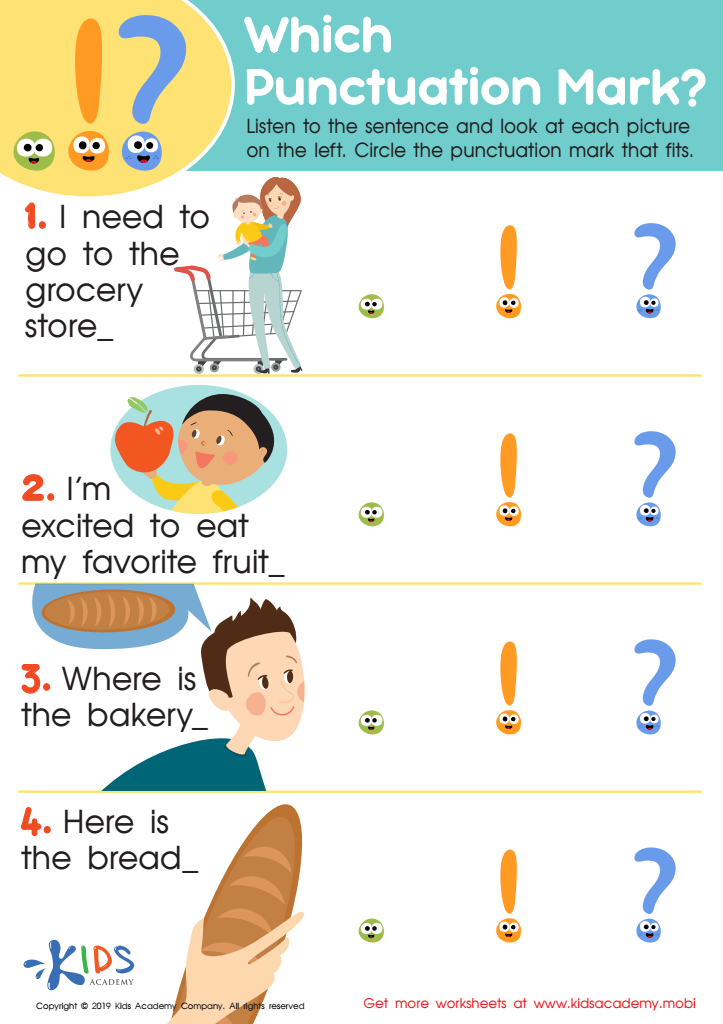
Which Punctuation Mark Worksheet
Punctuation marks are essential for expressing what we say. This worksheet asks your kindergarten student to circle the correct punctuation mark for each sentence. Read each sentence aloud and help them identify the expression needed. A picture accompanies each sentence. Enjoy! (79 words)
 Assign to My Students
Which Punctuation Mark Worksheet
Worksheet
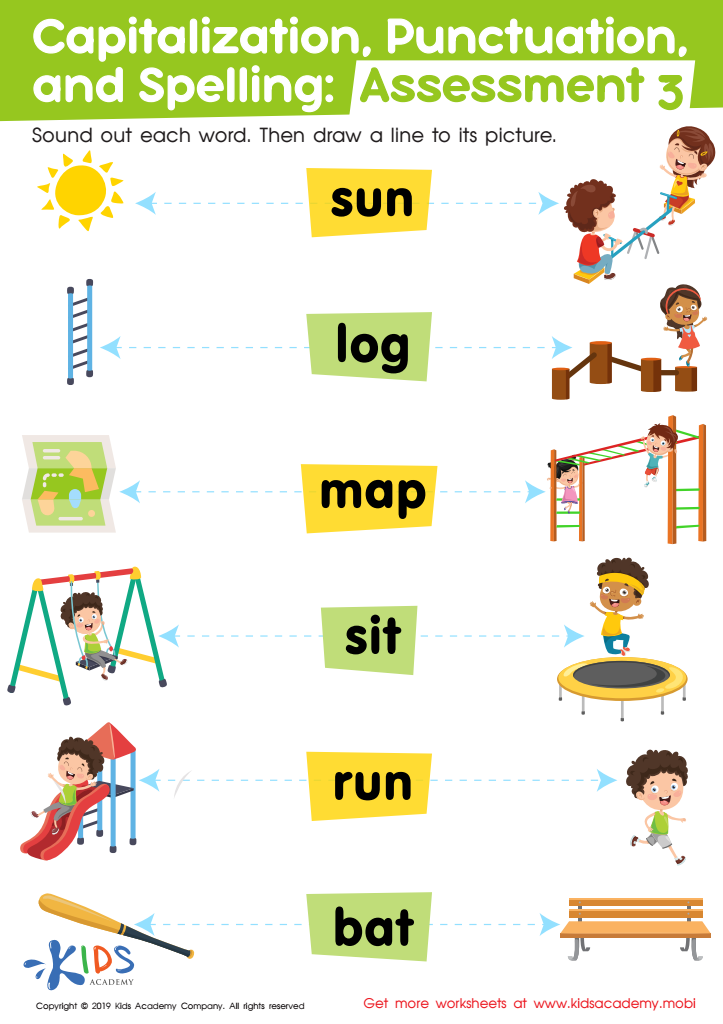
Capitalization. Punctuation. Spelling. Assessment 3 Worksheet
Before starting this worksheet, have your kids spell some simple words. Correct if wrong and show the right spellings. Then, ask them to link the pictures to the words you read out. Spelling is key for a good writer, and kids need to know how to spell to read texts easily.
Capitalization. Punctuation. Spelling. Assessment 3 Worksheet
Worksheet
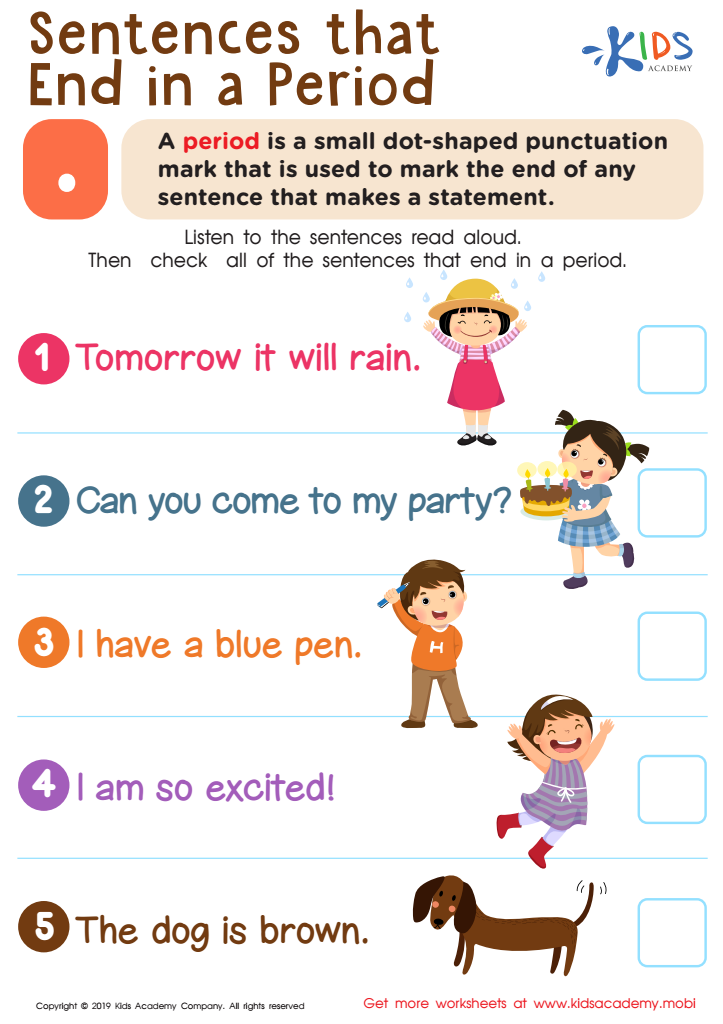
Sentences That End in a Period Worksheet
Before beginning, ask your kids if they know what punctuation marks are and can name a few. Common examples are the period (a small dot-shaped mark at the end of sentences), comma, question mark, and exclamation mark. Help practice their use with questions in the worksheet.
Sentences That End in a Period Worksheet
Worksheet
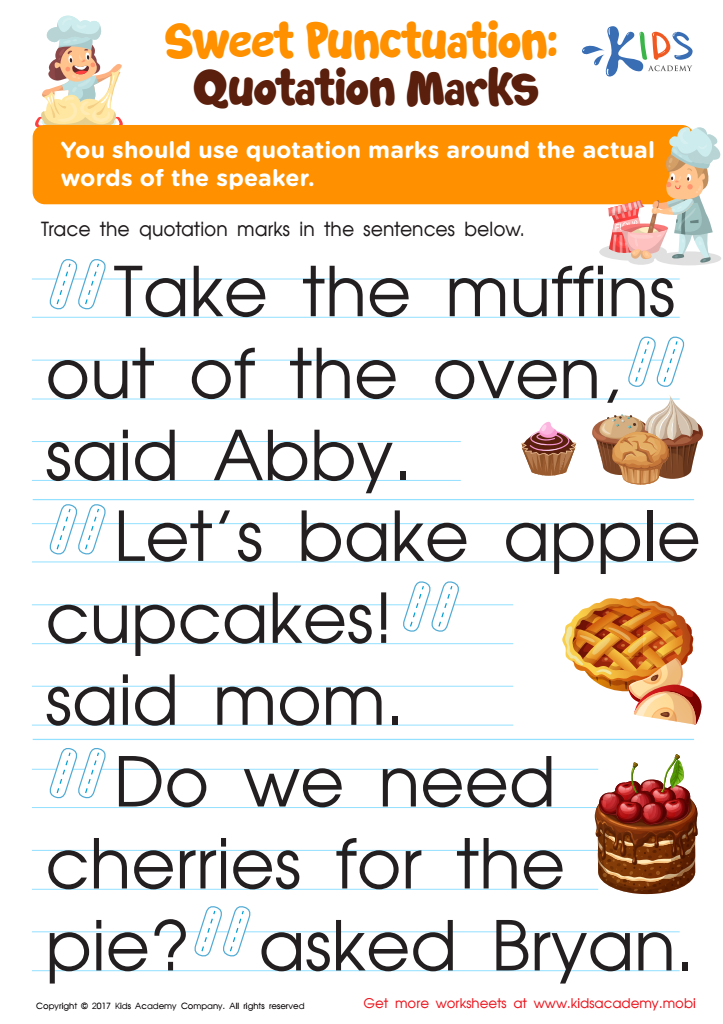
Commas and Quotation Marks Worksheet
This 3rd grade quotation marks worksheet introduces kids to using quotation marks in dialogue. Kids trace the quotation marks around each character's dialogue, learning to punctuate dialogue accurately.
Commas and Quotation Marks Worksheet
Worksheet
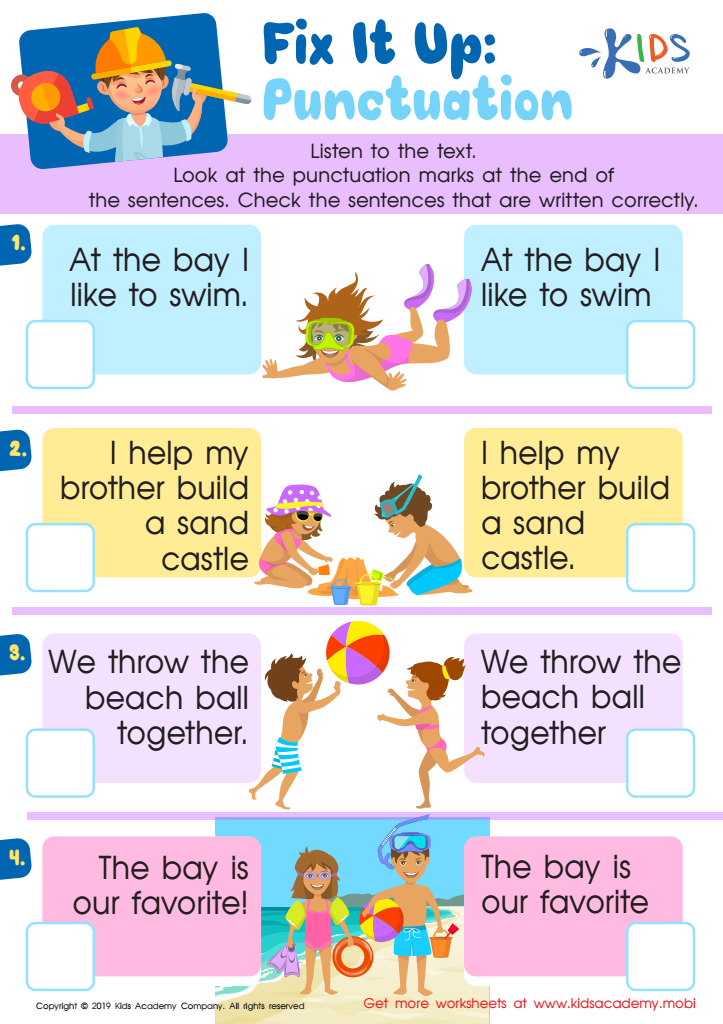
Fix Punctuation Worksheet
Have your kids tell you which punctuation marks they know before using this colorful worksheet. Read the sentences together and ask them to identify which are correctly punctuated. Guide them to check their answers. This simple activity helps teach kids to use punctuation correctly.
Fix Punctuation Worksheet
Worksheet
Join Kids Academy for Free
Who is primarily going to use this learning content?







Punctuation plays a crucial role in early literacy development for children ages 4 to 9, acting as a foundational tool that enhances their reading and writing skills. Understanding punctuation helps kids grasp the pauses, emphasis, and structure within sentences, enabling clearer communication. For instance, knowing the difference between a period and a question mark helps students convey their thoughts more effectively, transforming a basic sentence into a clear message or inquiry.
Moreover, mastering punctuation supports the development of comprehension skills. When children can identify punctuation marks, they better understand the flow and tone of a sentence, which enhances their ability to interpret texts they read. This comprehension is essential for both academic success and everyday interaction.
Parents and teachers who prioritize punctuation education encourage children's confidence as they express themselves through writing. Teaching punctuation in a fun and engaging manner fosters a love for language and literacy. Additionally, it equips children with critical thinking skills, as they learn to construct sentences that convey precise meanings. Ultimately, caring about punctuation understanding lays a strong foundation for lifelong literacy skills, enabling children to communicate effectively as they grow.








