Reading thermometers Worksheets for Ages 4-9
4 filtered results
-
From - To
Discover our engaging Reading Thermometers Worksheets designed for children aged 4-9! These interactive resources help young learners master the fundamentals of reading thermometers while developing essential skills in measurement, comparison, and critical thinking. With fun illustrations and age-appropriate activities, kids will enjoy learning about temperature in both Fahrenheit and Celsius. Our worksheets encourage hands-on practice, making learning enjoyable and effective. Perfect for home or classroom use, they support early math and science education in a playful manner. Explore our collection now and watch your child grasp reading thermometers with confidence! Ideal for educators and parents alike.
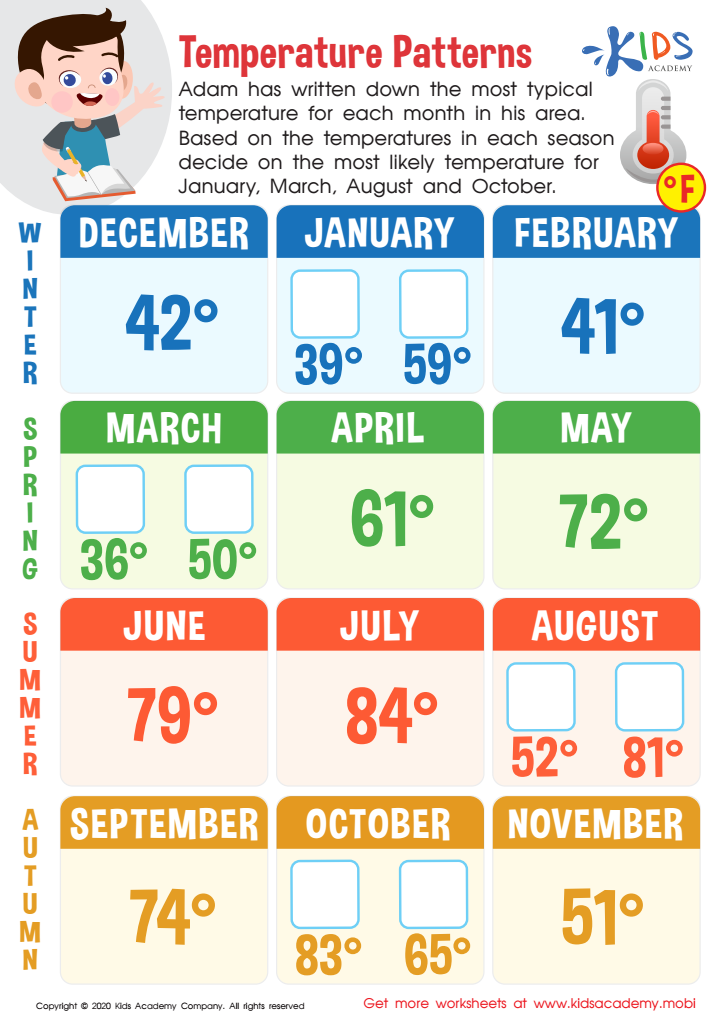
Temperature Patterns Worksheet
 Assign to My Students
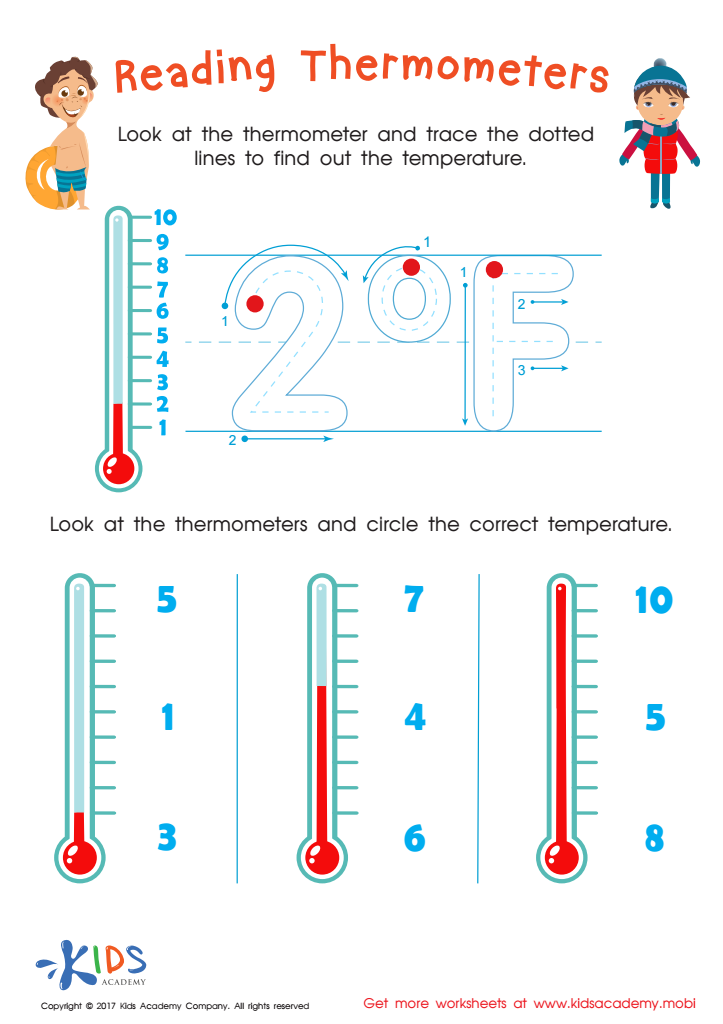
Reading Thermometers Printable
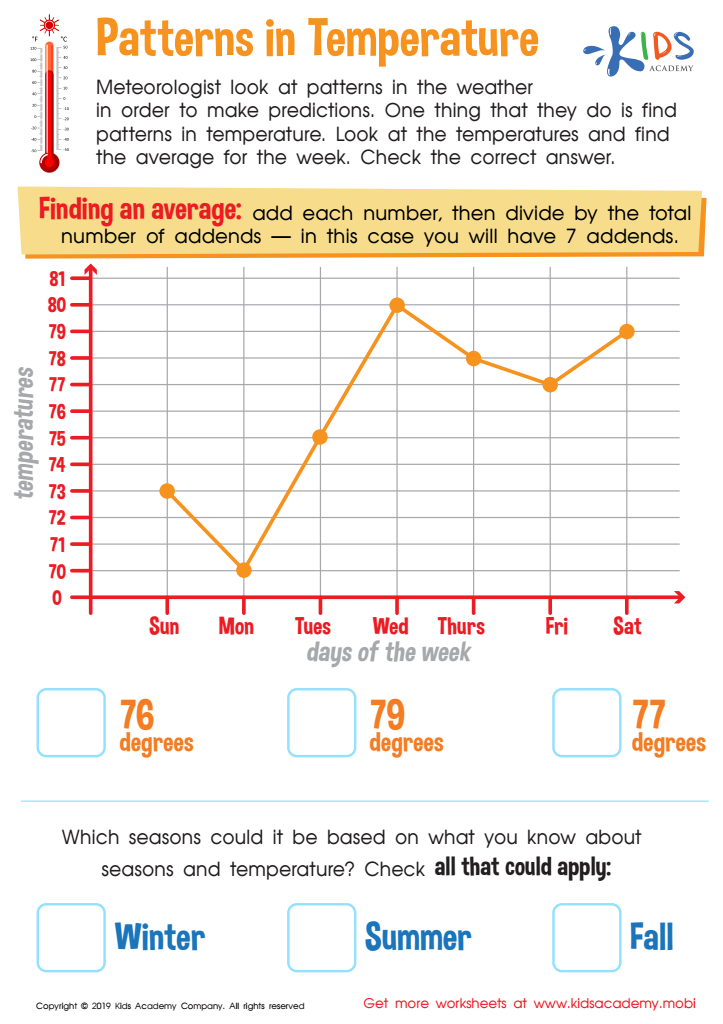
Patterns in Temperature Worksheet








Reading thermometers designed for children aged 4-9 serves as an essential tool for both parents and teachers. Understanding how to read a thermometer fosters early mathematical skills, including number recognition and basic measurement. Introducing such concepts at a young age builds a foundation for future learning in science and math.
Moreover, being able to measure temperature responsibilities cultivates safety awareness. Children learn how to monitor for fever or illness, promoting a proactive approach to health. When parents and educators equip young children with the skills to read thermometers, they empower them to understand their bodies’ signals, improving their ability to communicate basic health concerns.
Additionally, engaging children in hands-on activities involving thermometers can spur curiosity in science, sparking discussions about weather patterns or the importance of temperature in daily life, such as cooking or playing outdoors. By involving them in practical tasks, children develop critical thinking and reasoning skills.
In summary, reading thermometers not only fosters essential academic skills but also cultivates responsible and informed habits in young children, ultimately supporting their overall development and well-being. Parents and teachers play a crucial role in this learning process, making it imperative for them to prioritize such educational experiences.








