Sequencing numbers Worksheets for Ages 4-9
3 filtered results
-
From - To
Discover our engaging Sequencing Numbers Worksheets for children ages 4-9! These expertly designed worksheets help young learners build essential counting and ordering skills through fun and interactive activities. Ideal for preschoolers to early elementary students, our collection features various exercises that challenge kids to sequence numbers, recognize patterns, and develop critical thinking. Perfect for classroom or home use, our colorful worksheets promote confidence and competence in early math skills. Encourage your child’s mathematical journey and lay a strong foundation with our Sequencing Numbers Worksheets! Explore now and make learning an enjoyable adventure!
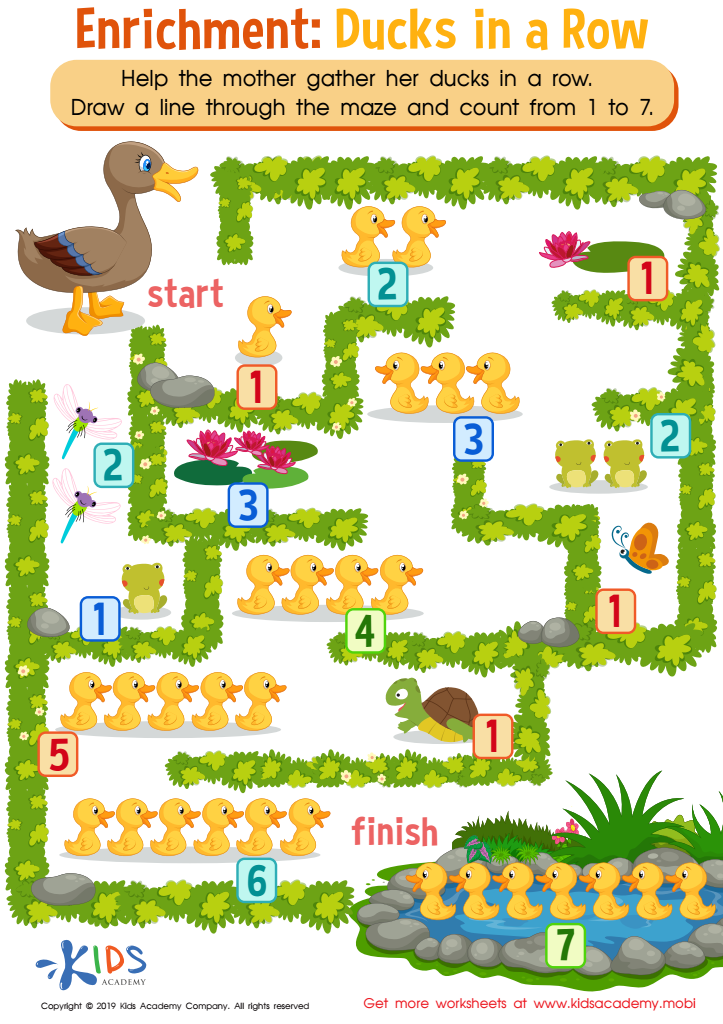
Ducks in a Row Worksheet
 Assign to My Students
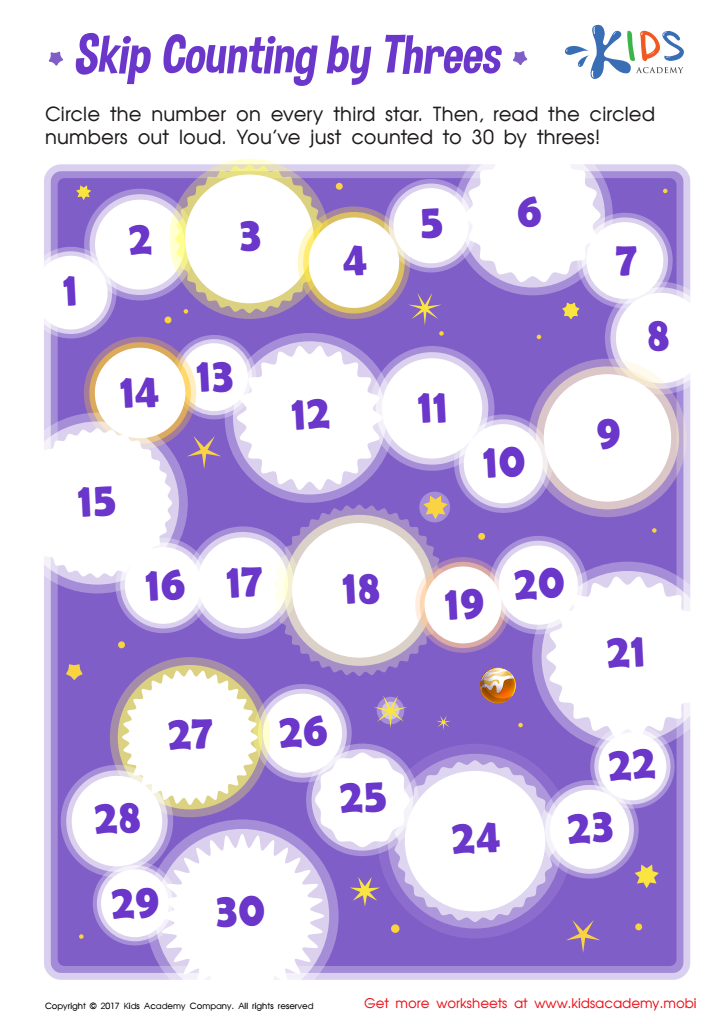
Skip Counting By Three Printable
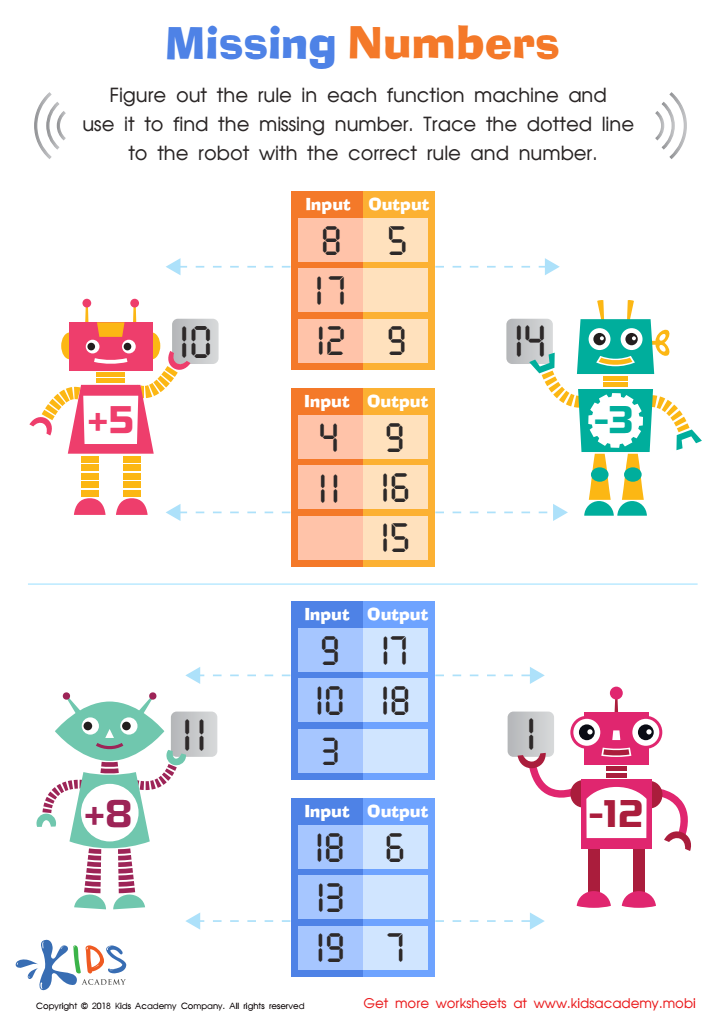
Missing Numbers Worksheet





%20(1).jpg)
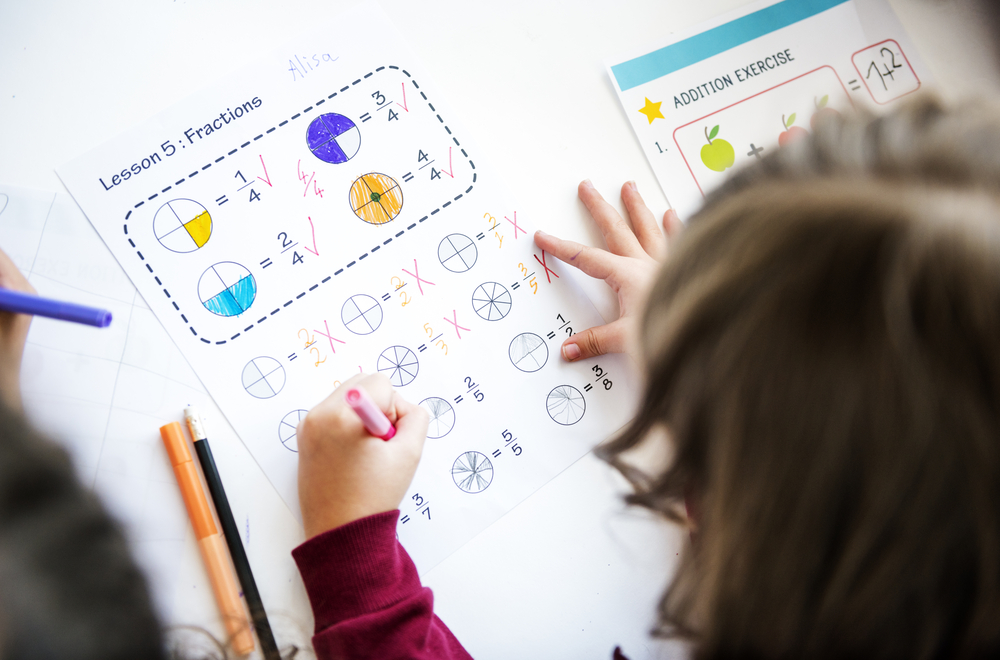

Sequencing numbers is a foundational skill that is crucial for children's mathematical development, particularly for ages 4-9. Understanding number order helps young learners grasp basic numerical concepts, which are essential for more advanced math topics they will encounter later, such as addition, subtraction, and place value.
Firstly, sequencing numbers enhances a child's ability to recognize patterns. Recognizing patterns is not only important for math but also for reading and problem-solving. For example, knowing that 7 comes after 6 and before 8 helps children predict and understand numerical constructs more intuitively.
Secondly, sequencing is tied closely to developing problem-solving skills. Number sequencing tasks often require children to think logically and critically, fostering these essential cognitive skills early on.
Additionally, this foundational understanding supports computational skills. For example, when children learn addition and subtraction, they often use number lines—a tool that relies on their apprehension of numerical sequences. These skills also underpin everyday tasks such as telling time, handling money, and following steps in a recipe, which are all functions of organizing numbers sequentially.
Without proficiency in sequencing, children may struggle with these more complex concepts, hindering their academic progression and practical life skills. Therefore, parents and teachers should prioritize number sequencing in early childhood education. It builds a critical math foundation, encourages pattern recognition, and enhances problem-solving skills, all of which are essential for future learning.








