Sorting and categorizing Worksheets for Ages 4-9
3 filtered results
-
From - To
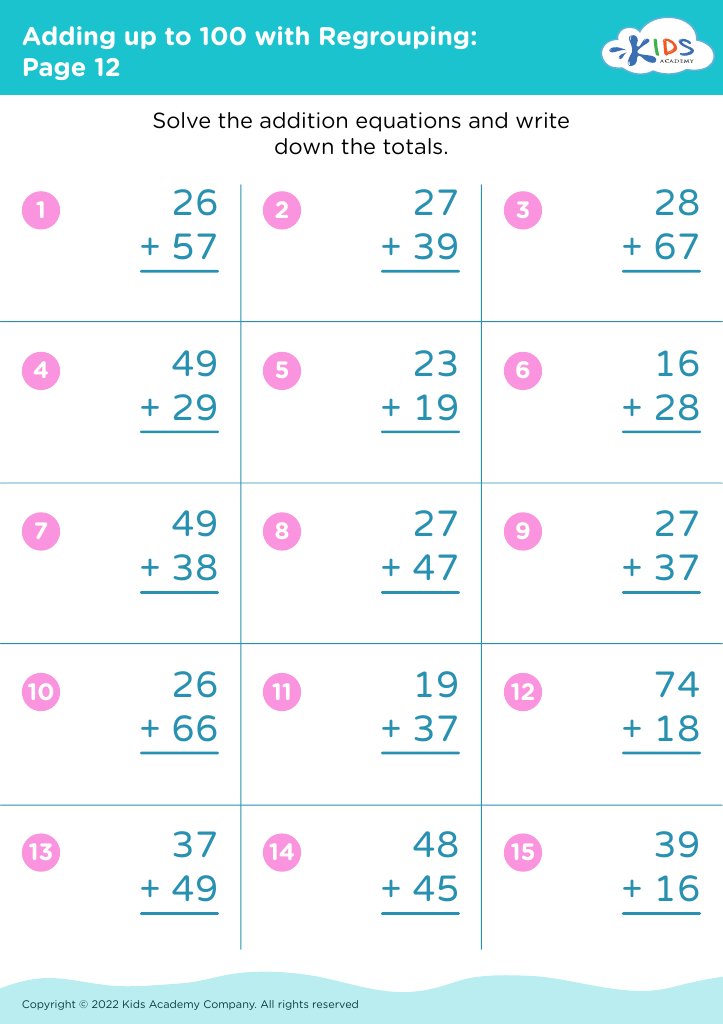
Discover our engaging Sorting and Categorizing Worksheets designed for children ages 4-9. At Kids Academy, we offer a variety of fun, educational activities that boost your child's critical thinking skills and help them recognize patterns. These worksheets focus on sorting objects by different attributes such as color, shape, size, and category, enhancing their organizational skills and logical reasoning. Perfect for preschool through early elementary students, our worksheets are crafted to make learning enjoyable and interactive. Encourage your child’s development in a playful manner with our specially curated resources. Explore now and watch them thrive!
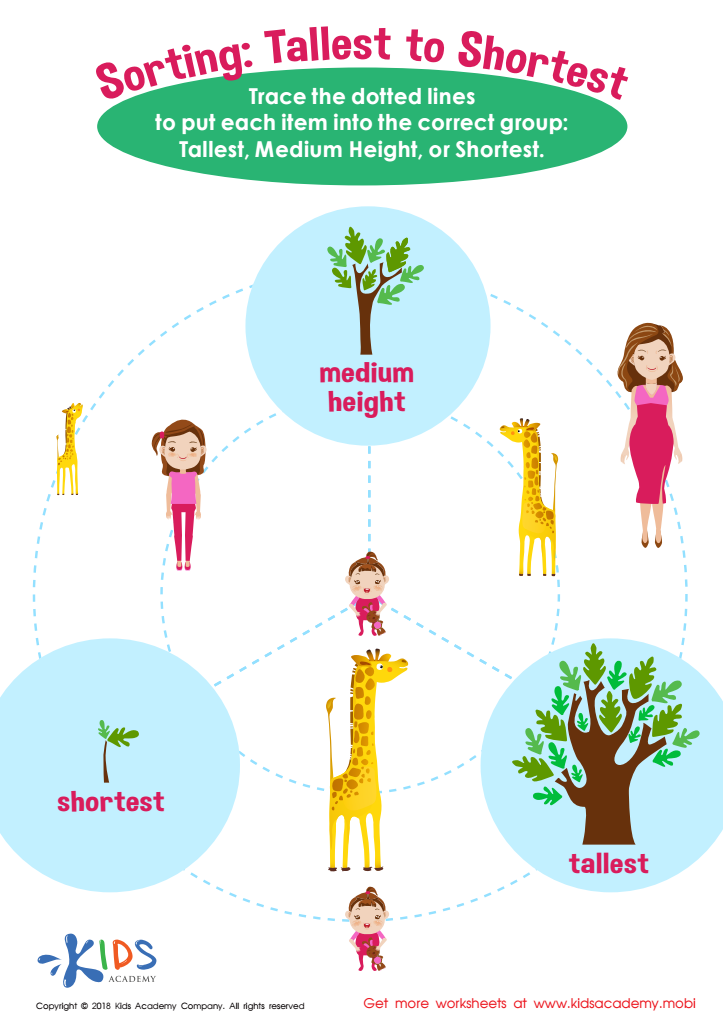
Sorting: Tallest to Shortest Worksheet
 Assign to My Students








Sorting and categorizing are foundational skills for children ages 4-9 that greatly impact their cognitive and academic development. These activities help young learners develop critical thinking and reasoning skills by encouraging them to identify similarities and differences among objects. This process reinforces essential concepts like color, shape, size, and function, integral to understanding more complex ideas in subjects such as math and science.
For parents and teachers, these tasks offer an engaging way to teach organization, a crucial skill for lifelong learning. When children sort objects, they learn how to make decisions and follow multi-step instructions, fostering their problem-solving abilities. Categorizing enhances vocabulary and language development, as children must describe and communicate their thought processes.
Moreover, sorting and categorizing build a child's confidence in their ability to make sense of the world around them. These practices lay the groundwork for early numeracy skills, aiding in the comprehension of sets, patterns, and sequencing, which are pivotal in math education.
In the social-emotional realm, organized play promotes cooperation and patience when completed in group settings. Understanding and utilizing these skills can lead to better classroom management and more focused, interactive learning experiences. For parents, recognizing their importance ensures that learning continues at home, providing a holistic environment for intellectual growth.








