Time calculation skills Worksheets for Ages 4-9
3 filtered results
-
From - To
Enhance your child's understanding of time with our engaging Time Calculation Skills Worksheets for ages 4-9! These expertly crafted worksheets are designed to develop essential time-telling proficiency, including recognizing hours, minutes, and basic time calculations. Featuring fun, age-appropriate exercises, these printable resources make learning to tell time an enjoyable experience. Perfect for home or classroom use, our worksheets promote cognitive development by integrating captivating visuals and interactive activities. Whether your child is just starting with the basics or advancing to more complex skills, these worksheets will support their journey in mastering time calculation. Explore and elevate time-learning now!
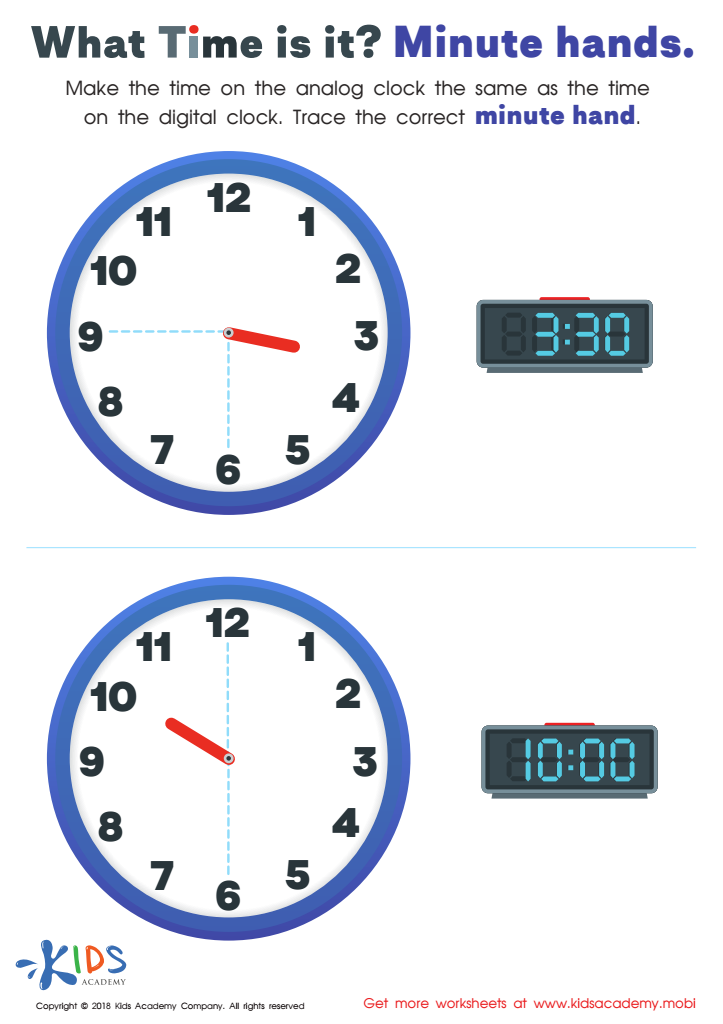
What Time Is it? Minute Hands Worksheet
 Assign to My Students
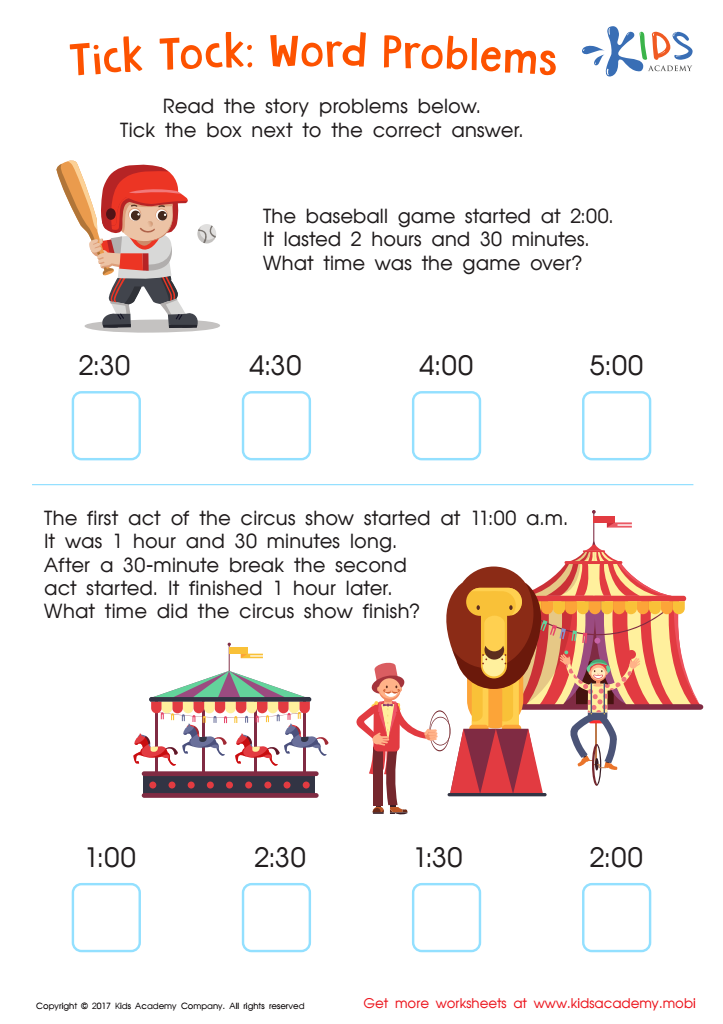
Tick Tock Word Problems Time Worksheet








Time calculation skills are crucial for children aged 4-9 because they lay the foundation for effective time management, responsibility, and independence. Understanding concepts like hours and minutes helps young children grasp the daily routine, thus transforming abstract ideas into concrete comprehension. When children learn to tell time, they can better balance various tasks like homework, play, and chores, promoting a sense of discipline and organization.
Possessing strong time calculation skills is also essential for academic success. Mathematics often incorporates problems involving time, so a solid understanding will bolster children’s overall numerical literacy. Additionally, these skills can aid in subjects beyond math, such as science and history, by enabling kids to sequence events correctly.
Socially, mastering time calculations helps children be punctual and respect the schedules of others. They begin to understand the importance of being on time for school, activities, and family gatherings. This respect for time fosters dependability and reliability, key traits that are invaluable as they grow older.
Parents and teachers play a critical role in nurturing these skills through practical exercises and everyday activities. Simple practices like setting timers or discussing the day's schedule can produce long-term benefits, making time calculation a fundamental aspect of early education.








