Understanding communities Worksheets for Ages 4-9
6 filtered results
-
From - To
Explore the "Understanding Communities Worksheets" designed for children ages 4-9, perfect for fostering a sense of belonging and awareness of their surroundings. These engaging worksheets introduce young learners to the various roles within a community, including familiar places, professions, and important symbols. By participating in fun activities like matching, coloring, and simple discussions, children gain critical insights into how communities function and the importance of cooperation. Enhance your child's social studies knowledge while encouraging them to appreciate their own community. Ideal for homes or classrooms, these worksheets create a strong foundation for understanding relationships within diverse environments. Download today!
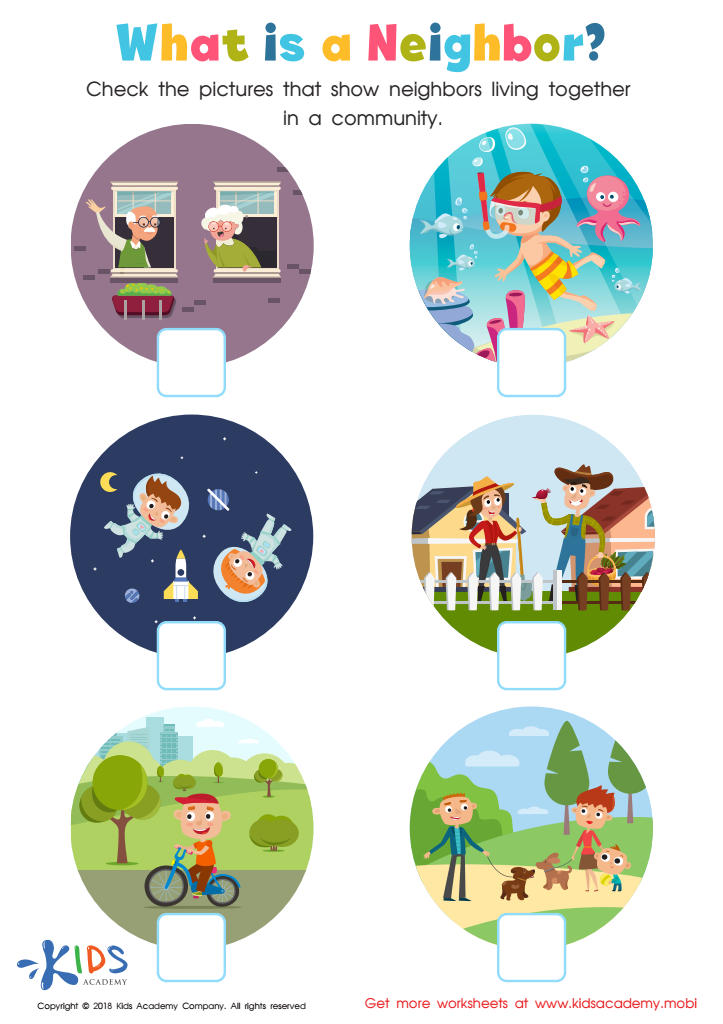
What is a neighbor Worksheet
 Assign to My Students
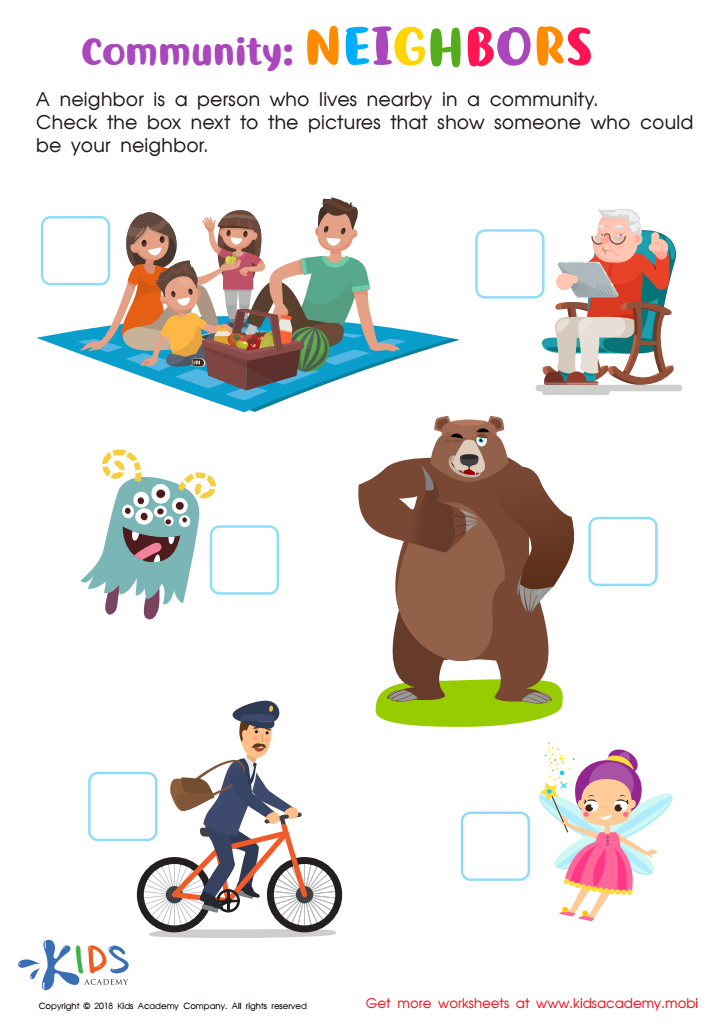
Community: Neighbors Worksheet
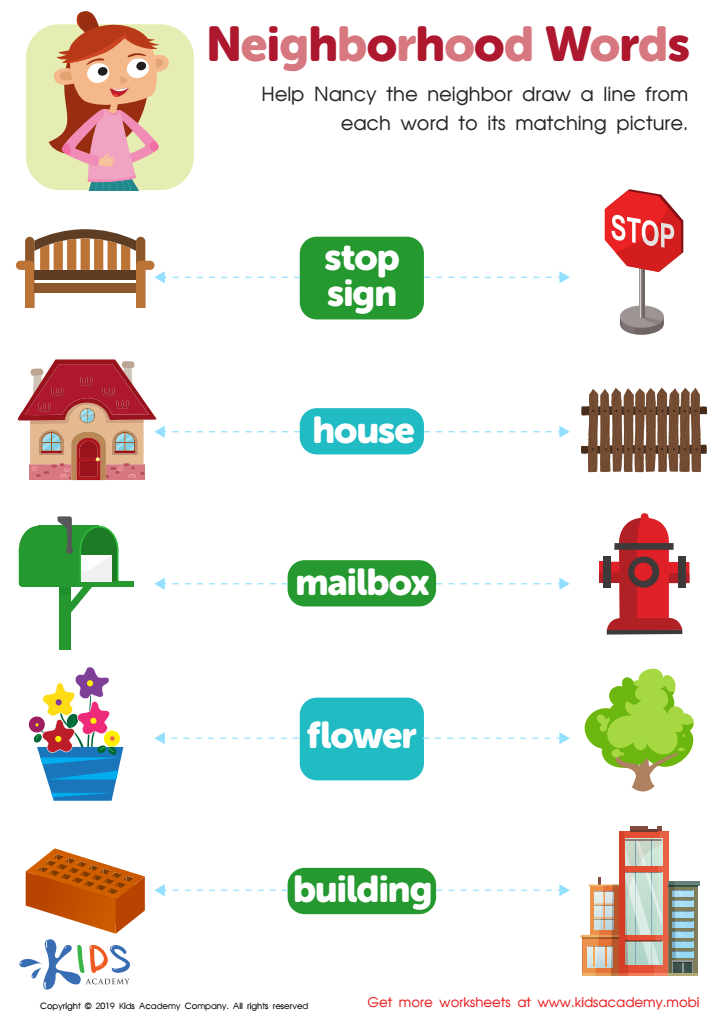
Neighborhood Words Worksheet
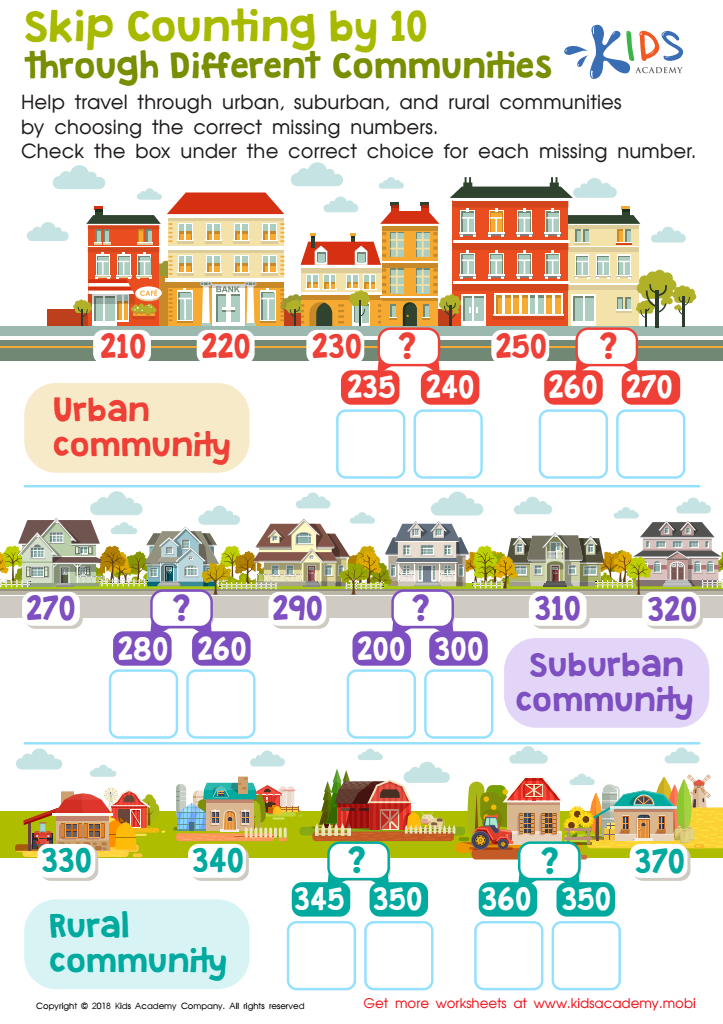
Skip Counting by 10 through Different Communities Worksheet
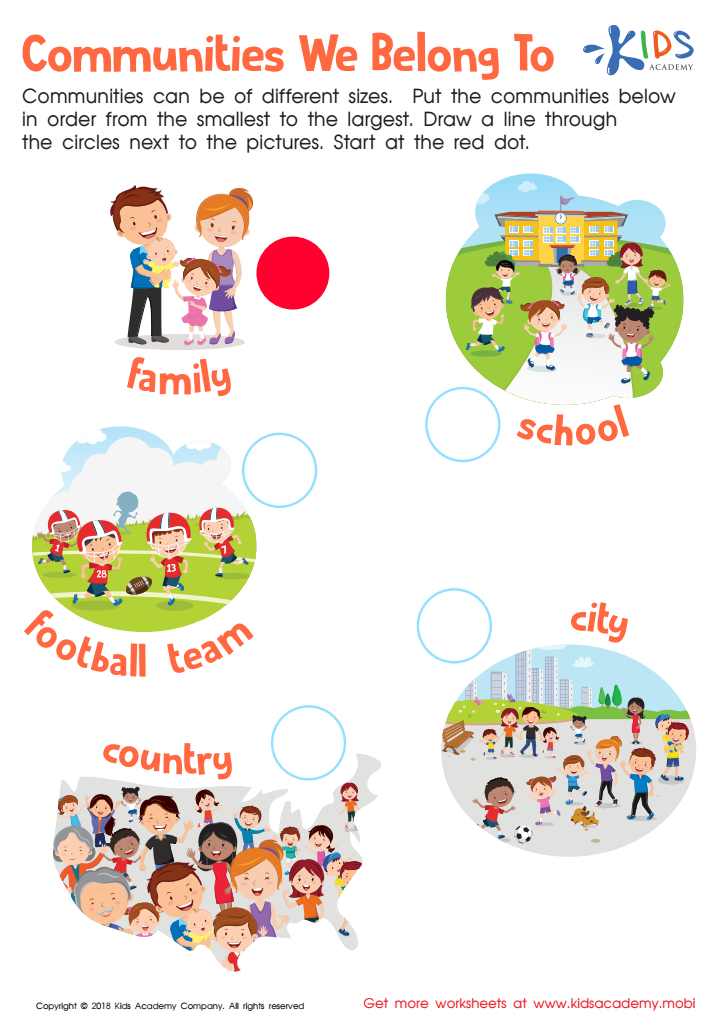
Communities We Belong to Worksheet
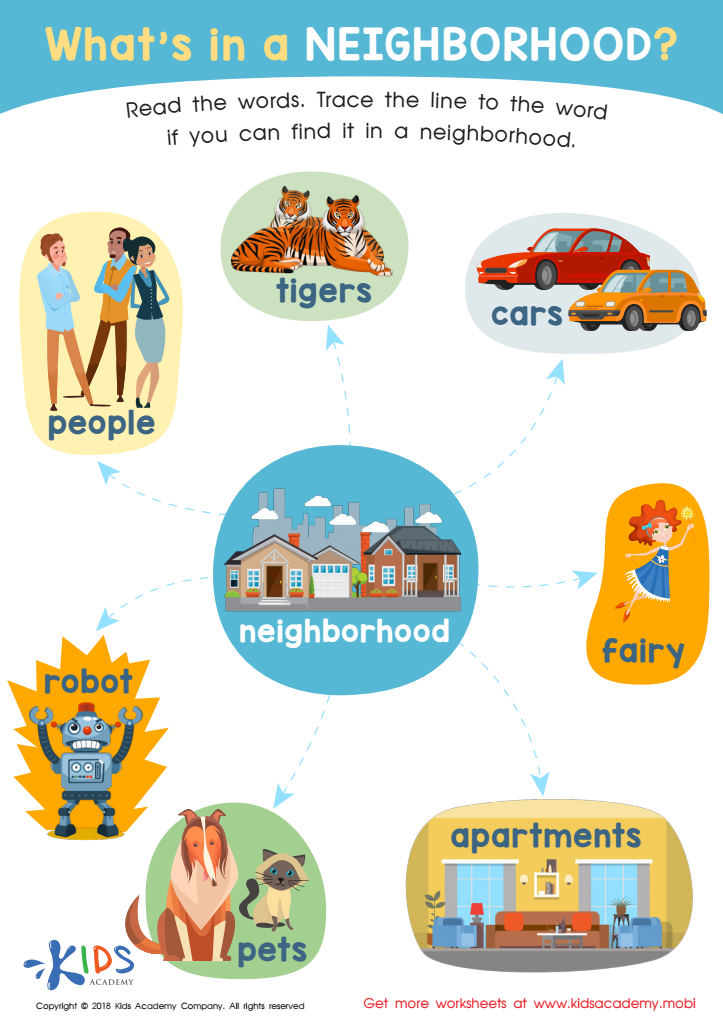
What's in a Neighborhood? Worksheet







Understanding communities is crucial for children aged 4-9 as it lays the foundation for their social, emotional, and cognitive development. Parents and teachers play a vital role in fostering this understanding, which helps children learn about diversity, empathy, and shared responsibility.
At this young age, children are naturally curious about the world around them. Introducing the concept of communities allows them to explore relationships, roles, and connections that exist in their lives. By learning about their own communities, children engage with their environment, understand different cultures, and appreciate varying perspectives. This knowledge helps develop crucial social skills, such as communication, cooperation, and conflict resolution.
Moreover, understanding communities nurtures a sense of belonging. When children feel part of a group, their self-esteem and emotional well-being improve. Parents and teachers can create opportunities for community engagement through local projects or events, promoting active citizenship from an early age.
Incorporating community themes into learning can also enhance critical thinking skills. When kids ask questions and find answers about their surroundings, they become more thoughtful and informed individuals. Ultimately, encouraging children to understand their communities sets the stage for responsible, empathetic, and engaged adulthood.








