Unlock the world of data with our "Understanding Graphs Worksheets for Ages 4-9"! Tailored specifically for young learners, these engaging worksheets make interpreting bar graphs, pie charts, and line graphs fun and educational. Through colorful visuals and simple exercises, kids can develop essential skills in reading and analyzing data. Perfect for ages 4-9, these worksheets enhance logical thinking and introduce foundational math competencies in an age-appropriate manner. Printable and easy-to-use, our resources support both classroom learning and home practice. Help your child build confidence in math with our comprehensive collection of graph worksheets today!

Check out this FREE "Understanding graphs" Trial Lesson for age 4-9!

Organize and Categorize Data #2

Favorites
With answer key
Interactive
  • 4-9
  • Understanding graphs
Recycling Picture Graph Worksheet

Recycling Picture Graph Worksheet

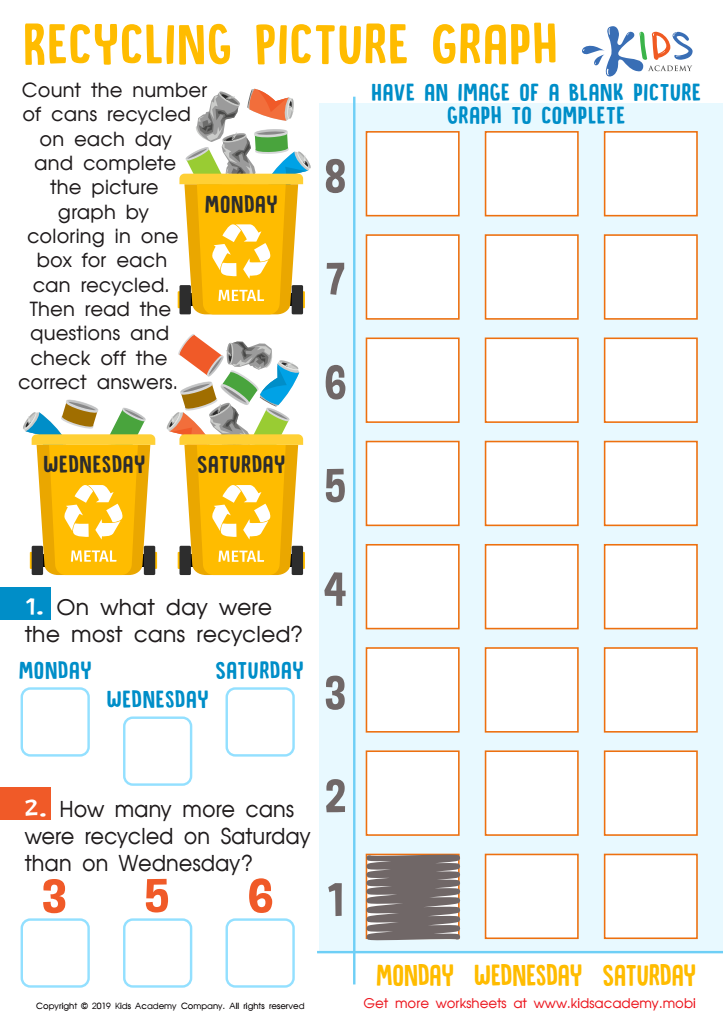
This worksheet can help kindergartners learn numbers and why recycling is important. After using items and materials, they can turn them into new materials instead of throwing them away. Guide your students to follow the instructions and answer the questions at the end. Help them understand how recycling benefits our environment.
Recycling Picture Graph Worksheet
Worksheet
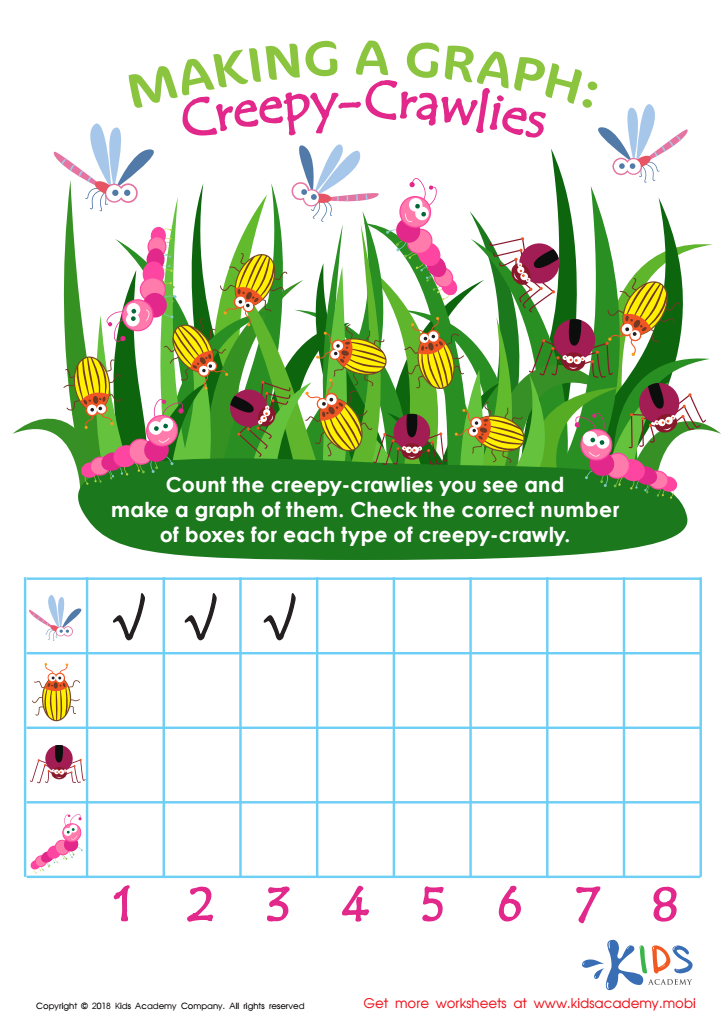
Making a Graph: Creepy Crawlies Worksheet

Making a Graph: Creepy Crawlies Worksheet

Let your little math whiz create a graph with this free PDF worksheet. They can count and sort the creepy-crawlies, checking off the correct number of boxes for each type. This engaging activity will help them hone their visual discrimination skills while efficiently organizing data.
Making a Graph: Creepy Crawlies Worksheet
Worksheet
Fruit Math: Picture Graphs Worksheet

Fruit Math: Picture Graphs Worksheet

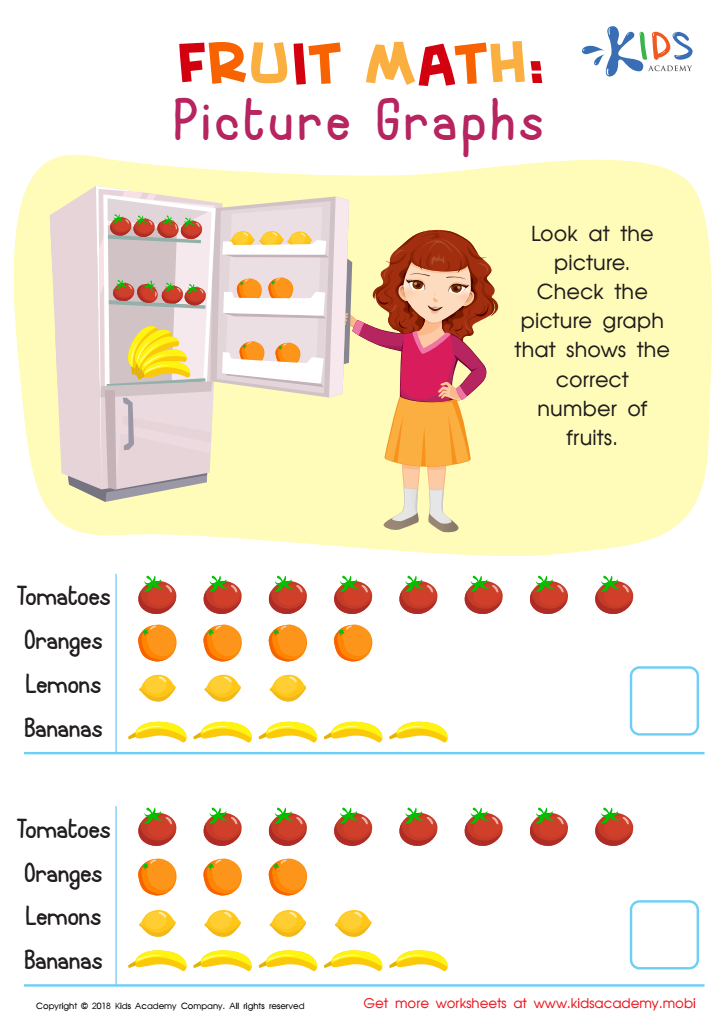
Help your child learn to draw graphs by having them look at pictures. Ask them to identify a graph that accurately portrays the data and have them explain why. This will prepare them to easily draw more complex graphs in the future. For example, have them look at the picture with the number of fruits in the colorful worksheet and explain why the graph is accurate.
Fruit Math: Picture Graphs Worksheet
Worksheet
Tricky Graphs Worksheet
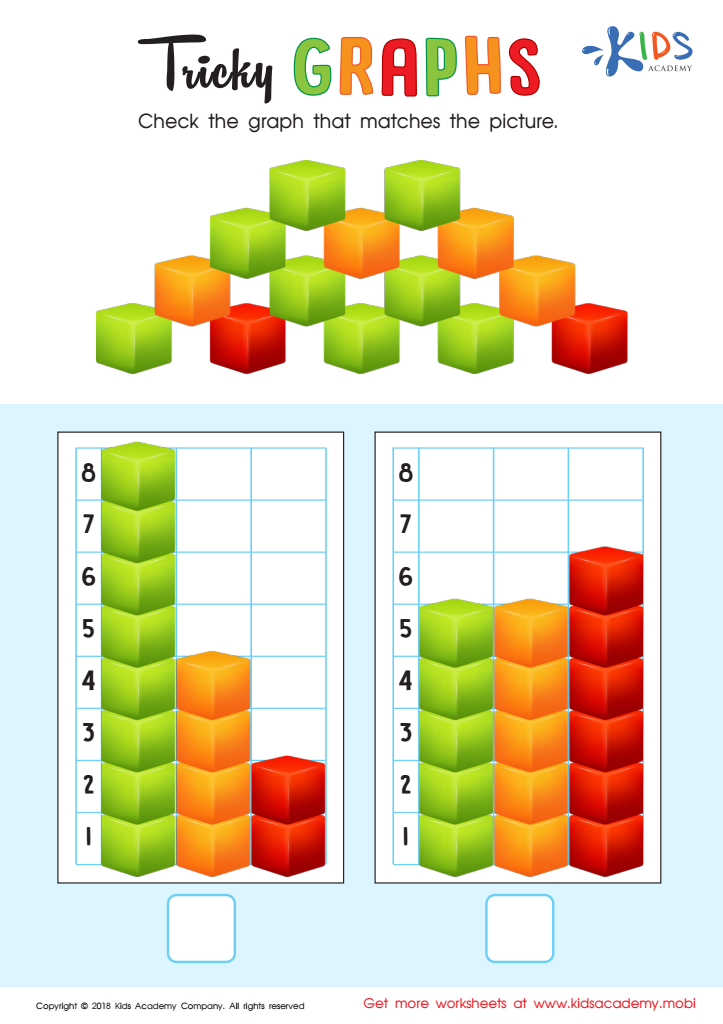
Tricky Graphs Worksheet

Looking for a fun way to sharpen your kid's graphing skills? Get this colorful PDF worksheet! They'll get to practice visual discrimination, counting, and creating bar graphs. Plus, graphing and reading graphs are essential for problem-solving in math.
Tricky Graphs Worksheet
Worksheet
Match Tally Marks to Bar Graphs Worksheet

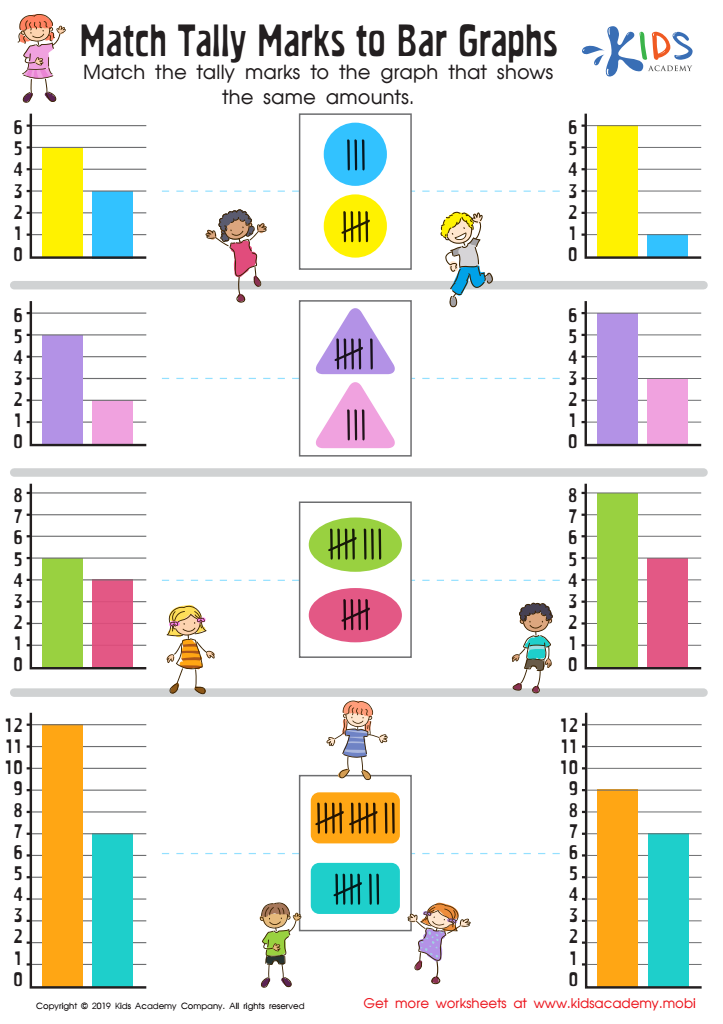
Match Tally Marks to Bar Graphs Worksheet

Learning math can be tough for kids. Rules and formulas can be confusing. Don't worry, this worksheet can help them understand graphs better. Show them how to match the tally marks with the graph that shows the same amount. It will help them grasp the basics and prepare them for more complex equations.
Match Tally Marks to Bar Graphs Worksheet
Worksheet
Aircraft Carrier Picture Graphs Worksheet


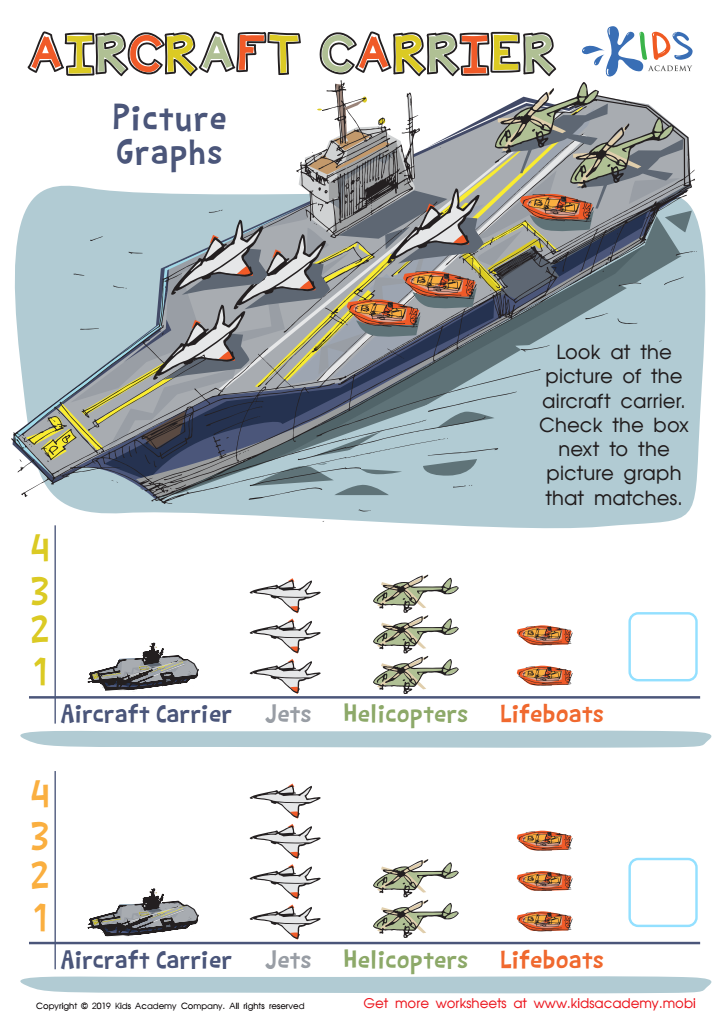
Aircraft Carrier Picture Graphs Worksheet

Kids love learning about jets and boats with this awesome worksheet! It's a great way to engage them as they work on picture graphs. Representing numerical values with pictures, this free PDF requires them to choose which picture graph and representation best match the carrier in the picture. It's also great practice for visual discrimination!
Aircraft Carrier Picture Graphs Worksheet

Worksheet


Understanding graphs at an early age is crucial for a child’s cognitive and analytical development. For children between ages 4-9, learning to interpret and create graphs encourages critical thinking and problem-solving skills. It helps them make sense of complex data by visualizing it in a simple and engaging way.

Graphs transform abstract numbers into concrete, visual representations, making it easier for young learners to grasp basic mathematical concepts such as counting, comparing, and identifying patterns. By recognizing these patterns, children can develop early numeracy skills, which are foundational for more advanced math and science learning.

Furthermore, understanding graphs enhances a child's ability to communicate information effectively. Being able to draw or interpret a simple bar or line graph helps them convey their thoughts and findings clearly, a skill beneficial not only in academics but in real-life situations where they need to make decisions based on data.

Lastly, early introduction to graphs nurtures curiosity and encourages exploration. Children can collect data on everyday activities, such as their favorite fruits or daily weather, and graph them. This hands-on experience makes learning fun and interactive, fostering a lifelong interest in analytical thinking.

In sum, parents and teachers should care about teaching children to understand graphs as it builds crucial cognitive skills, enhances communication, and promotes enjoyment in learning.