Understanding measurement Worksheets for Ages 4-9
3 filtered results
-
From - To
Welcome to our "Understanding Measurement" worksheets designed for children aged 4-9! These engaging resources aim to introduce young learners to the concepts of measurement, providing essential skills for their educational journey. Our worksheets include a variety of activities such as comparing lengths, weighing objects, and exploring capacity. Each worksheet is crafted to ensure fun while promoting critical thinking and problem-solving skills. With colorful illustrations and age-appropriate challenges, kids will develop a solid foundation in measurement concepts. Perfect for homeschoolers and classroom settings, these worksheets make learning measurement enjoyable and effective! Start exploring and watch your child’s understanding grow!
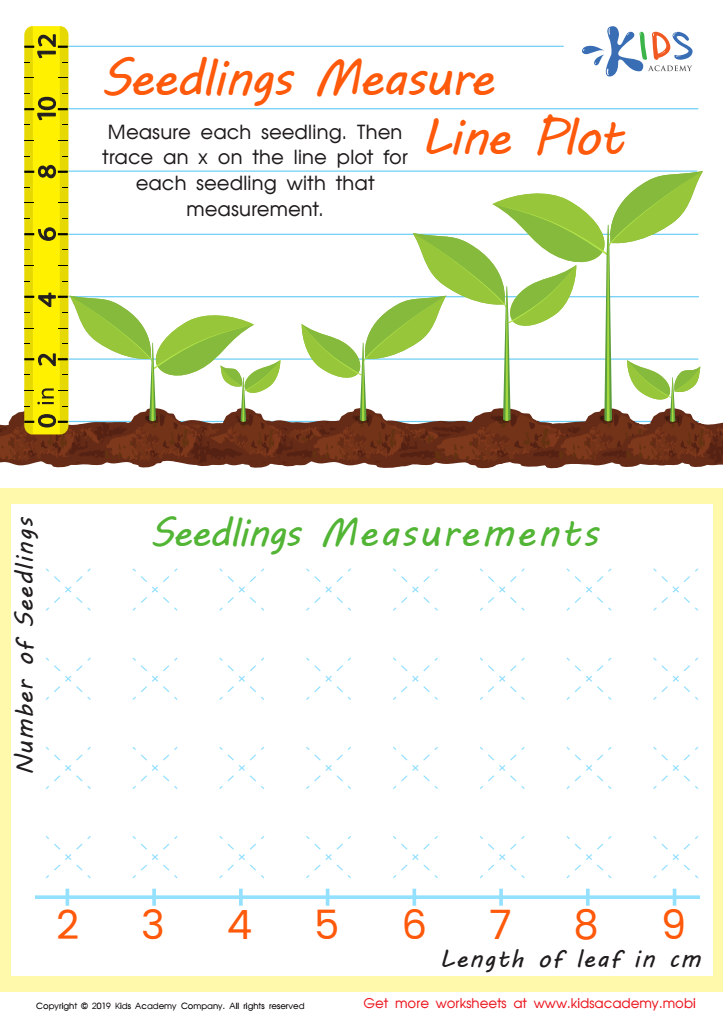
Seedling Measure Line Plot Worksheet
 Assign to My Students
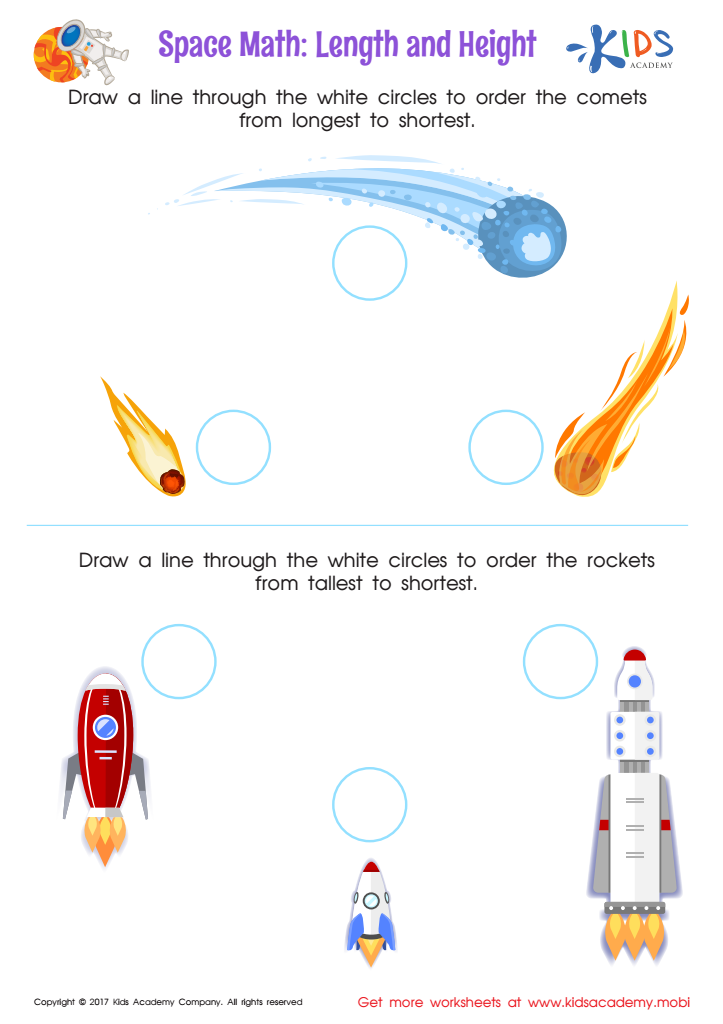
Space Math Worksheet







Understanding measurement is essential for children aged 4-9 as it lays the foundation for vital life skills and academic success. At this developmental stage, children are naturally curious and eager to explore their environment. Engaging them in measurement activities not only enhances their cognitive development but also fosters critical thinking and problem-solving skills.
Measurement introduces key mathematical concepts such as length, weight, volume, and time. Children learn to compare, contrast, and categorize objects, which strengthens their analytical abilities. For example, by measuring the height of plants or comparing the weights of different fruits, children engage in hands-on learning, making abstract concepts tangible.
Moreover, measurement is integrated into everyday life, helping children understand real-world applications. Whether cooking, shopping, or organizing, knowledge of measurement enhances their ability to navigate and interact with their surroundings. It also nurtures a sense of confidence as they begin to grasp these relatable concepts.
Parents and teachers play a crucial role in facilitating this learning process by providing engaging and age-appropriate measurement activities. By emphasizing measurement, adults can ensure that children develop a strong mathematical foundation that supports them throughout their education, empowering them for future success.








