Explore our "Understanding Quantities Worksheets for Ages 4-9," designed to enhance young learners' number recognition and counting skills. These engaging worksheets provide a fun platform for children to grasp essential math concepts, such as comparing quantities, identifying larger or smaller amounts, and developing early numeracy. Each activity encourages critical thinking and promotes cognitive development through colorful illustrations and interactive exercises. Ideal for homeschooling or supplemental learning, our worksheets cater to various learning styles, ensuring every child can thrive. Help your child gain confidence in math and prepare for future success with our thoughtfully crafted resources! Download and start learning today!
Check out this FREE "Understanding Quantities" Trial Lesson for age 4-9!

Adding with 3's

Favorites
With answer key
Interactive
  • 4-9
  • Understanding Quantities
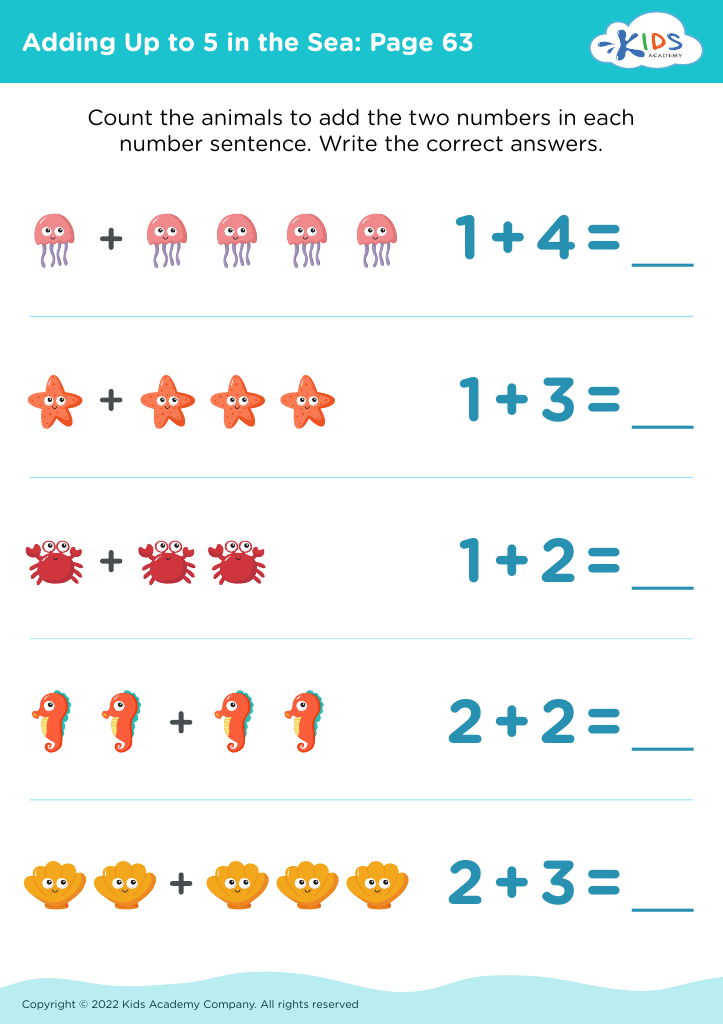
Adding Up to 5 in the Sea: Page 63
Worksheet
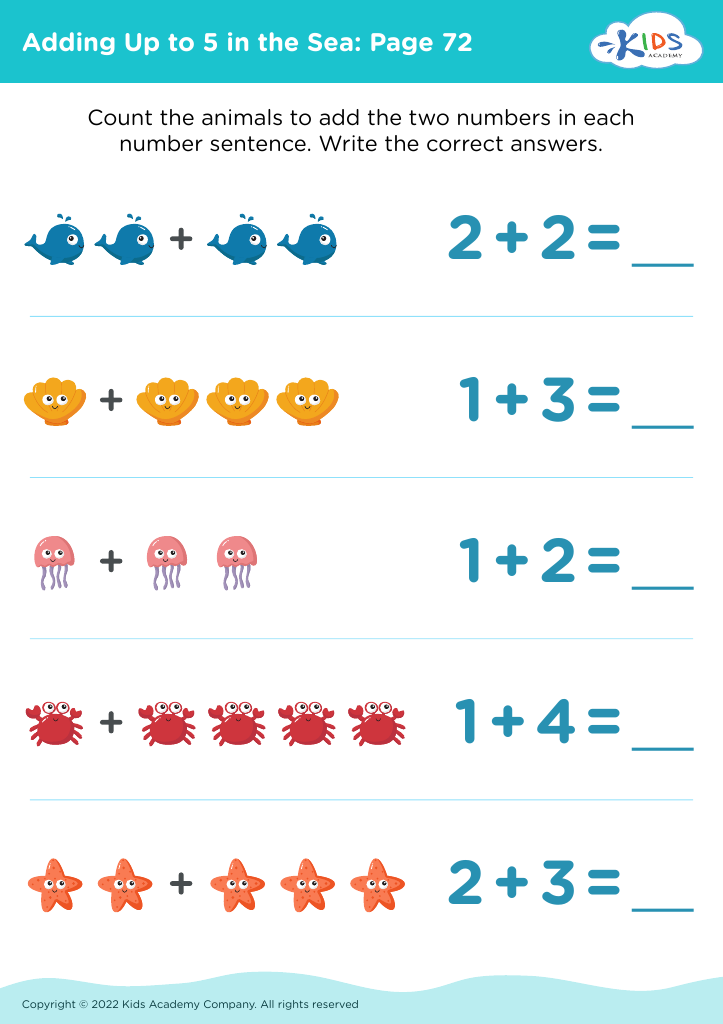
Adding Up to 5 in the Sea: Page 72
Worksheet
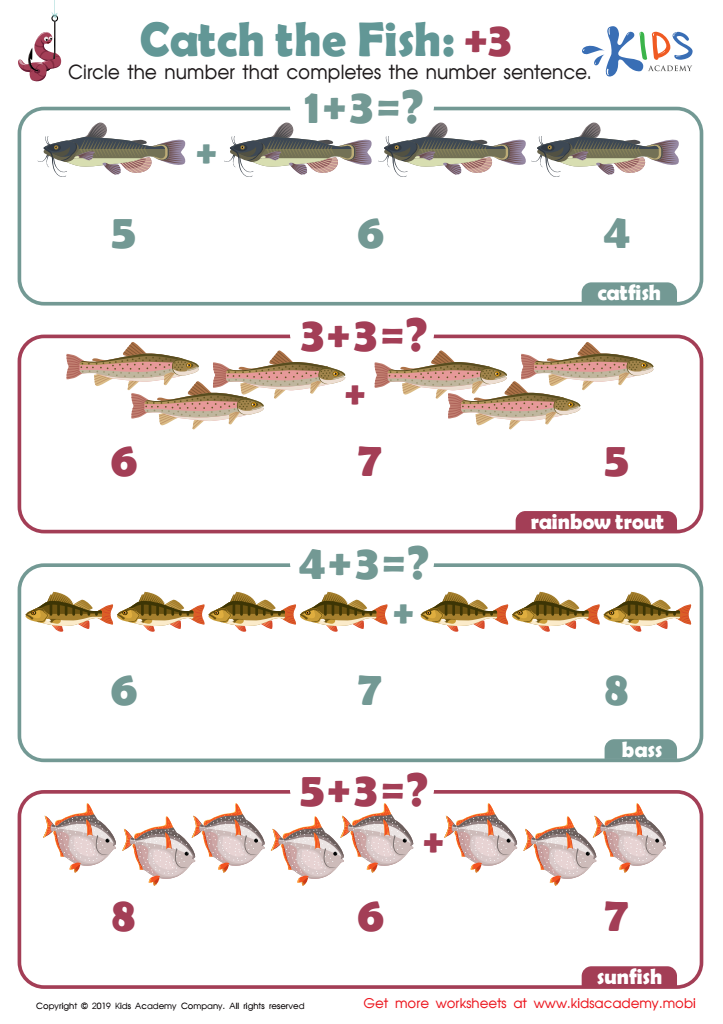
Catch the Fish: +3 Worksheet

Catch the Fish: +3 Worksheet

Math may be tricky for your child, with all the numbers and calculations. This worksheet can help them brush up. Ask them to identify the objects in the picture, then count them and help them circle the right number to complete the sentence. It's a simple and effective way to improve math skills.
Catch the Fish: +3 Worksheet
Worksheet
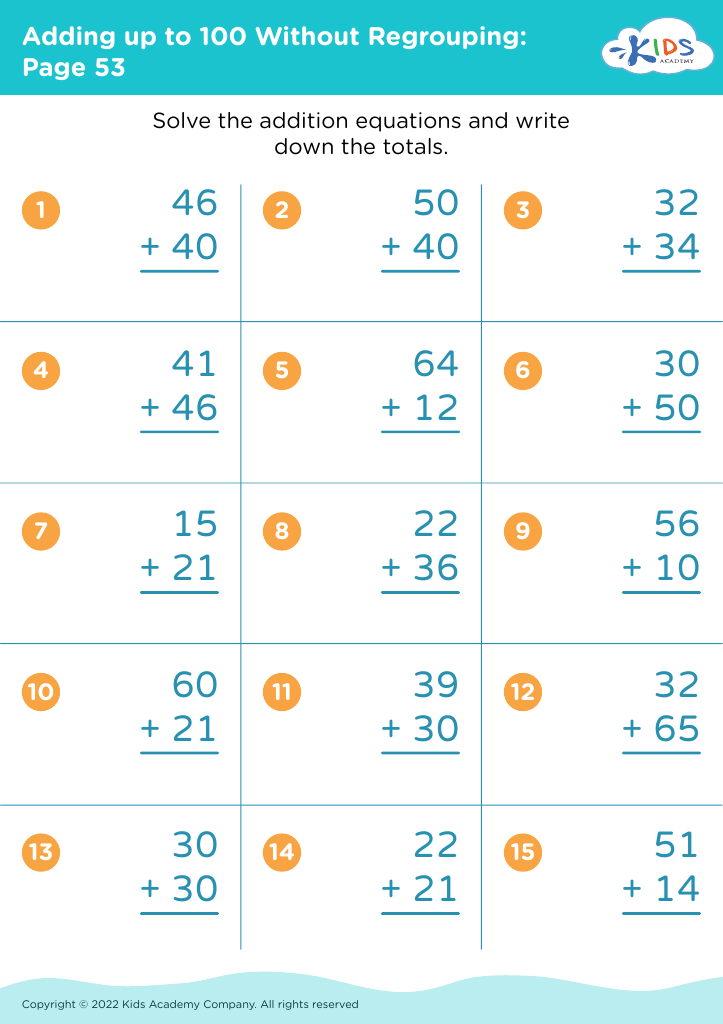
Adding up to 100 Without Regrouping: Page 53
Worksheet
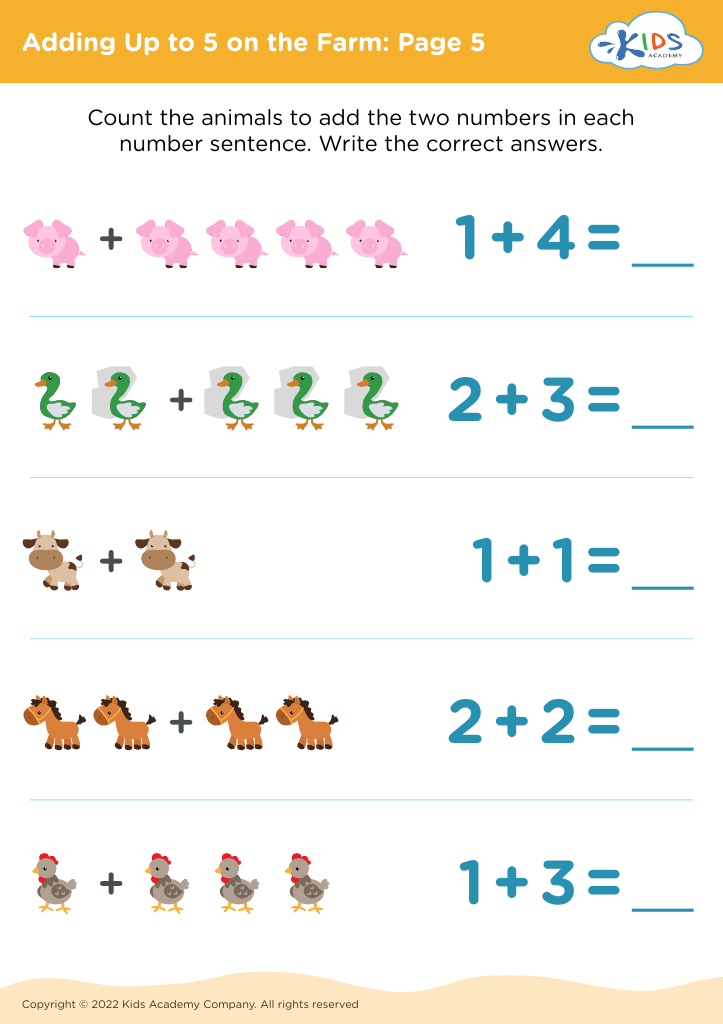
Adding Up to 5 on the Farm: Page 5
Worksheet
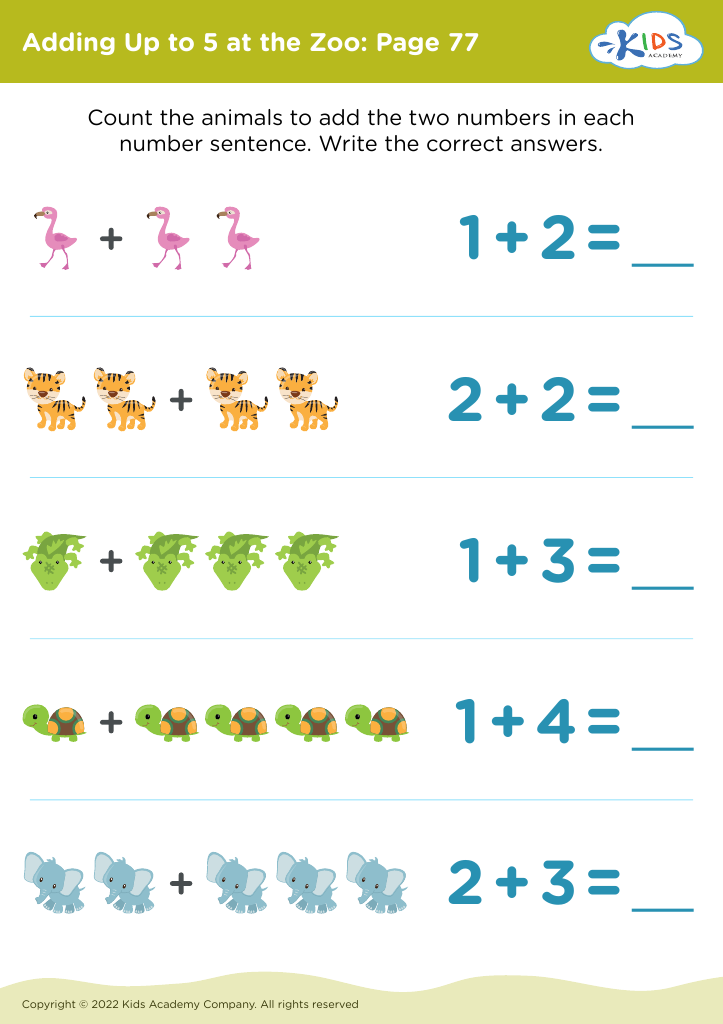
Adding Up to 5 at the Zoo: Page 77
Worksheet
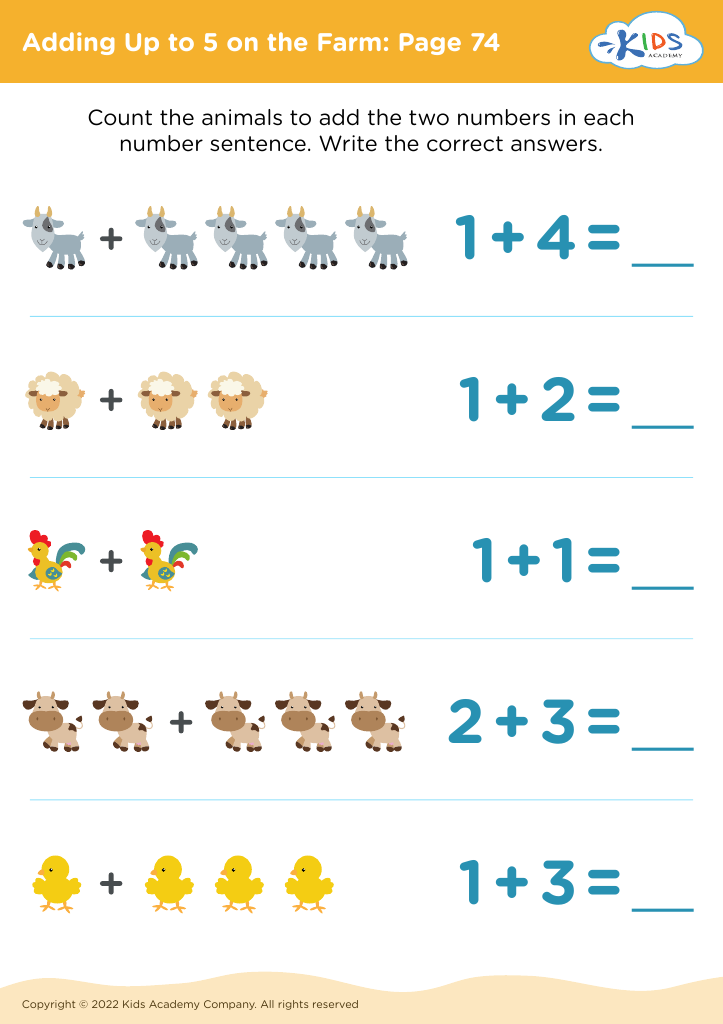
Adding Up to 5 on the Farm: Page 74
Worksheet
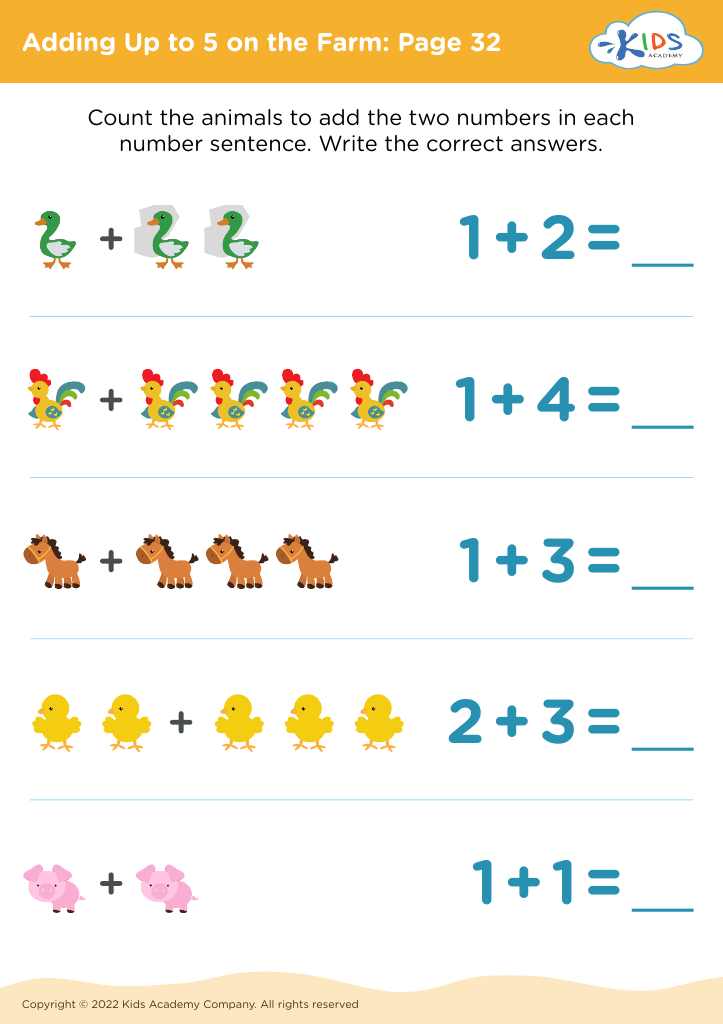
Adding Up to 5 on the Farm: Page 32
Worksheet
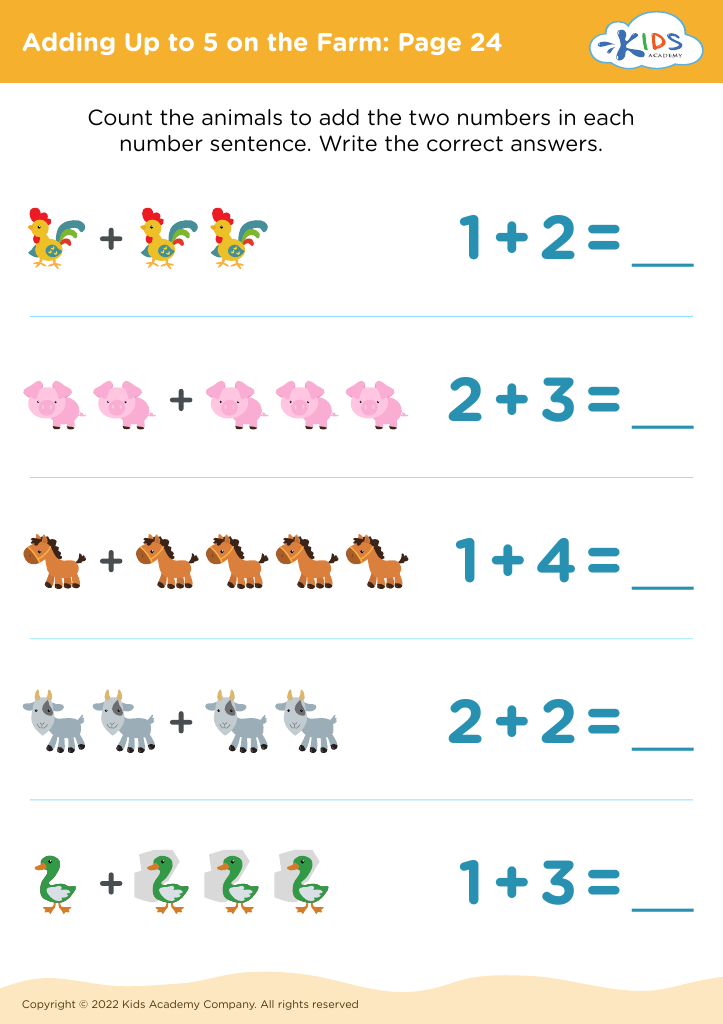
Adding Up to 5 on the Farm: Page 24
Worksheet
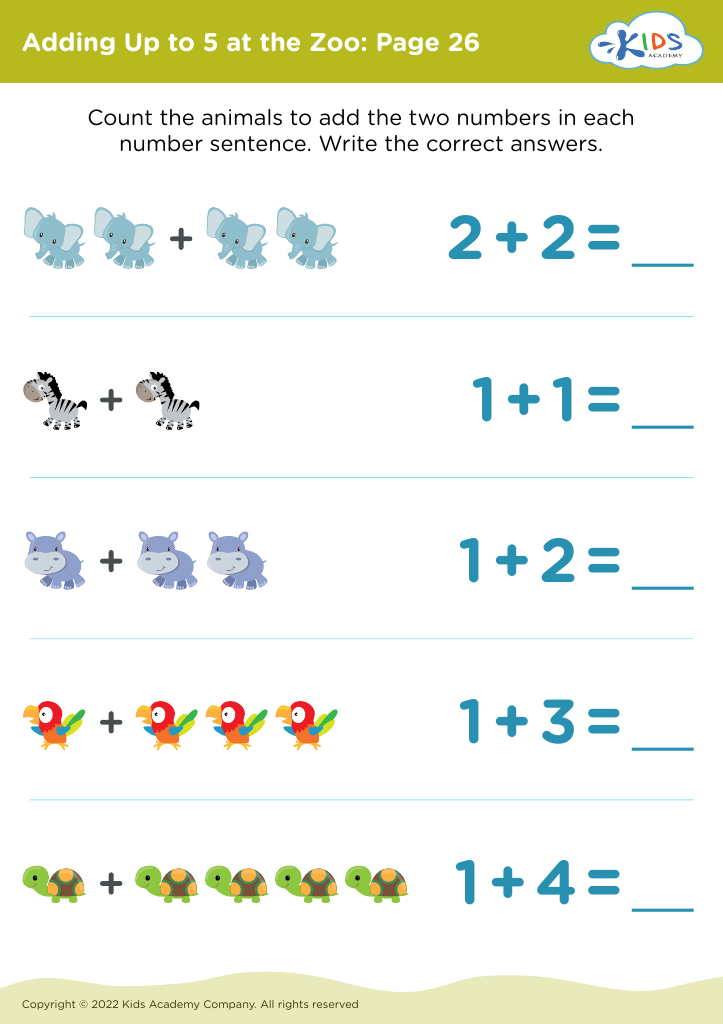
Adding Up to 5 at the Zoo: Page 26
Worksheet
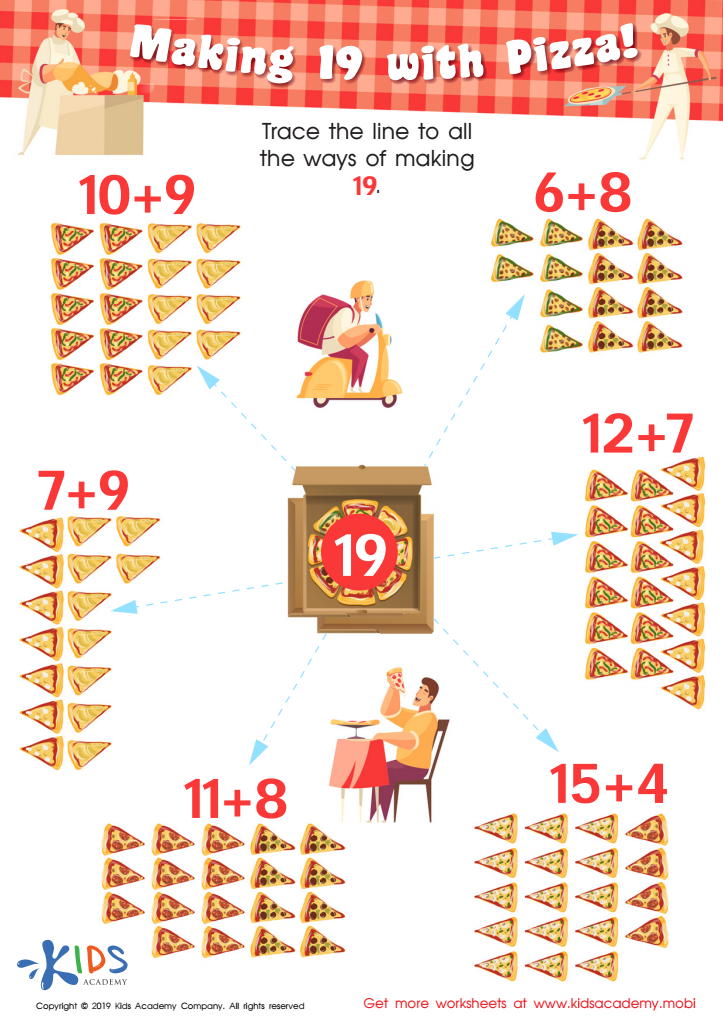
Making 19 with Pizza! Worksheet
Making 19 with Pizza! Worksheet
Who loves pizza? Your kids do! Next time you need to teach them math, make it fun by combining it with something they enjoy. This worksheet uses a pizza-themed problem to help them practice solving equations. Have them trace the line to figure out how to make 19. It's a great way to make learning math fun!
Making 19 with Pizza! Worksheet
Worksheet
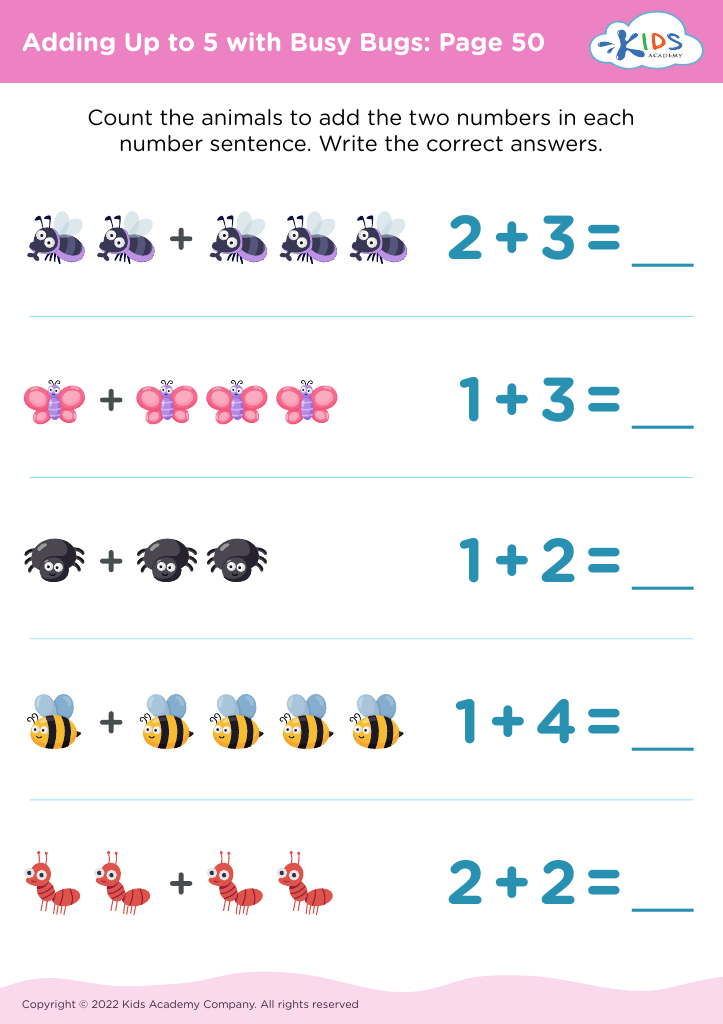
Adding Up to 5 with Busy Bugs: Page 50
Worksheet
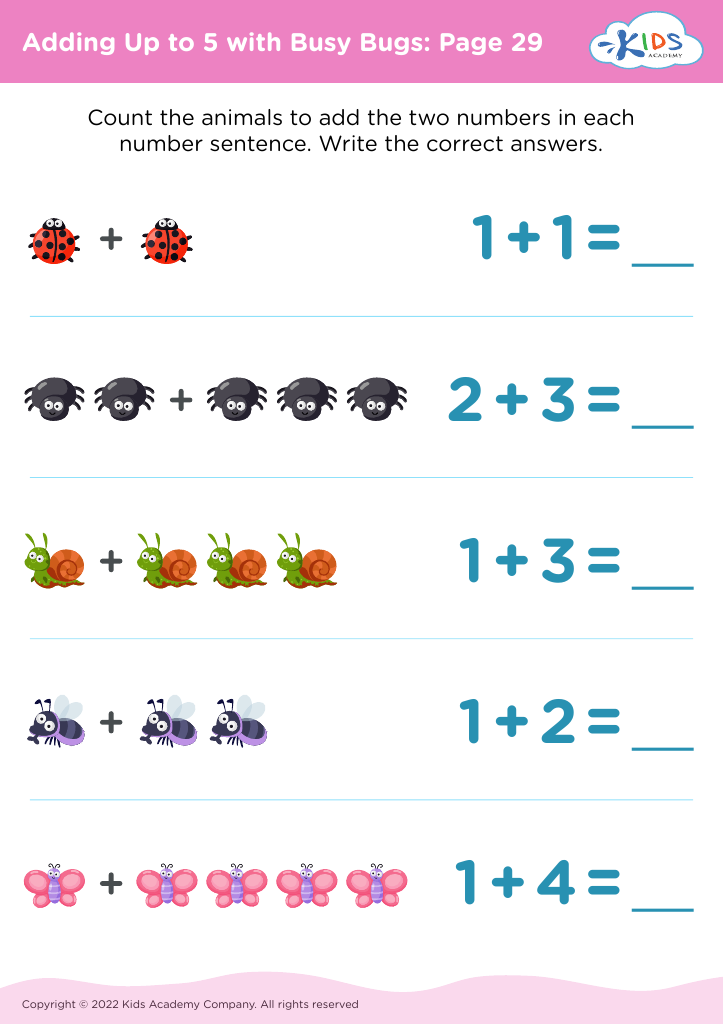
Adding Up to 5 with Busy Bugs: Page 29
Worksheet
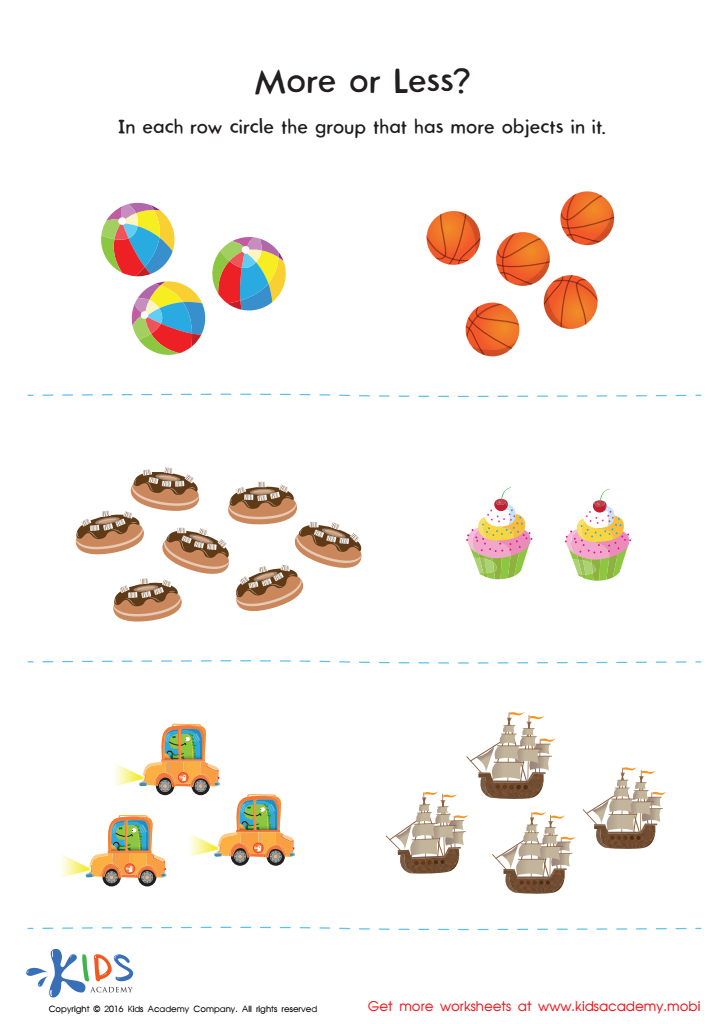
More or Less PDF Printable Worksheet

More or Less Size Worksheet

Try this "More or Less" PDF printable worksheet to help them out!
More or Less Size Worksheet
Worksheet
Place Value: Chapter 1 Worksheet
Place Value: Chapter 1 Worksheet
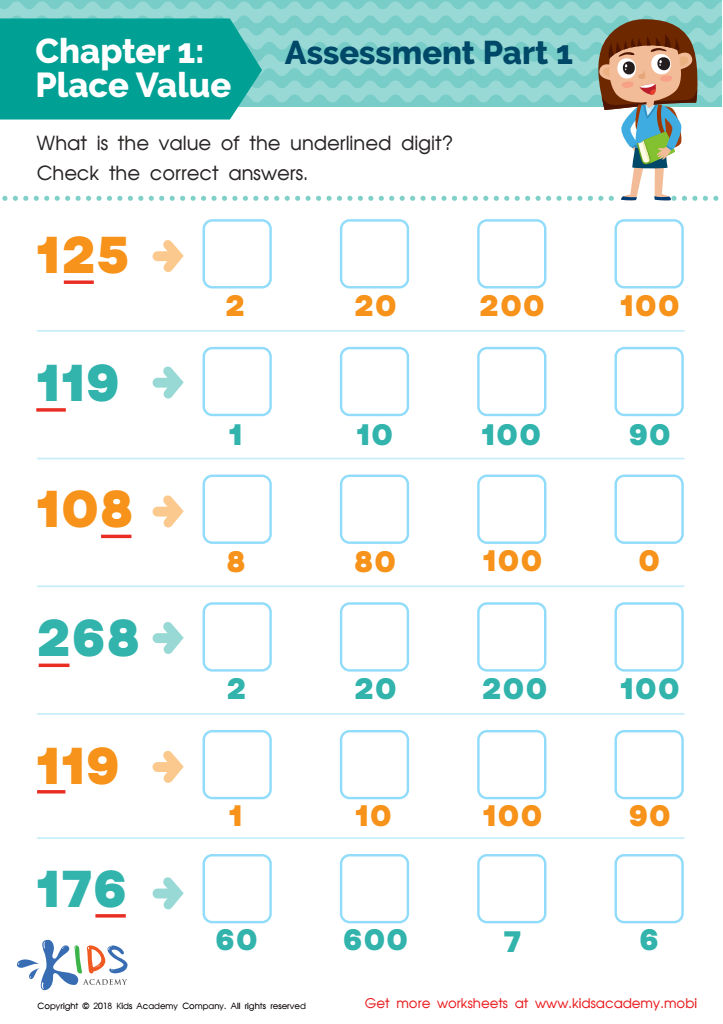
Check your kid's place value understanding with this assessment worksheet. It features 6 questions with one digit underlined for your child to determine the correct value of. Get the download and see if they can correctly choose the answer from the options given. It's a great way to test progress and keep their minds sharp!
Place Value: Chapter 1 Worksheet
Worksheet
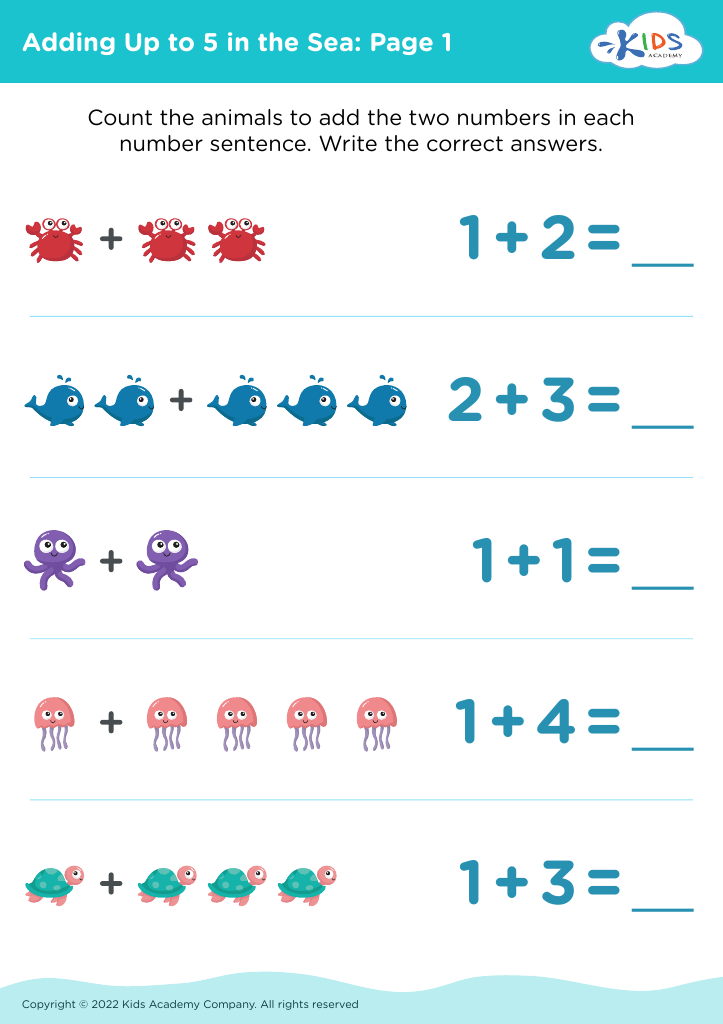
Adding Up to 5 in the Sea: Page 1

Adding Up to 5 in the Sea: Page 1

Adding Up to 5 in the Sea: Page 1
Worksheet
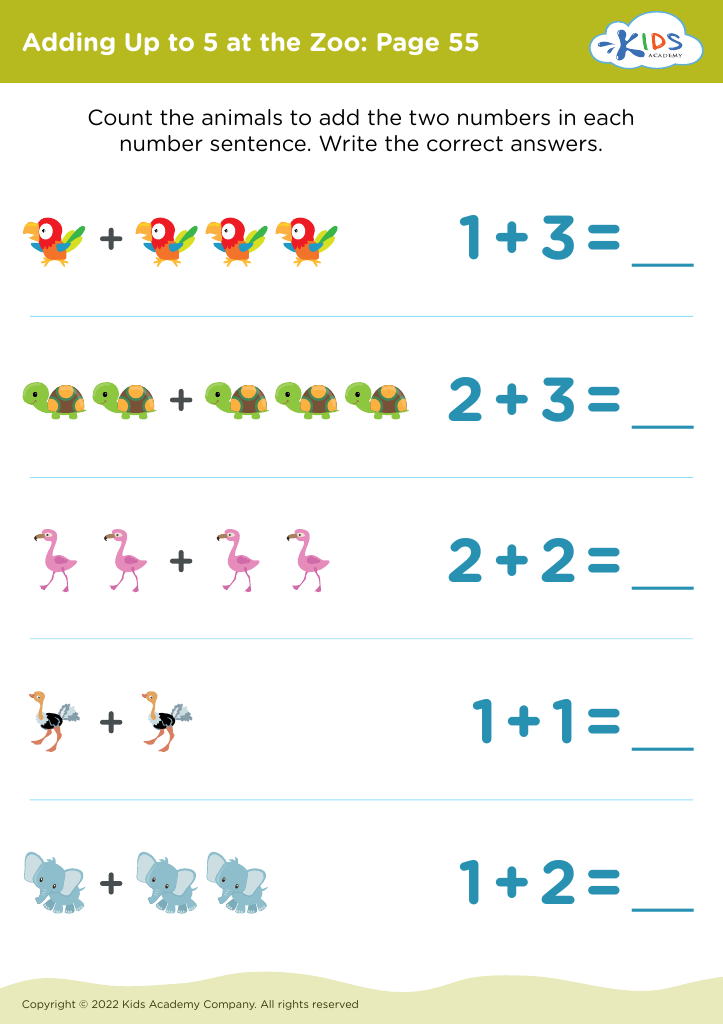
Adding Up to 5 at the Zoo: Page 55
Worksheet
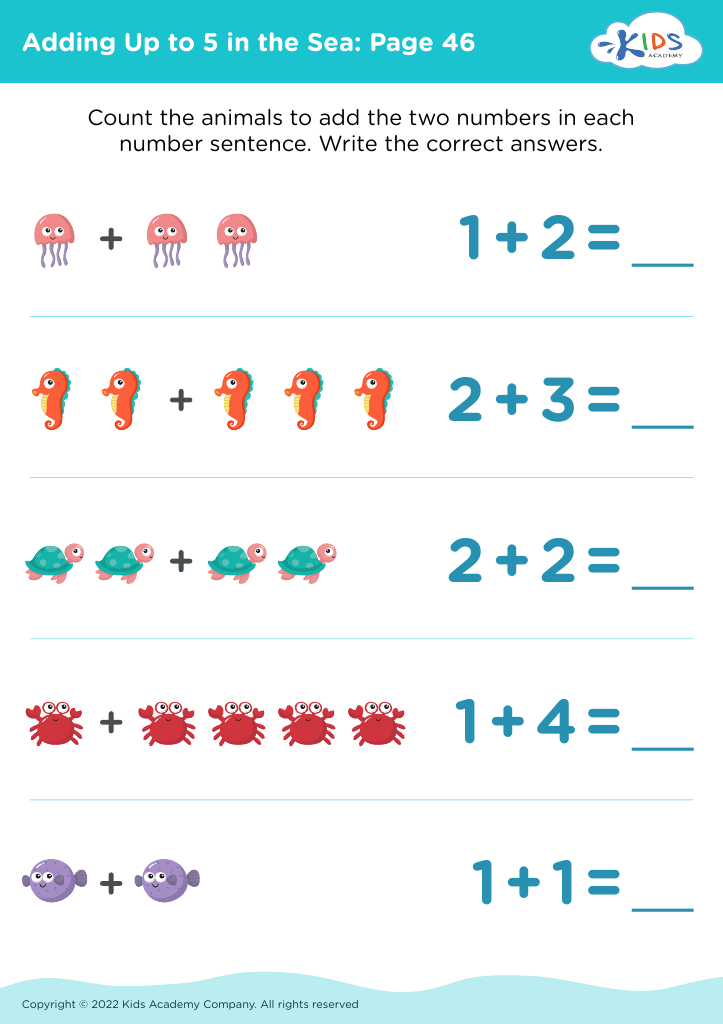
Adding Up to 5 in the Sea: Page 46
Worksheet
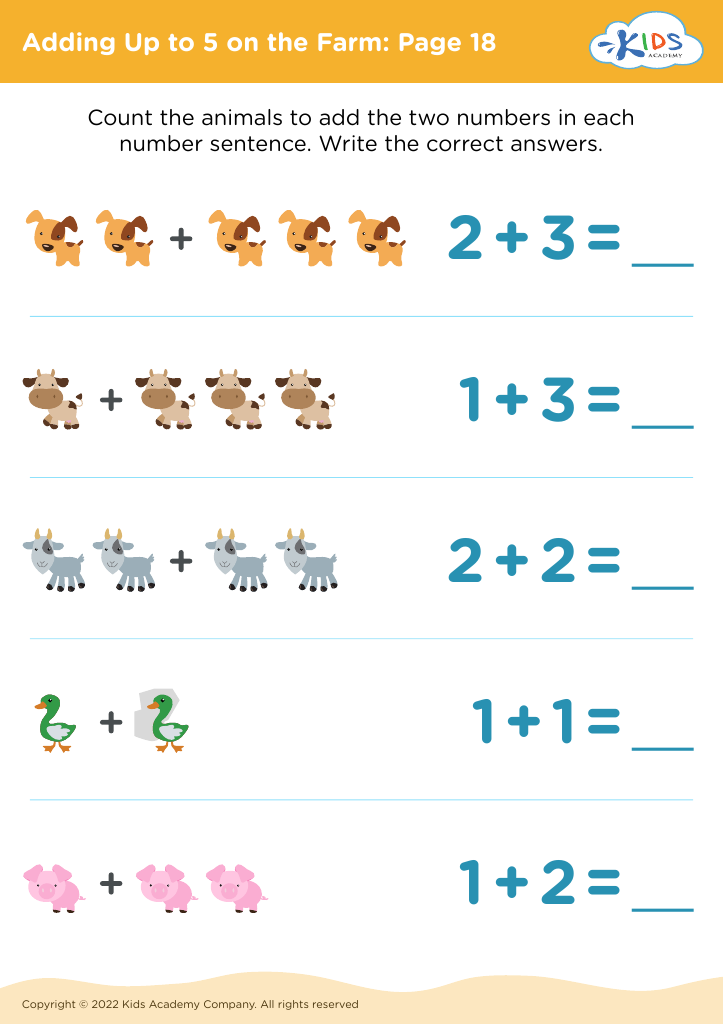
Adding Up to 5 on the Farm: Page 18
Worksheet
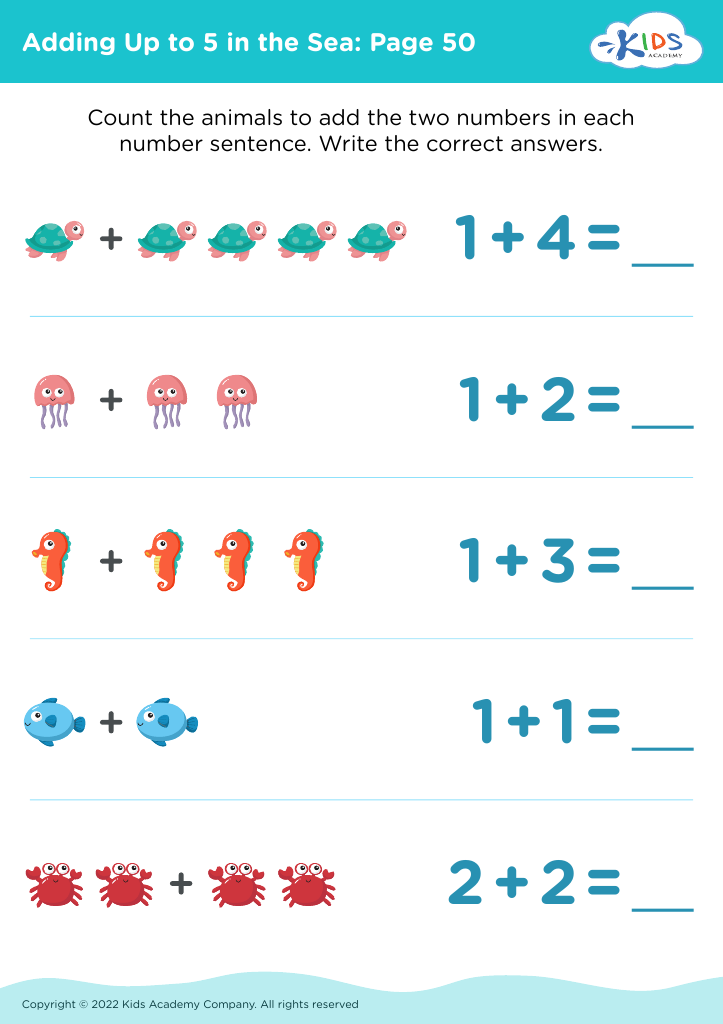
Adding Up to 5 in the Sea: Page 50
Worksheet
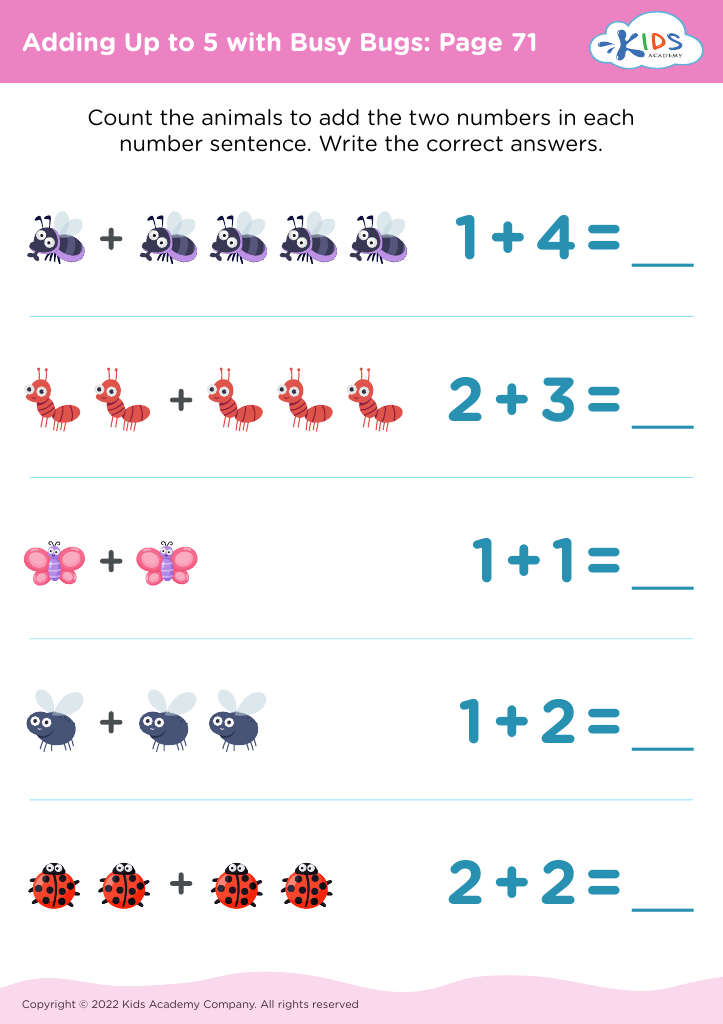
Adding Up to 5 with Busy Bugs: Page 71
Worksheet
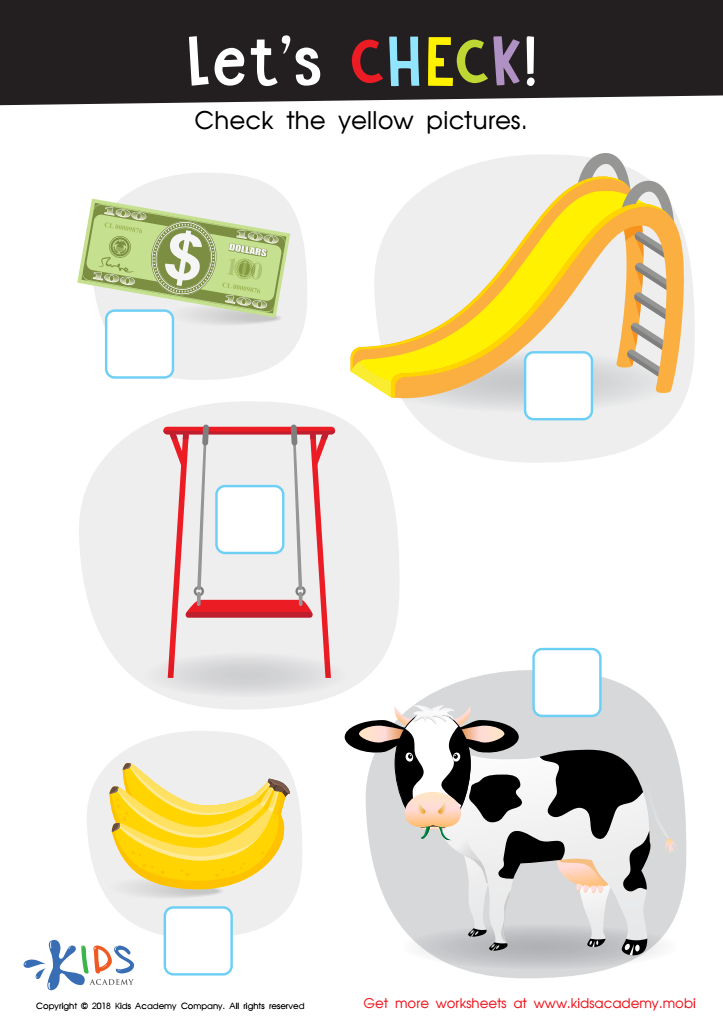
Let's Check! Worksheet
Let's Check! Worksheet

Before starting this coloring sheet, ask your kids to name some colors they know, or point to familiar items and ask them what color they are. Check if they can correctly identify the pictures of yellow objects. Then, you can begin the worksheet.
Let's Check! Worksheet

Worksheet
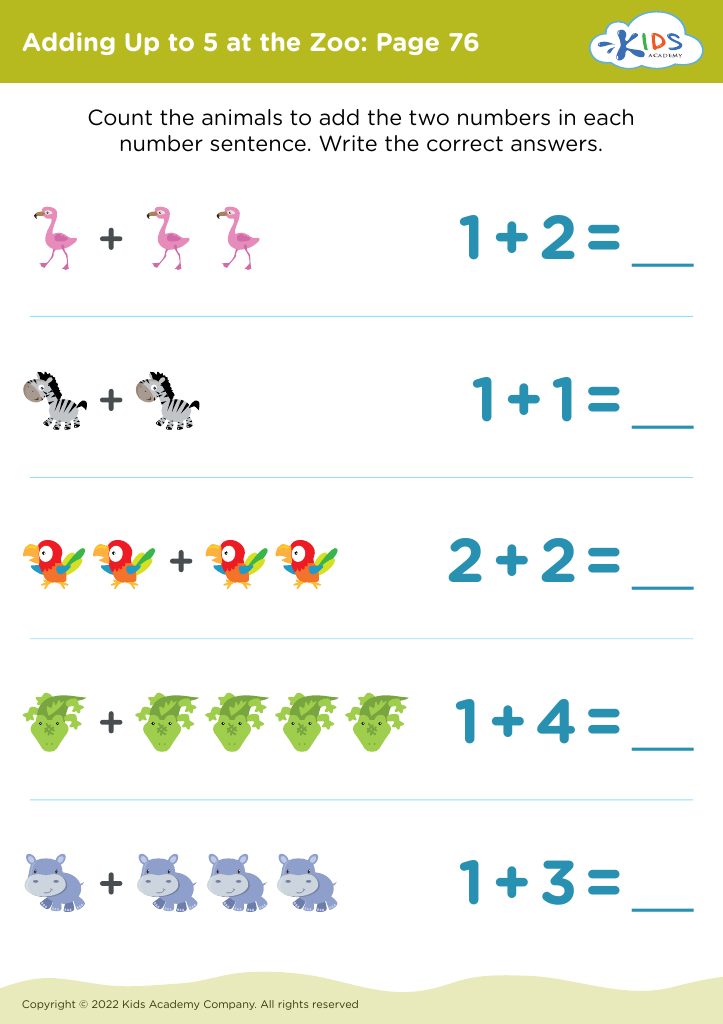
Adding Up to 5 at the Zoo: Page 76
Worksheet
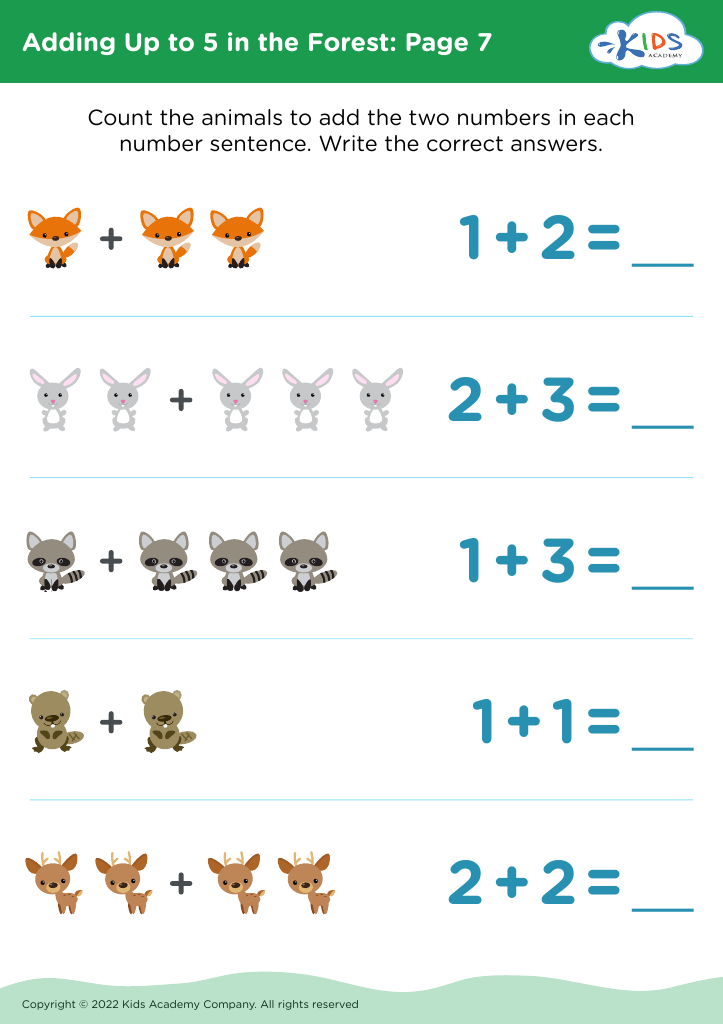
Adding Up to 5 in the Forest: Page 7
Worksheet


Understanding quantities is a foundational skill crucial for children's overall academic success and everyday life. For ages 4 to 9, children are at a key developmental stage where they begin to grasp basic mathematical concepts. Parents and teachers should prioritize this understanding because it forms the basis for more complex mathematics in later years, such as addition, subtraction, and even problem-solving.

When children learn to understand quantities, they develop a sense of number sense, which involves recognizing, comparing, and operating with numbers. This skill is tied to their cognitive development, helping them improve critical thinking and logical reasoning. Furthermore, a strong grasp of quantities enhances their ability to engage in real-life situations, such as grocery shopping or cooking, where measurement is essential.

Together with emotional and social competencies, this skill also supports children's confidence in their abilities and reduces math anxiety—a common concern as they progress through school. Ultimately, fostering an understanding of quantities empowers children to approach math with curiosity and resilience. Therefore, parents and teachers play a vital role in cultivating these essential skills, guiding them on their journey toward becoming confident, capable learners.