Animal identification Adding at the Zoo Worksheets for Ages 4-9
8 filtered results
-
From - To
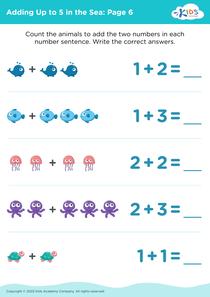
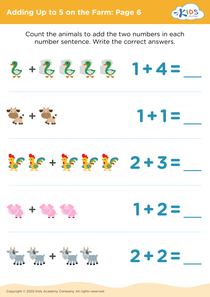
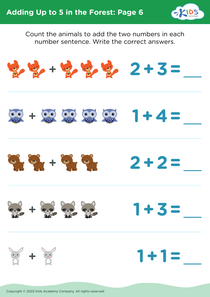
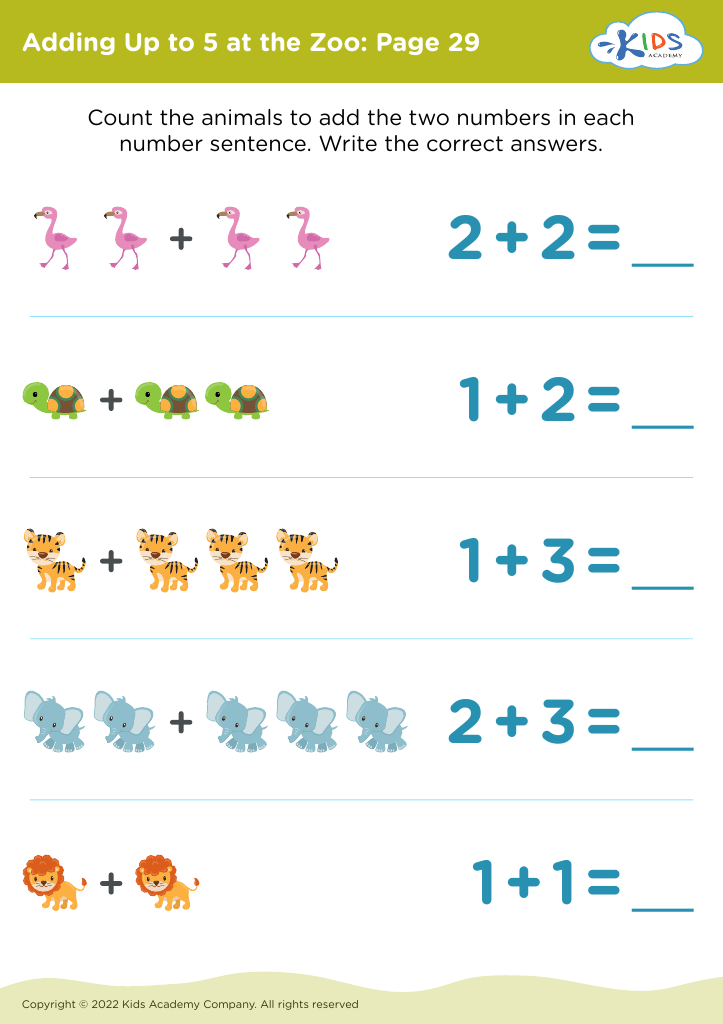
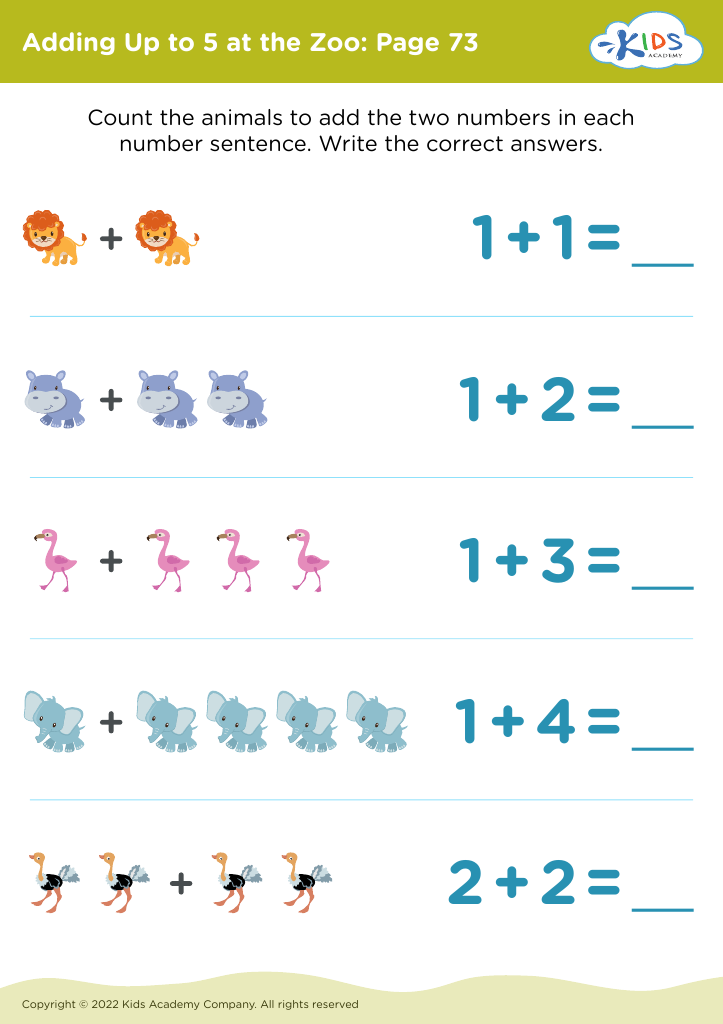
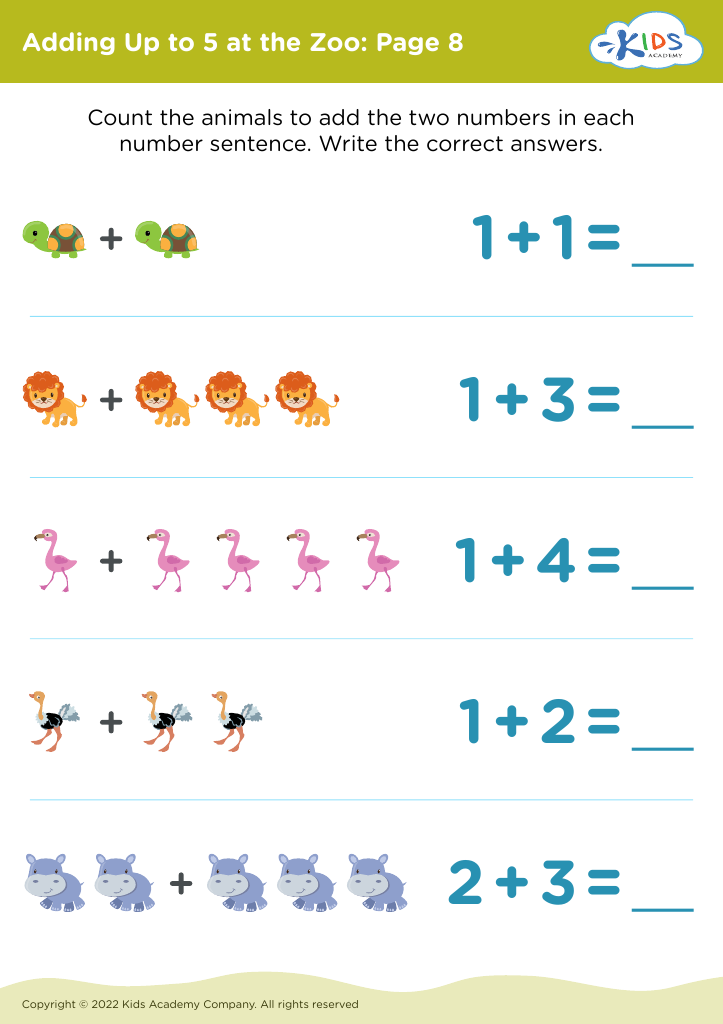
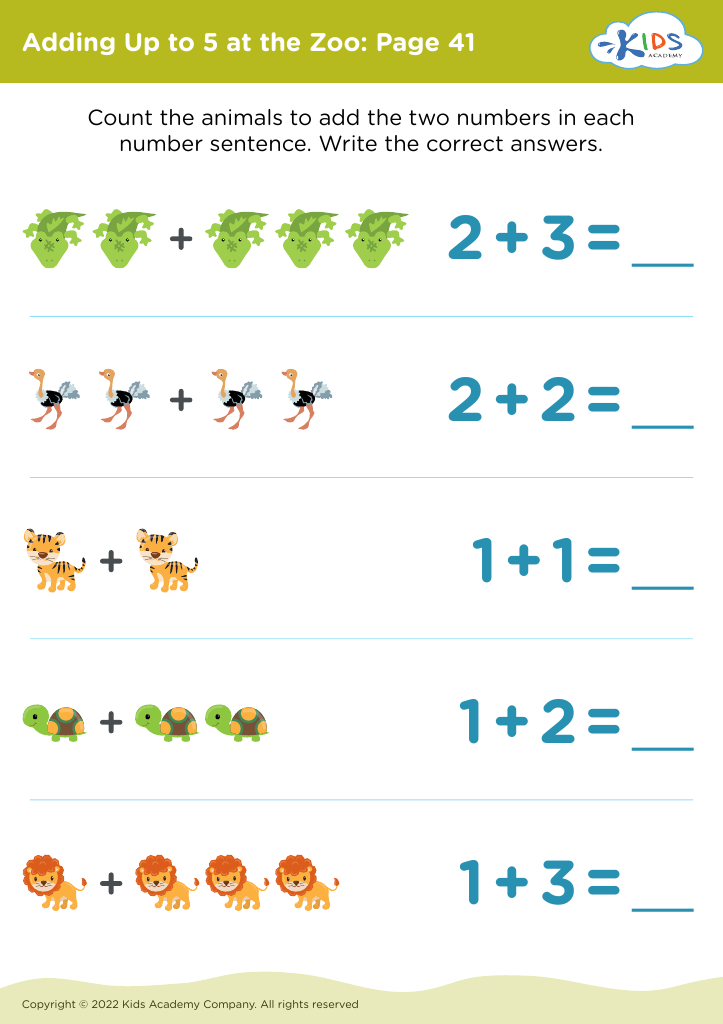
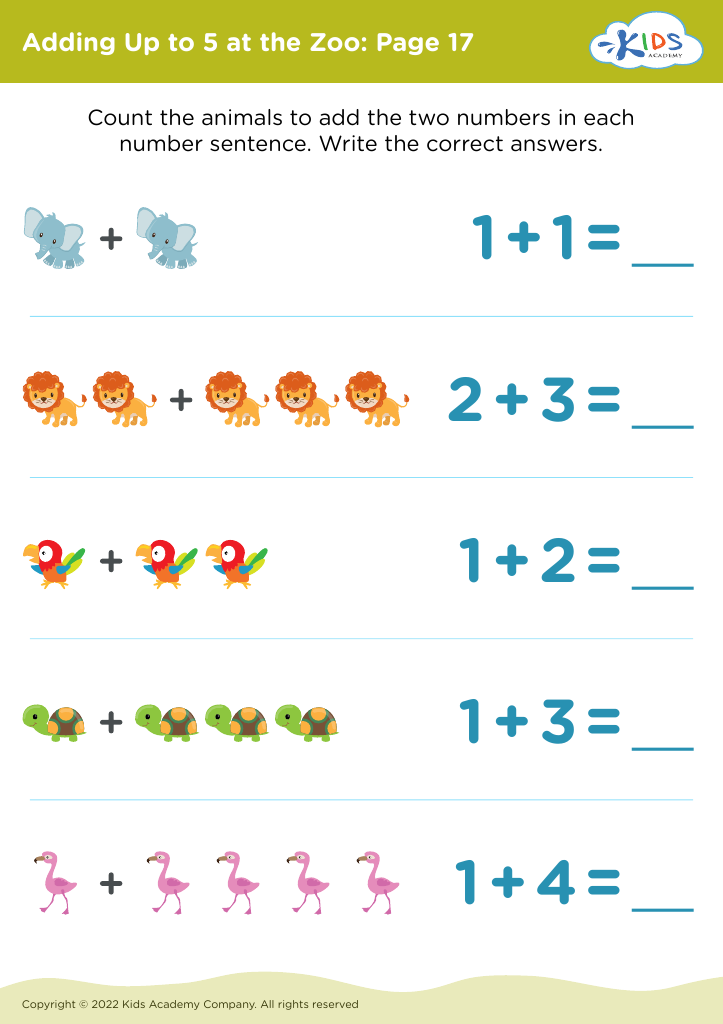
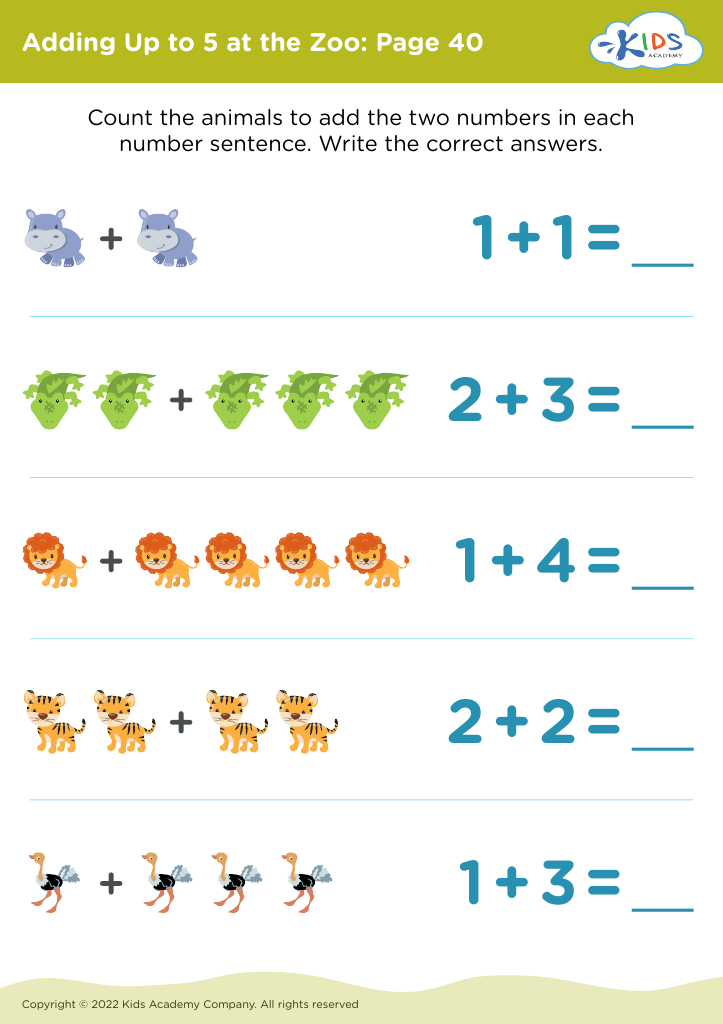
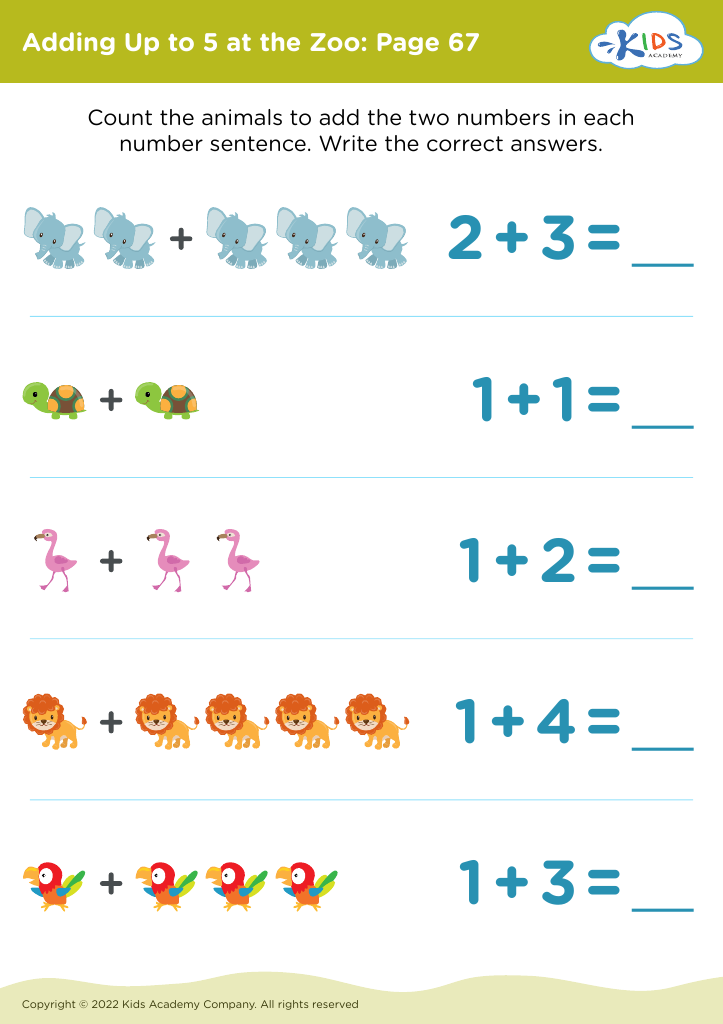
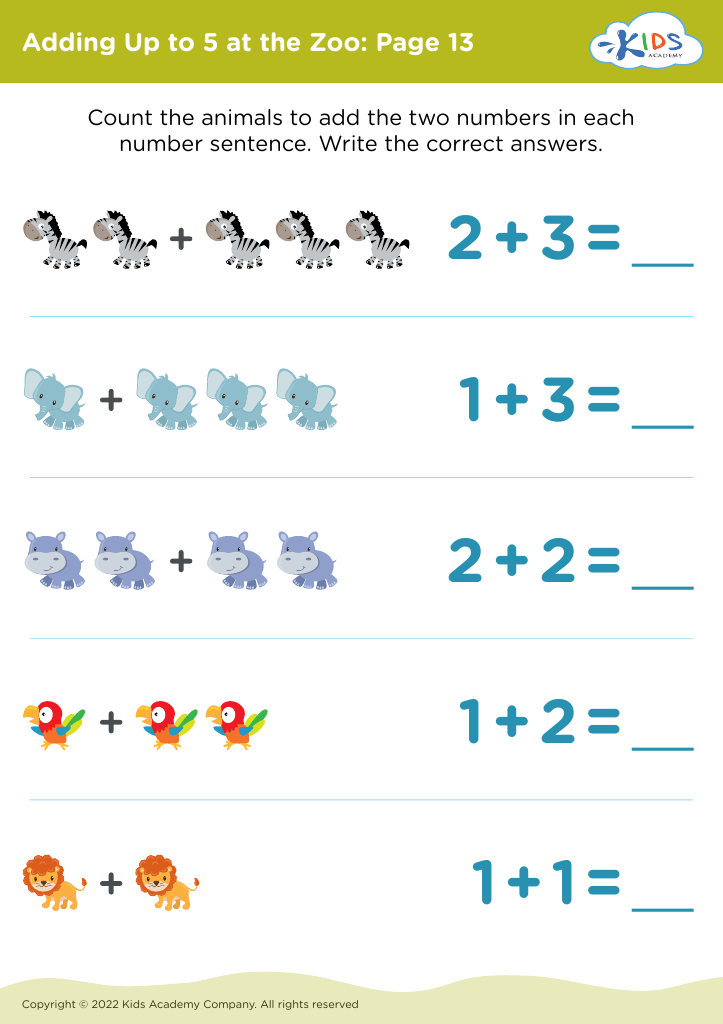
Explore the fun and educational "Animal Identification Adding at the Zoo Worksheets" designed for children aged 4-9! These engaging worksheets integrate math skills with wildlife education, helping kids develop their addition skills while learning to identify various animals. Each page features vibrant illustrations of zoo animals alongside interactive addition problems to foster both numeracy and animal recognition. Ideal for home or classroom use, these worksheets encourage critical thinking and provide an exciting way to learn. Inspire a love for both math and nature as young learners embark on a delightful journey through the animal kingdom with challenging yet enjoyable activities.



Animal identification at the zoo is a wonderful opportunity for young learners, and parents and teachers should care deeply about it. First, it ignites children's curiosity about wildlife. When kids learn to identify animals, they develop a better understanding of different species, their habitats, and their roles in the ecosystem. This knowledge fosters a sense of wonder and appreciation for nature, encouraging children to respect and protect the environment.
Moreover, animal identification supports early literacy and critical thinking skills. As children engage with animal names, behaviors, and characteristics, they expand their vocabulary and enhance their observational skills. Interactive activities at the zoo, such as scavenger hunts or guided tours, further enrich this learning experience, offering social interaction and teamwork.
Additionally, understanding animal identification nurtures empathy in young minds. When children learn about animals’ needs, behaviors, and the challenges they face in the wild, they become more compassionate and responsible citizens.
In essence, incorporating animal identification into zoo outings or classroom lessons creates a rich educational experience that promotes curiosity, literacy, social skills, and empathy—all crucial for healthy development in children ages 4-9. By supporting these activities, parents and teachers contribute to well-rounded, environmentally-conscious future generations.