Filters

18 filtered results

Clear all filters
Favorites
With answer key
Interactive

18 filtered results

Difficulty Level

Grade


Subject

    Explore our engaging "Cognitive Development Adding at the Zoo Worksheets" tailored for children ages 4-9! These interactive worksheets combine the fun of the zoo with essential math skills, enhancing kids' ability to add while learning about animals. Through colorful illustrations and playful scenarios, children will practice addition in a captivating setting, reinforcing cognitive skills such as problem-solving and critical thinking. Designed by educators, these resources promote spatial awareness and numeracy in an enjoyable way, encouraging young learners to explore math concepts through vivid zoo adventures. Perfect for classrooms or home learning, our worksheets will inspire curiosity and a love for learning!
    Check out this FREE Trial Lesson on Adding at the Zoo for age 4-9!

    My Family

    Favorites
    With answer key
    Interactive
    • 4-9
    • Cognitive Development
    • Adding at the Zoo
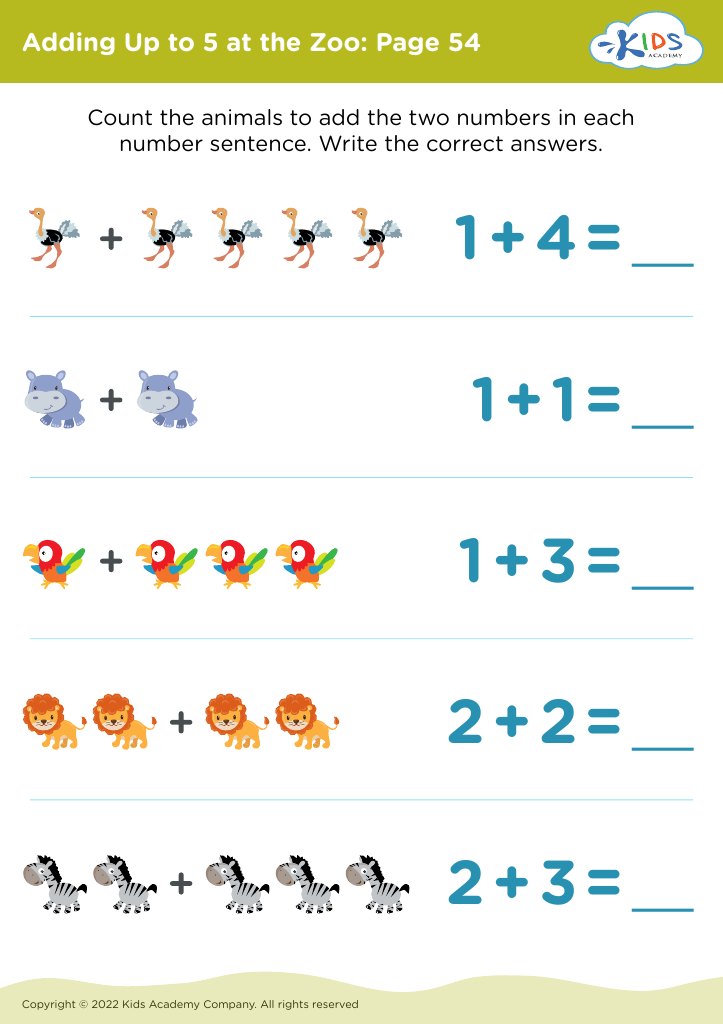
    Adding Up to 5 at the Zoo: Page 54
    Adding Up to 5 at the Zoo: Page 54
    Adding Up to 5 at the Zoo: Page 54
    Worksheet
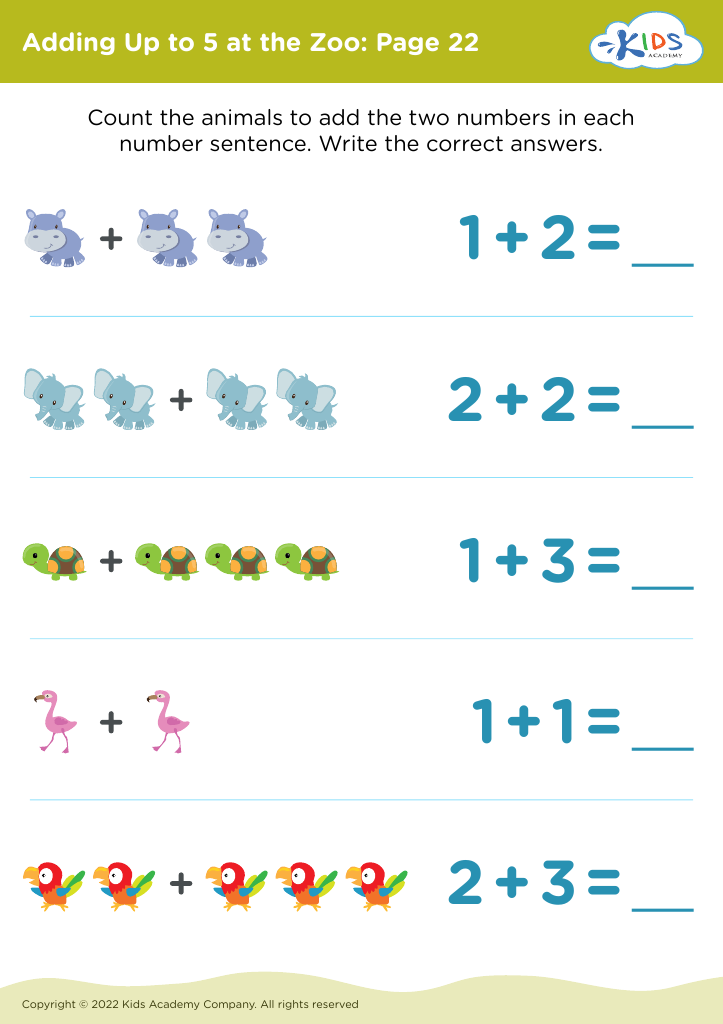
    Adding Up to 5 at the Zoo: Page 22
    Adding Up to 5 at the Zoo: Page 22
    Adding Up to 5 at the Zoo: Page 22
    Worksheet
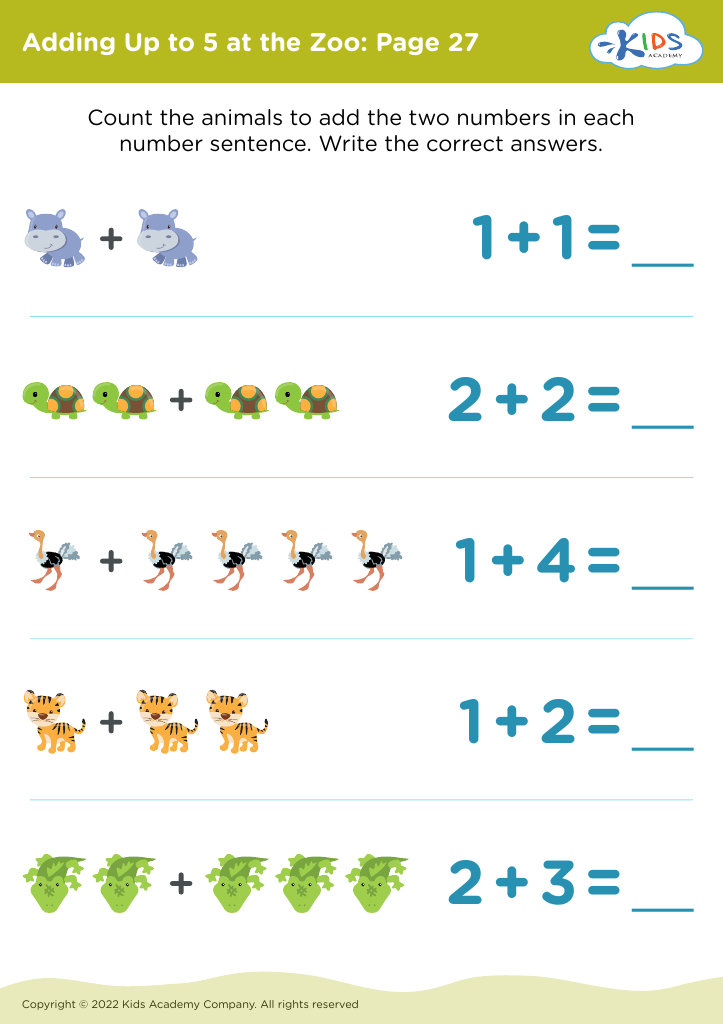
    Adding Up to 5 at the Zoo: Page 27
    Adding Up to 5 at the Zoo: Page 27
    Adding Up to 5 at the Zoo: Page 27
    Worksheet
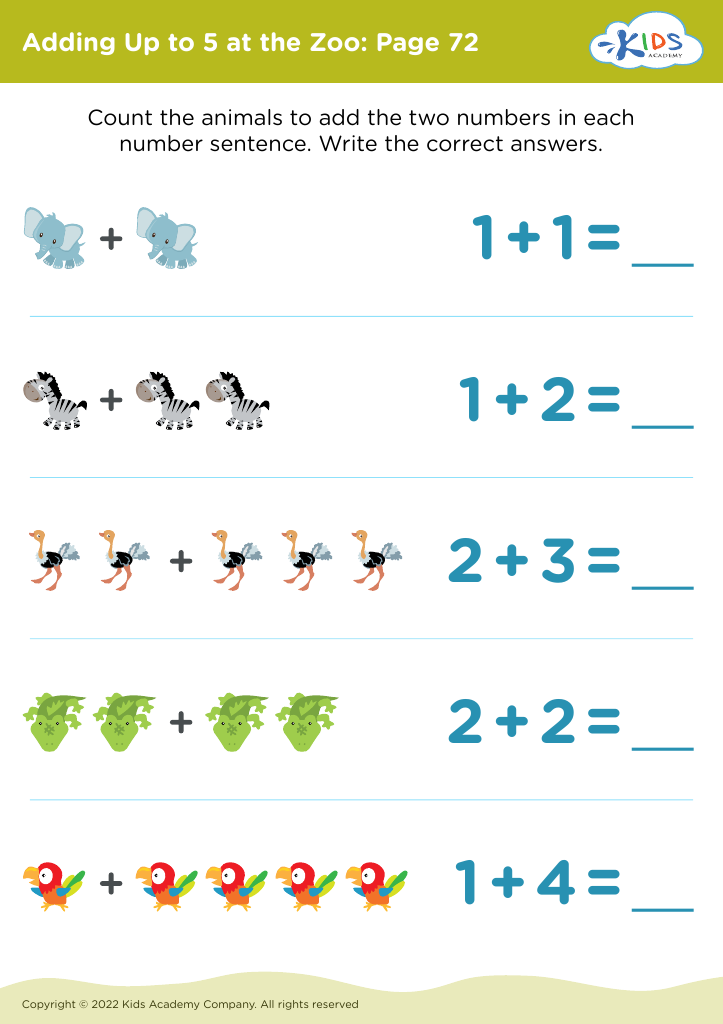
    Adding Up to 5 at the Zoo: Page 72
    Adding Up to 5 at the Zoo: Page 72
    Adding Up to 5 at the Zoo: Page 72
    Worksheet
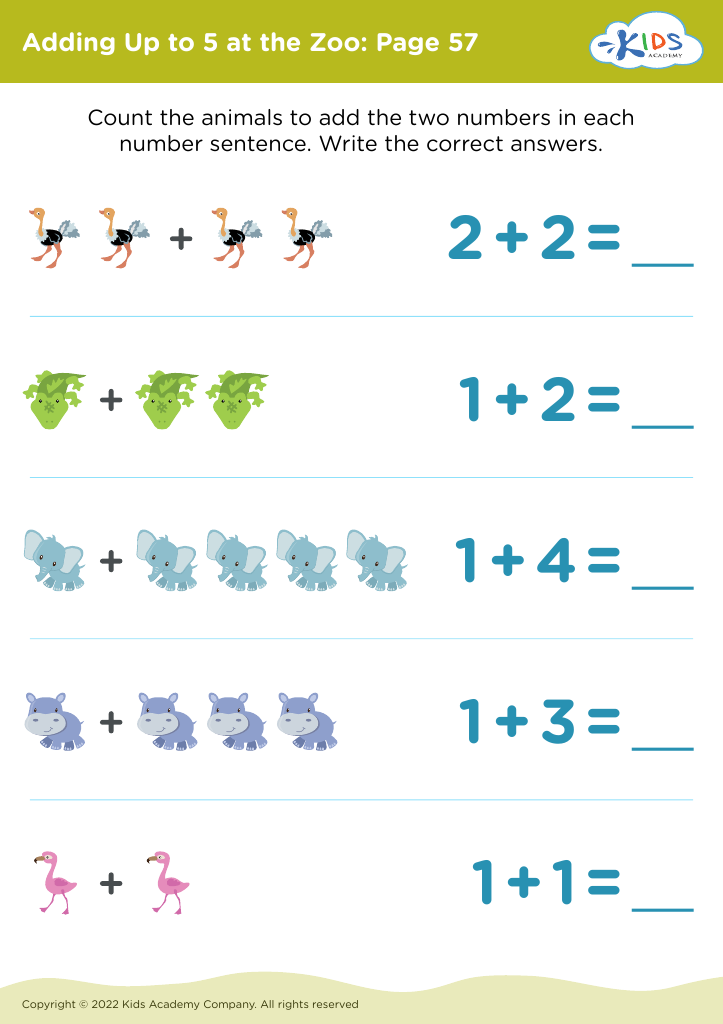
    Adding Up to 5 at the Zoo: Page 57
    Adding Up to 5 at the Zoo: Page 57
    Adding Up to 5 at the Zoo: Page 57
    Worksheet
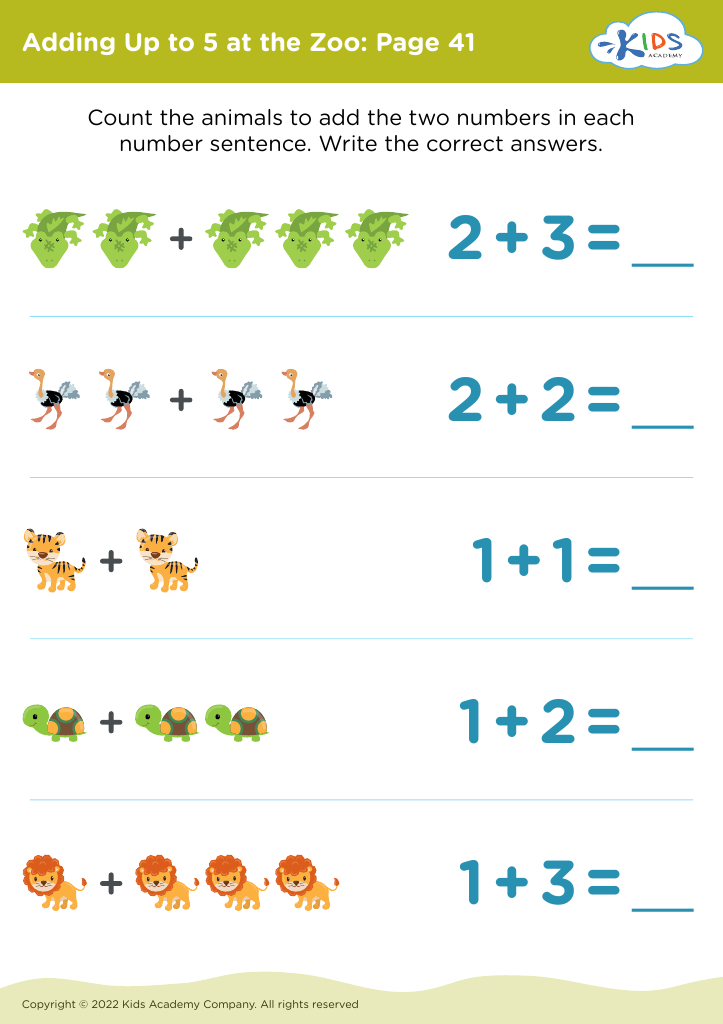
    Adding Up to 5 at the Zoo: Page 41
    Adding Up to 5 at the Zoo: Page 41
    Adding Up to 5 at the Zoo: Page 41
    Worksheet
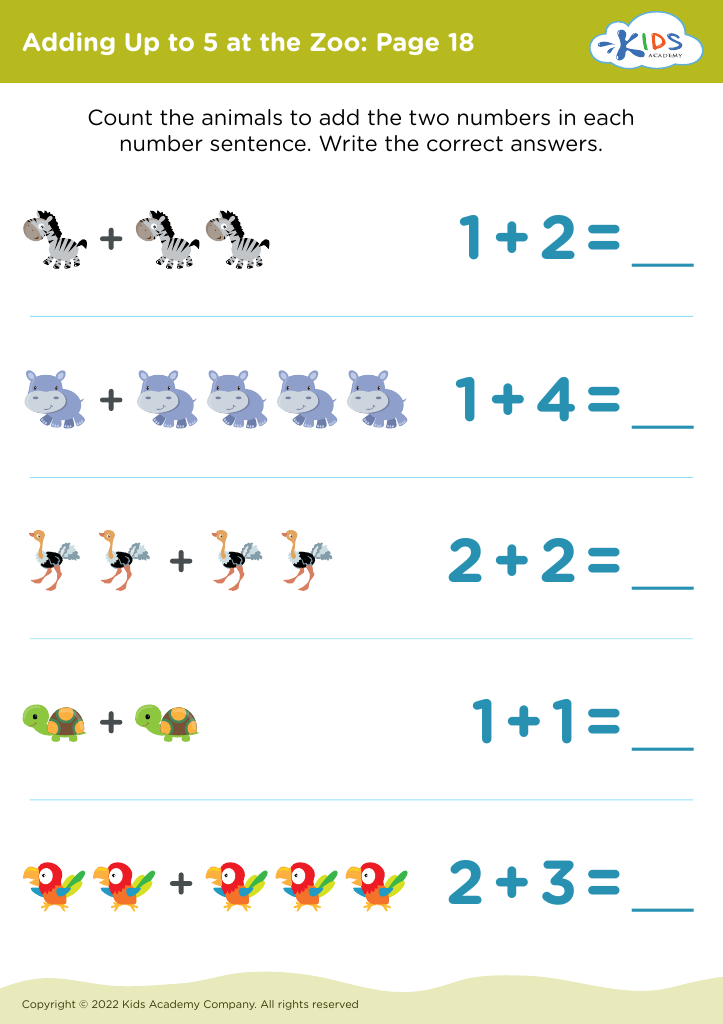
    Adding Up to 5 at the Zoo: Page 18
    Adding Up to 5 at the Zoo: Page 18
    Adding Up to 5 at the Zoo: Page 18
    Worksheet
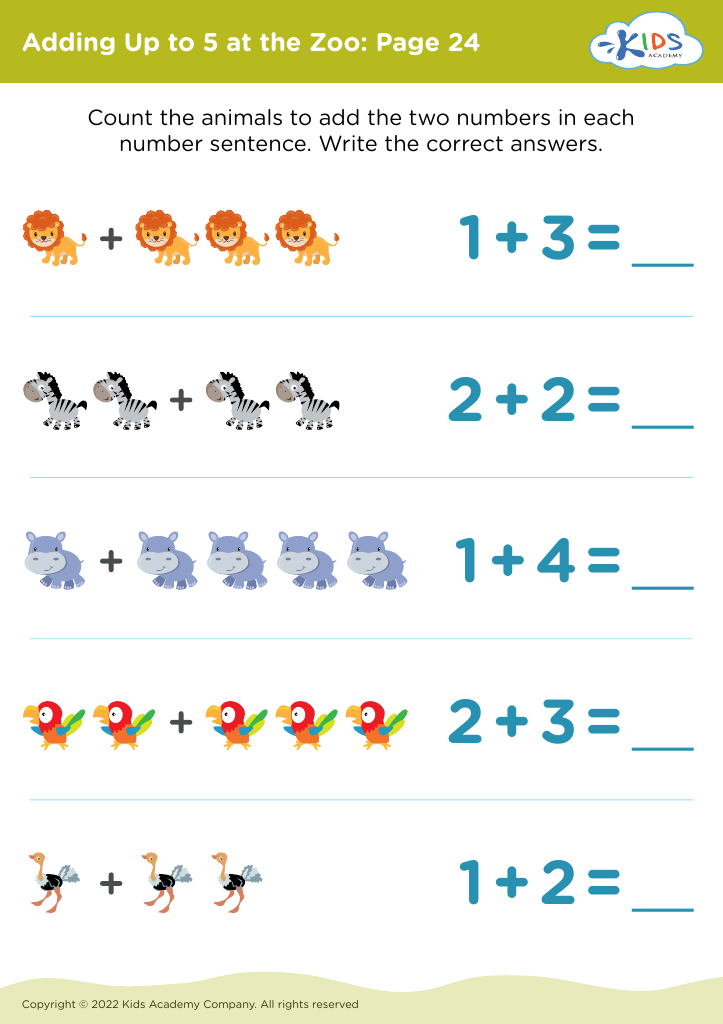
    Adding Up to 5 at the Zoo: Page 24
    Adding Up to 5 at the Zoo: Page 24
    Adding Up to 5 at the Zoo: Page 24
    Worksheet
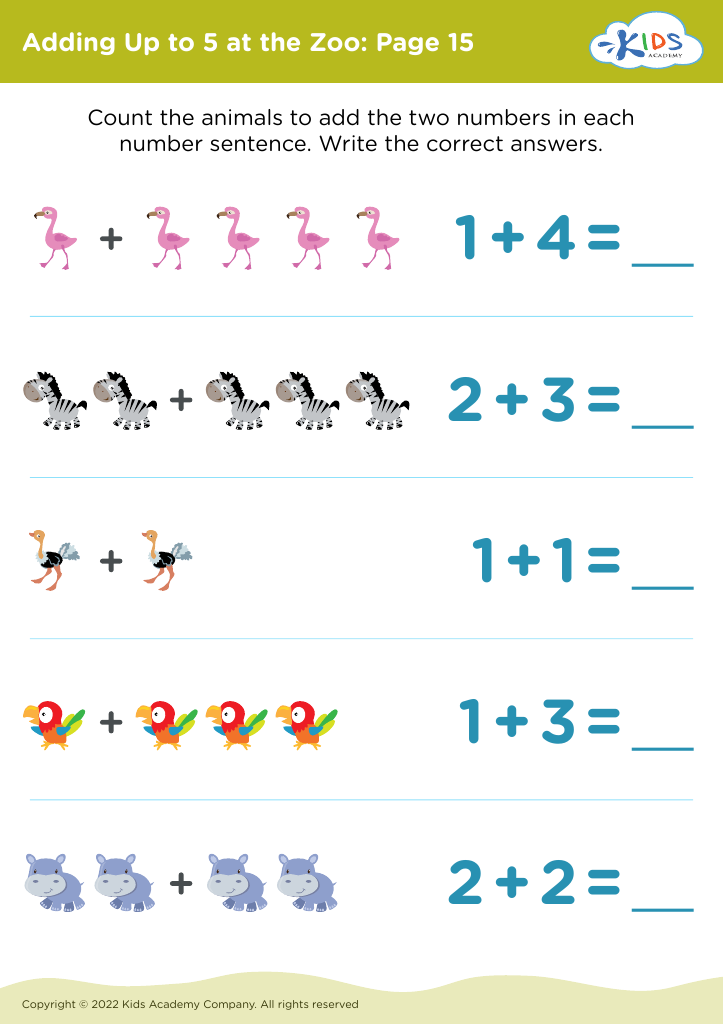
    Adding Up to 5 at the Zoo: Page 15
    Adding Up to 5 at the Zoo: Page 15
    Adding Up to 5 at the Zoo: Page 15
    Worksheet
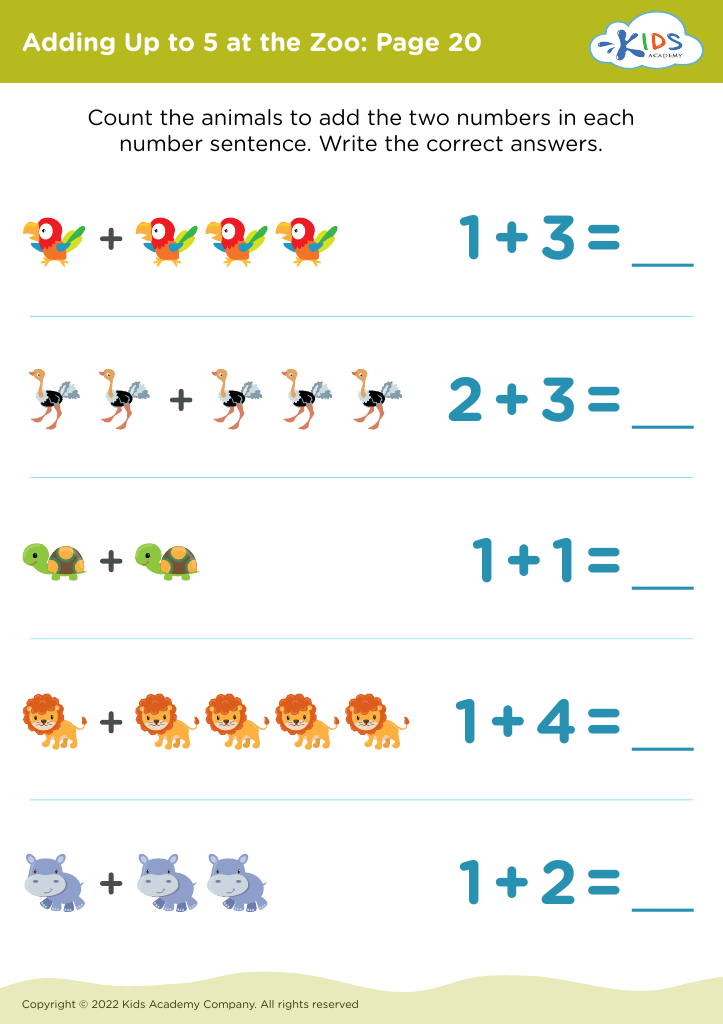
    Adding Up to 5 at the Zoo: Page 20
    Adding Up to 5 at the Zoo: Page 20
    Adding Up to 5 at the Zoo: Page 20
    Worksheet
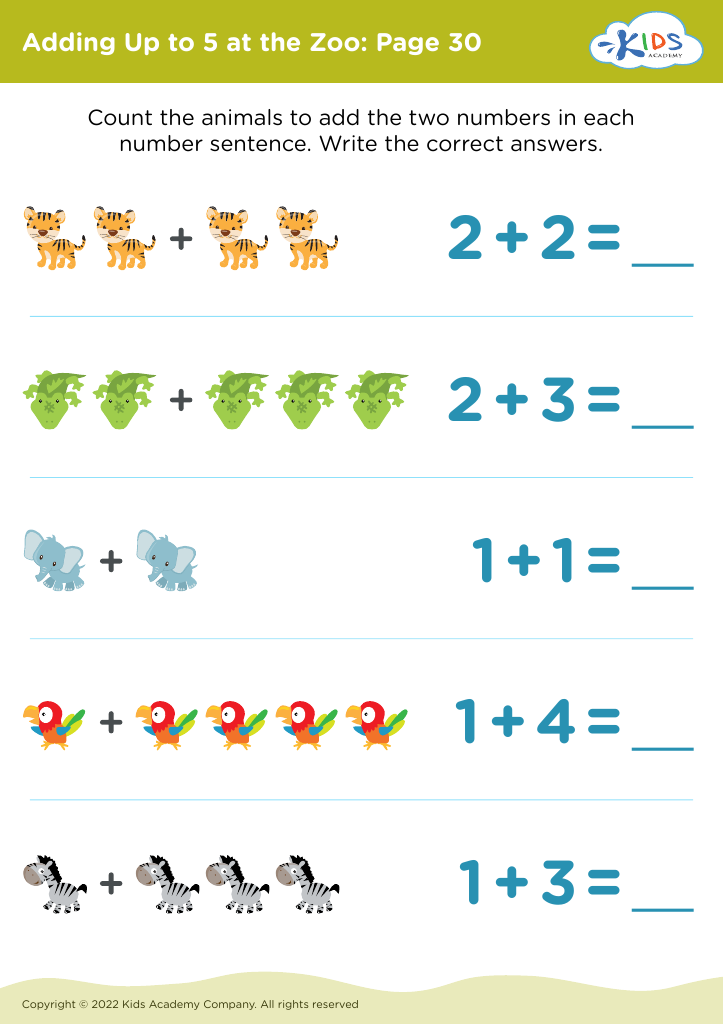
    Adding Up to 5 at the Zoo: Page 30
    Adding Up to 5 at the Zoo: Page 30
    Adding Up to 5 at the Zoo: Page 30
    Worksheet
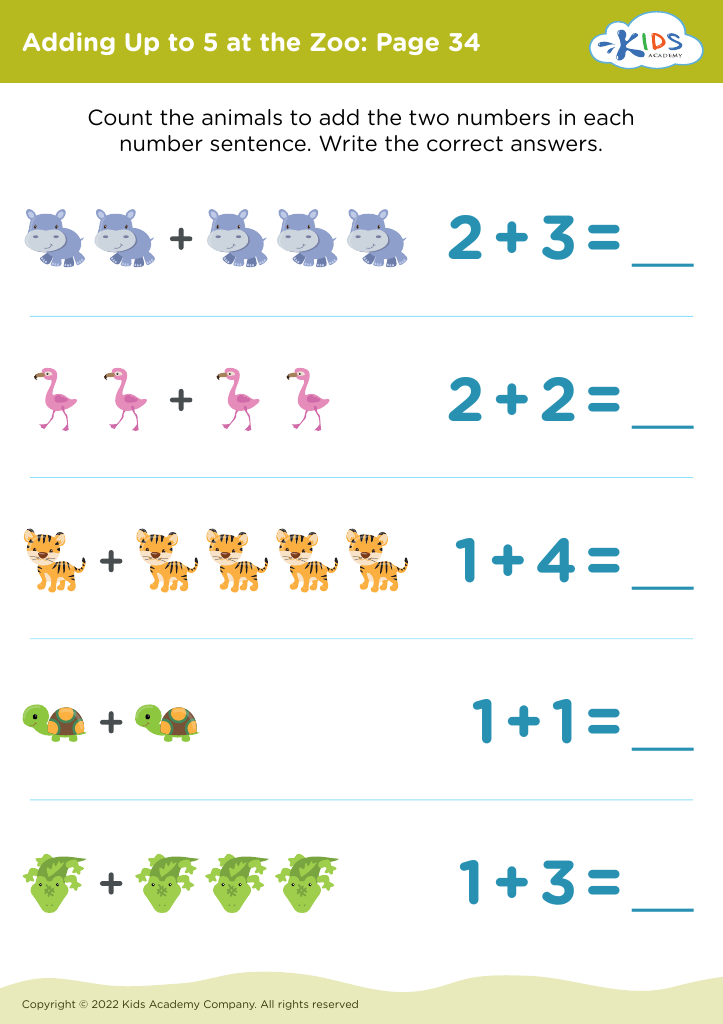
    Adding Up to 5 at the Zoo: Page 34
    Adding Up to 5 at the Zoo: Page 34
    Adding Up to 5 at the Zoo: Page 34
    Worksheet
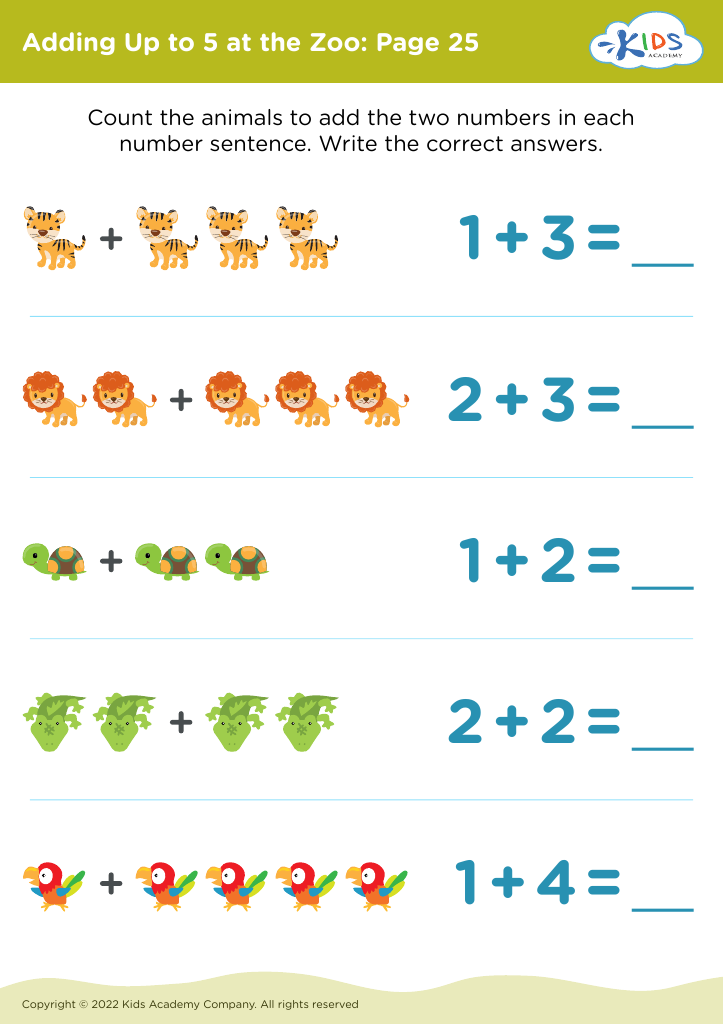
    Adding Up to 5 at the Zoo: Page 25
    Adding Up to 5 at the Zoo: Page 25
    Adding Up to 5 at the Zoo: Page 25
    Worksheet
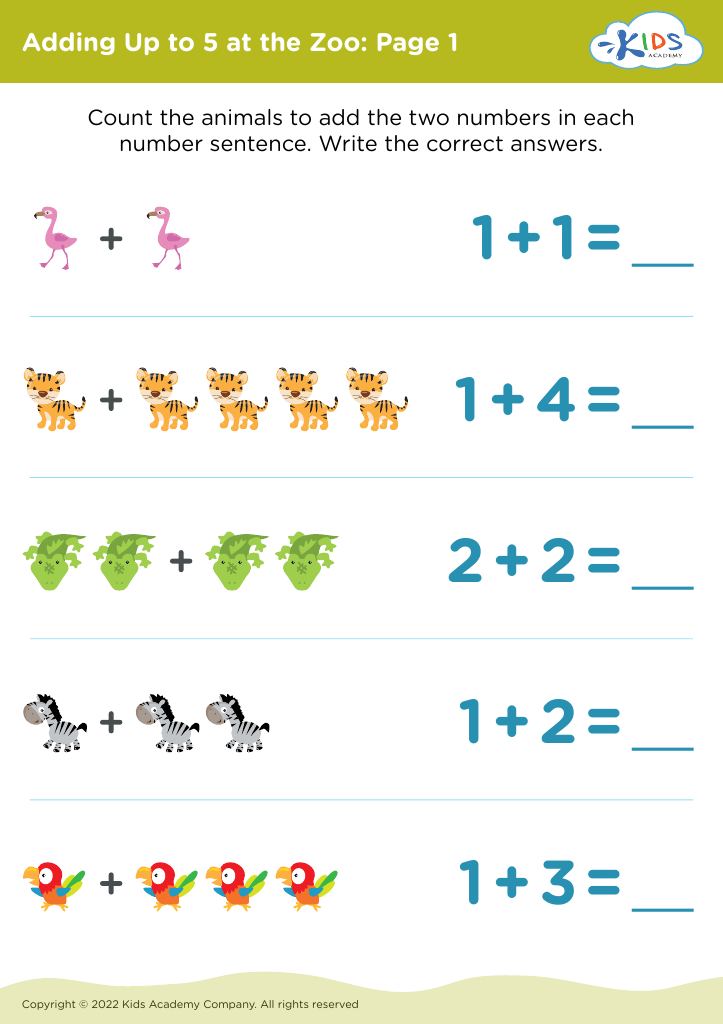
    Adding Up to 5 at the Zoo: Page 1
    Adding Up to 5 at the Zoo: Page 1

    Adding Up to 5 at the Zoo: Page 1

    Adding Up to 5 at the Zoo: Page 1
    Worksheet
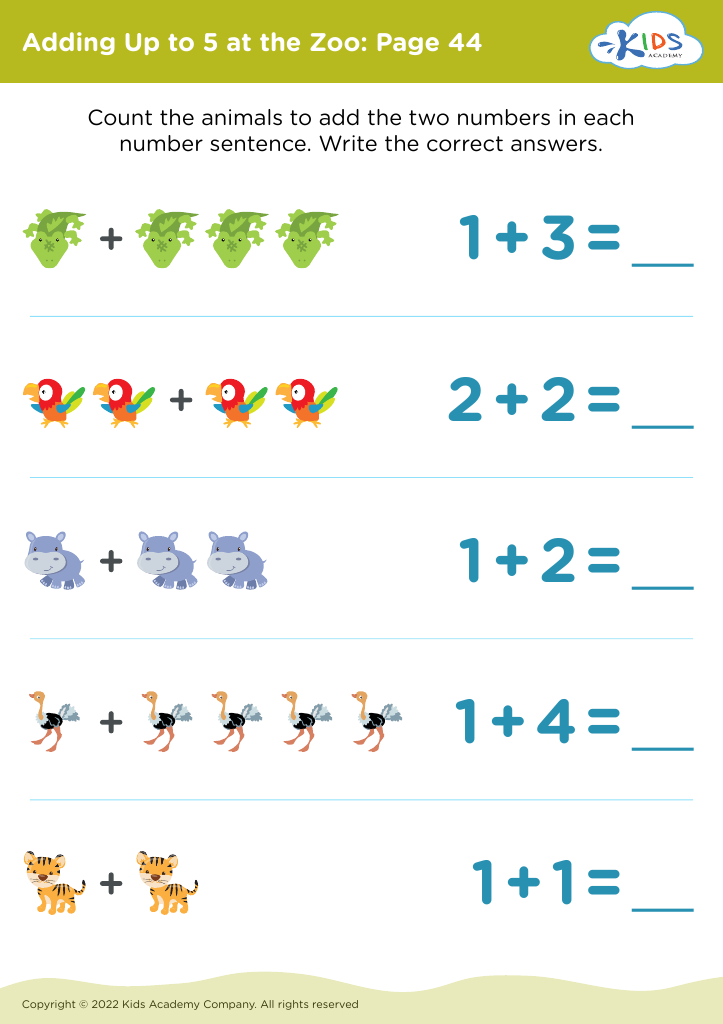
    Adding Up to 5 at the Zoo: Page 44
    Adding Up to 5 at the Zoo: Page 44
    Adding Up to 5 at the Zoo: Page 44
    Worksheet
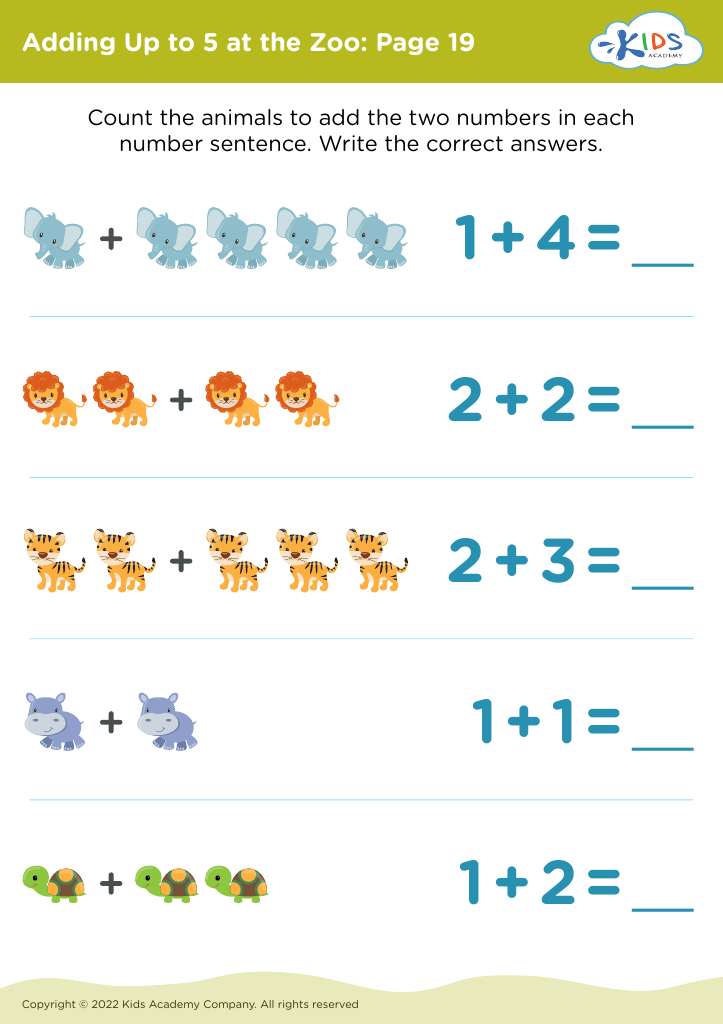
    Adding Up to 5 at the Zoo: Page 19
    Adding Up to 5 at the Zoo: Page 19
    Adding Up to 5 at the Zoo: Page 19
    Worksheet
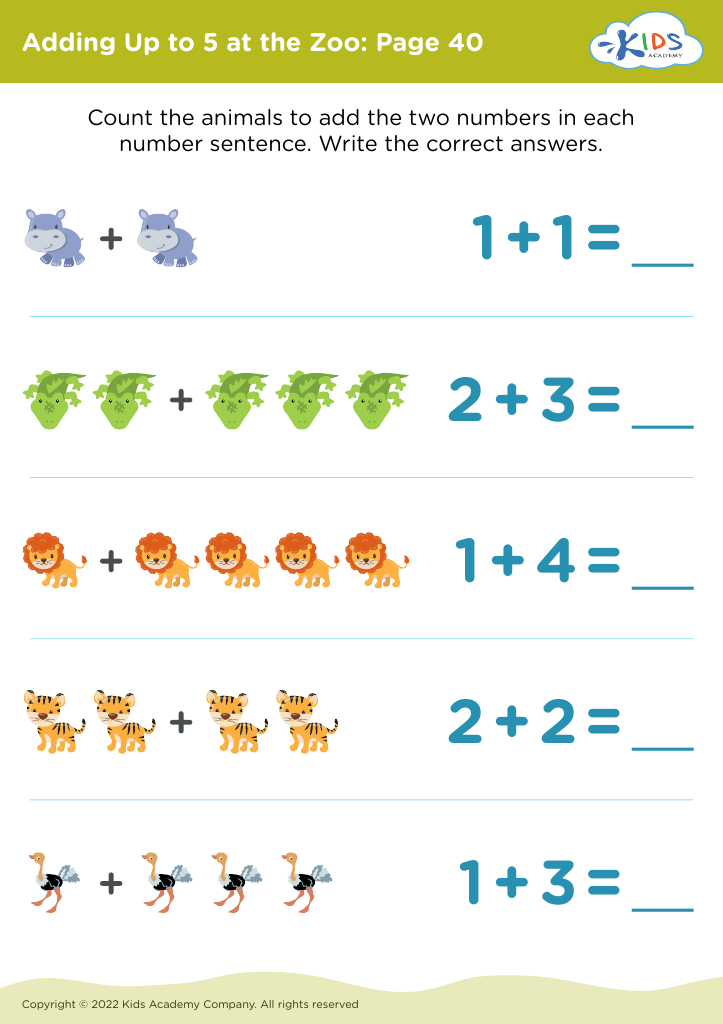
    Adding Up to 5 at the Zoo: Page 40
    Adding Up to 5 at the Zoo: Page 40
    Adding Up to 5 at the Zoo: Page 40
    Worksheet
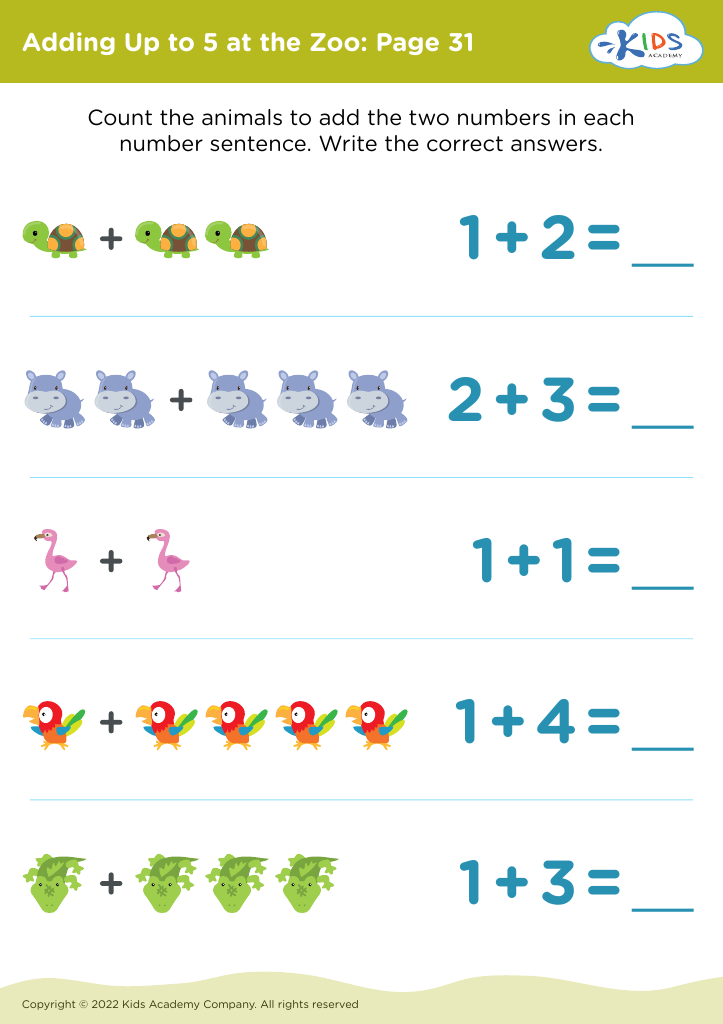
    Adding Up to 5 at the Zoo: Page 31
    Adding Up to 5 at the Zoo: Page 31
    Adding Up to 5 at the Zoo: Page 31
    Worksheet


    Cognitive development is critical in the early years, shaping how children think, learn, and interact with the world. "Cognitive Development: Adding at the Zoo" effectively engages young learners, combining academic skills with play-based learning in a familiar and exciting setting. This approach captures children's interest while teaching important mathematical concepts, such as addition and number sense.

    For parents and teachers, fostering cognitive growth through such interactive educational experiences is crucial, as they facilitate problem-solving, critical thinking, and creativity. Learning in vibrant contexts like a zoo allows children to connect academic concepts with real-life scenarios, making learning relevant and memorable. This not only enhances their mathematical skills but also promotes curiosity about the world around them.

    Additionally, the collaborative aspect of group activities, such as working with peers to solve math challenges, develops social skills and teamwork. Cognitive development activities like these nurture emotional intelligence and adaptability, preparing children for future academic success.

    In summary, "Adding at the Zoo" is a valuable resource that supports holistic development. By prioritizing such enriching experiences, parents and teachers lay a solid foundation for children's lifelong learning and growth, ensuring they become confident, competent individuals.