Filters

47 filtered results

Clear all filters
Favorites
With answer key
Interactive

47 filtered results

Difficulty Level

Grade


Check out this FREE Trial Lesson on Adding in the Sea for age 4-9!

Short and Long Vowel Sort

Favorites
With answer key
Interactive
  • 4-9
  • Basic Addition Skills
  • Adding in the Sea
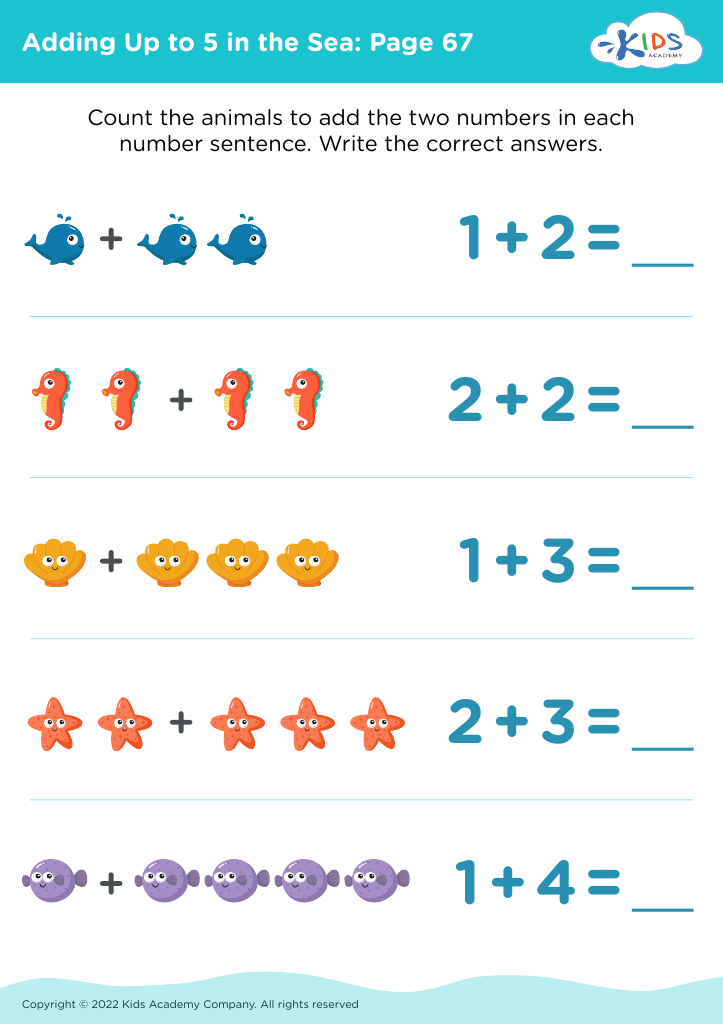
Adding Up to 5 in the Sea: Page 67
Worksheet
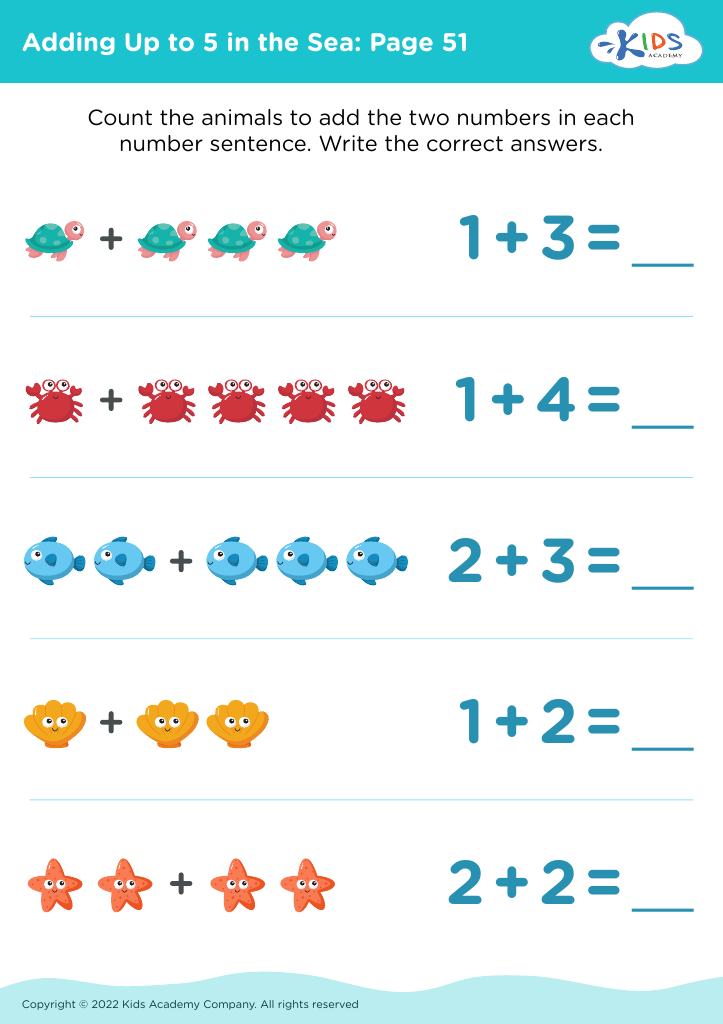
Adding Up to 5 in the Sea: Page 51
Worksheet
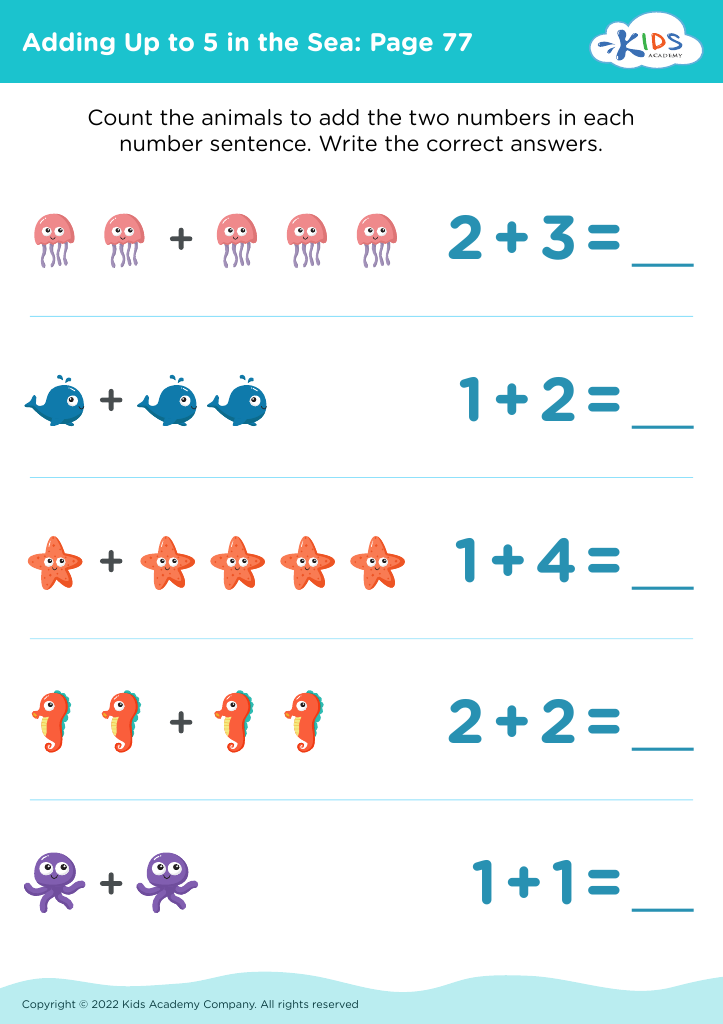
Adding Up to 5 in the Sea: Page 77
Worksheet
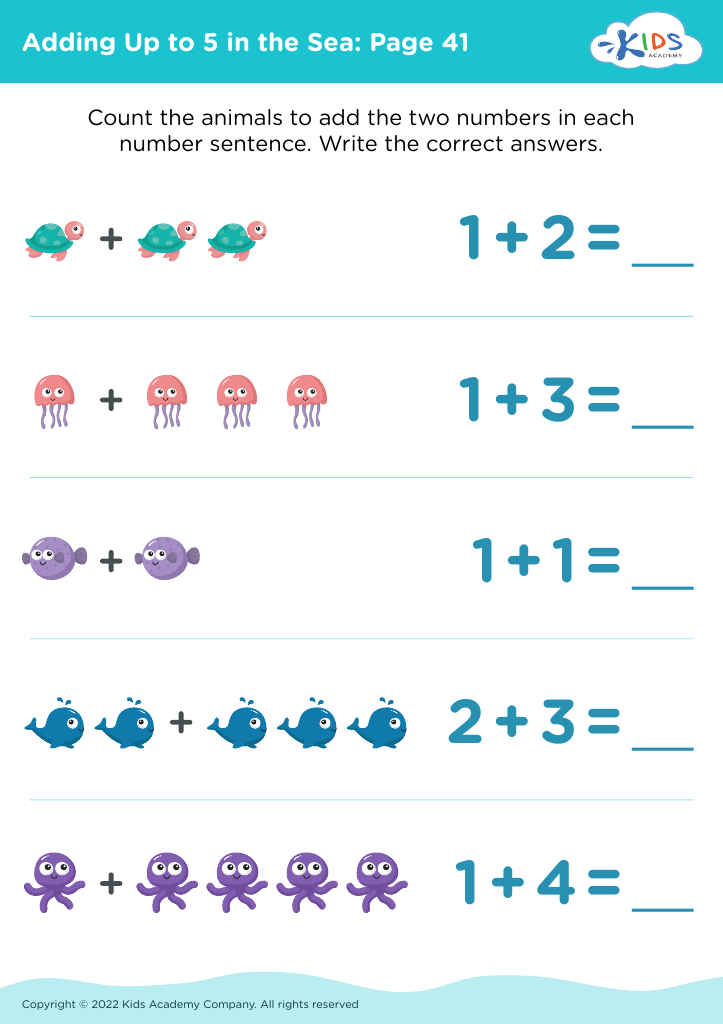
Adding Up to 5 in the Sea: Page 41
Worksheet
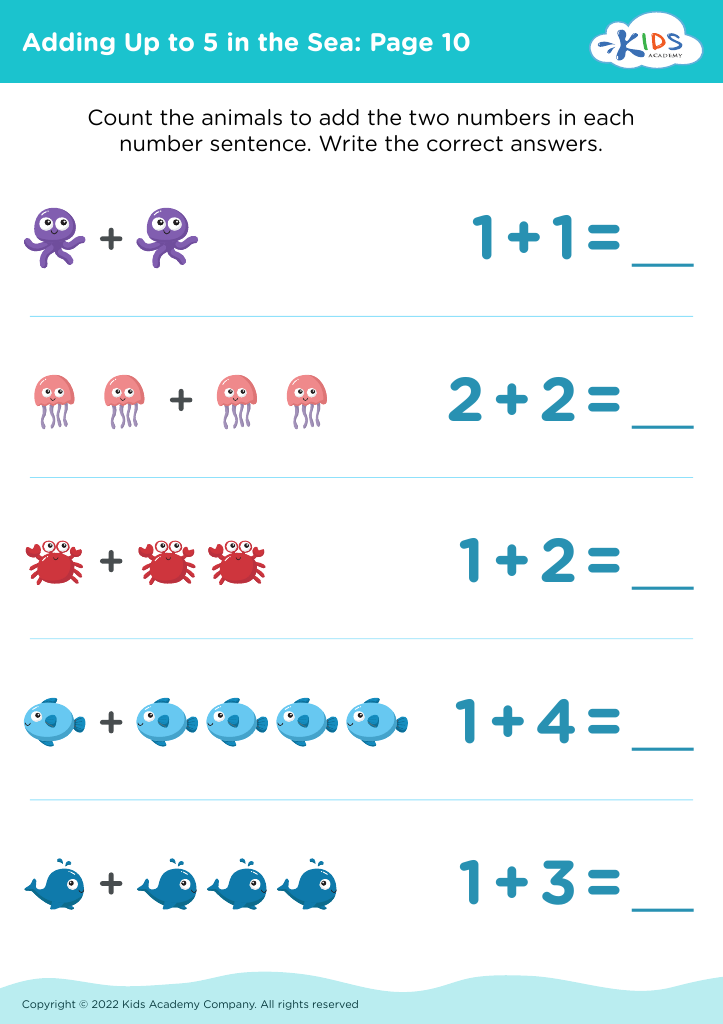
Adding Up to 5 in the Sea: Page 10
Worksheet
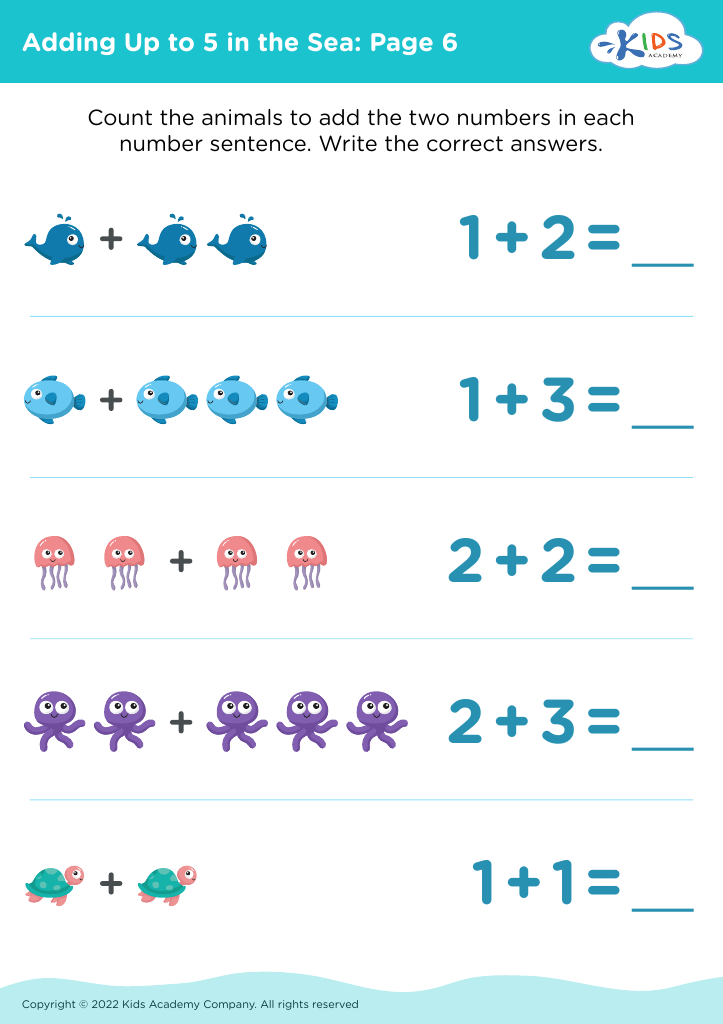
Adding Up to 5 in the Sea: Page 6

Adding Up to 5 in the Sea: Page 6

Adding Up to 5 in the Sea: Page 6
Worksheet
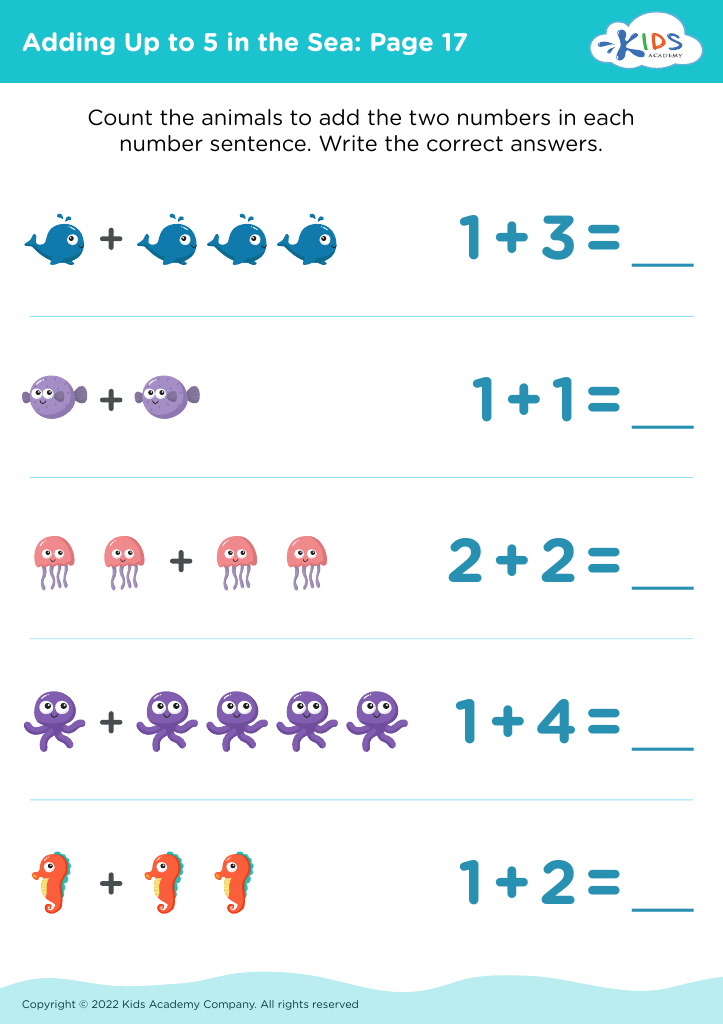
Adding Up to 5 in the Sea: Page 17
Worksheet
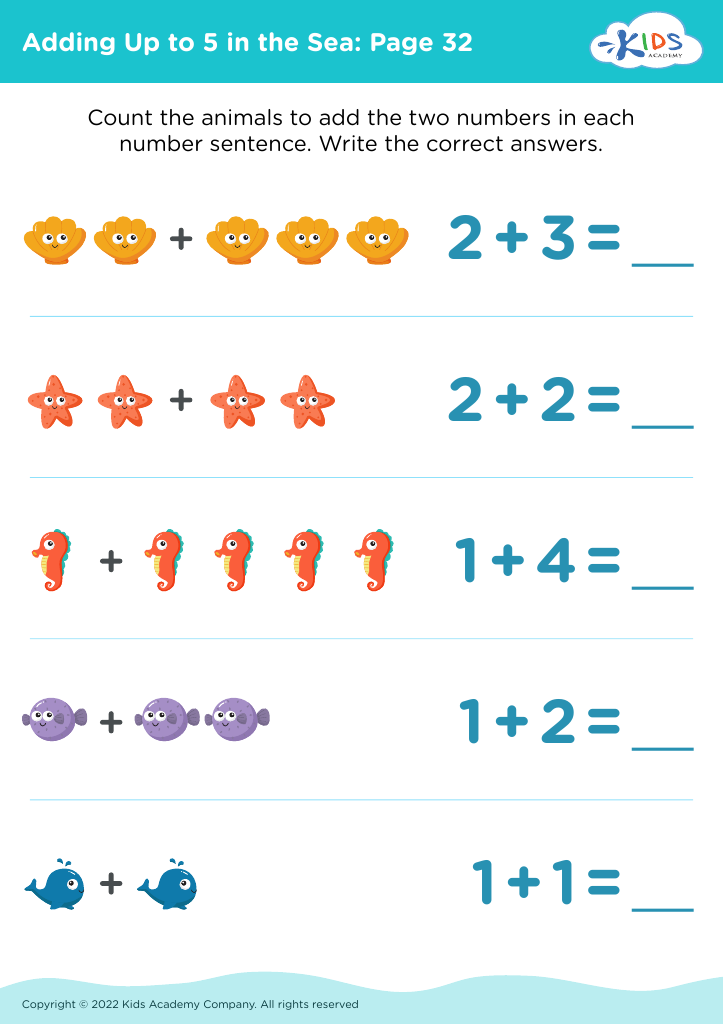
Adding Up to 5 in the Sea: Page 32
Worksheet
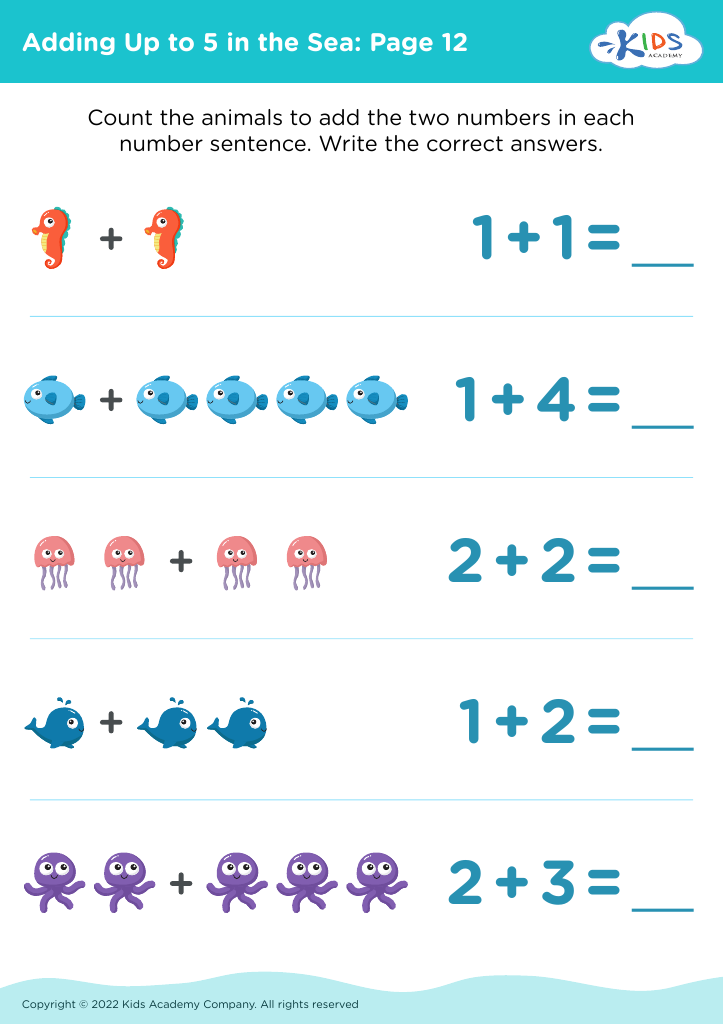
Adding Up to 5 in the Sea: Page 12
Worksheet
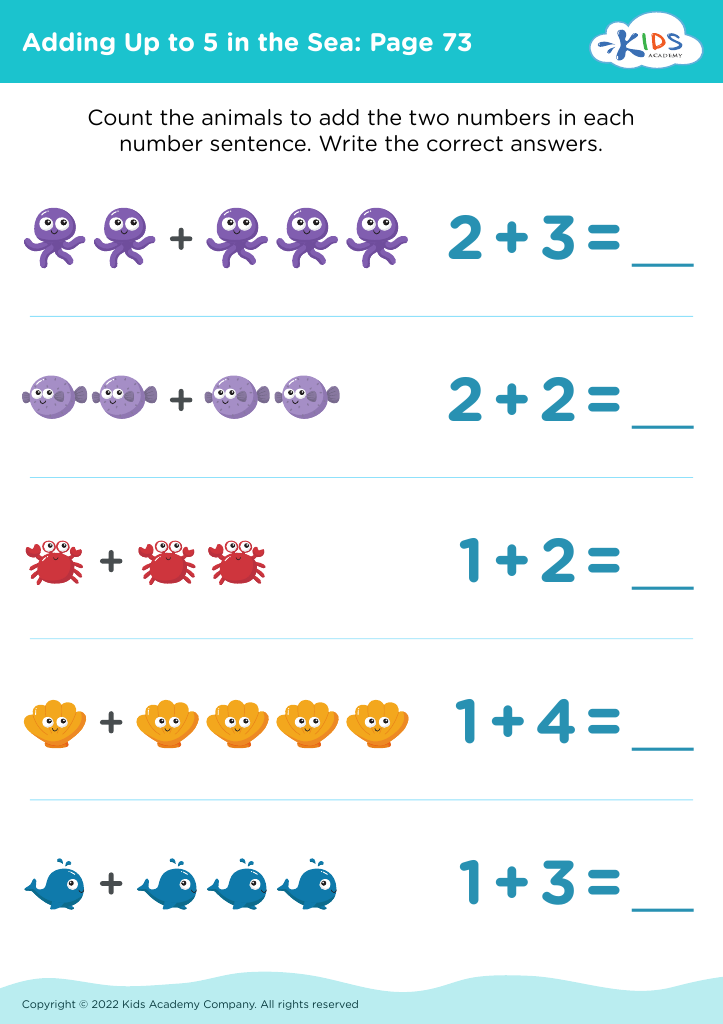
Adding Up to 5 in the Sea: Page 73
Worksheet
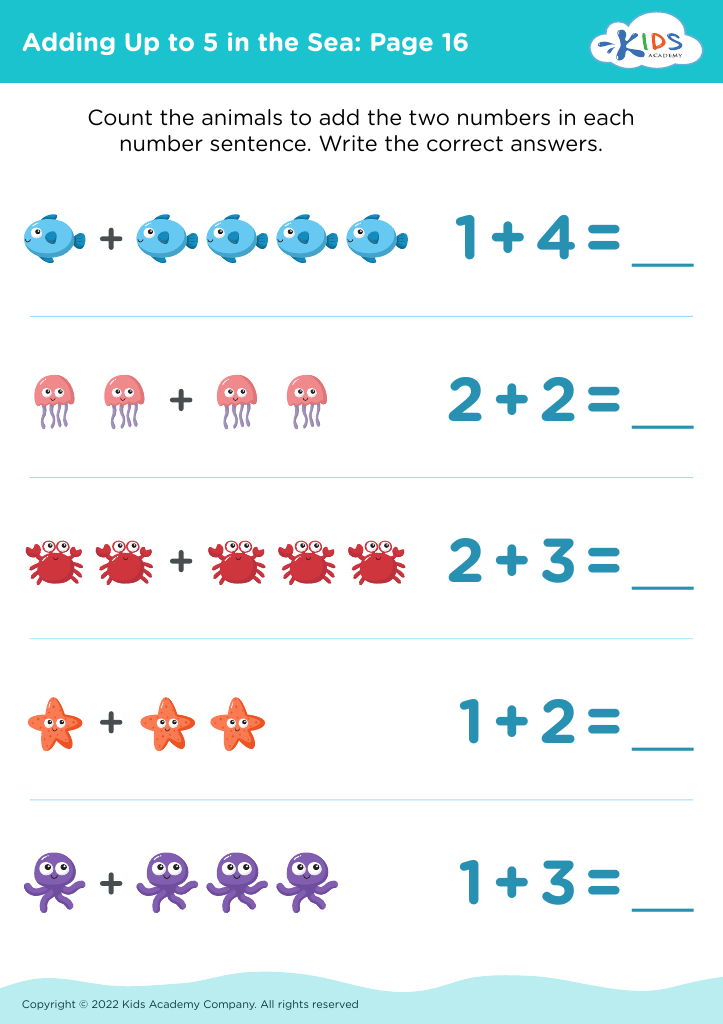
Adding Up to 5 in the Sea: Page 16
Worksheet
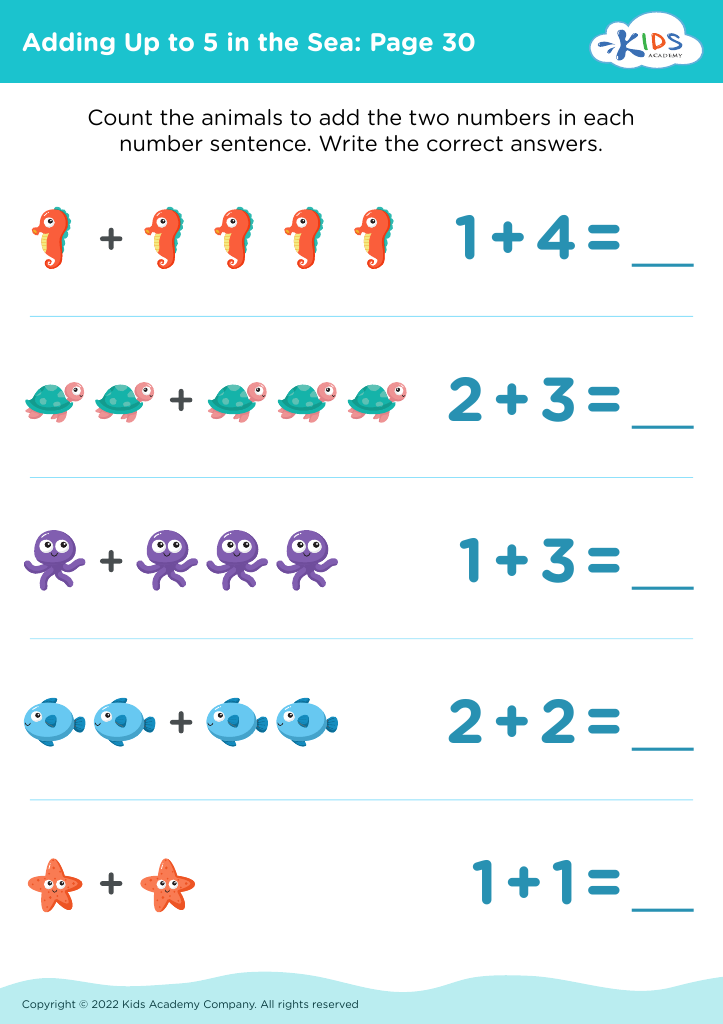
Adding Up to 5 in the Sea: Page 30
Worksheet
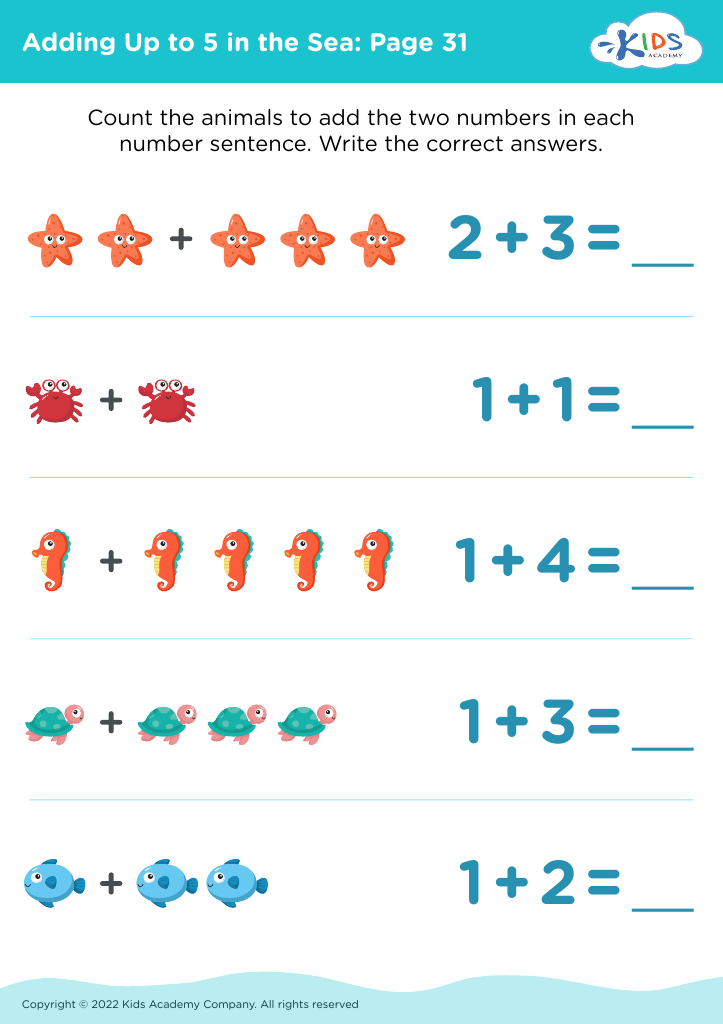
Adding Up to 5 in the Sea: Page 31
Worksheet
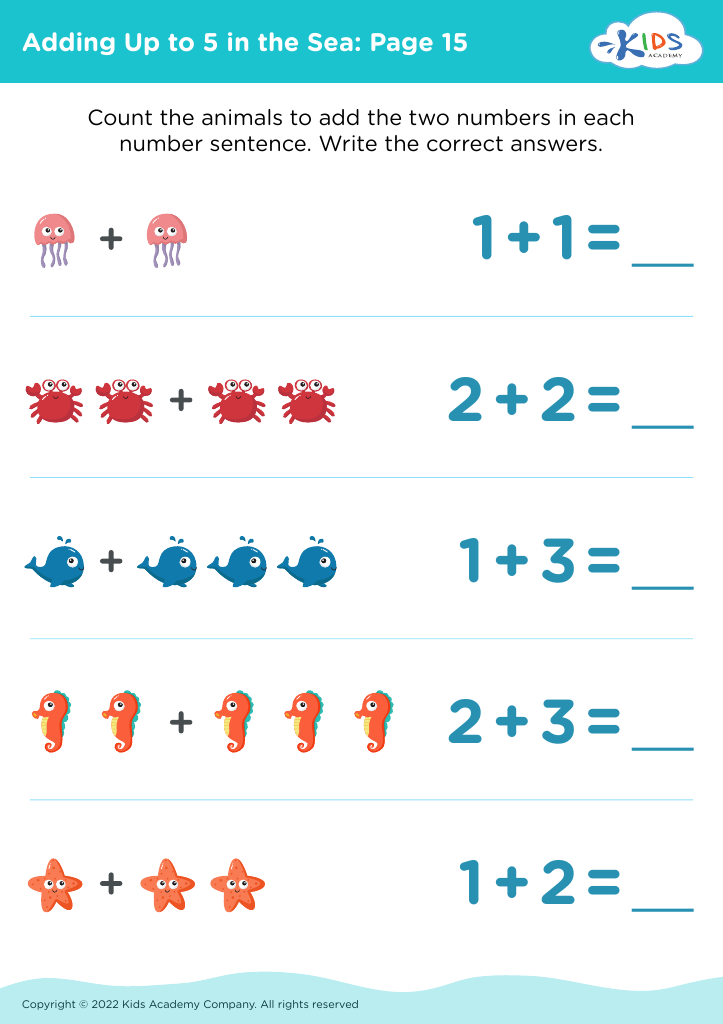
Adding Up to 5 in the Sea: Page 15
Worksheet
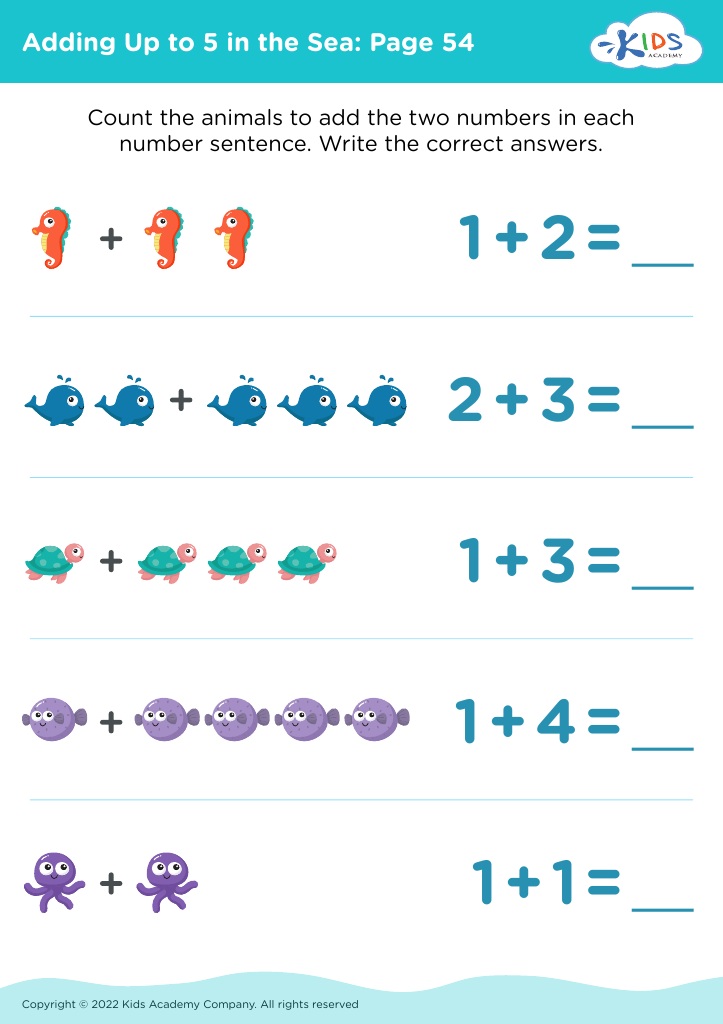
Adding Up to 5 in the Sea: Page 54
Worksheet
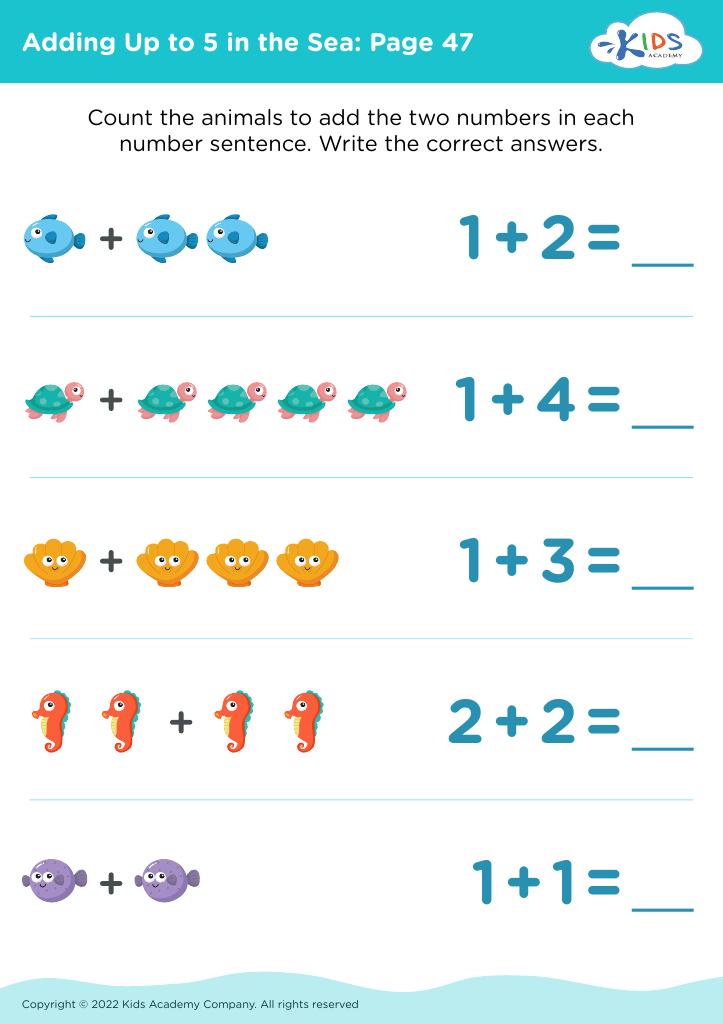
Adding Up to 5 in the Sea: Page 47
Worksheet
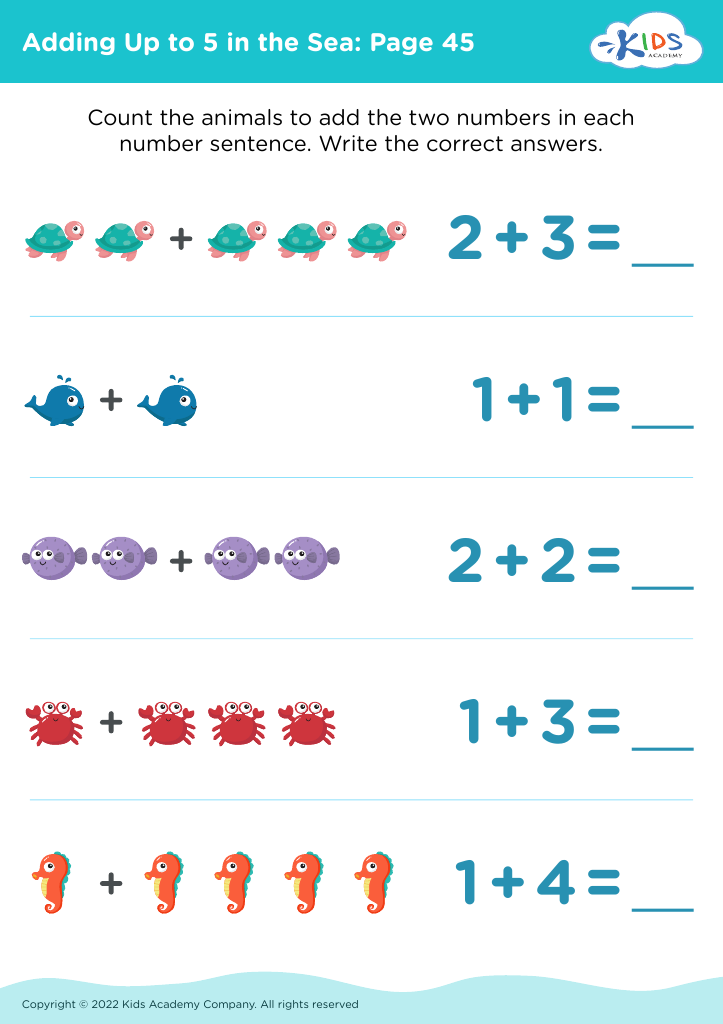
Adding Up to 5 in the Sea: Page 45
Worksheet
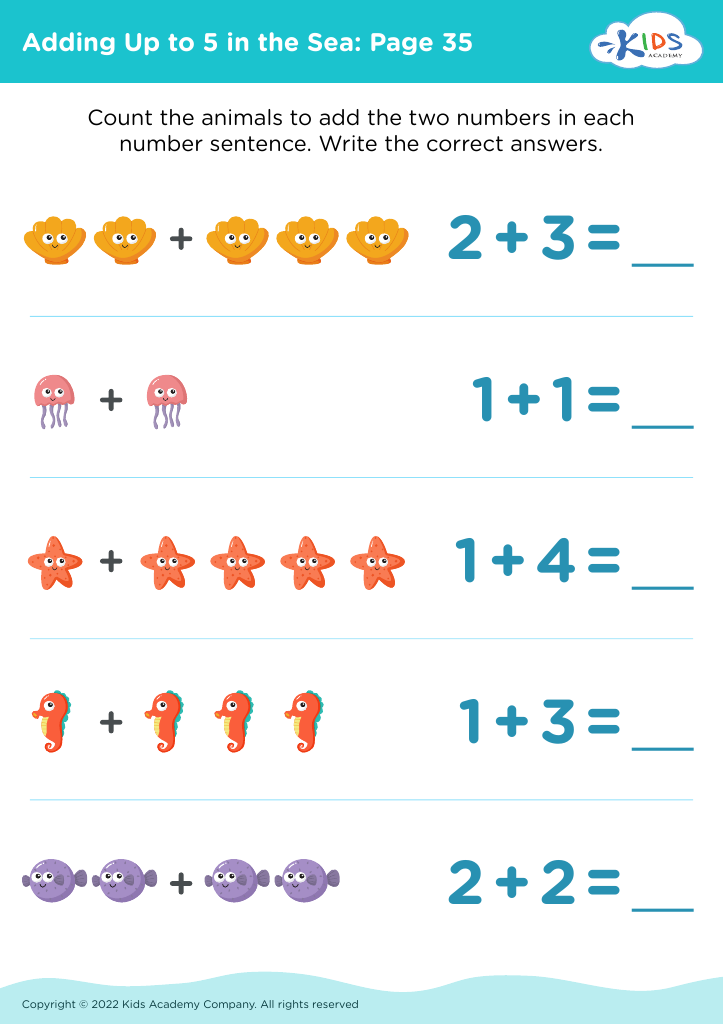
Adding Up to 5 in the Sea: Page 35
Worksheet
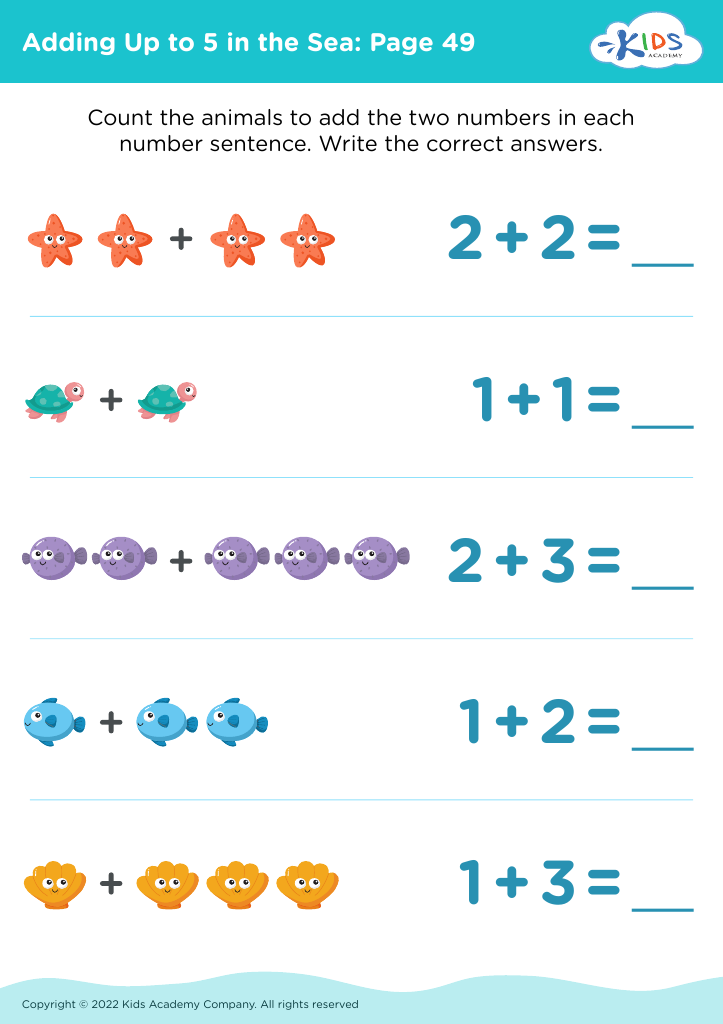
Adding Up to 5 in the Sea: Page 49
Worksheet
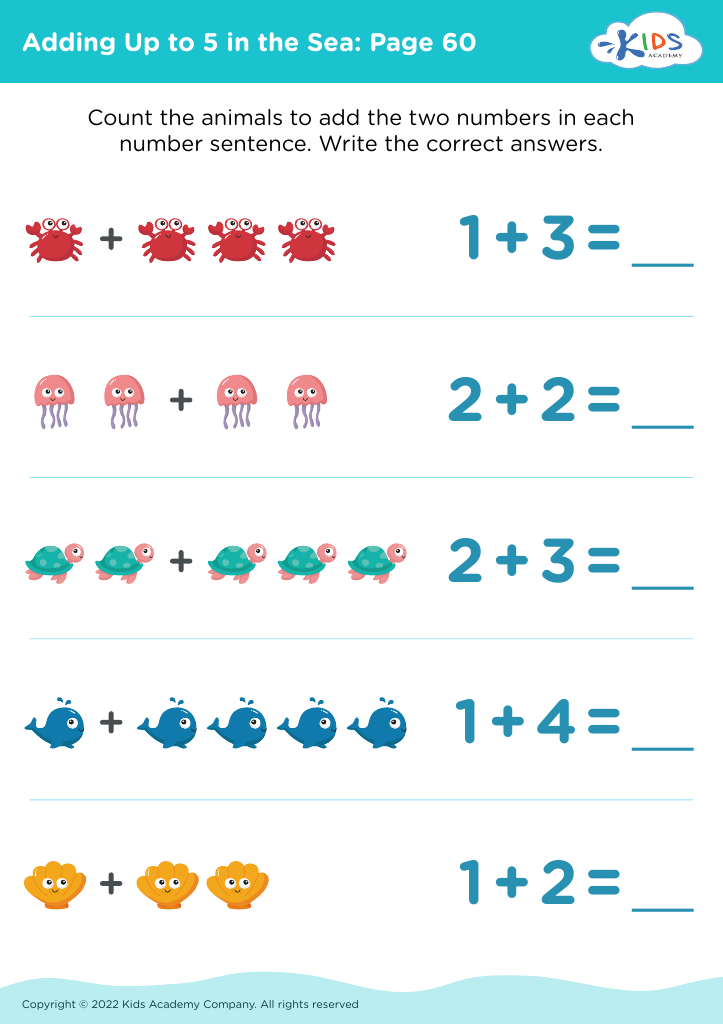
Adding Up to 5 in the Sea: Page 60
Worksheet
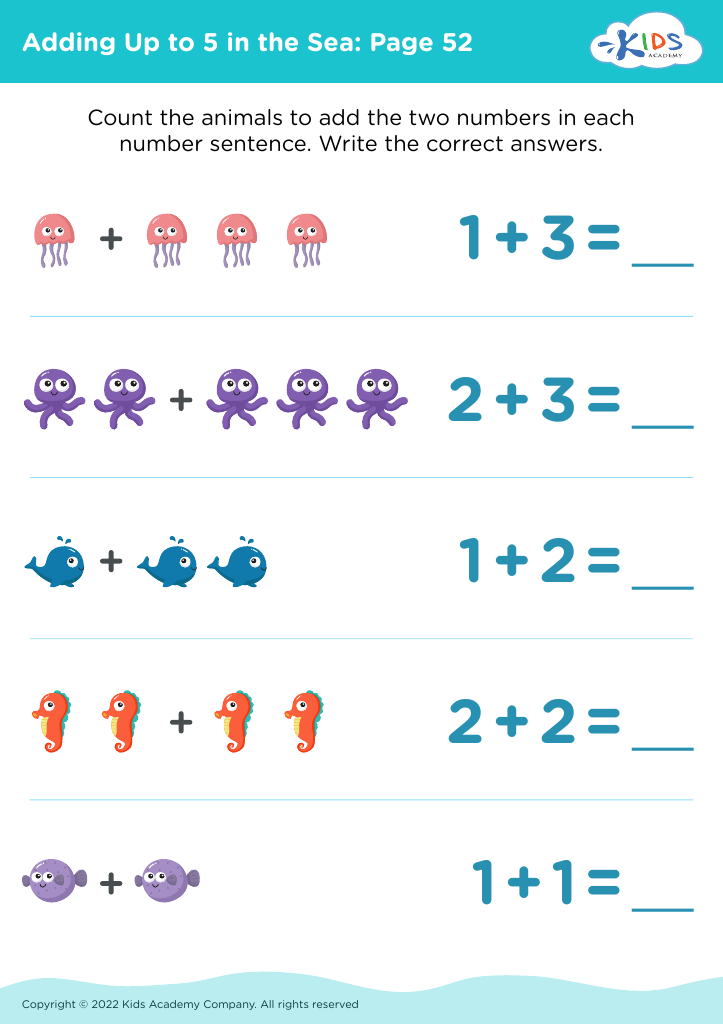
Adding Up to 5 in the Sea: Page 52
Worksheet
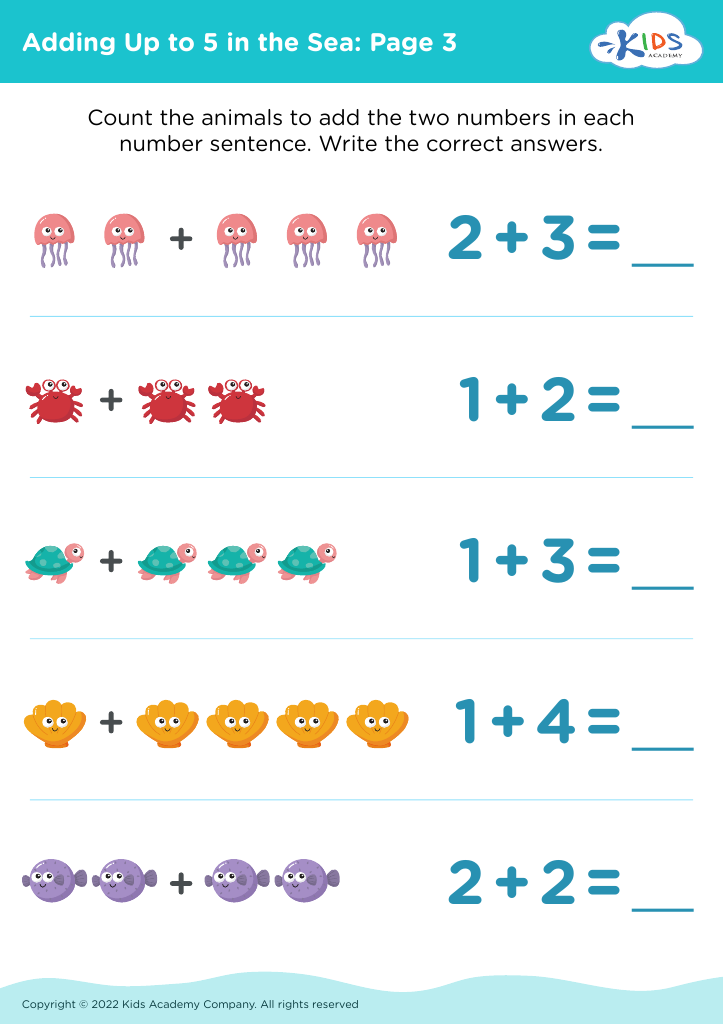
Adding Up to 5 in the Sea: Page 3

Adding Up to 5 in the Sea: Page 3

Adding Up to 5 in the Sea: Page 3
Worksheet
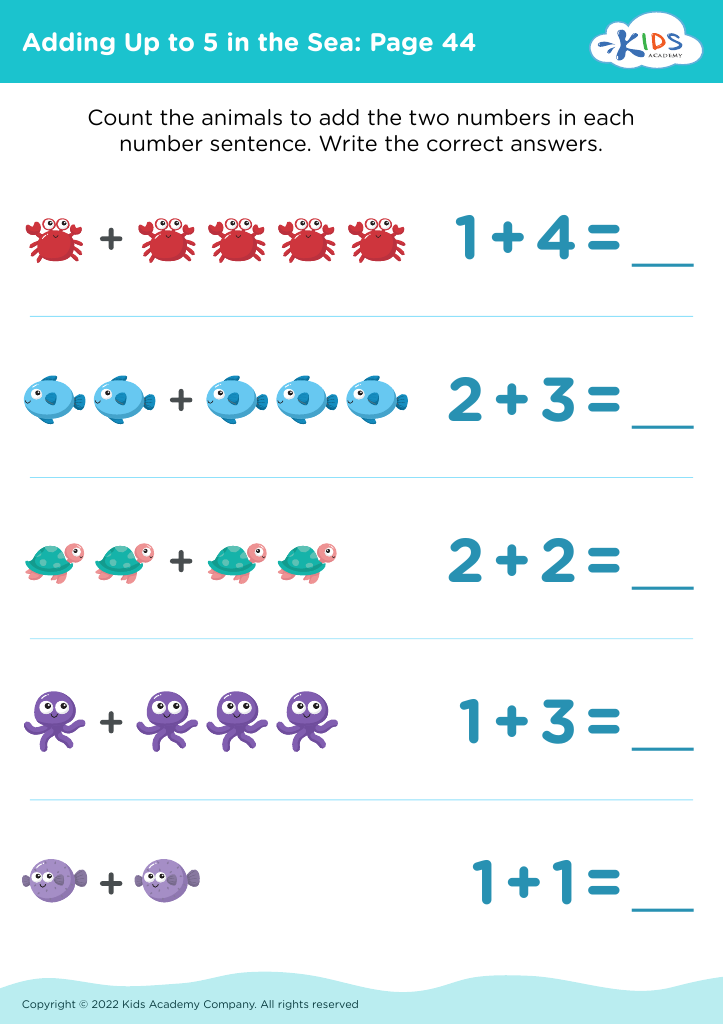
Adding Up to 5 in the Sea: Page 44
Worksheet


Basic addition skills are foundational to a child’s mathematical understanding and cognitive development, especially during the critical early childhood years. The educational game "Basic Addition Skills Adding in the Sea" focuses on making learning fun and effective for children ages 4-9. Here’s why parents and teachers should prioritize this kind of resource:

First, developing basic addition skills at an early age can significantly boost a child's confidence in math. Success with addition often builds a strong numeric foundation, making advanced concepts easier to grasp later on. This foundational knowledge also translates into improved problem-solving skills and logical thinking.

Second, "Adding in the Sea" engages children through an interactive and thematic underwater adventure, making learning enjoyable and less intimidating. This method can enhance children’s retention of mathematical facts and concepts due to the appealing and repeatable nature of the game.

Moreover, incorporating fun elements into learning helps maintain a child's interest and enthusiasm, making them more likely to practice regularly and thereby improve their skills.

Lastly, cultivating these abilities within the recommended age range aligns with academic curriculums, creating a smoother, more seamless transition into formal education settings. It ensures children are adequately prepared for future academic challenges, contributing to their overall academic success and fostering a lifelong love for learning.

By focusing on "Basic Addition Skills Adding in the Sea," parents and teachers invest in a critical aspect of their child's educational foundation, facilitating both immediate and long-term academic success and cognitive growth.