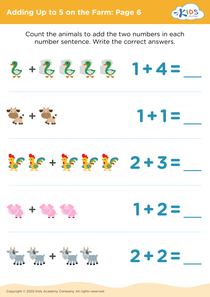
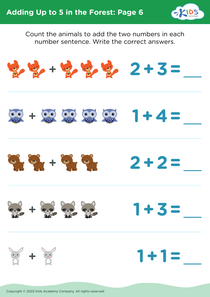
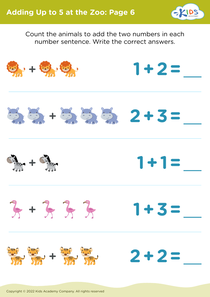
Basic Math Skills Adding in the Sea Worksheets for Ages 4-9
4 filtered results
-
From - To
Explore the exciting world of "Basic Math Skills: Adding in the Sea Worksheets" designed for children ages 4-9! Our engaging worksheets make learning addition fun, incorporating vibrant sea-themed scenarios that capture young learners' imaginations. Each worksheet features colorful underwater illustrations, reinforcing foundational math concepts while sparking curiosity about marine life. Perfect for classroom use or home practice, these activities promote critical thinking and counting skills through enjoyable ocean-related problems. Foster a love for math as your child dives into hands-on practice that ranges from simple addition to more complex sums. Embrace learning with these captivating worksheets today!
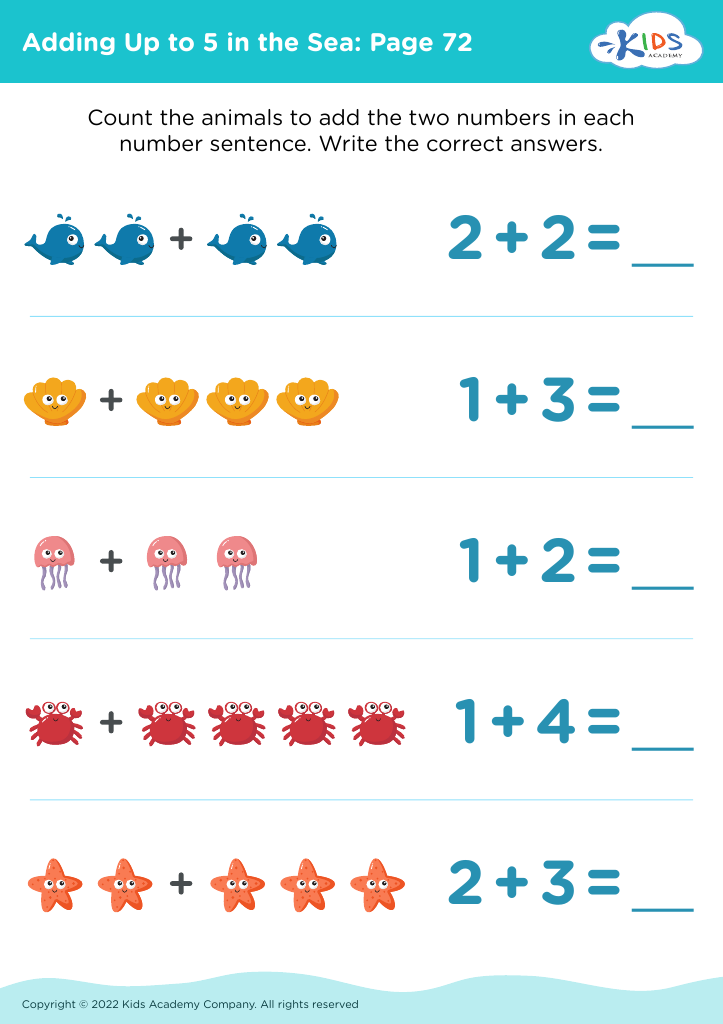
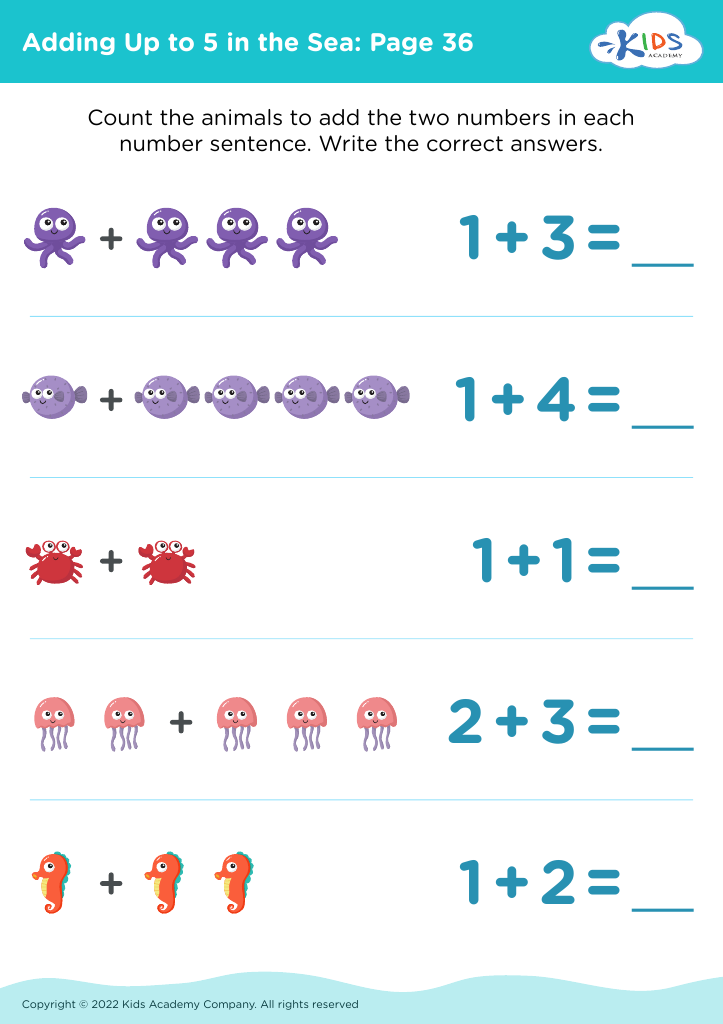
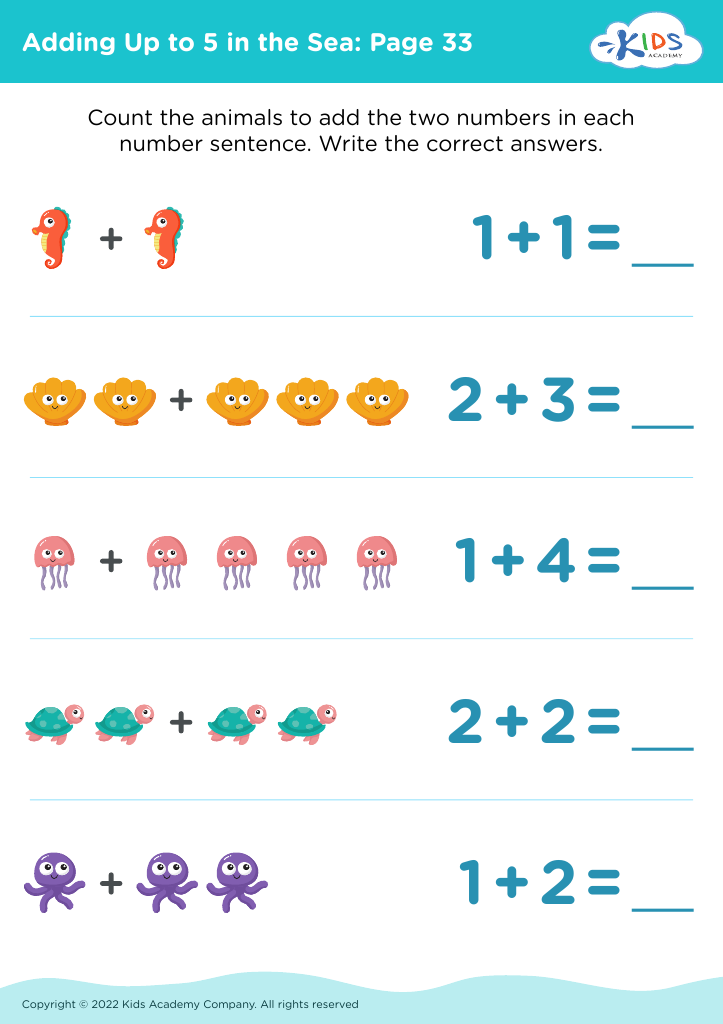
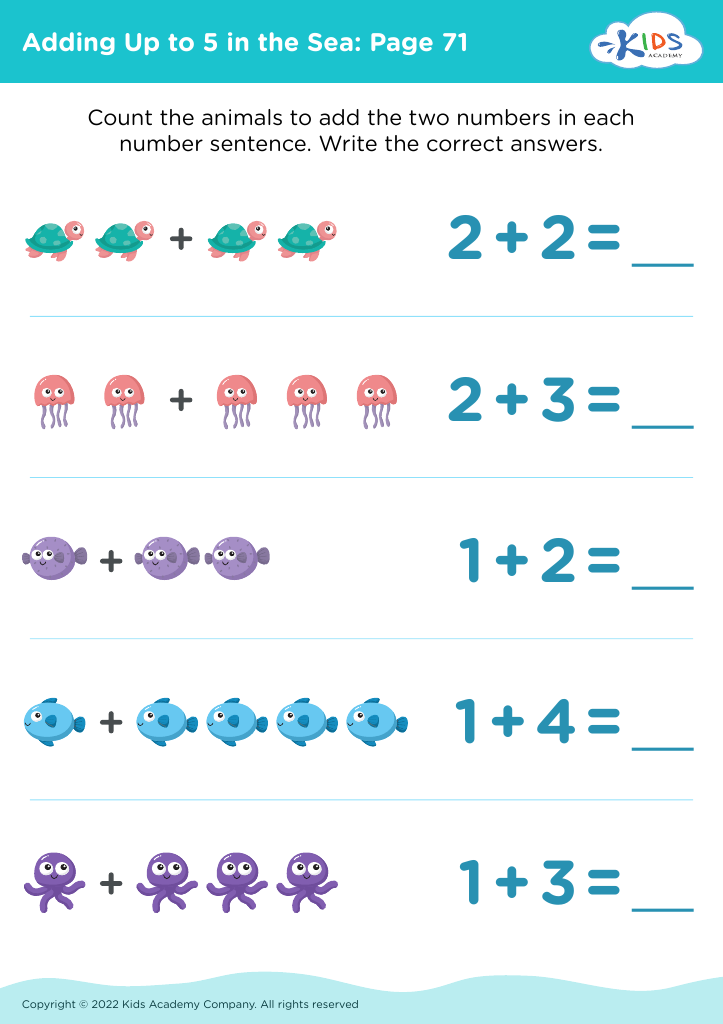



Basic math skills, such as addition, play a crucial role in a child’s early development, particularly for ages 4-9. Engaging activities like "Adding in the Sea" introduce math concepts in a fun and relatable context. This method fosters an early appreciation for math while developing essential problem-solving skills and logical reasoning.
Firstly, mastering basic addition is fundamental to a child’s overall academic success. It sets the foundation for more complex mathematical concepts later on and boosts confidence in their abilities. Interactive learning experiences, such as those based in themed environments like the ocean, can spark interest and promote enthusiasm for learning, making math enjoyable.
Moreover, parental and teacher involvement in these activities supports social interaction and strengthens relationships. When adults engage in playful educational experiences, they not only teach skills but also model positive learning attitudes and behaviors. This can inspire children to explore and engage more deeply with math in everyday life.
Additionally, early math skills are linked to future academic achievements across subjects, enhancing critical thinking abilities. "Adding in the Sea" helps young learners comprehend math as a part of life, reinforcing the importance of teamwork, exploration, and curiosity in education—an investment in a brighter future for the child.