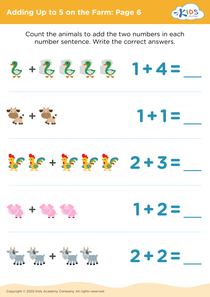
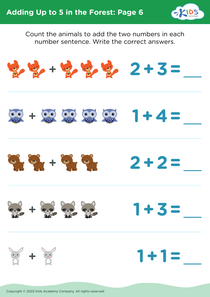
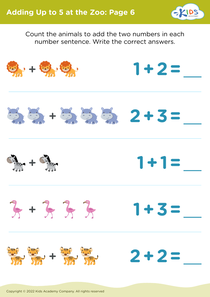
Basic Math understanding Adding in the Sea Worksheets for Ages 4-9
3 filtered results
-
From - To
Discover exciting "Adding in the Sea" worksheets designed for kids ages 4-9! These engaging resources help young learners build their basic math skills through fun, themed activities. Each worksheet is filled with vibrant ocean imagery and relatable scenarios to make addition enjoyable. By reinforcing essential math concepts, children will enhance their understanding of numbers while developing confidence in problem-solving. Ideal for parents and educators alike, these worksheets provide a perfect blend of education and entertainment. Nurture your child's mathematical journey with our captivating "Adding in the Sea" worksheets—where learning meets adventure in the underwater world!
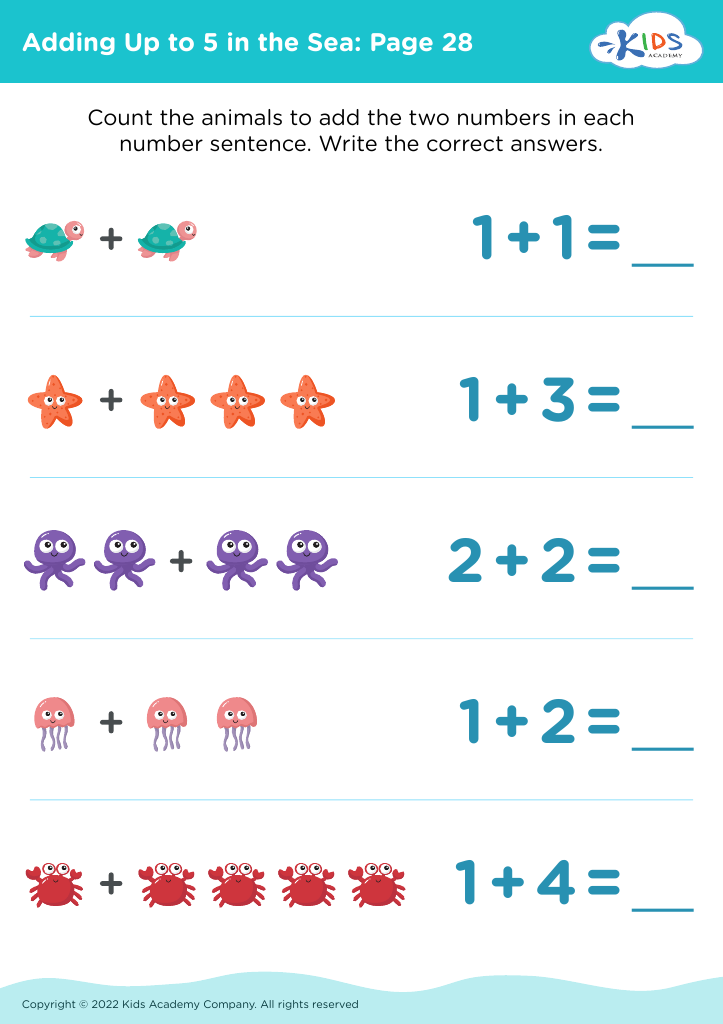
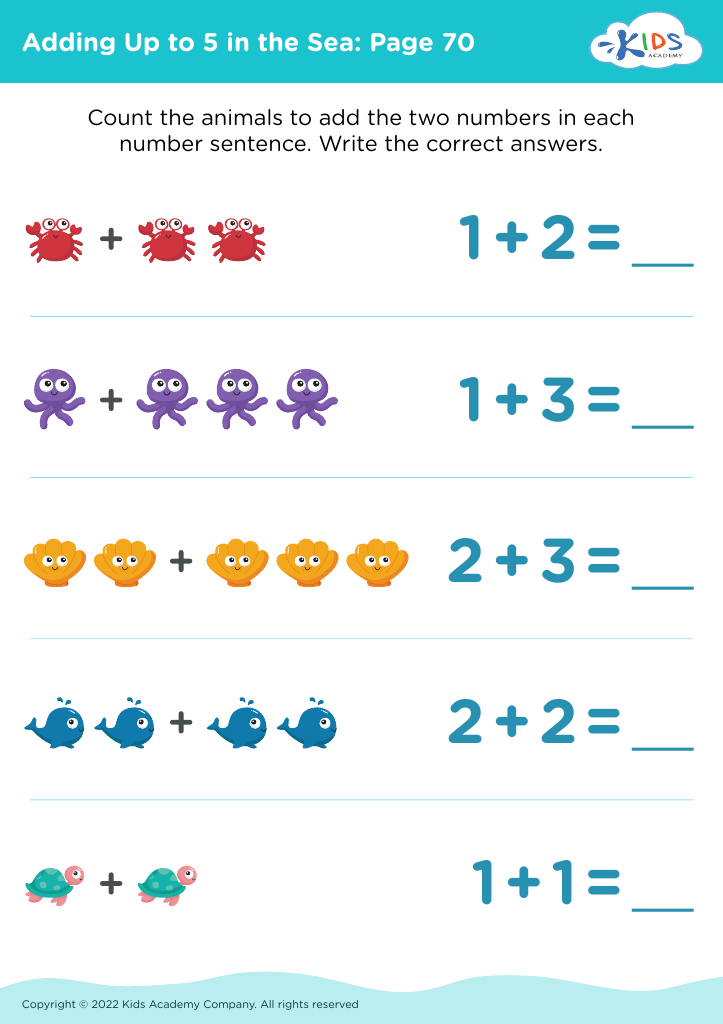
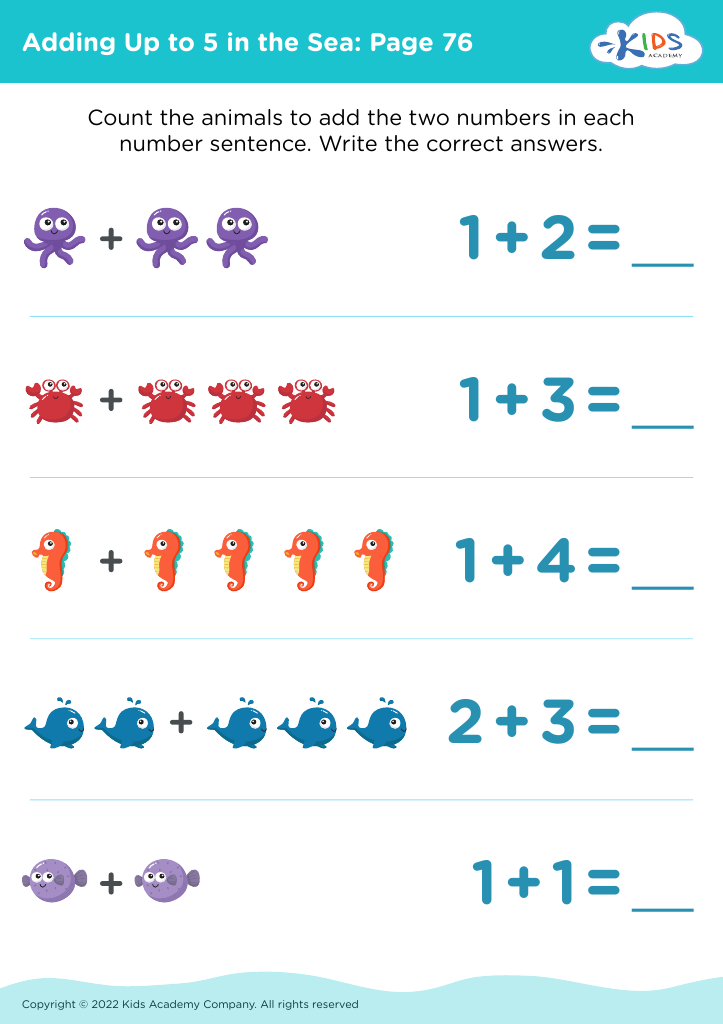



Understanding basic math, particularly addition, is crucial for children aged 4-9, laying the foundation for their future learning. Engaging activities like "Adding in the Sea" transform abstract math concepts into relatable experiences. Such themed math exercises capture children's attention, which is vital for effective learning at this young age.
First, fostering a solid grasp of addition enhances children's problem-solving skills—they learn how to combine numbers, an essential life skill. Recognizing patterns within numbers also helps them in advanced math topics later on. Additionally, math literacy boosts confidence, empowering children to take on challenges without fear of failure.
Second, incorporating playful themes, like ocean life, into math lessons ties in elements of creativity and imagination, making learning more enjoyable. This approach can spark a child's interest in math and the sciences, crucial for their comprehensive education.
Lastly, understanding basic math spews into other disciplines: reading comprehension improves as children decipher problems and verbal instructions. By emphasizing addition and related concepts in engaging ways, parents and teachers can ensure that children are well-prepared for future academic success, ultimately leading to a more competent and confident learner.