Cognitive Development Adding in the Sea Worksheets for Ages 4-9 - Page 2
28 filtered results
-
From - To
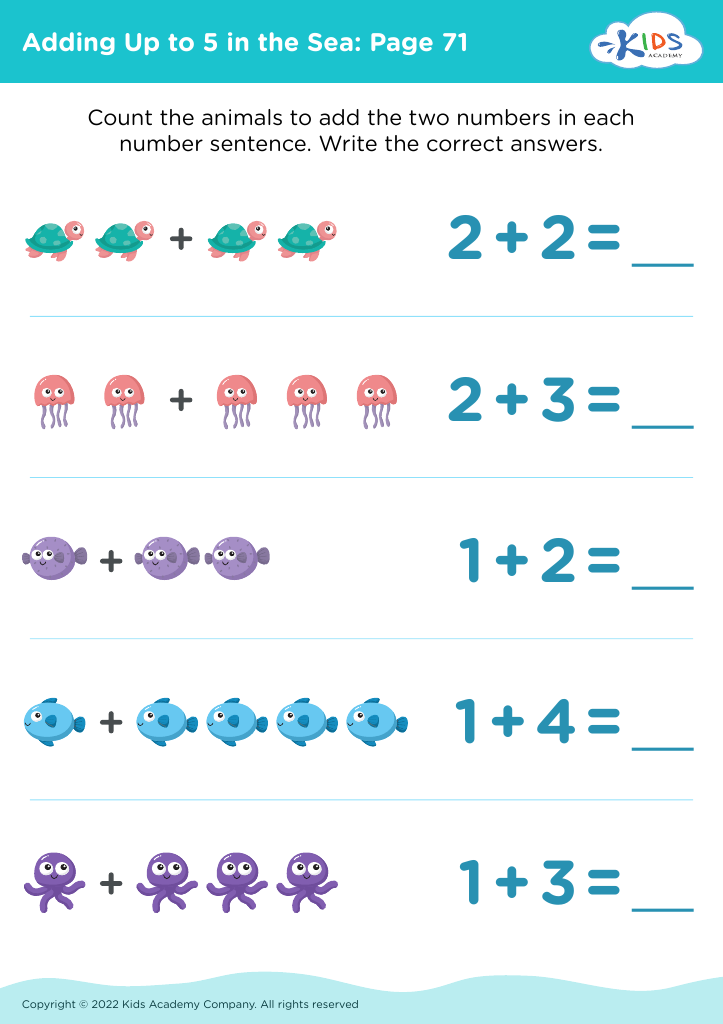
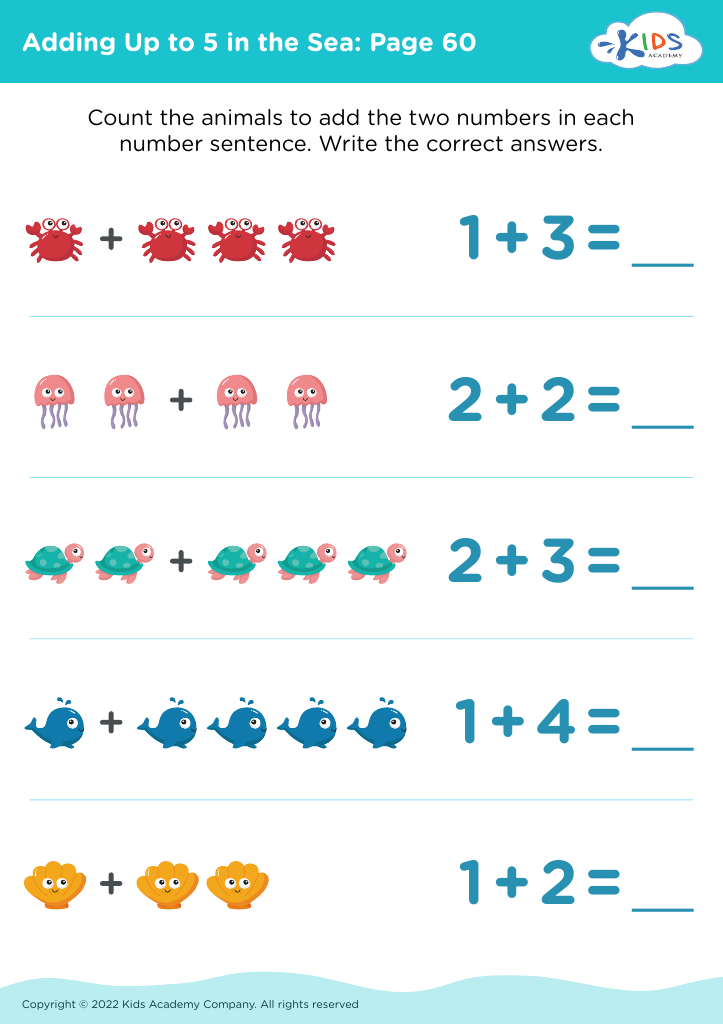
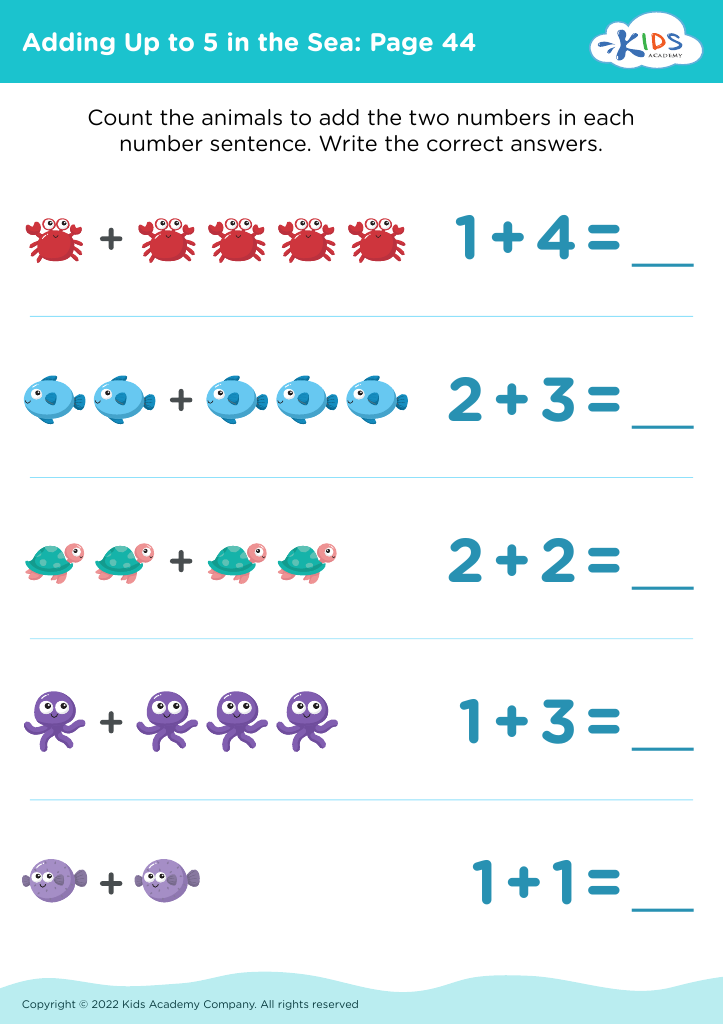



Cognitive development is crucial for children aged 4-9 as it lays the foundation for their academic, social, and emotional growth. During these formative years, children's brains are rapidly developing, allowing them to think critically, solve problems, and understand the world around them. This stage encompasses essential skills such as language acquisition, memory, and reasoning.
For parents and teachers, fostering cognitive development means engaging children in a variety of stimulating activities. These can include puzzles, storytelling, interactive games, and hands-on experiences that promote curiosity and exploration. By providing an enriched environment, adults can enhance children's abilities to make connections, develop numerical and verbal skills, and encourage creativity.
Moreover, cognitive development has a significant impact on a child's confidence and self-esteem. When children master new skills or concepts, they gain a sense of accomplishment. This increased self-assuredness can lead to greater enthusiasm for learning and a willingness to take on challenges. Understanding the importance of cognitive development enables parents and teachers to be proactive in their approach, tailoring activities and support to help children reach their full potential, ultimately setting them on a path toward lifelong learning and success.