Hand-eye Coordination Adding in the Sea Worksheets for Ages 4-9
4 filtered results
-
From - To
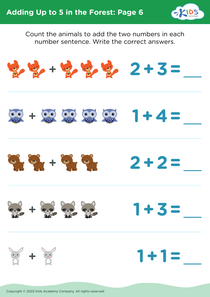
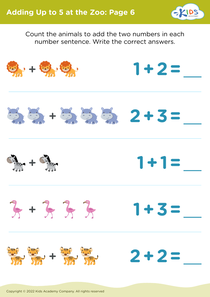
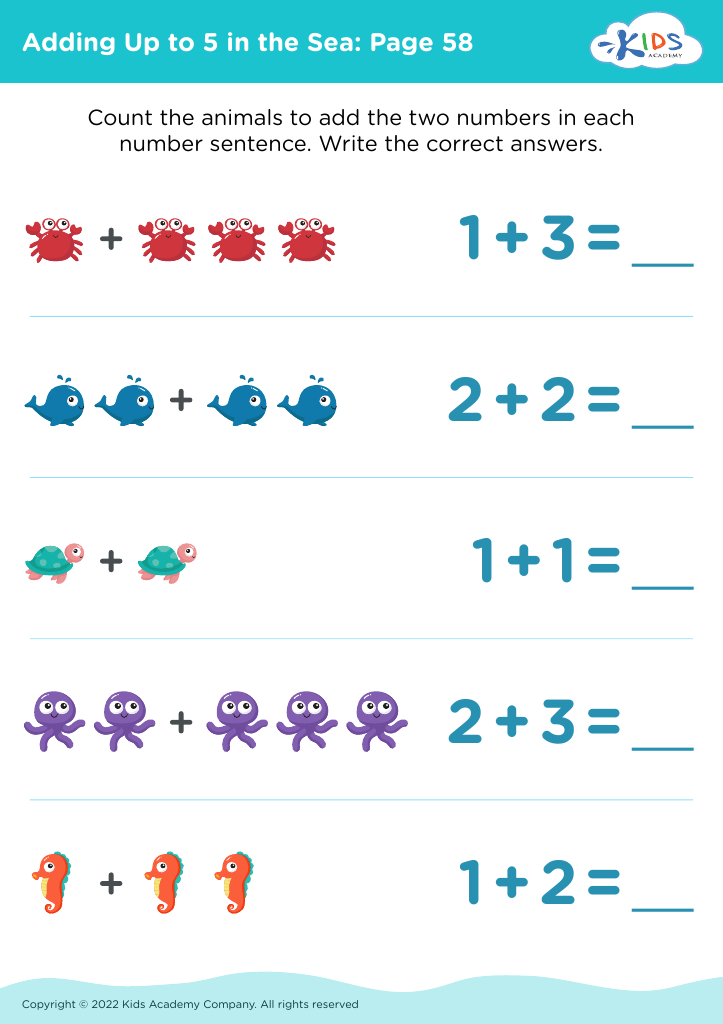
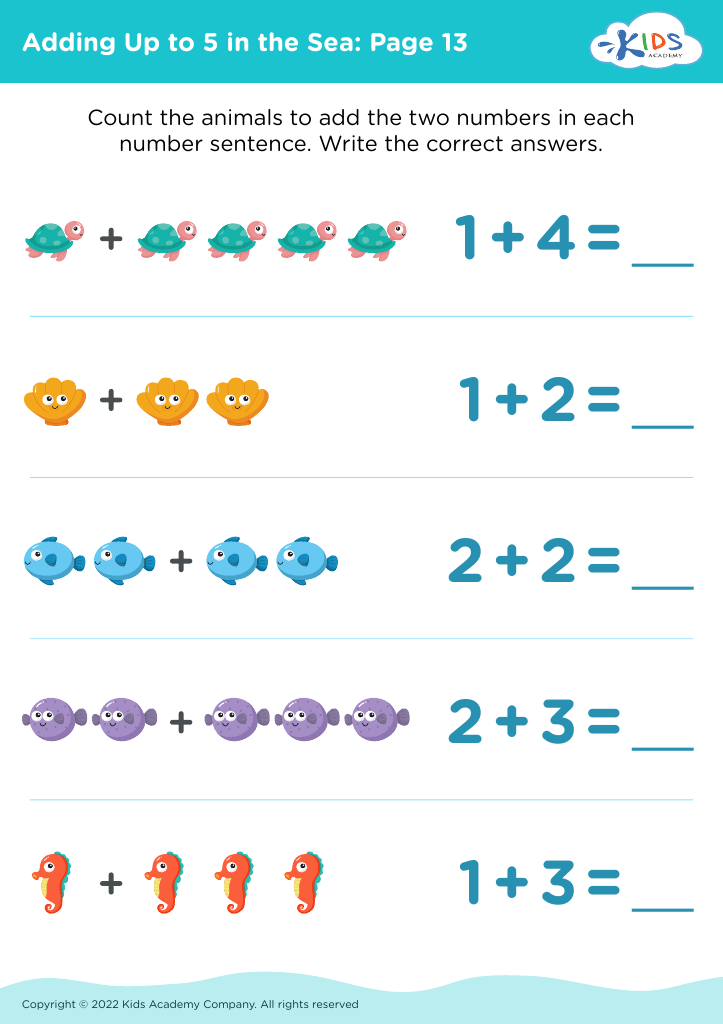
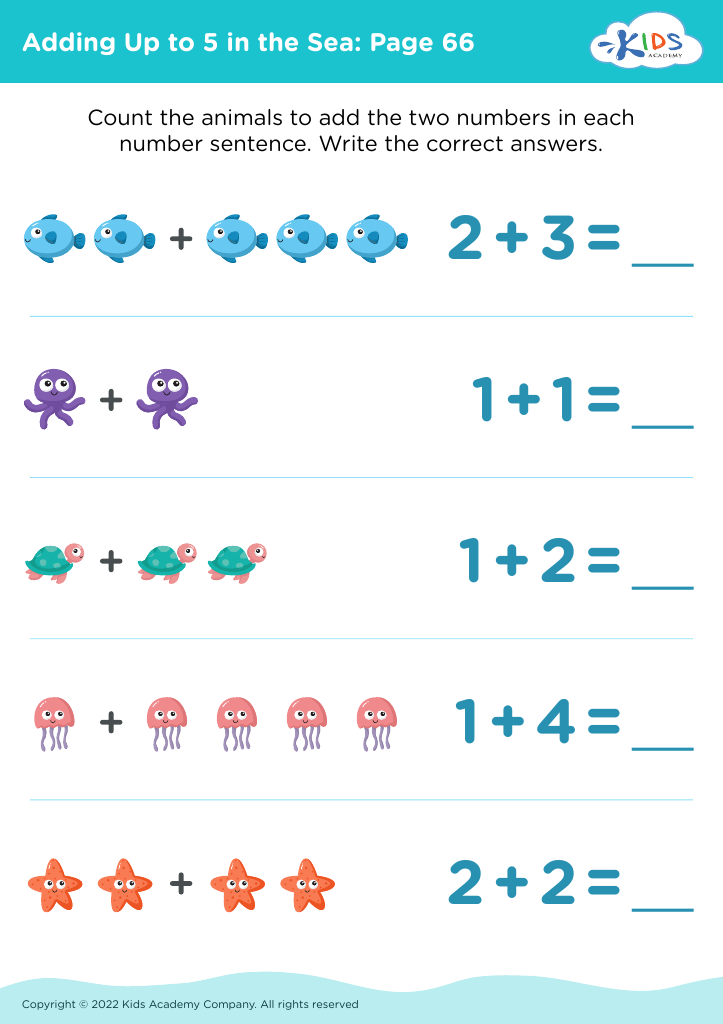
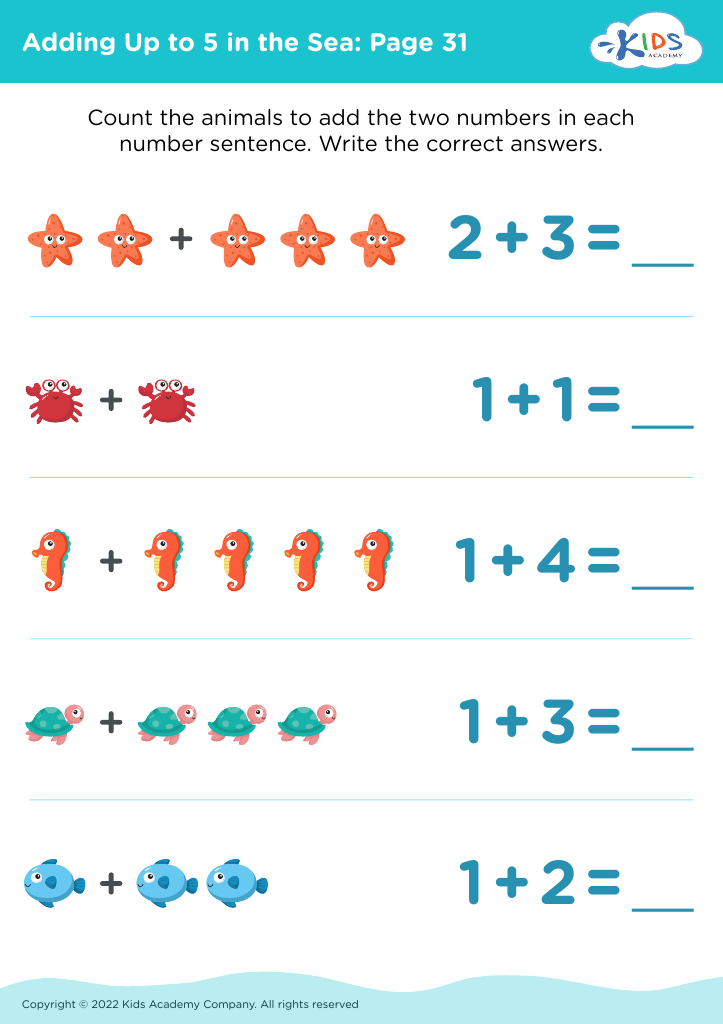
Enhance your child's hand-eye coordination and math skills with our "Adding in the Sea Worksheets" for ages 4-9. These engaging printable worksheets combine the excitement of the ocean theme with fun addition exercises designed to strengthen essential motor skills. Children will enjoy connecting the dots and solving addition problems, all while developing their focus and precision. Perfect for young learners, our worksheets make math enjoyable and interactive. Dive into a world of learning where kids can explore the sea and sharpen their abilities at the same time. Ideal for classroom activities or home practice, these worksheets make learning both effective and fun!



Hand-eye coordination is a crucial skill for children aged 4-9, as it plays a pivotal role in their overall development. This coordination is fundamental for activities like writing, drawing, and participating in sports, impacting fine and gross motor skills. Developing hand-eye coordination lays the groundwork for academic success and fosters confidence in trying new tasks.
Engaging in activities that enhance hand-eye coordination—such as “Adding in the Sea,” which can incorporate playful water-based games or interactive sea-themed tasks—makes learning enjoyable and accessible. Such activities capture children's imagination, making them more willing to participate while enhancing their cognitive and motor abilities.
Moreover, good hand-eye coordination can improve a child's ability to focus and follow directions, skills that are vital not only in school but also in daily life. By appreciating its importance, parents and teachers can create supportive environments that integrate fun, interactive activities aimed at improving this skill. They can find creative ways to encourage participation, such as movement-based games or colorful educational tools. This attention to hand-eye coordination in a playful context ensures children are not only learning key skills but also building essential connections that foster a love for learning during their formative years.