Animal recognition Adding on the Farm Worksheets for Ages 4-9 - Page 2
31 filtered results
-
From - To
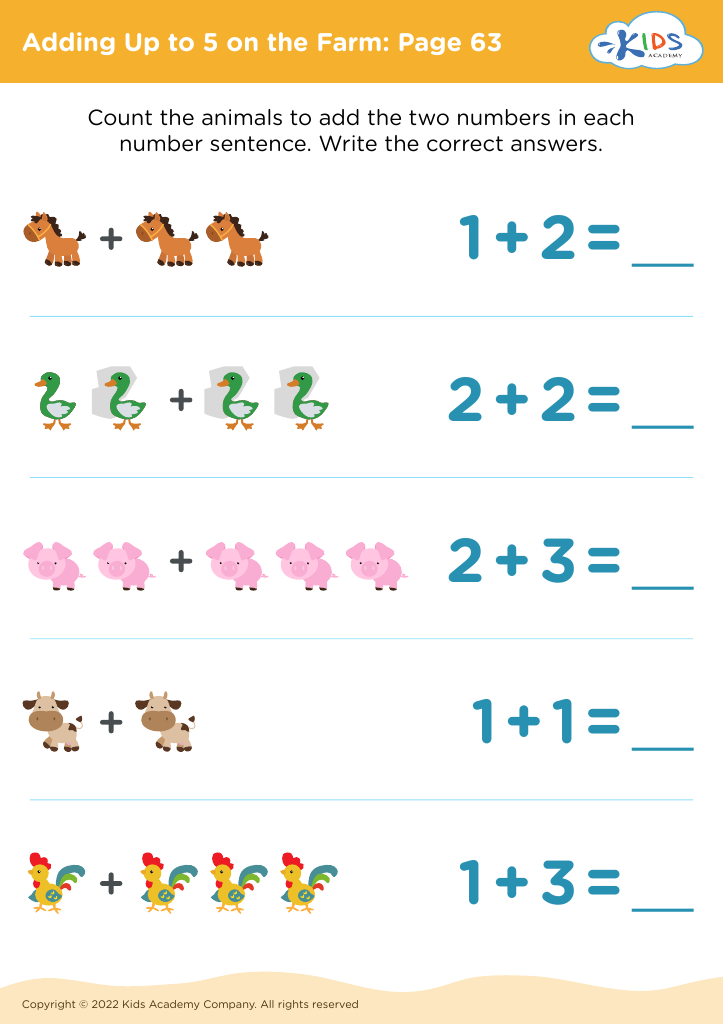
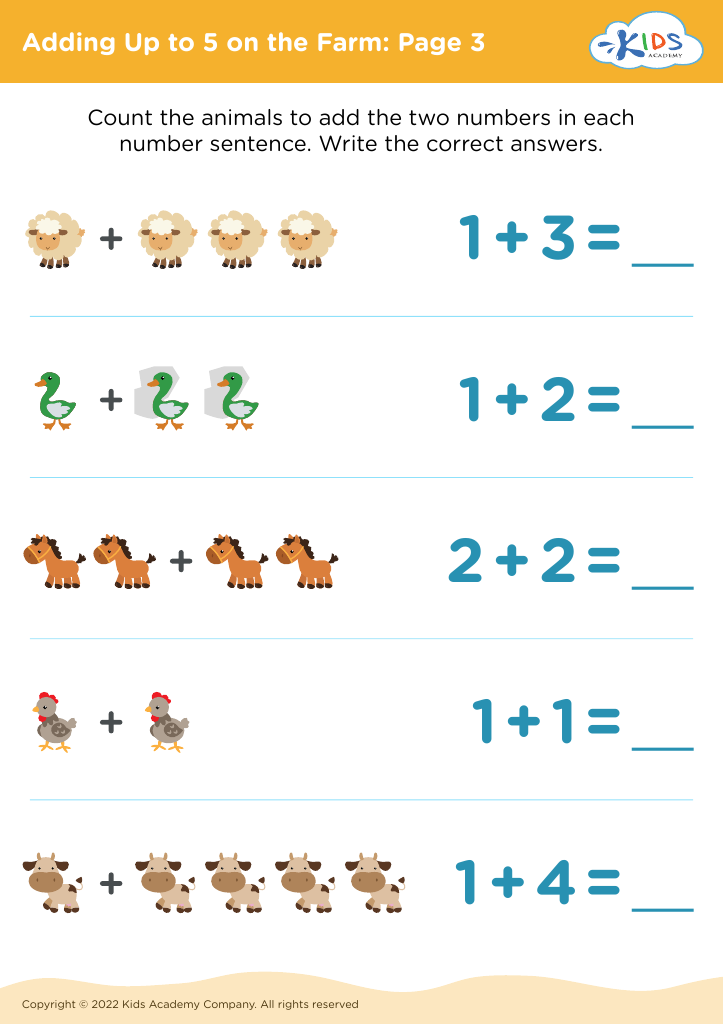
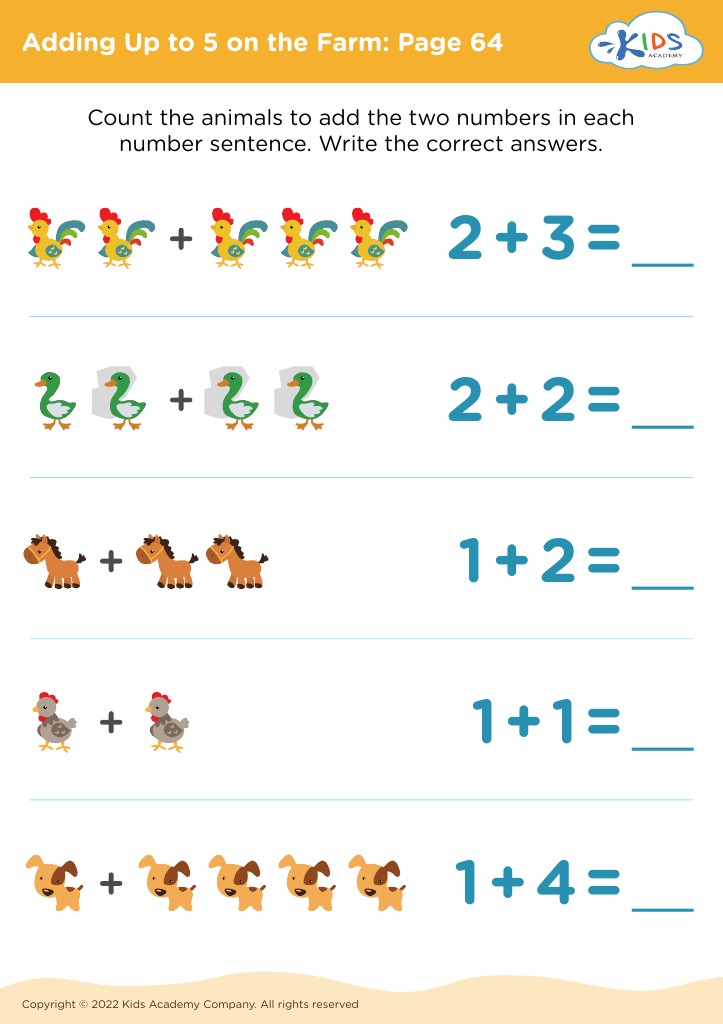
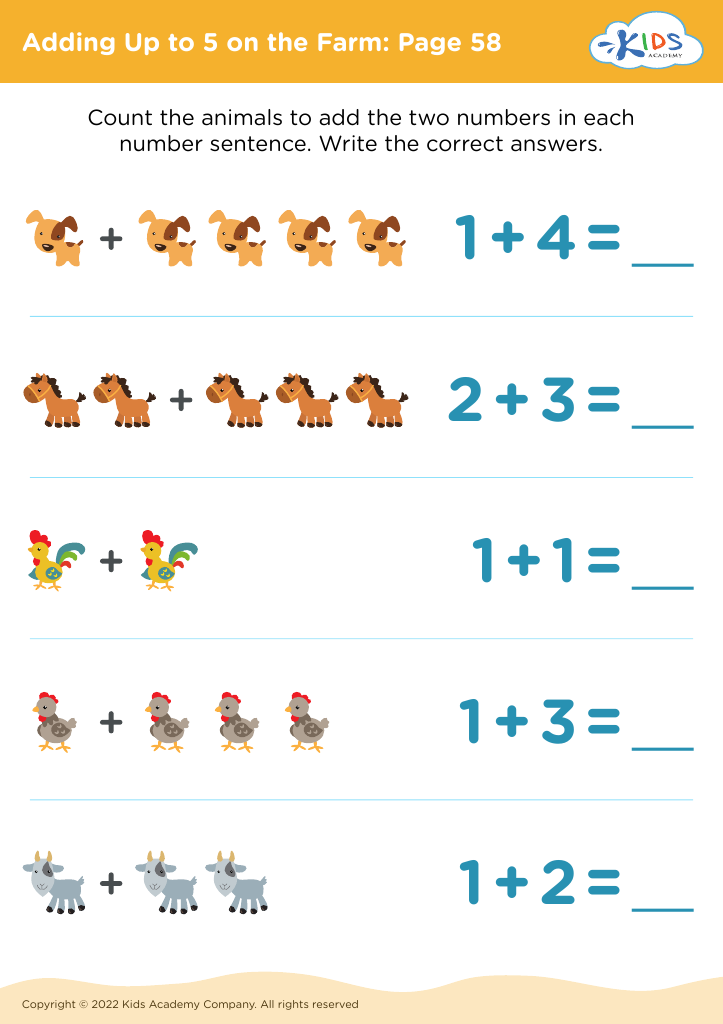
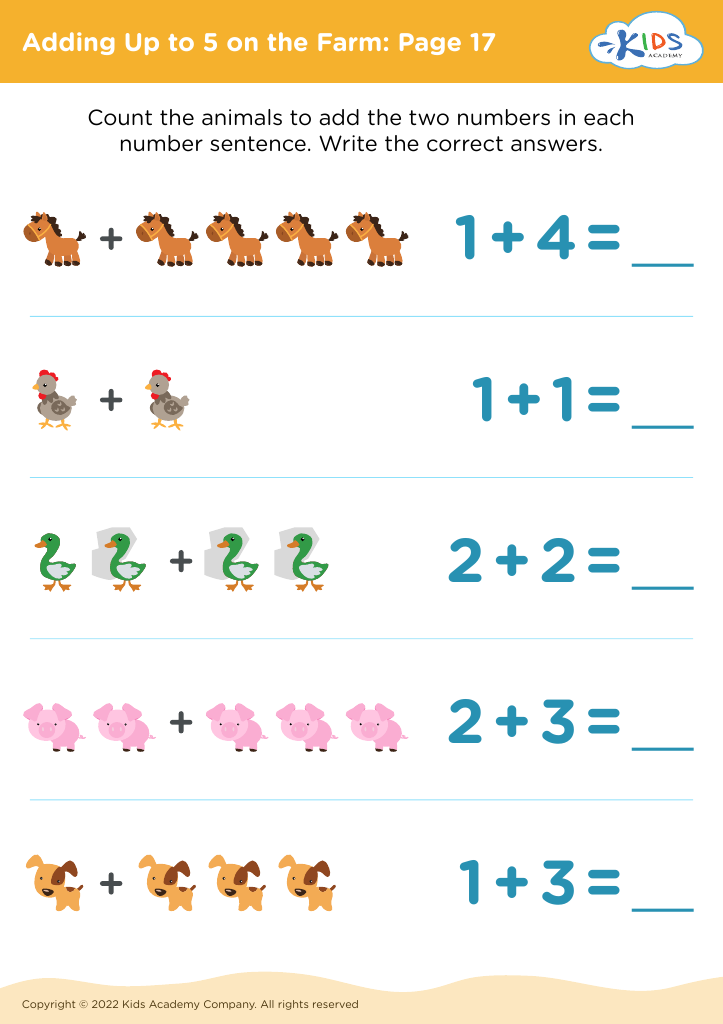
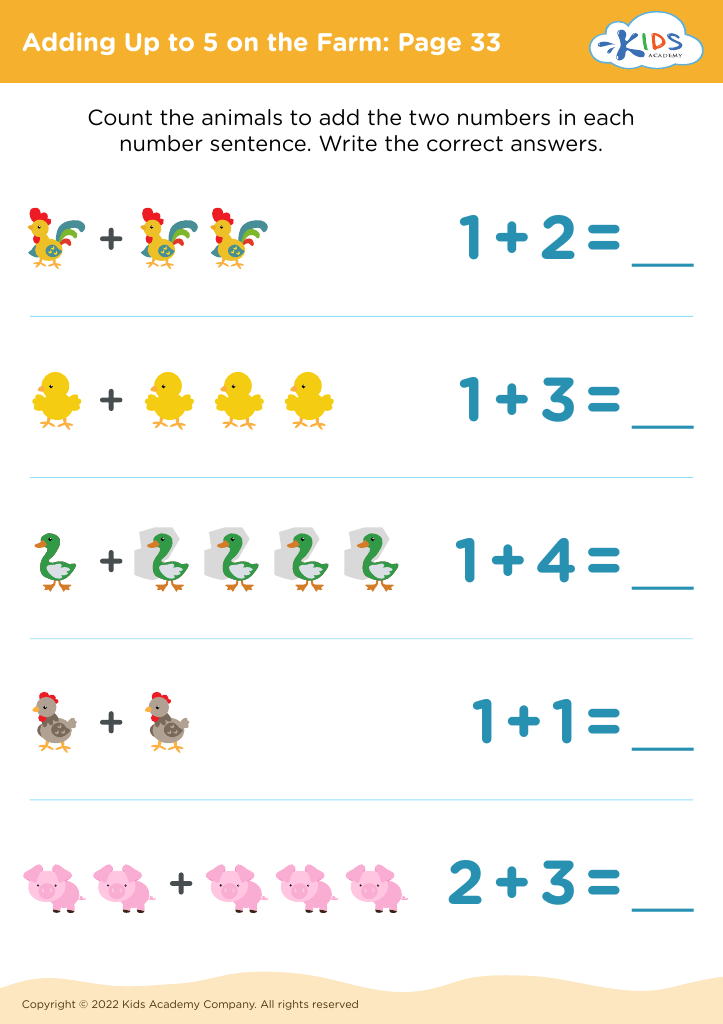
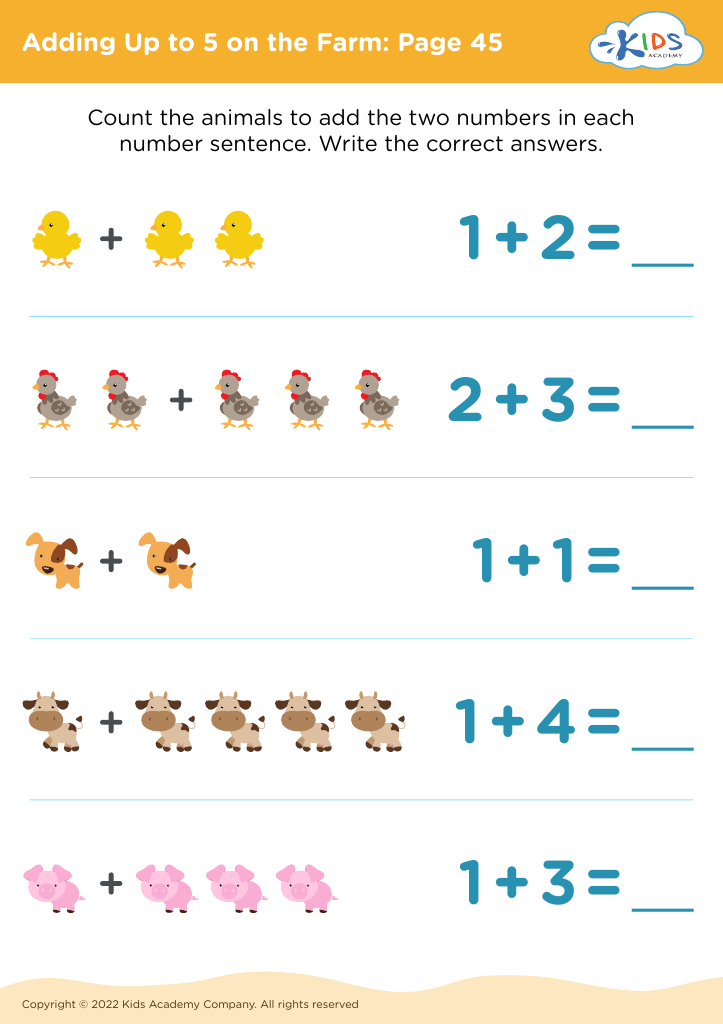



Animal recognition is a crucial skill for children aged 4 to 9, particularly when exploring the theme of "Animals on the Farm." Parents and teachers should care about this for several reasons. Firstly, recognizing farm animals helps children develop their cognitive skills, enhancing memory and observational abilities. This foundational knowledge not only enriches their vocabulary but also introduces them to the concepts of animal life cycles, habitats, and roles on the farm.
Moreover, engaging with farm animals encourages curiosity and fosters a connection with nature. Understanding where food comes from—like eggs or milk—helps children appreciate the agricultural process and promotes healthy eating habits. It also supports empathy and compassion as they learn to care for animals, fostering a sense of responsibility.
In addition, animal recognition can enhance social skills. Activities such as group discussions, storytelling, and games centered around farm animals encourage collaboration and communication. Incorporating arts and crafts—like drawing distinct animals—adds a creative element that retains their interest.
Overall, emphasizing animal recognition not only enriches educational experiences but also lays the groundwork for respect towards wildlife and an appreciation for environmental sustainability.