Visual Learning Adding on the Farm Worksheets for Ages 4-9 - Page 2
25 filtered results
-
From - To
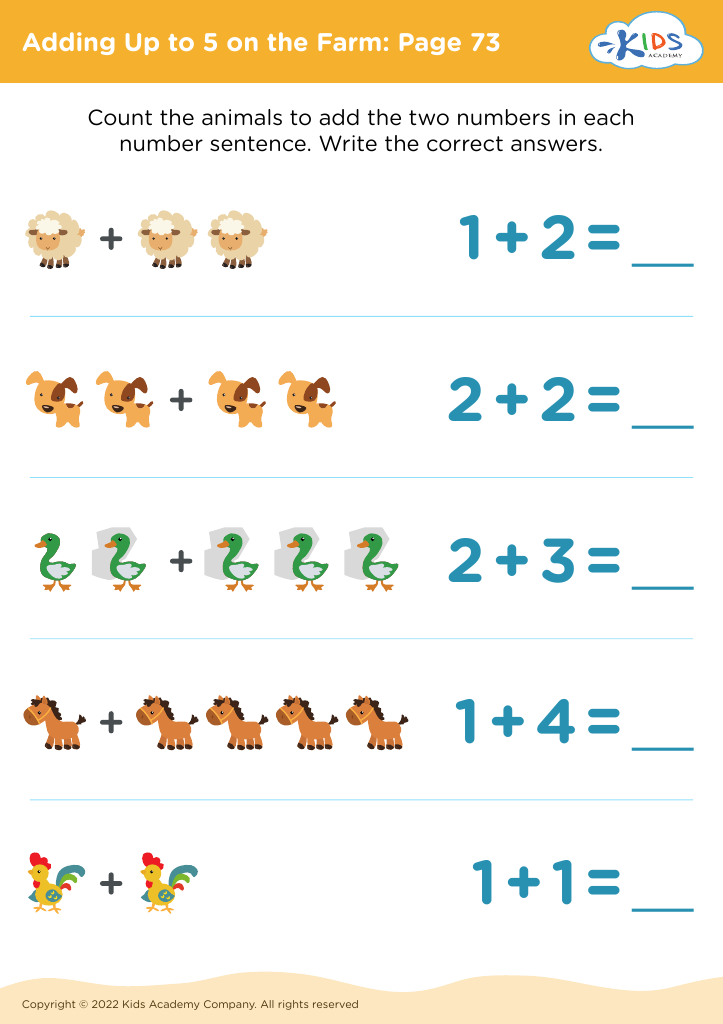



Visual learning is a powerful educational approach, especially for young children aged 4-9. Incorporating visual elements on a farm captivates young learners, making abstract concepts more tangible. For instance, through pictures of different animals, crops, and equipment, children can better understand how farms operate, fostering a sense of connection to the rural environment.
This method greatly appeals to the developmental stage of children in this age group, who are naturally curious and often engage more deeply with content when it’s visually stimulating. Visual learning encourages children to observe, categorize, and interpret information, enhancing critical thinking and retention skills.
Furthermore, farm-related visual learning can introduce important life lessons about responsibility, nature, and sustainability. It can spark discussions about food production, environmental stewardship, and community, all pivotal topics in today’s world. This interactive learning approach supports social-emotional development as children collaborate on projects, share insights, and engage in hands-on activities.
Ultimately, when parents and teachers embrace visual learning tools in farm education, they cultivate a rich learning experience that supports diverse learning styles, builds essential skills, and nurtures a lifelong love of discovery in children. It transforms learning into an engaging adventure, paving the way for future academic success.