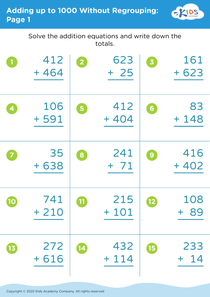
Recognizing Patterns Adding up to 1000 with Regrouping Worksheets for Ages 4-9
4 filtered results
-
From - To
Unlock your child's mathematical potential with our "Recognizing Patterns Adding up to 1000 with Regrouping Worksheets" for ages 4-9. Designed to make math engaging, these worksheets help young learners grasp the importance of patterns in addition and regrouping. Through fun activities, children will develop essential skills, enhancing their number sense and boosting their confidence in handling larger sums. Each worksheet is carefully crafted to cater to your child's developmental stage, fostering critical thinking while keeping the learning experience enjoyable. Begin your journey to mastering math concepts today with our interactive and visually stimulating resources that turn challenges into learning opportunities!
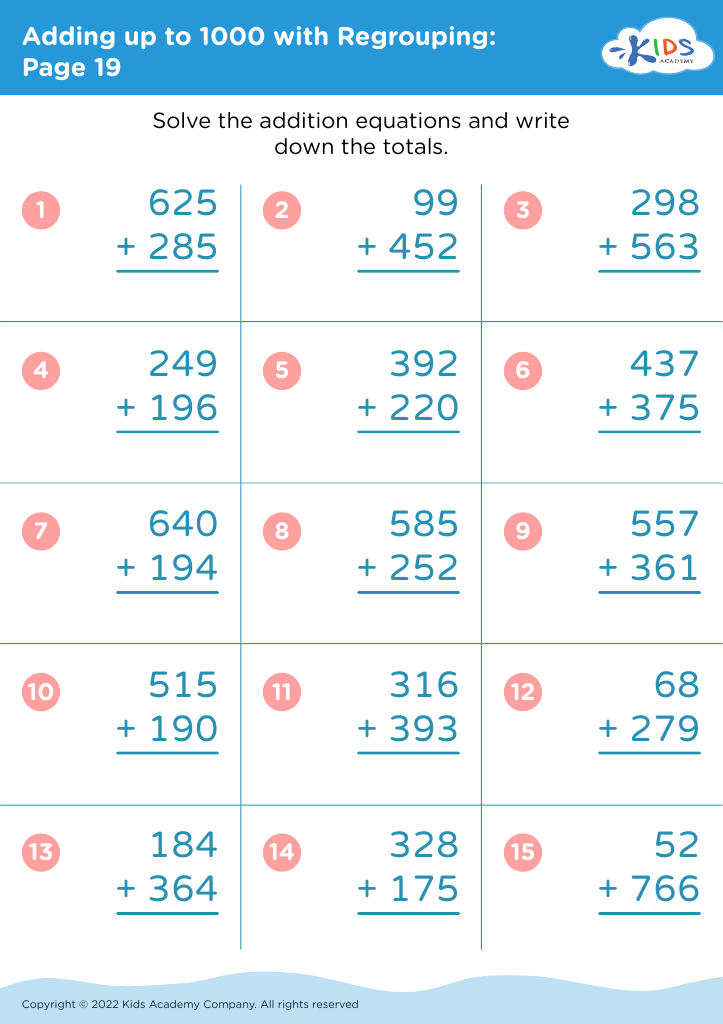
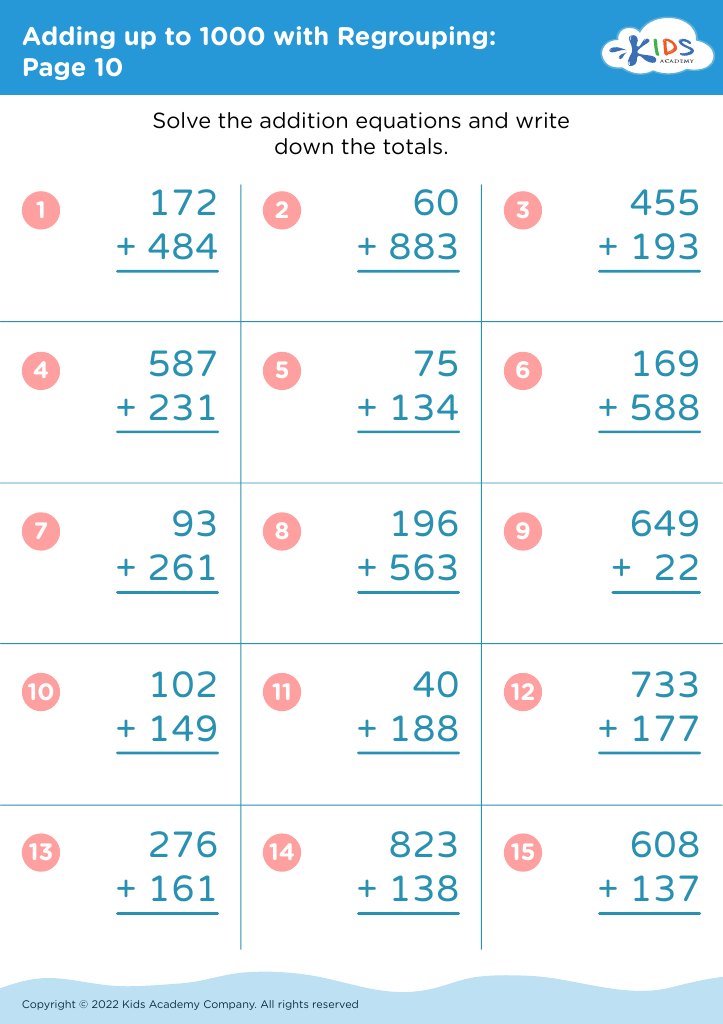
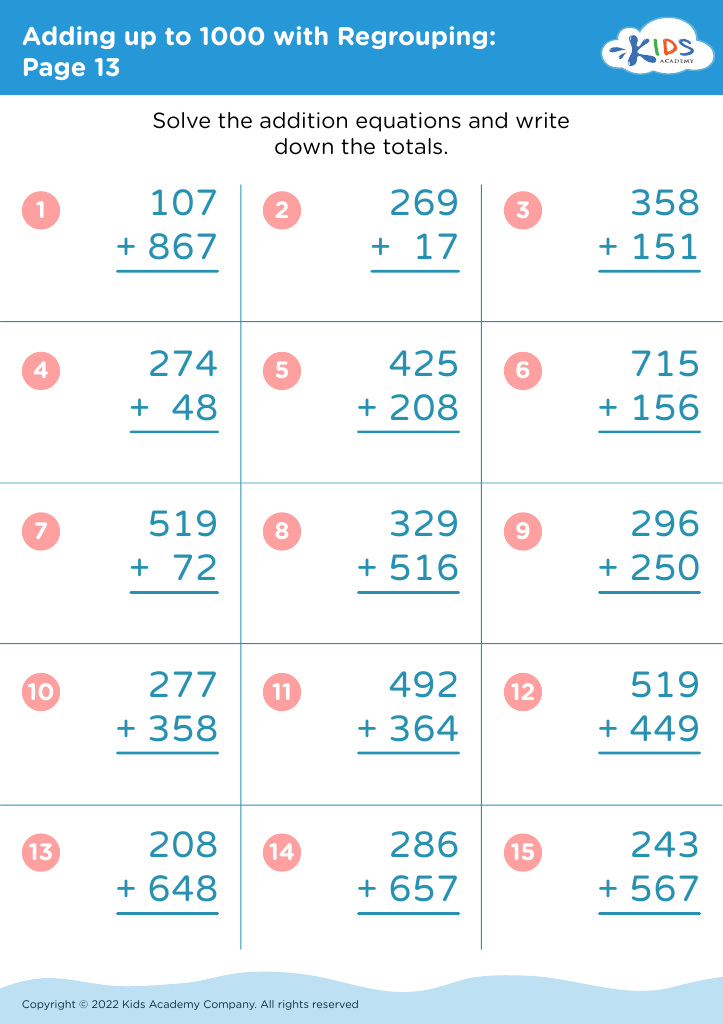
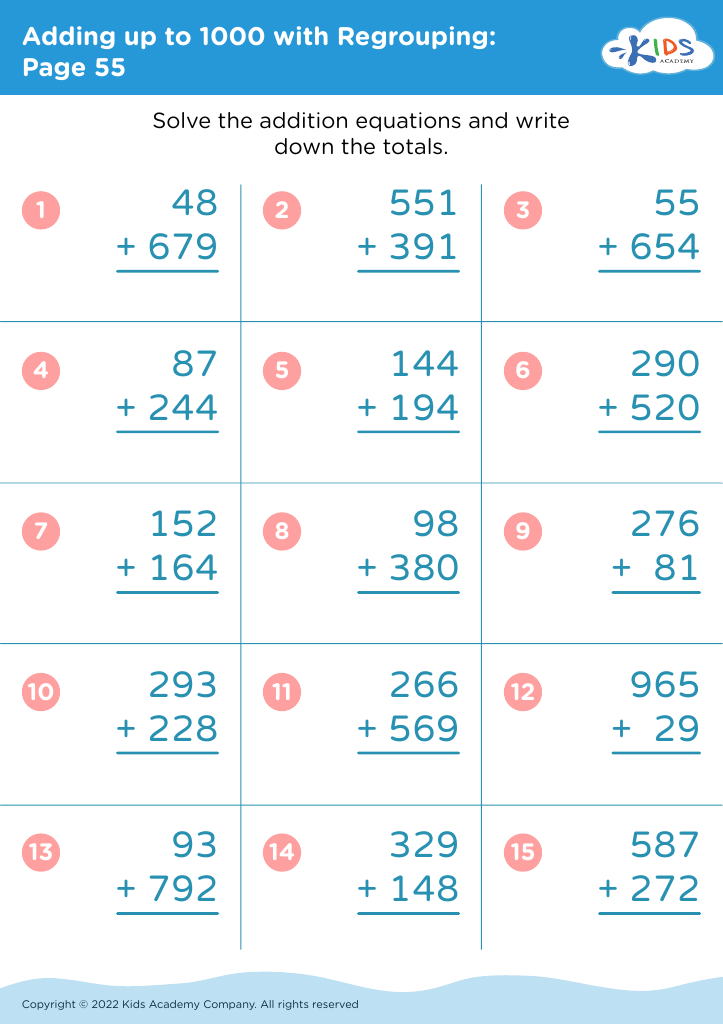


Recognizing patterns in mathematics, especially when adding up to 1000 with regrouping, is crucial for children aged 4-9 as it lays a foundational understanding of number concepts. Mastering these skills enhances cognitive development, enabling young learners to make connections between numbers and their relationships. When children identify patterns, they develop strategies that simplify complex calculations, fostering confidence in their mathematical abilities.
Engaging with regrouping encourages critical thinking as children learn to decompose numbers into tens and hundreds, making addition more manageable. This skill not only aids in mental calculations but also prepares students for more advanced concepts in geometry and algebra as they progress in their education.
For parents and teachers, emphasizing pattern recognition contributes to building a supportive learning environment, nurtures a love for math, and equips children with problem-solving skills they'll use throughout their lives. By focusing on these foundational skills early on, adults can help children develop resilience and a positive mindset towards challenges they face in academic settings.
In summary, understanding patterns and mastering addition with regrouping are vital stepping stones in a child's mathematical journey, influencing their academic performance and self-esteem well into the future.