Enhance comprehension Adding up to 1000 Without Regrouping Worksheets for Ages 4-9
4 filtered results
-
From - To
Discover our "Enhance Comprehension Adding Up to 1000 Without Regrouping" worksheets, designed for children ages 4-9. These engaging materials help young learners develop a solid understanding of addition concepts by focusing on sums up to 1000 without the complexities of regrouping. Our worksheets feature colorful illustrations and fun activities that maintain children's interest while promoting critical thinking and problem-solving skills. Ideal for home or classroom use, these resources support foundational math comprehension essential for future learning. Empower your child's confidence in mathematics and ensure a comprehensive grasp of addition with our thoughtfully created worksheets, tailored to inspire and educate young minds.
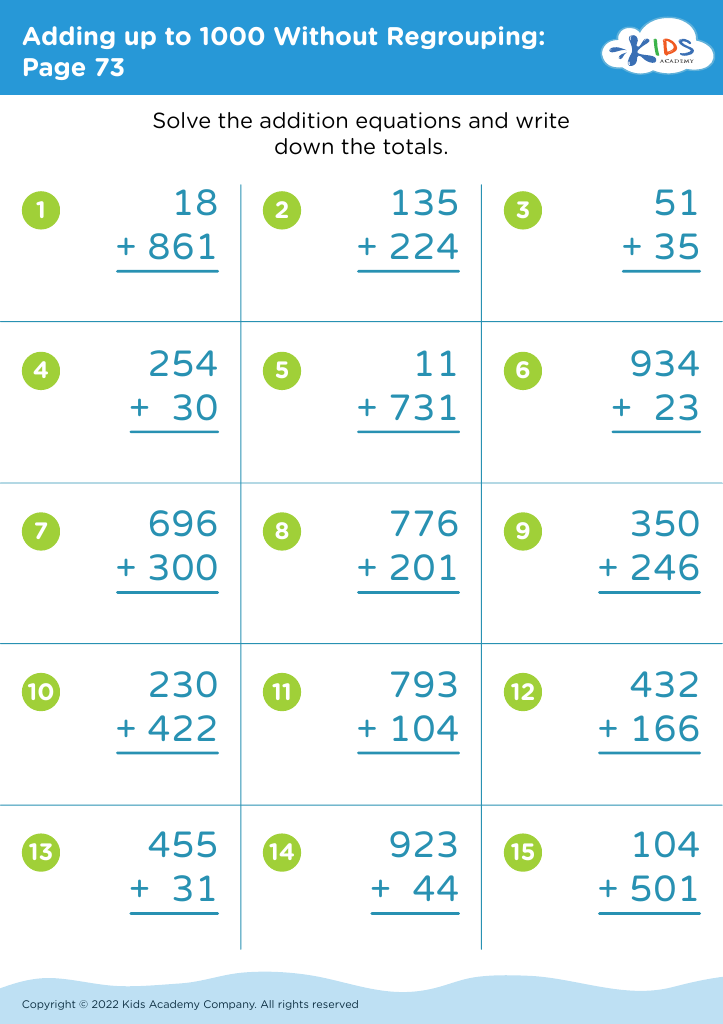
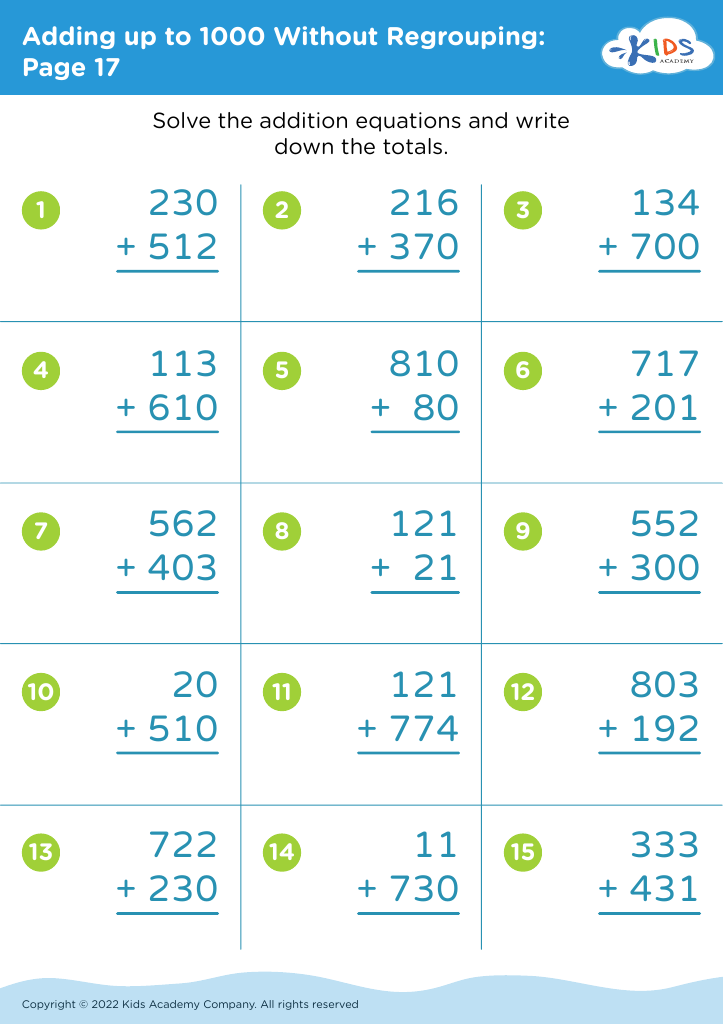
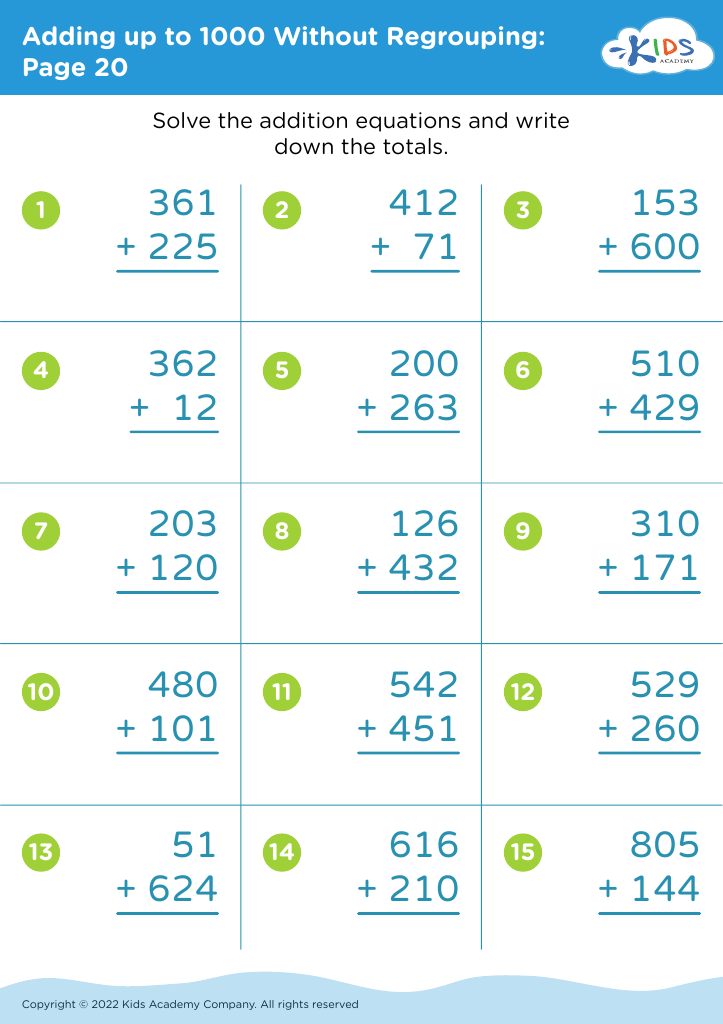
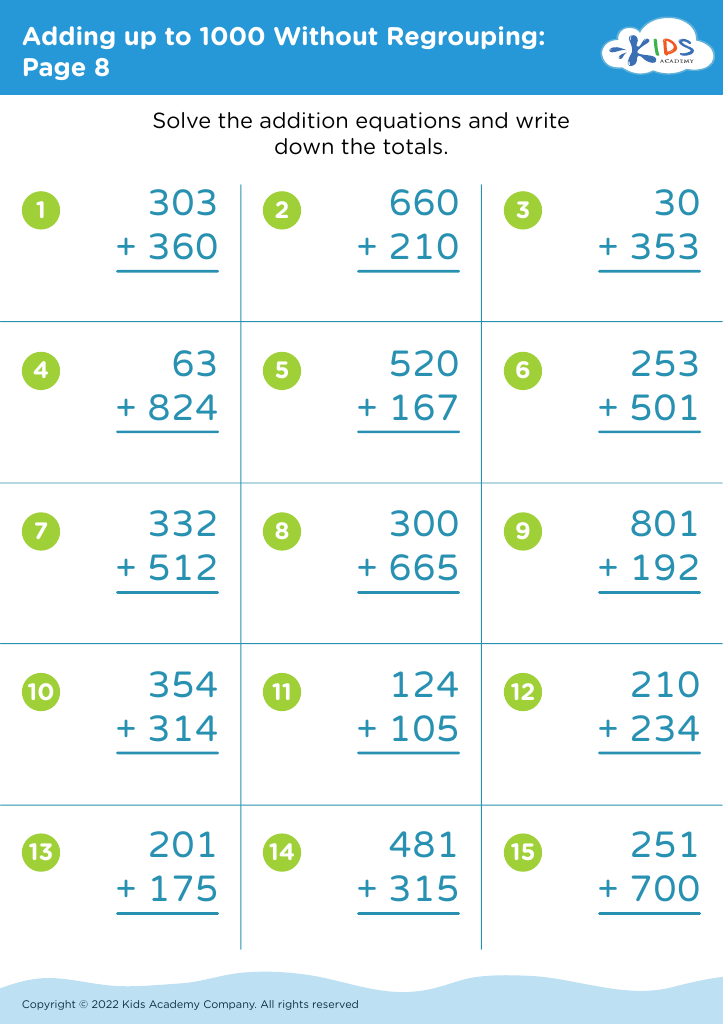


Enhancing comprehension in young learners, particularly on topics like adding numbers up to 1,000 without regrouping, is crucial for several reasons. First, it builds a strong foundation in mathematics, which is a fundamental skill that supports ongoing academic success. Mastering addition within this range helps children develop number sense, allowing them to recognize patterns and relationships among numbers.
Further, this stage of learning promotes critical thinking and problem-solving abilities. Without the complexity of regrouping, students can focus on understanding concepts and strategies, encouraging them to think logically about number relationships. This clarity in mathematical processing is vital as they progress to more complex topics, such as multiplication or division.
Parents and teachers also play pivotal roles in fostering an environment where children feel confident and engaged in math. By emphasizing comprehension over rote memorization, they help cultivate a love for learning that can extend beyond mathematics. Moreover, strong addition skills enable better performance in real-world situations, from managing finances to cooking or planning events. Overall, prioritizing comprehension in adding up to 1,000 equips children with essential tools for lifelong learning and problem-solving, making it a worthwhile focus for both educators and parents.