Simplifying Fractions Adding up to 1000 Without Regrouping Worksheets for Ages 4-9
3 filtered results
-
From - To
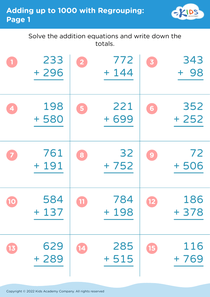
Discover our unique "Simplifying Fractions Adding up to 1000 Without Regrouping" worksheets designed for kids aged 4-9. These engaging and educational worksheets are specially crafted to make complex math concepts simple and fun. They focus on simplifying fractions and performing addition up to 1000 without regrouping, aiding in the development of essential math skills. Perfect for young learners, these worksheets combine clear instructions with vibrant visuals, ensuring that children stay engaged while mastering foundational math principles. Boost your child's confidence and competence in math with these invaluable learning resources. Explore our collection and start simplifying math today!
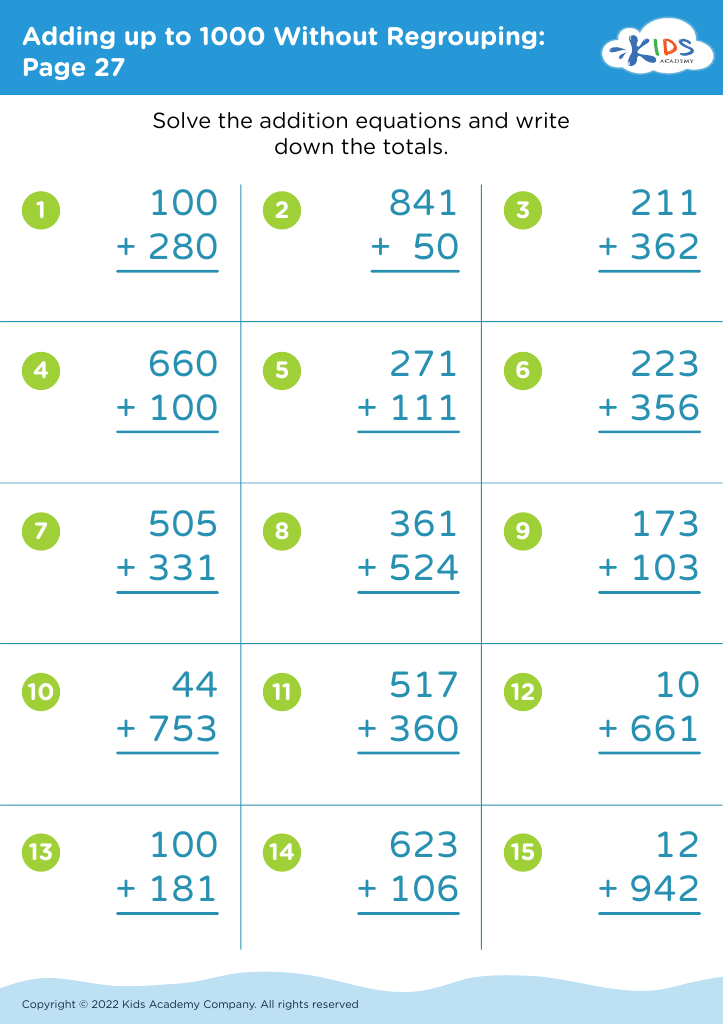
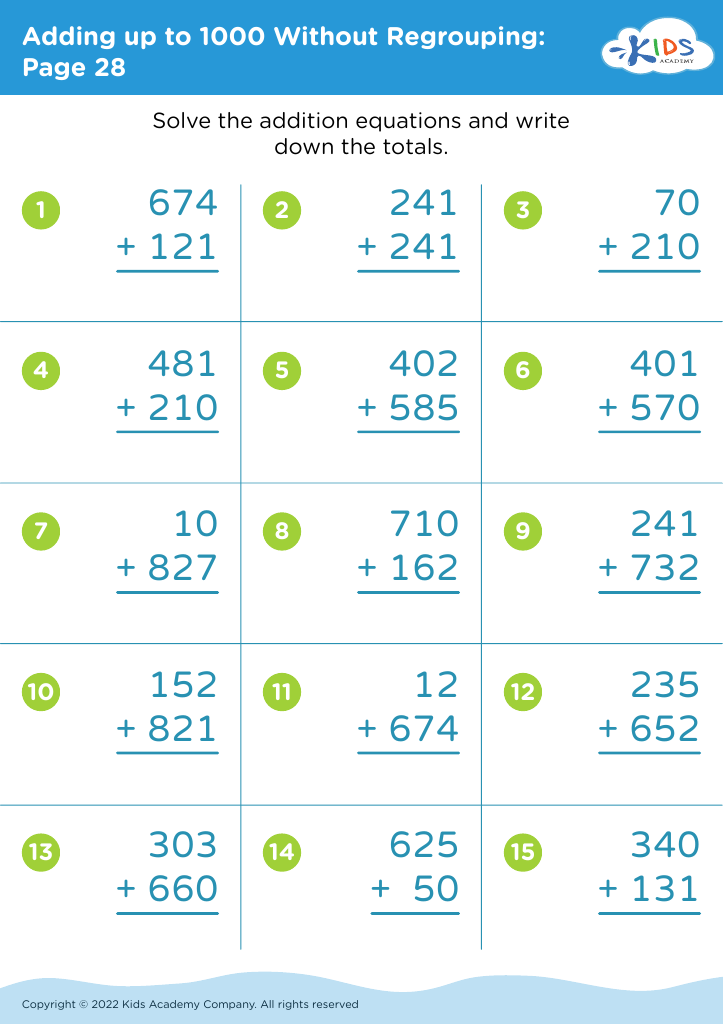
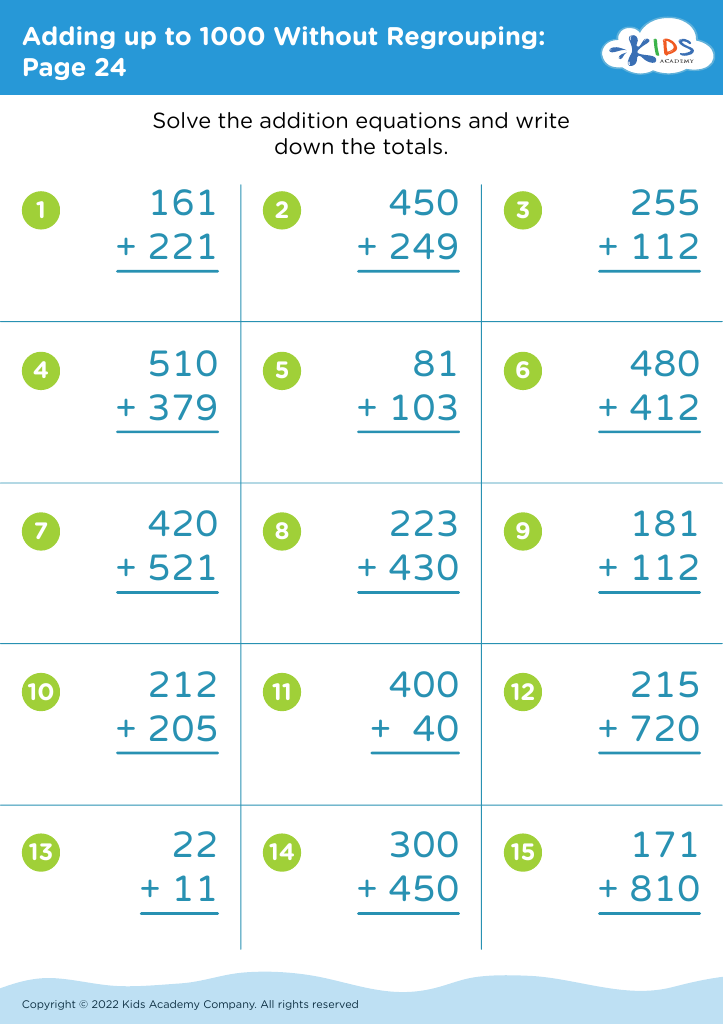


Parents and teachers should care about simplifying fractions and the concept of addition without regrouping for young children (ages 4-9) because these foundational math skills are crucial for long-term academic success. Simplifying fractions teaches kids how to break down complex problems into manageable steps, fostering critical thinking and problem-solving abilities. At early ages, grasping these basic principles ensures children develop confidence and proficiency in math, which benefits them as they progress to more advanced topics.
Adding up to 1000 without regrouping enhances their numerical skills and comprehension. This practice helps young learners build a solid understanding of place value, coordination, and number sense. Knowing how to effortlessly add numbers within a familiar and significant range, like 1000, lays a strong foundation for mastering more intricate manipulations involving borrowing and carrying.
Furthermore, engaging children with these concepts early on fosters a positive attitude towards math. They learn through play and guided exercises tailored to their developmental stages. Compelling and achievable activities instill a sense of accomplishment and motivate continued learning. When both parents and teachers prioritize these skills, they ensure children have the vital tools and mindset to tackle future challenges with ease, preparing them for math in everyday life and academic pursuits.