Basic Addition Adding up to 1000 Worksheets for Ages 4-9
6 filtered results
-
From - To
Our "Basic Addition Adding up to 1000 Worksheets for Ages 4-9" are designed to give young learners the essential skills needed to master addition. These engaging and educational worksheets help children gain confidence in adding numbers up to 1000, promoting both fun and learning. Each printable worksheet balances playfulness with educational rigor, ensuring an effective and enjoyable learning experience. Ideal for early grade students, these worksheets foster critical thinking and precision in math, setting a strong foundation for future mathematical success. Visit Kids Academy to explore our resources and help your child flourish in basic addition skills.
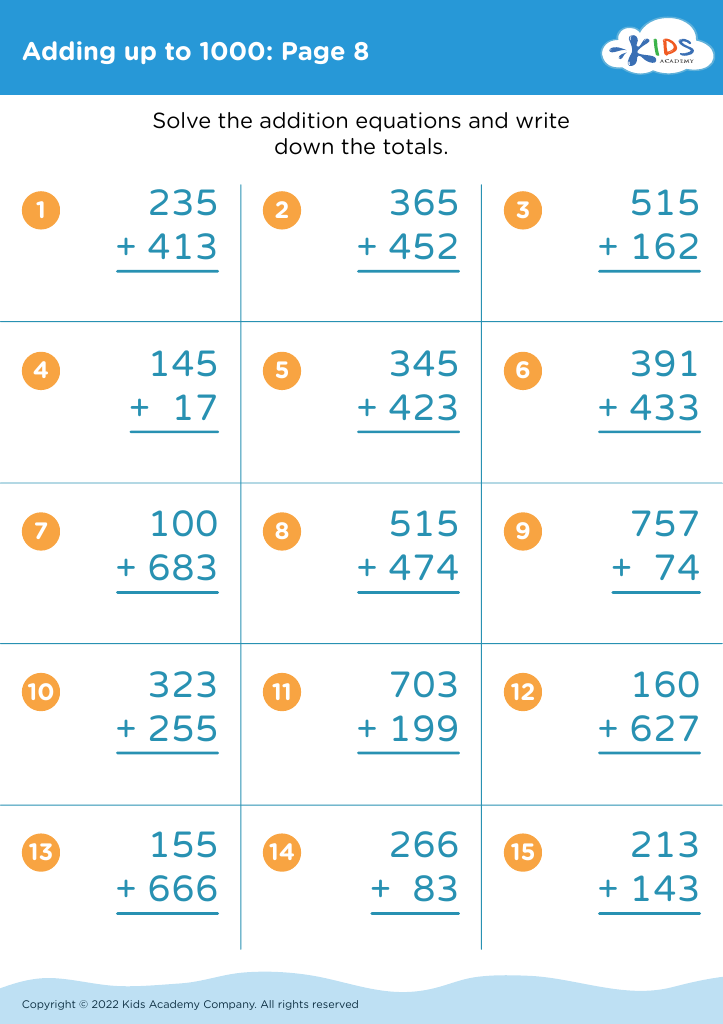
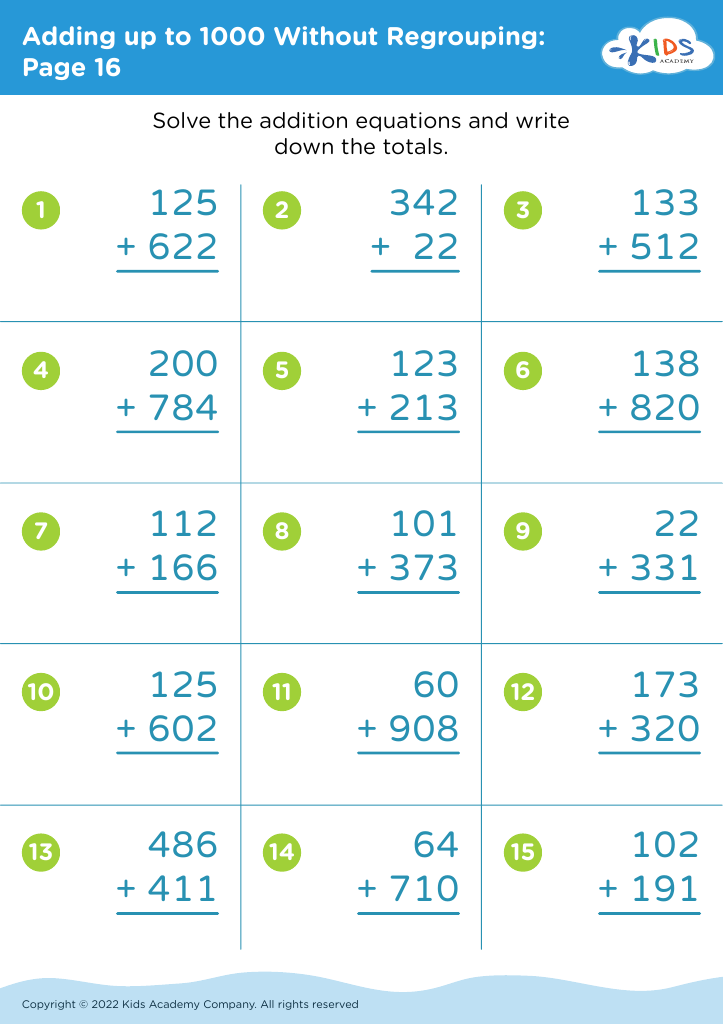
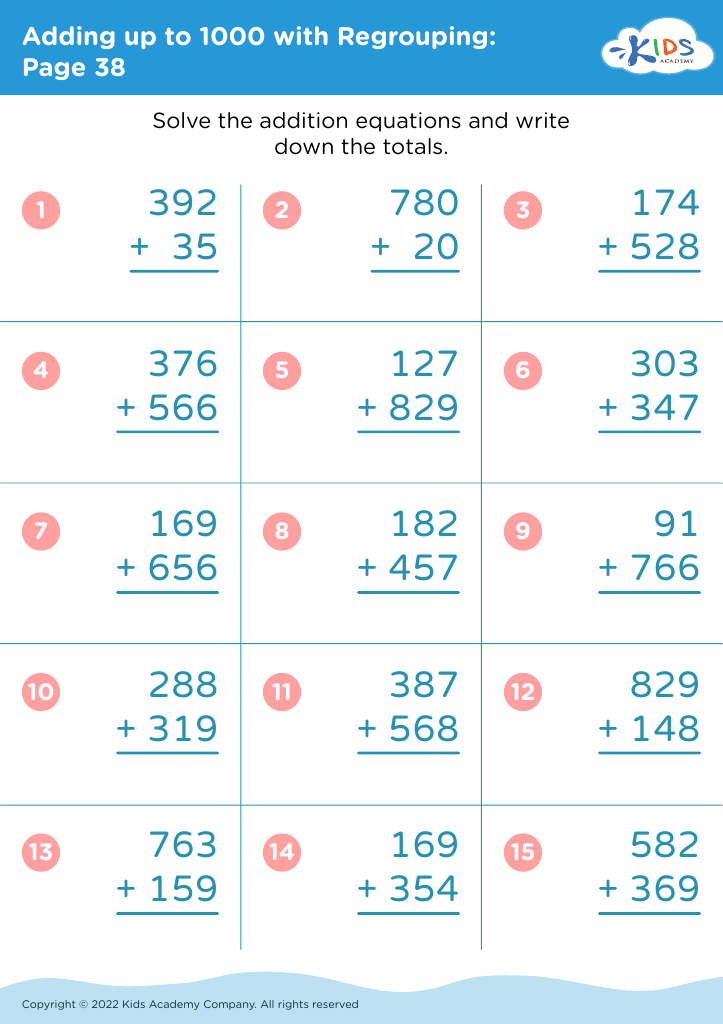
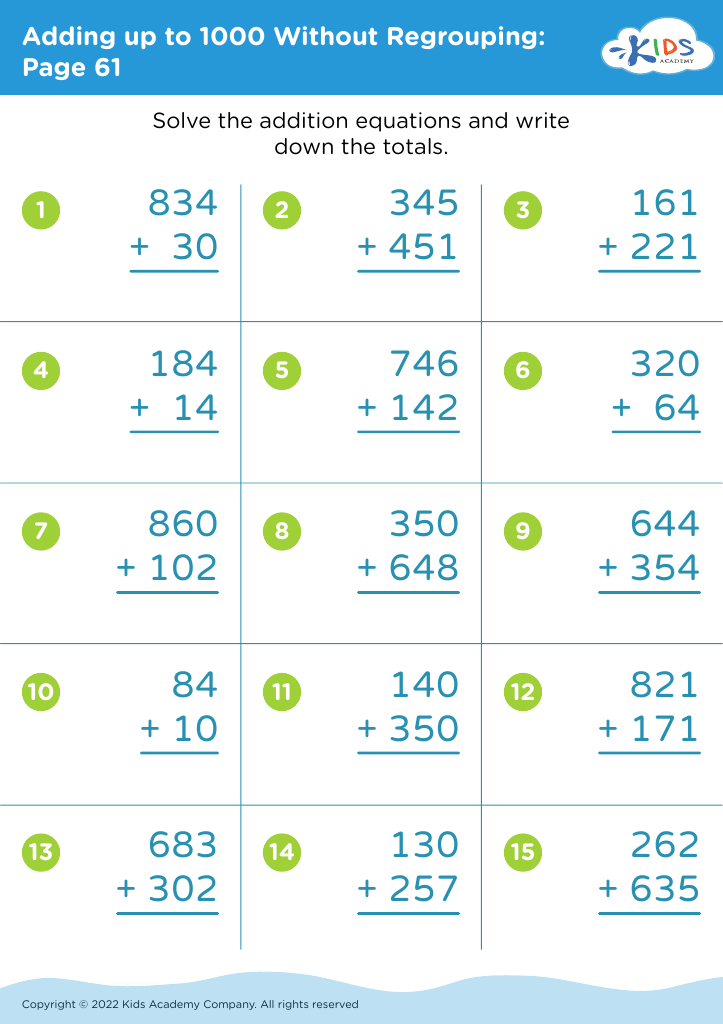
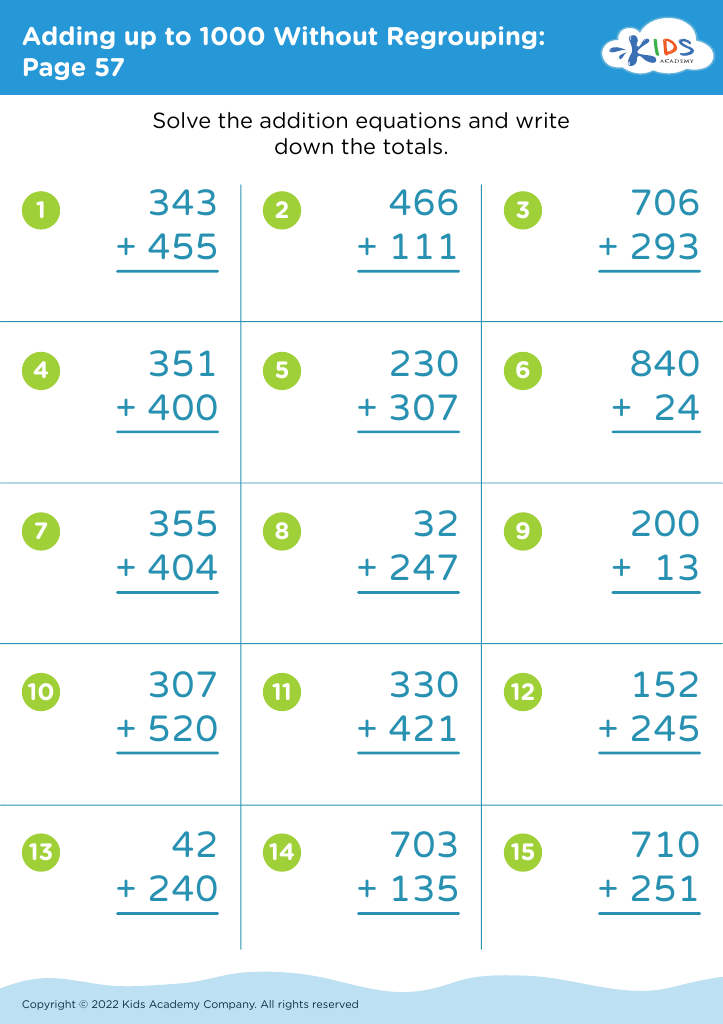
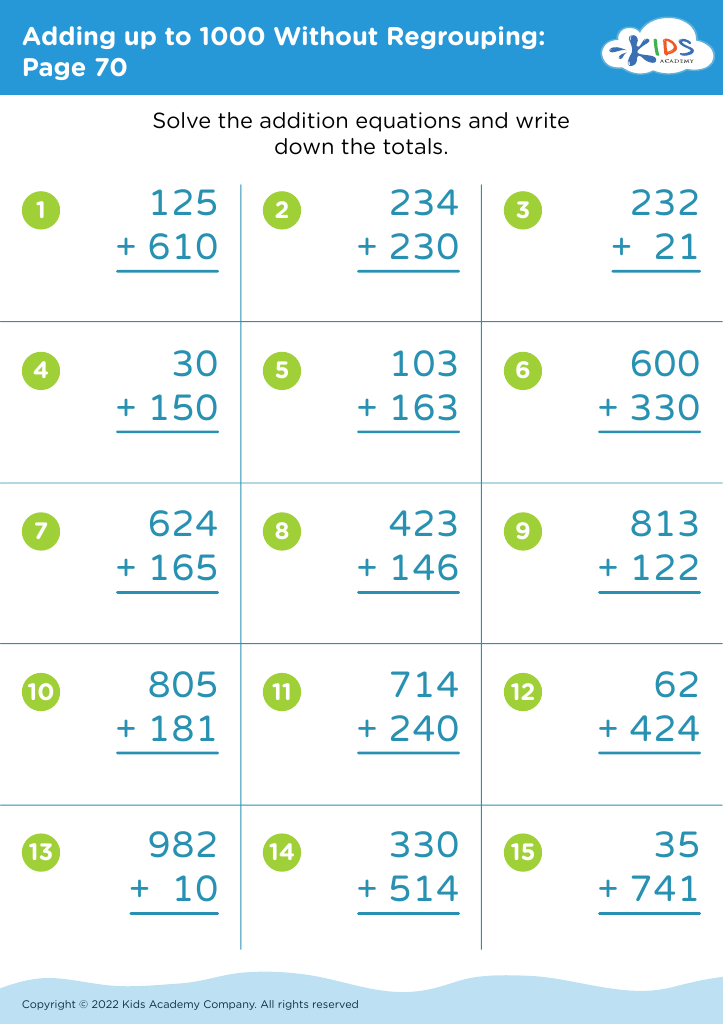



Fostering an early understanding of basic addition up to 1000 in children ages 4-9 sets the foundation for their future success in mathematics and daily problem-solving skills. At this developmental stage, children’s brains are exceptionally adept at absorbing new information, making it an ideal time to introduce mathematical concepts. Mastering addition enhances their numerical comprehension, helps them recognize patterns, and cultivates critical thinking skills.
When parents and teachers prioritize teaching basic addition, they offer children the tools needed to tackle more complex arithmetic operations in later grades, such as subtraction, multiplication, and division. Furthermore, these early math skills often correlate positively with improved academic performance across all subjects, as math skills support logical reasoning and attention to detail.
Early proficiency in addition also equips children with practical life skills. They learn to handle money, manage quantities, tell time, and problem-solve in real-world situations, fostering independence and confidence. Encouraging interest and enjoyment in math through supportive learning environments and engaging activities can inspire a lifelong love for learning and enable children to approach more challenging subjects with resilience and curiosity. Therefore, caring about basic addition is critical to empowering children with the skills they need to succeed academically and in everyday life.








