Filters

19 filtered results

Clear all filters
Favorites
With answer key
Interactive

19 filtered results

Difficulty Level

Grade


Welcome to our "Counting Practice: Adding Up to 1000 Worksheets" page, designed for children aged 4-9! These engaging, printable worksheets provide a fun way for young learners to develop essential counting and addition skills. Our activities focus on helping kids confidently understand numbers and enhance their mathematical abilities while encouraging critical thinking. Tailored to different learning levels, these worksheets include vibrant visuals and interactive exercises that keep children motivated. Perfect for classroom use or at-home learning, our resources will ensure children are well-prepared as they explore the world of numbers, gradually adding up to 1000 with ease. Start counting today!
Check out this FREE Trial Lesson on Adding up to 1000 for age 4-9!

Exactly the Same, or Not

Favorites
With answer key
Interactive
  • 4-9
  • Counting practice
  • Adding up to 1000
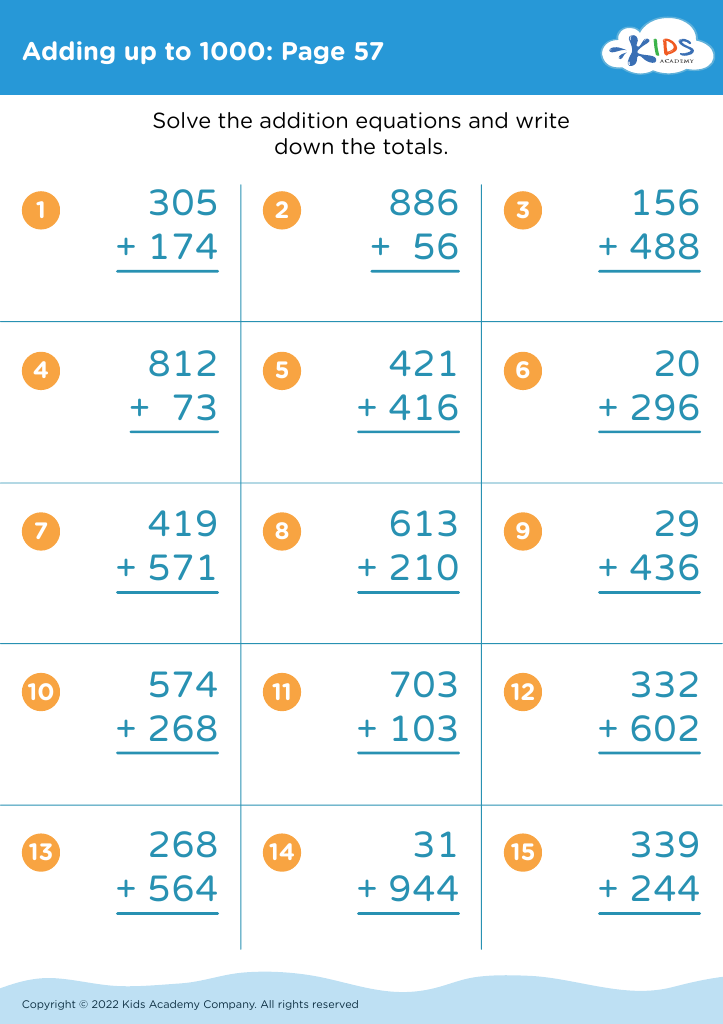
Adding up to 1000: Page 57

Adding up to 1000: Page 57

Adding up to 1000: Page 57
Worksheet
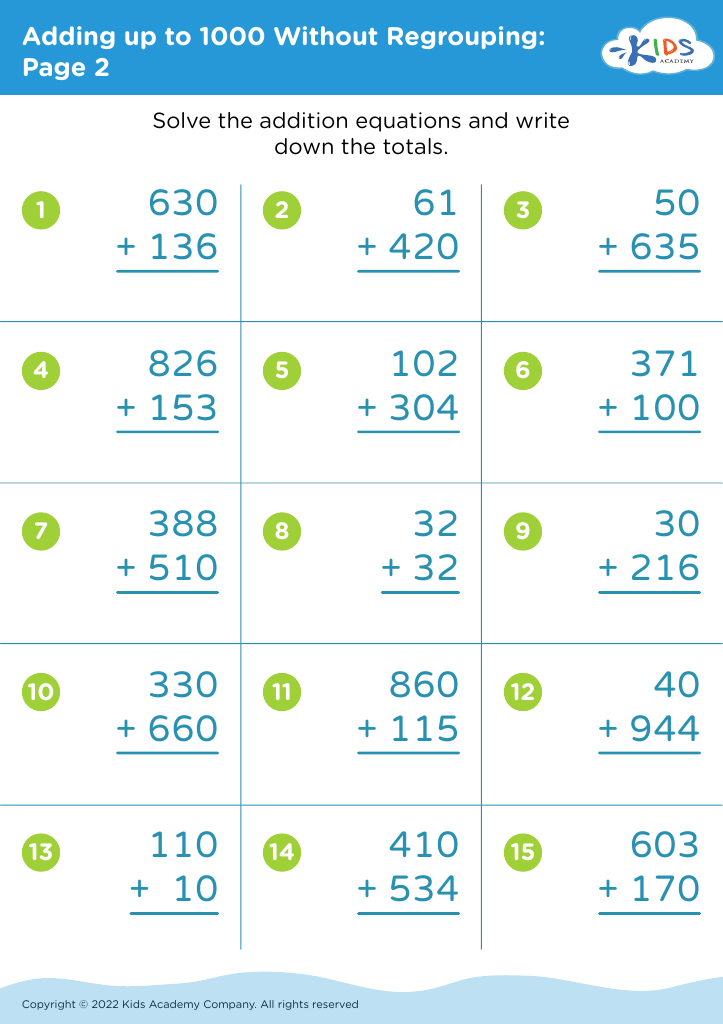
Adding up to 1000 Without Regrouping: Page 2
Worksheet
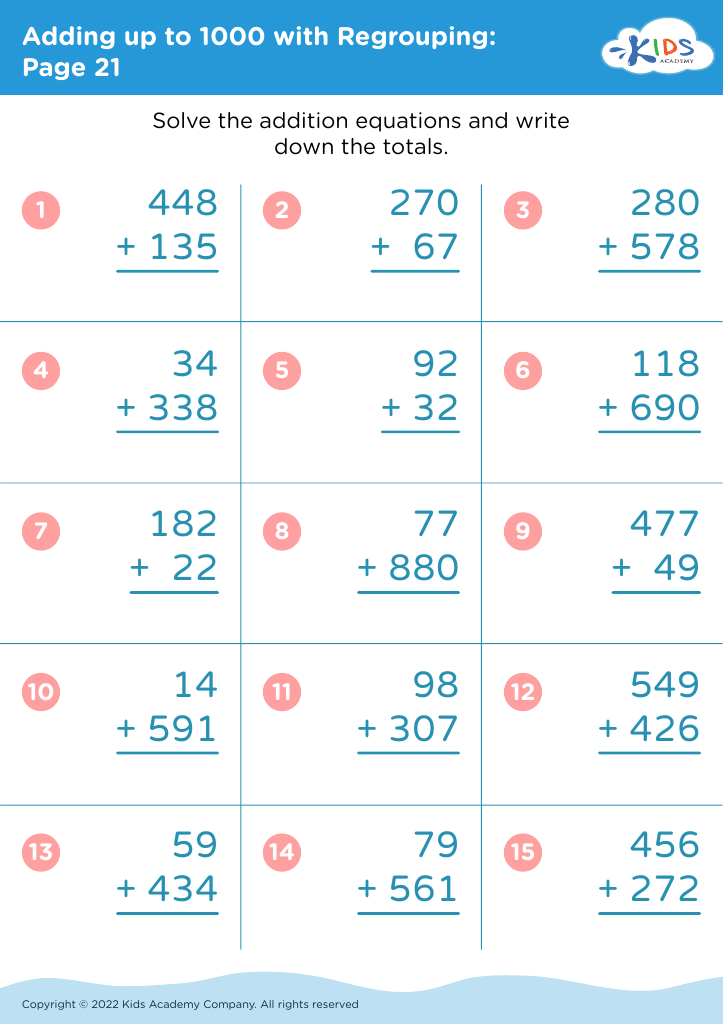
Adding up to 1000 with Regrouping: Page 21
Worksheet
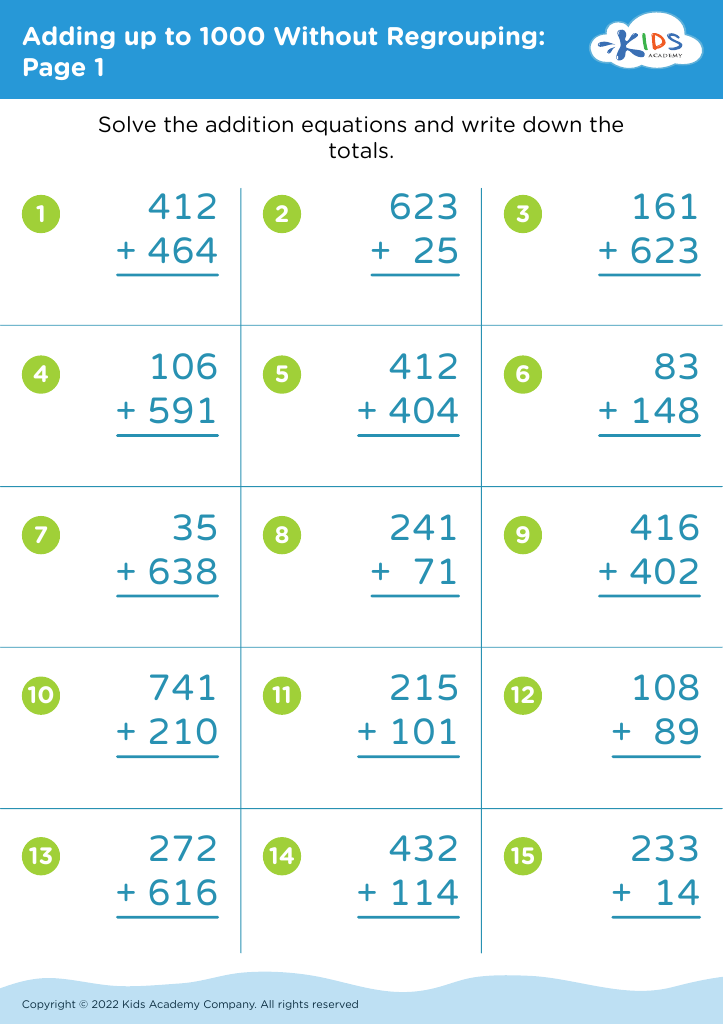
Adding up to 1000 Without Regrouping: Page 1
Worksheet
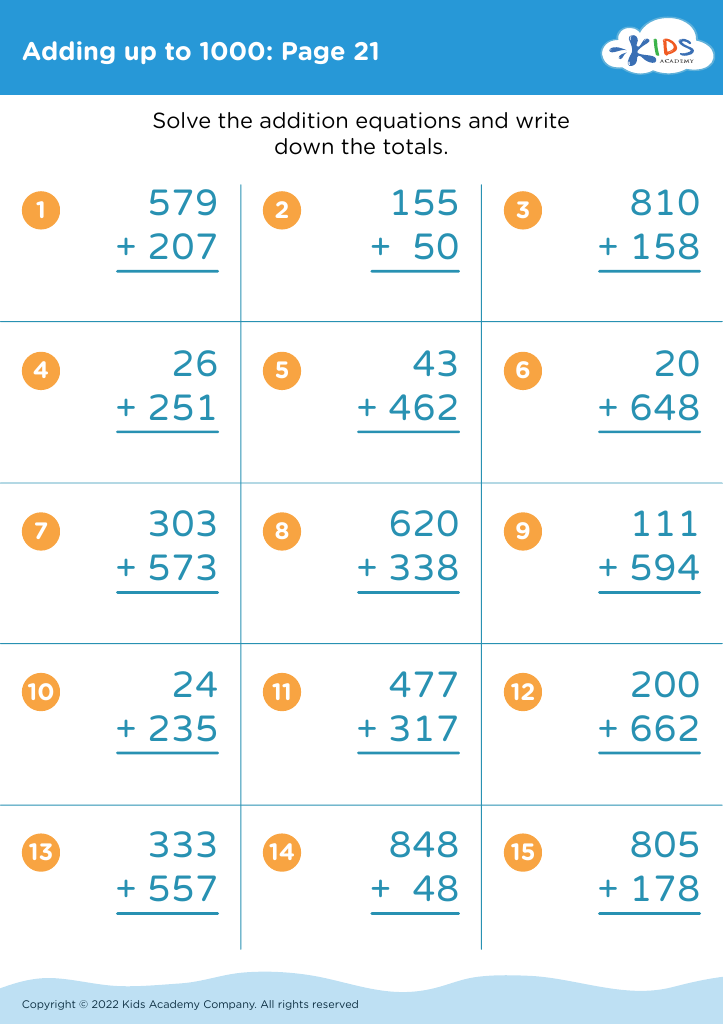
Adding up to 1000: Page 21

Adding up to 1000: Page 21

Adding up to 1000: Page 21
Worksheet
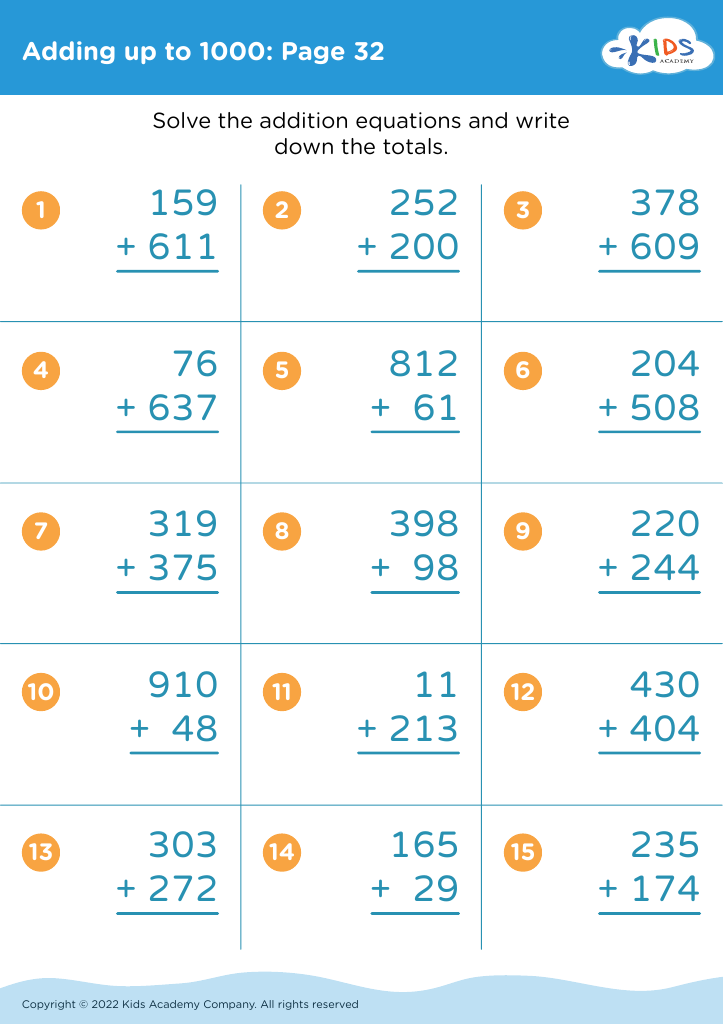
Adding up to 1000: Page 32

Adding up to 1000: Page 32

Adding up to 1000: Page 32
Worksheet
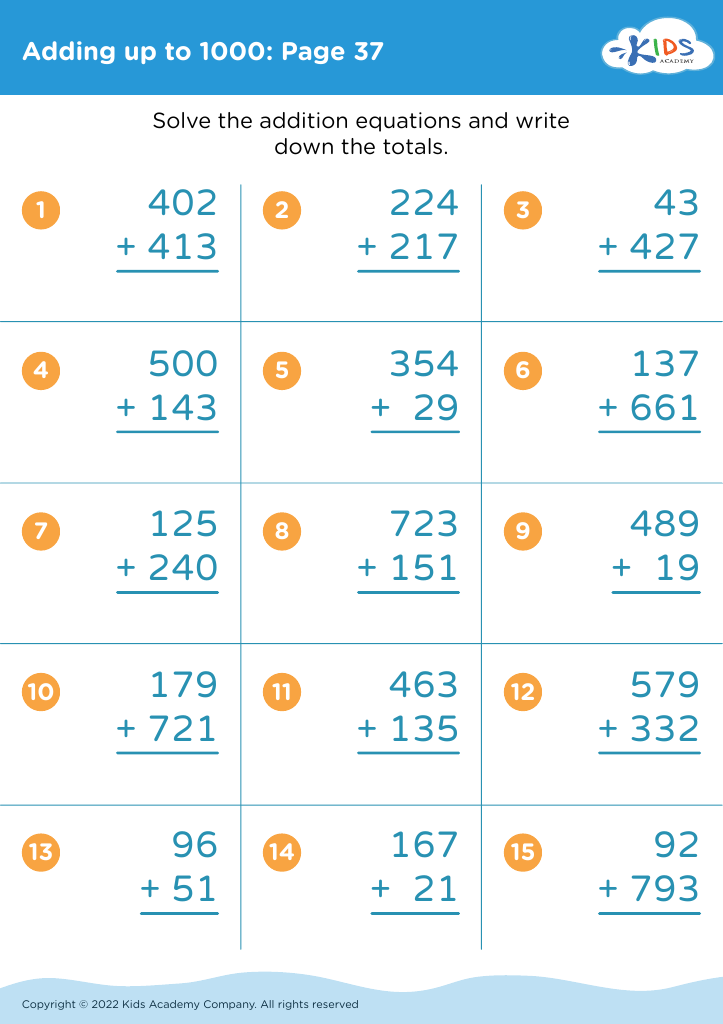
Adding up to 1000: Page 37

Adding up to 1000: Page 37

Adding up to 1000: Page 37
Worksheet
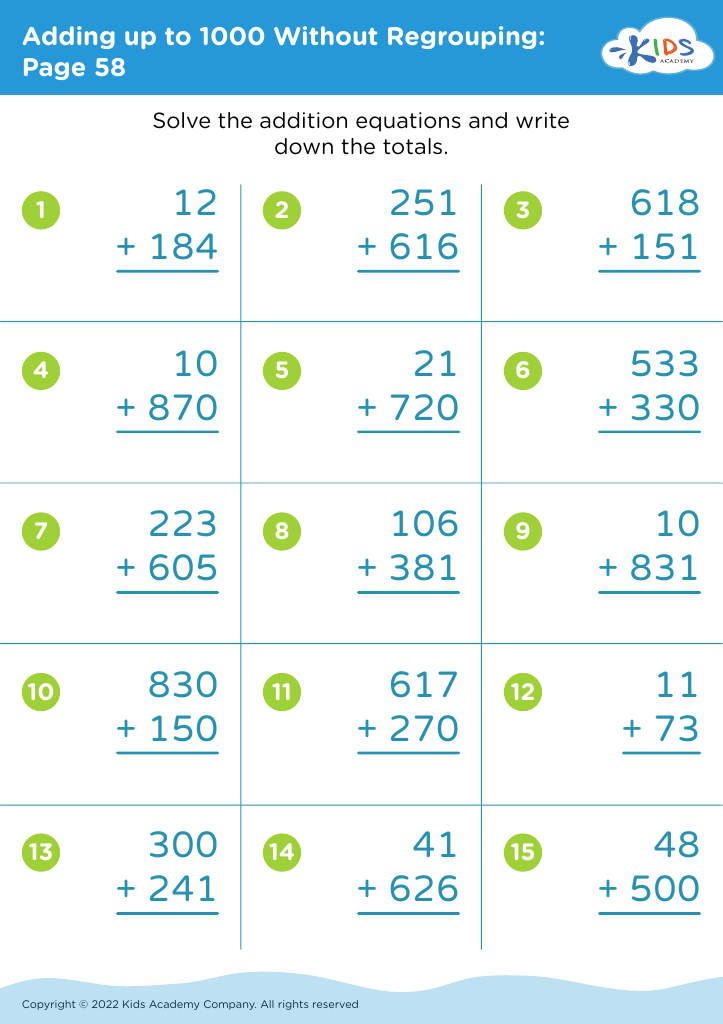
Adding up to 1000 Without Regrouping: Page 58
Worksheet
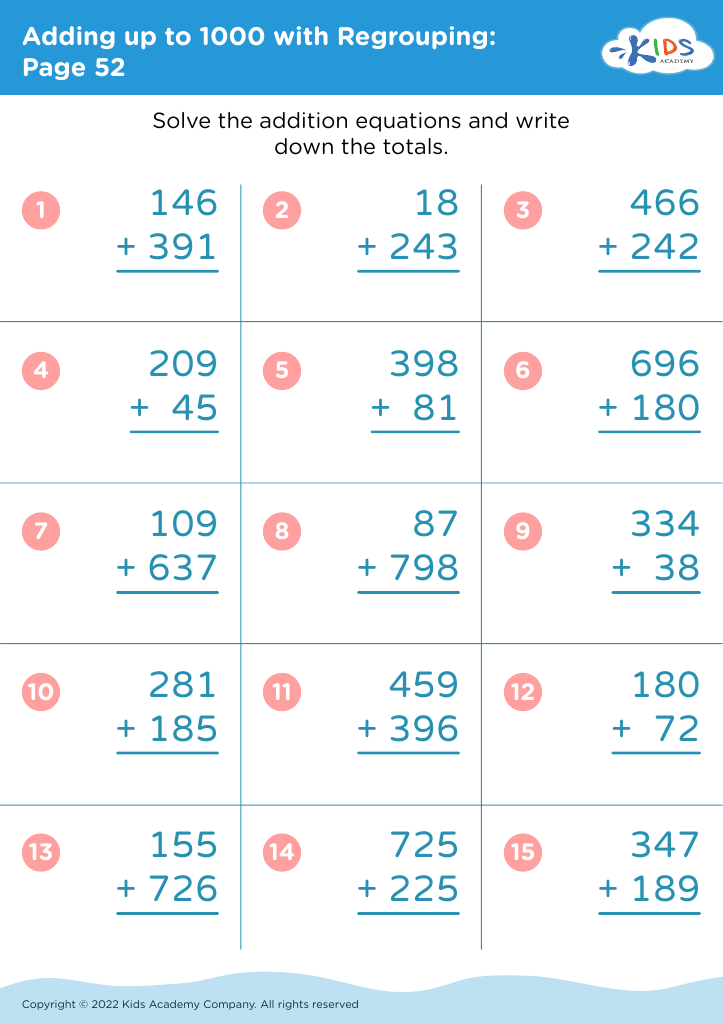
Adding up to 1000 with Regrouping: Page 52
Worksheet
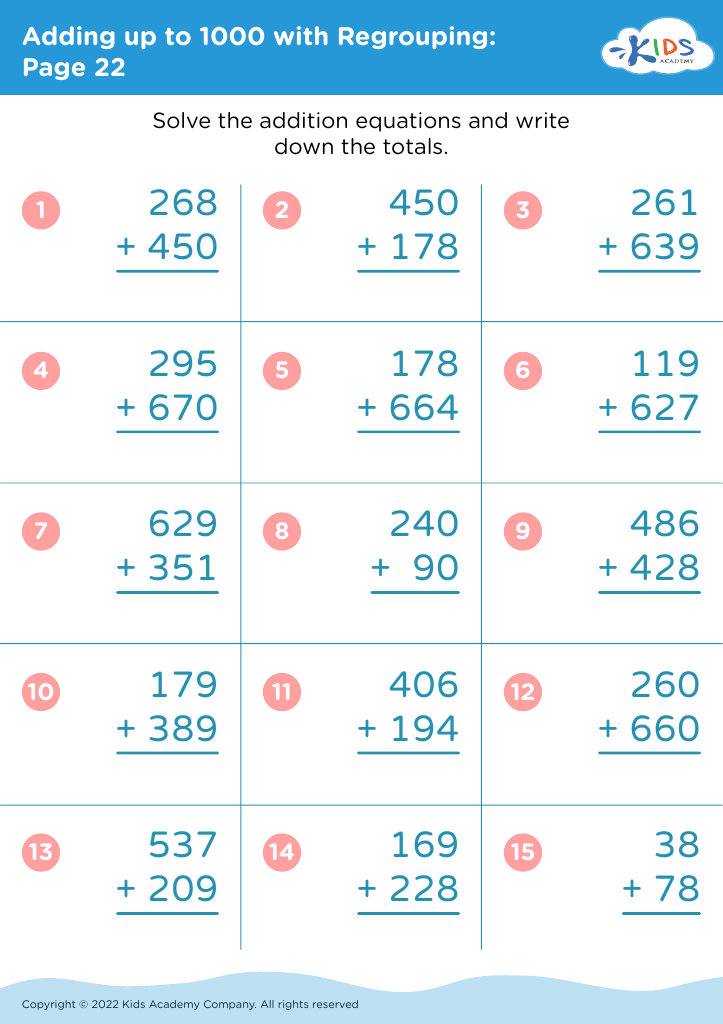
Adding up to 1000 with Regrouping: Page 22
Worksheet
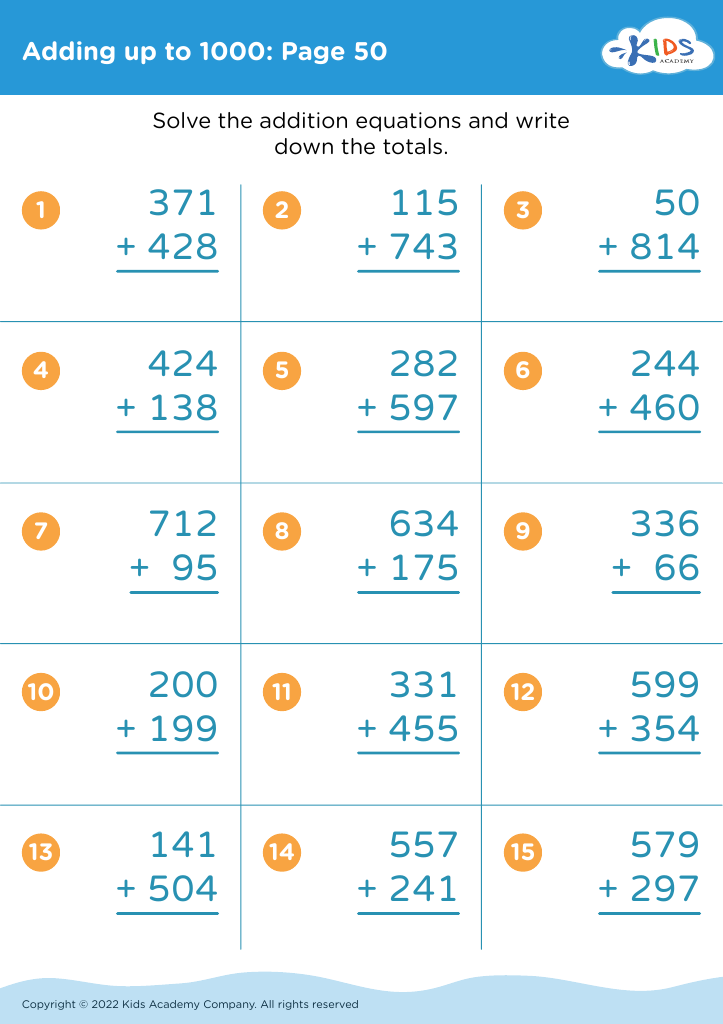
Adding up to 1000: Page 50

Adding up to 1000: Page 50

Adding up to 1000: Page 50
Worksheet
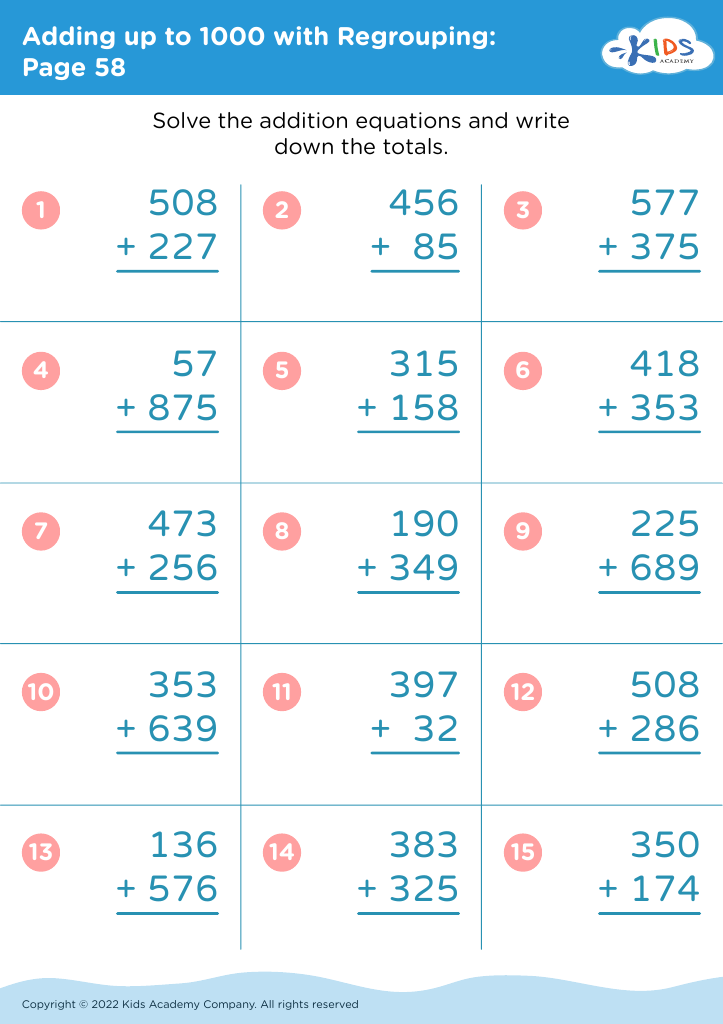
Adding up to 1000 with Regrouping: Page 58
Worksheet
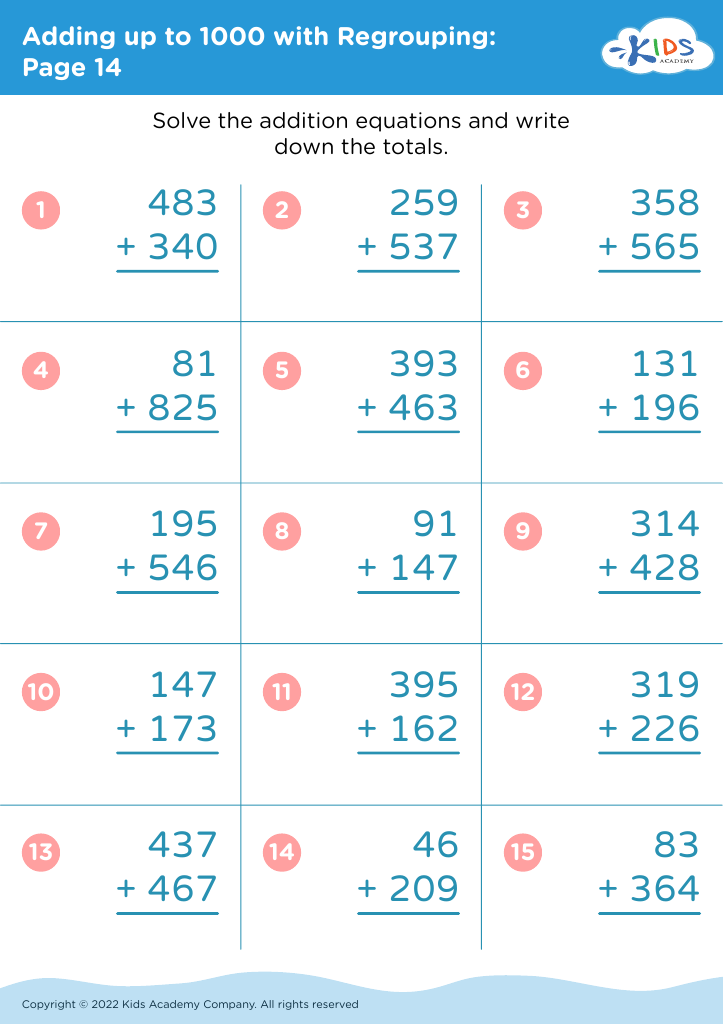
Adding up to 1000 with Regrouping: Page 14
Worksheet
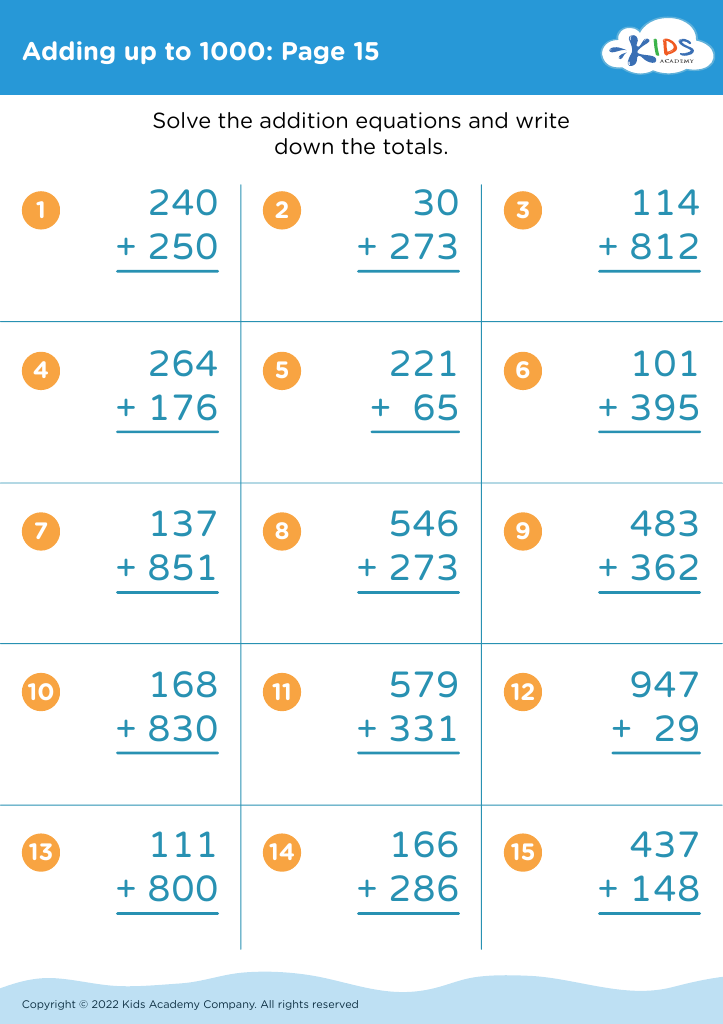
Adding up to 1000: Page 15

Adding up to 1000: Page 15

Adding up to 1000: Page 15
Worksheet
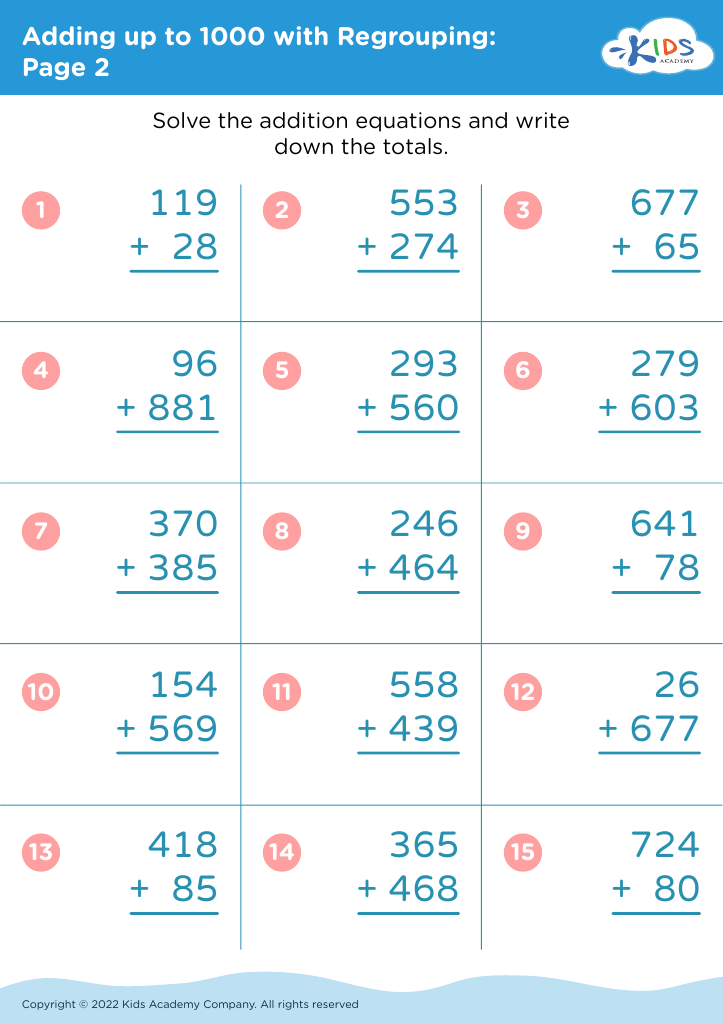
Adding up to 1000 with Regrouping: Page 2
Worksheet
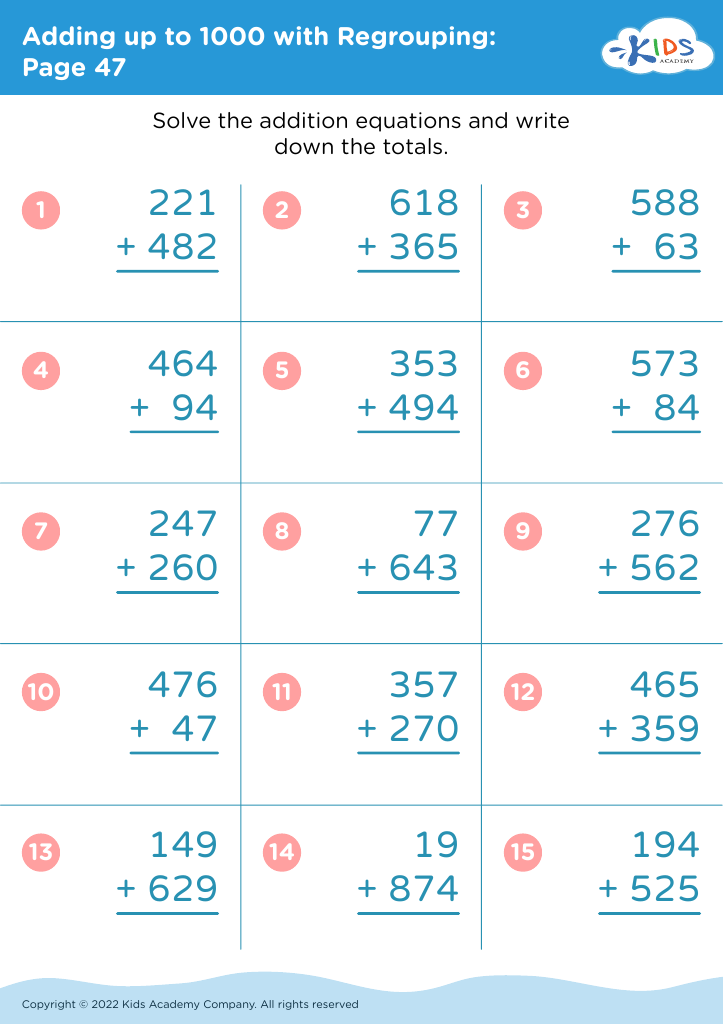
Adding up to 1000 with Regrouping: Page 47
Worksheet
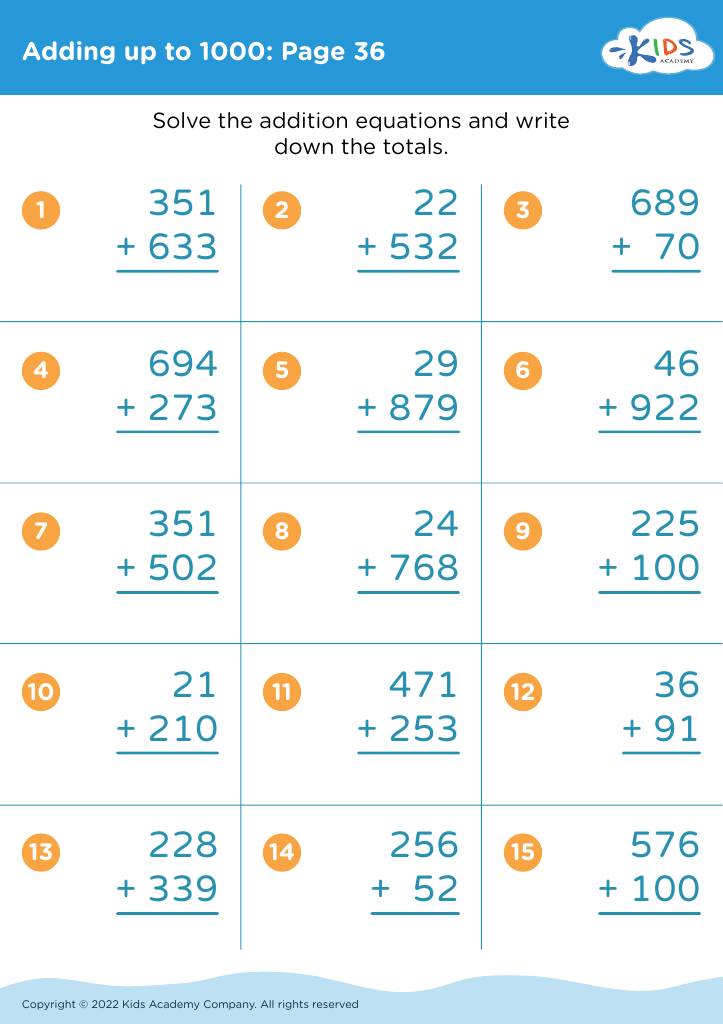
Adding up to 1000: Page 36

Adding up to 1000: Page 36

Adding up to 1000: Page 36
Worksheet
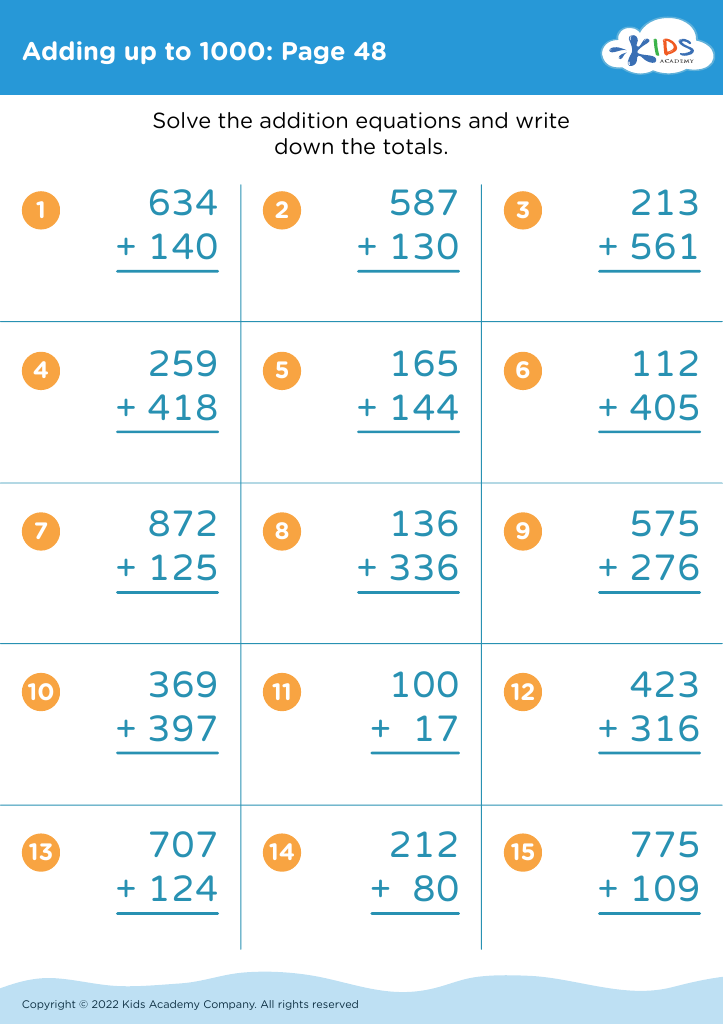
Adding up to 1000: Page 48

Adding up to 1000: Page 48

Adding up to 1000: Page 48
Worksheet
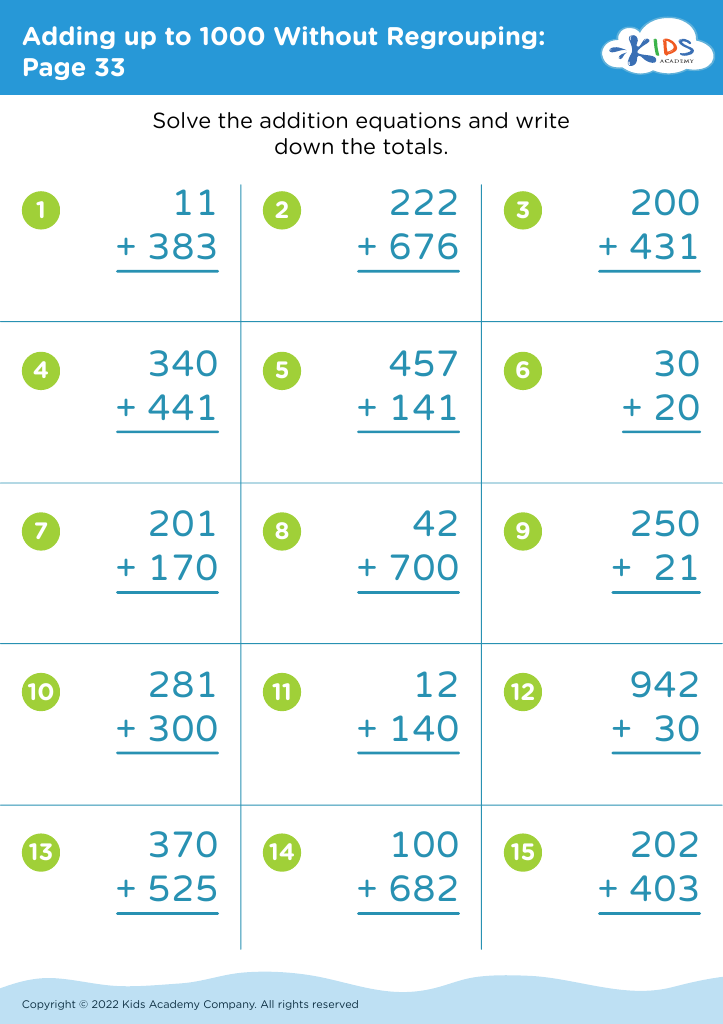
Adding up to 1000 Without Regrouping: Page 33
Worksheet


Counting practice, especially when introducing children to addition up to 1000, is essential for ages 4-9 as it lays the groundwork for fundamental mathematical skills. At this developmental stage, children are naturally curious and capable of grasping numerical concepts, making it an ideal time to foster their understanding of numbers and addition.

Learning to count and add helps young learners develop their ability to recognize patterns and enhance their problem-solving skills. Mastery of these concepts also promotes confidence, allowing children to tackle more complex mathematical challenges in the future. Counting practice invites children to explore different counting techniques, such as skip counting or grouping, which enhance their critical thinking abilities.

Moreover, numeracy skills are foundational for everyday tasks, from measuring ingredients in cooking to budgeting with pocket money. By incorporating counting practice into their routines, parents and teachers are equipping children with essential life skills. The ability to understand and manipulate numbers has far-reaching implications, supporting not only academic achievement in mathematics but also fostering analytical skills valuable in all subjects. Thus, engaging children in extensive counting practice ultimately sets them on a path to become confident, capable learners and problem solvers.