Fraction comparison Adding up to 1000 Worksheets for Ages 4-9
13 filtered results
-
From - To
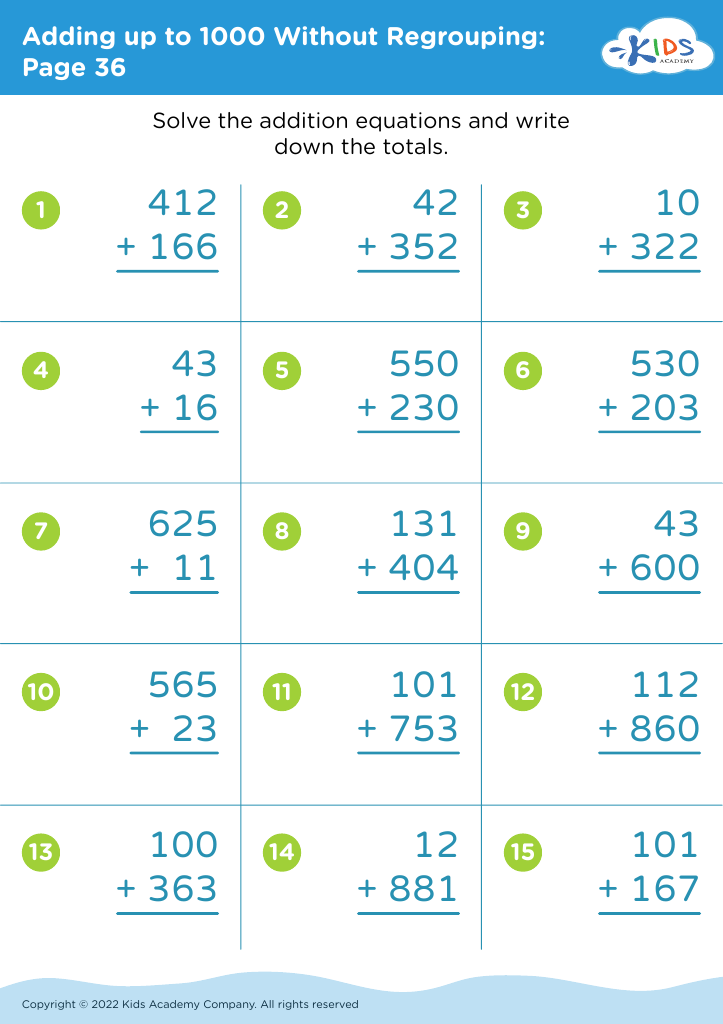
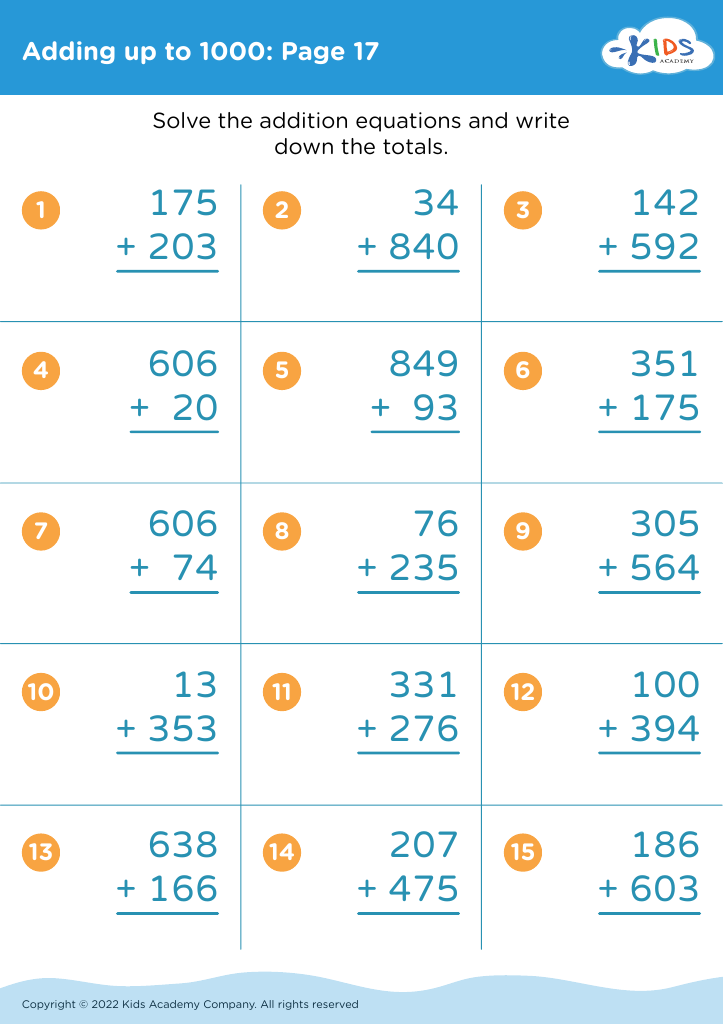
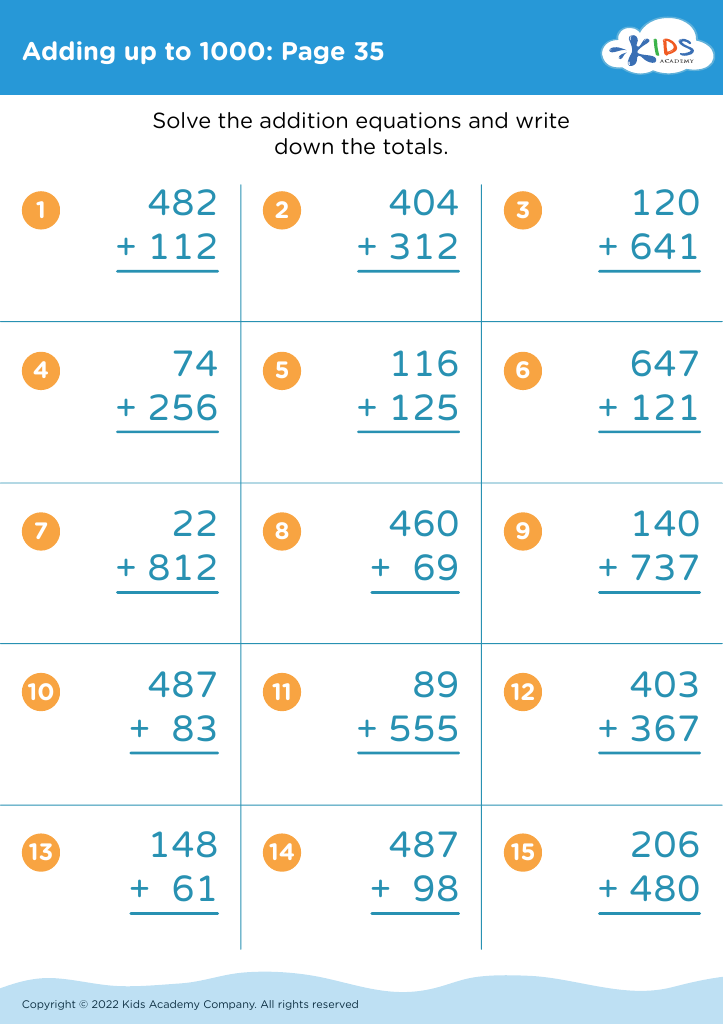
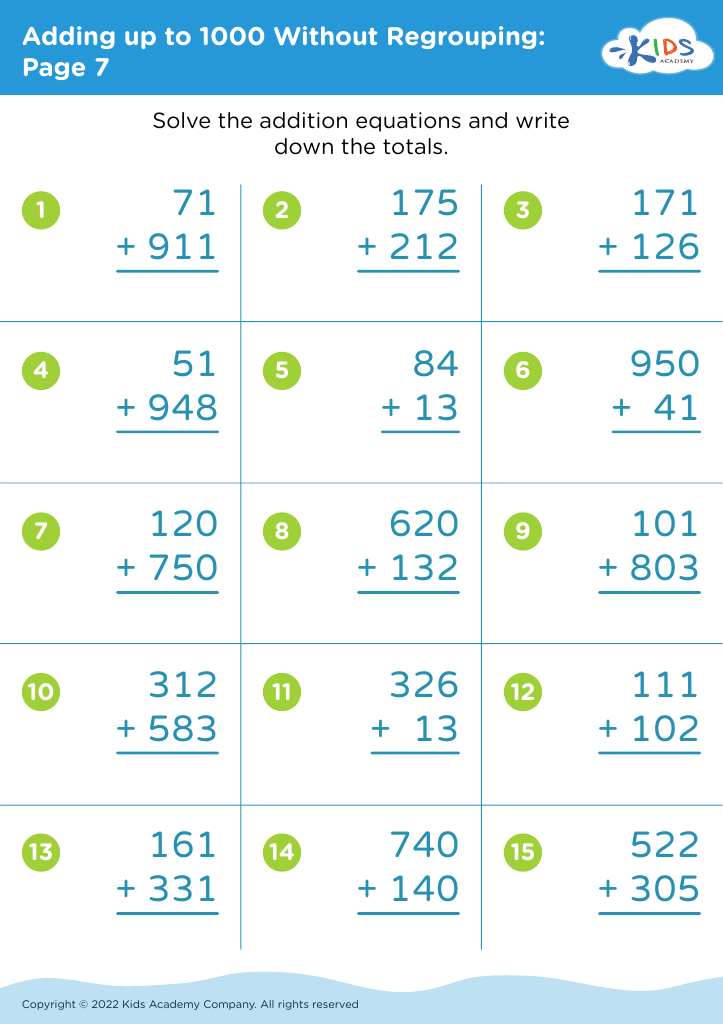
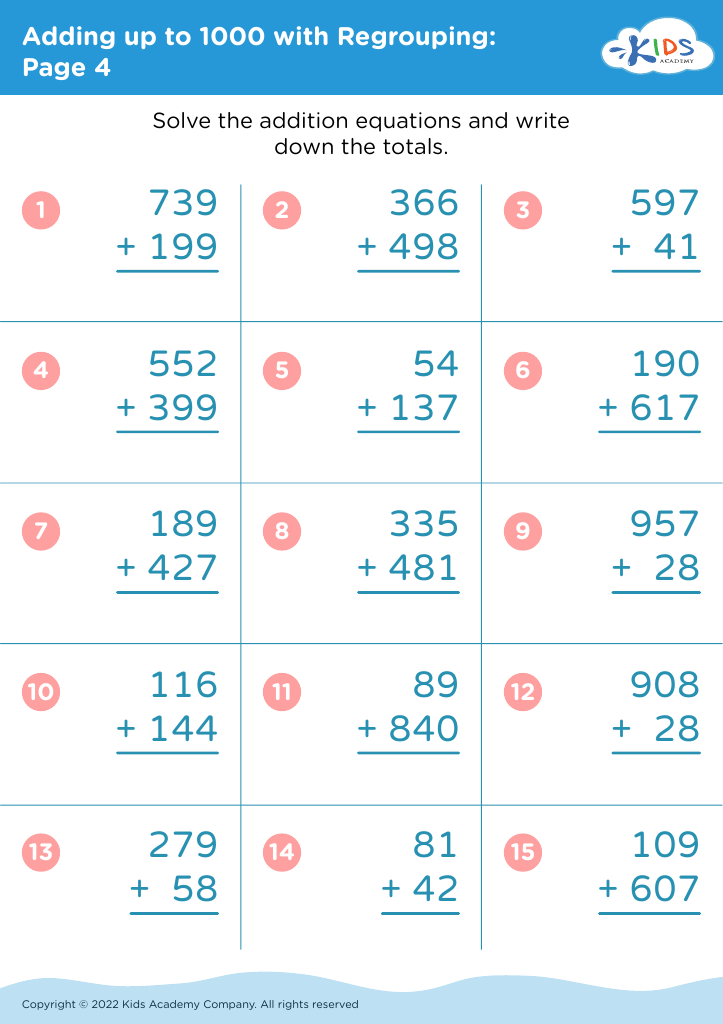
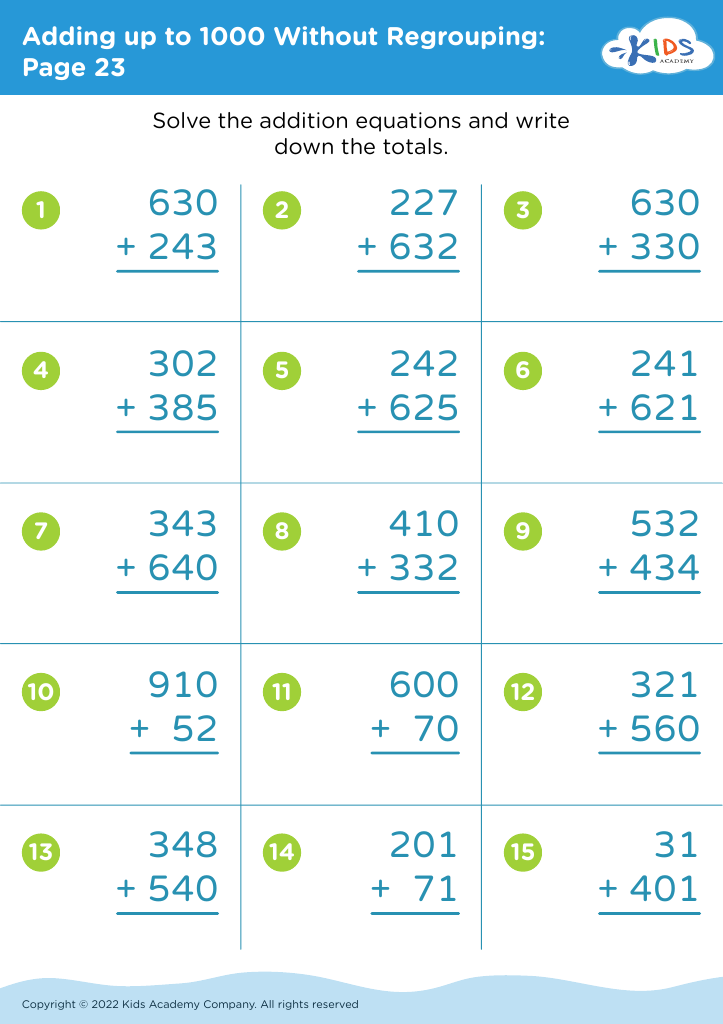
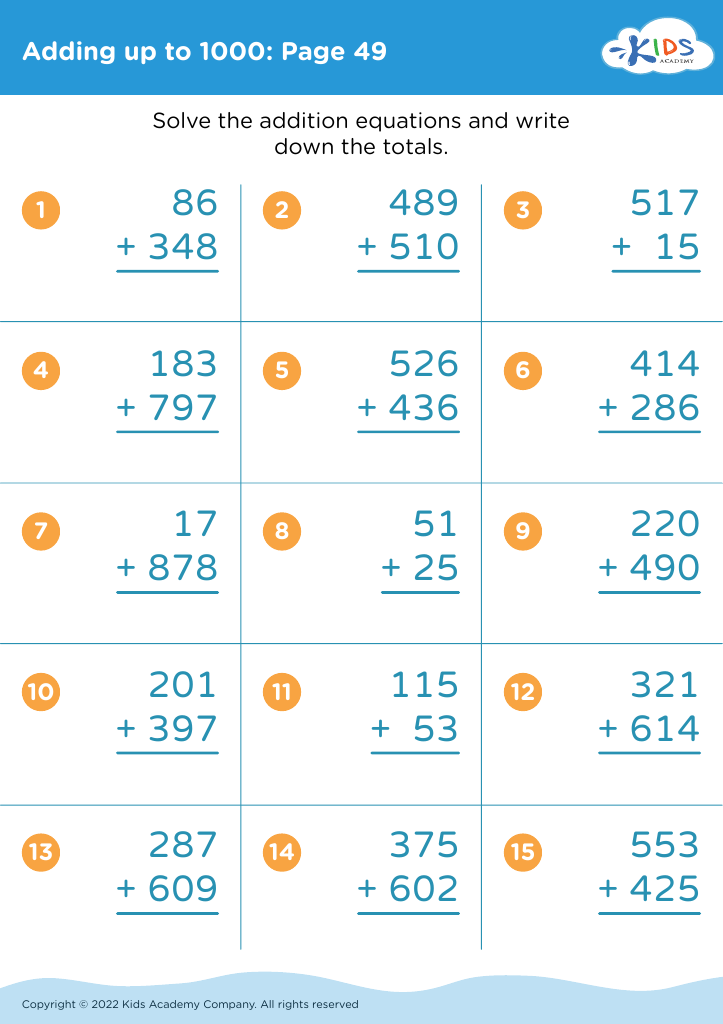
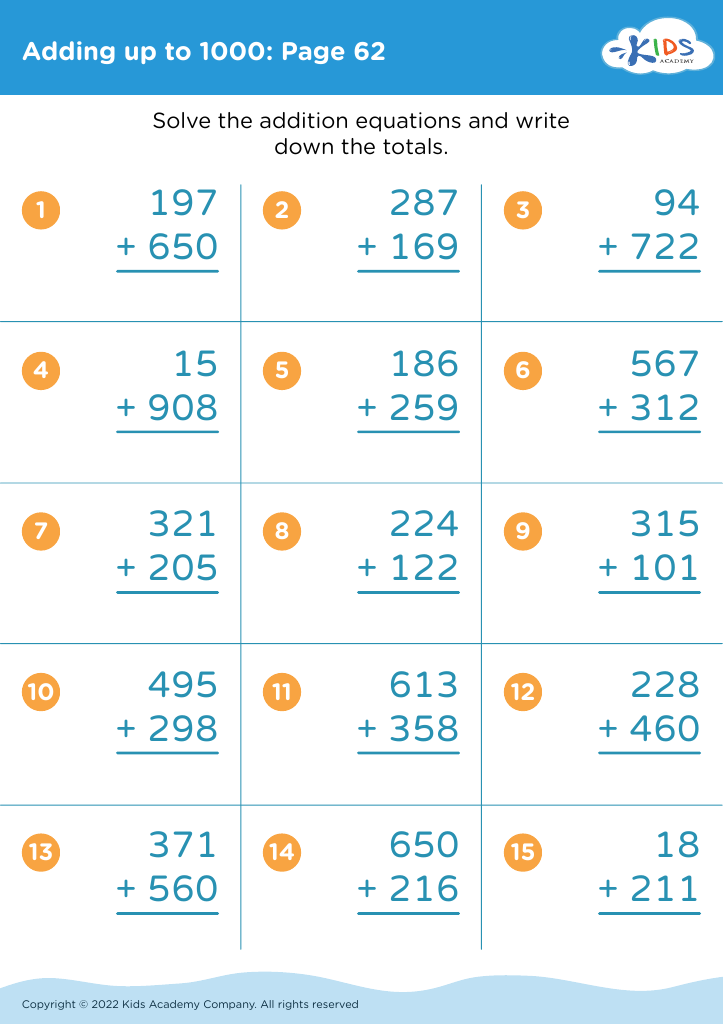
Explore our engaging "Fraction Comparison Adding up to 1000 Worksheets" designed for children aged 4-9! These worksheets encourage young learners to compare fractions with ease while reinforcing their understanding of addition up to 1000. With interactive and visually appealing exercises, children will develop essential math skills in a fun and meaningful way. Perfect for classroom use or at-home practice, our resources promote critical thinking and boost confidence as kids tackle fraction challenges. Watch your little ones thrive in math with these carefully crafted worksheets that align with their cognitive development stage. Get started today and make learning joyful!
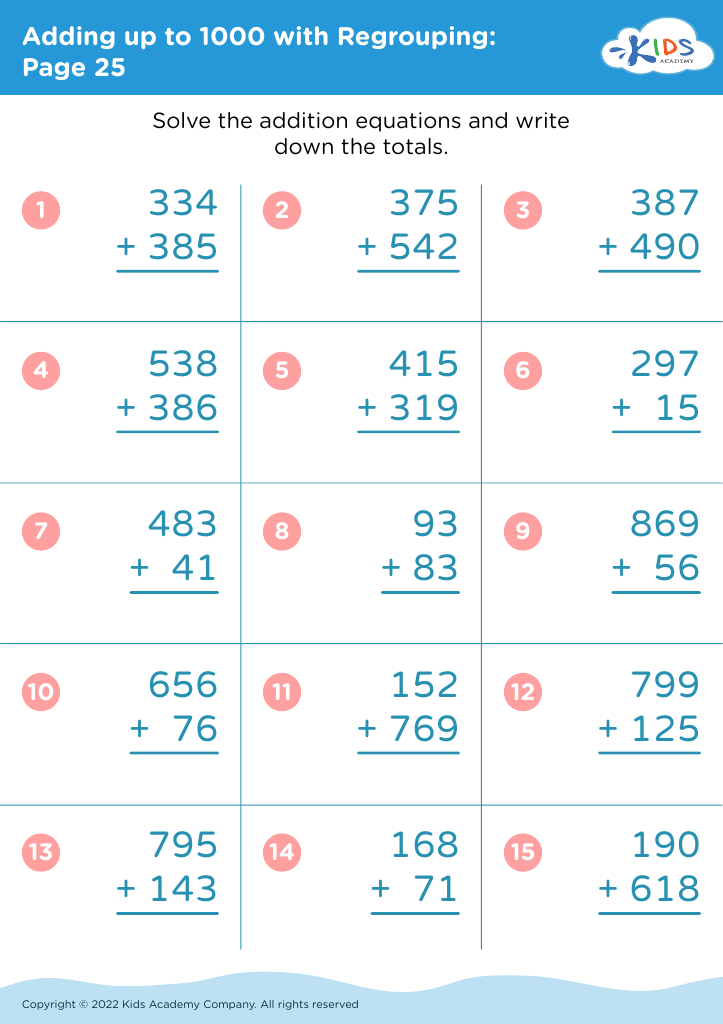



Understanding fraction comparison is crucial for children aged 4-9 as it lays the foundation for essential mathematical concepts they will encounter later in their education. Fractions represent parts of a whole, and grasping how to compare them helps children develop critical thinking and problem-solving skills. By learning to compare fractions, children enhance their ability to understand proportions, ratios, and even basic algebra concepts.
Moreover, fraction comparison is not just an abstract idea; it connects to everyday experiences, such as sharing food or dividing objects. These relatable situations enable young learners to visualize and grasp the concept more effectively. This early understanding influences their confidence in dealing with math-related tasks in the future and helps cultivate a positive attitude toward learning mathematics.
For parents and teachers, fostering this skill is essential in promoting a well-rounded education. It encourages curiosity and exploration in mathematics, which can lead to deeper learning outcomes. Additionally, as students progress, proficiency in comparing fractions will aid in more complex subjects, making it vital for building strong foundational skills. In essence, supporting young learners in mastering fraction comparison is an investment in their overall academic success and lifelong mathematical understanding.








