Identifying shapes Adding up to 1000 Worksheets for Ages 4-9
3 filtered results
-
From - To
Unlock the power of early learning with our comprehensive 'Identifying Shapes Adding up to 1000' worksheets, designed for children aged 4-9. These engaging printables merge the excitement of shape identification with the challenge of addition, helping young learners build foundational math skills. Perfect for homeschooling or supplemental practice, our worksheets cater to various learning styles and developmental stages, encouraging critical thinking and problem solving. Watch your child confidently explore geometry concepts while mastering addition up to 1000, all in a fun, interactive way. Elevate their learning journey and inspire a lifelong love of mathematics!
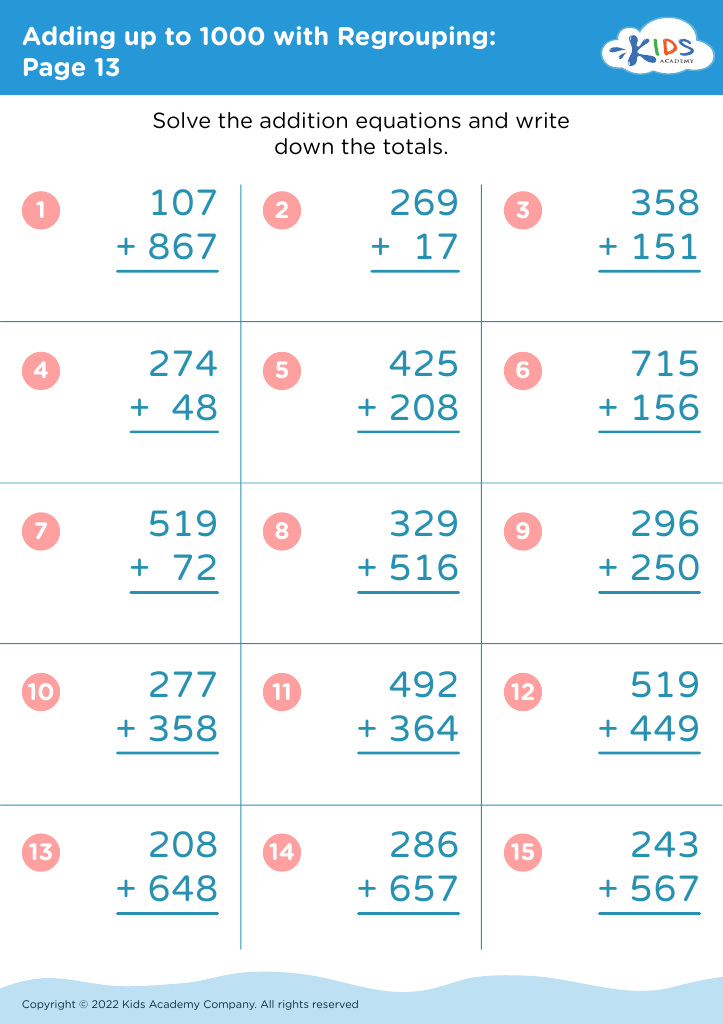
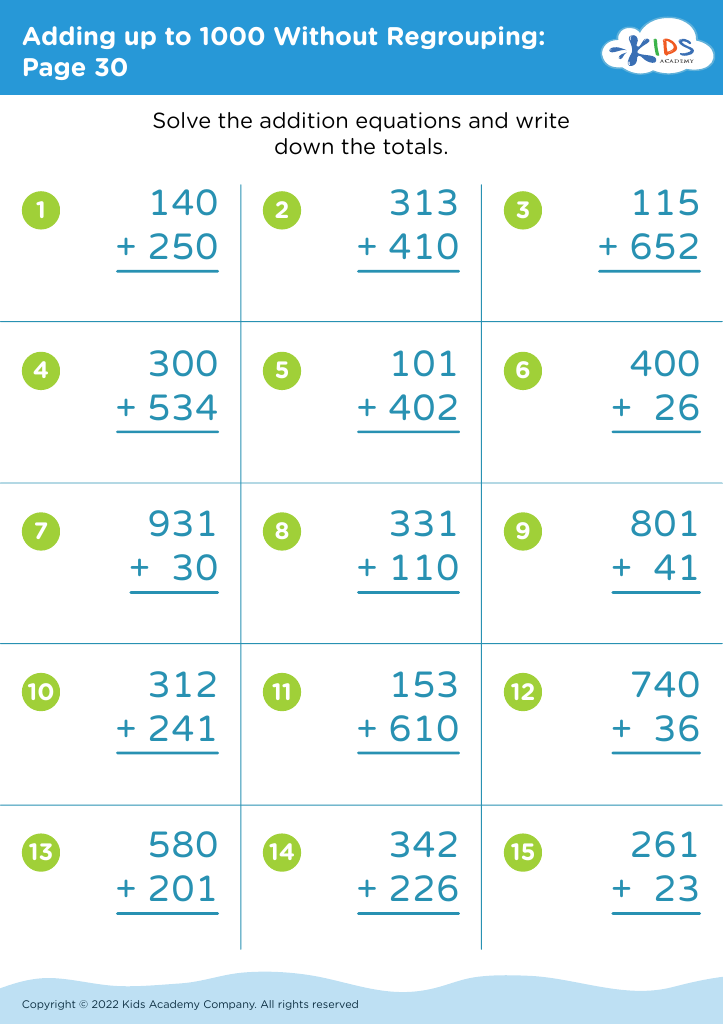
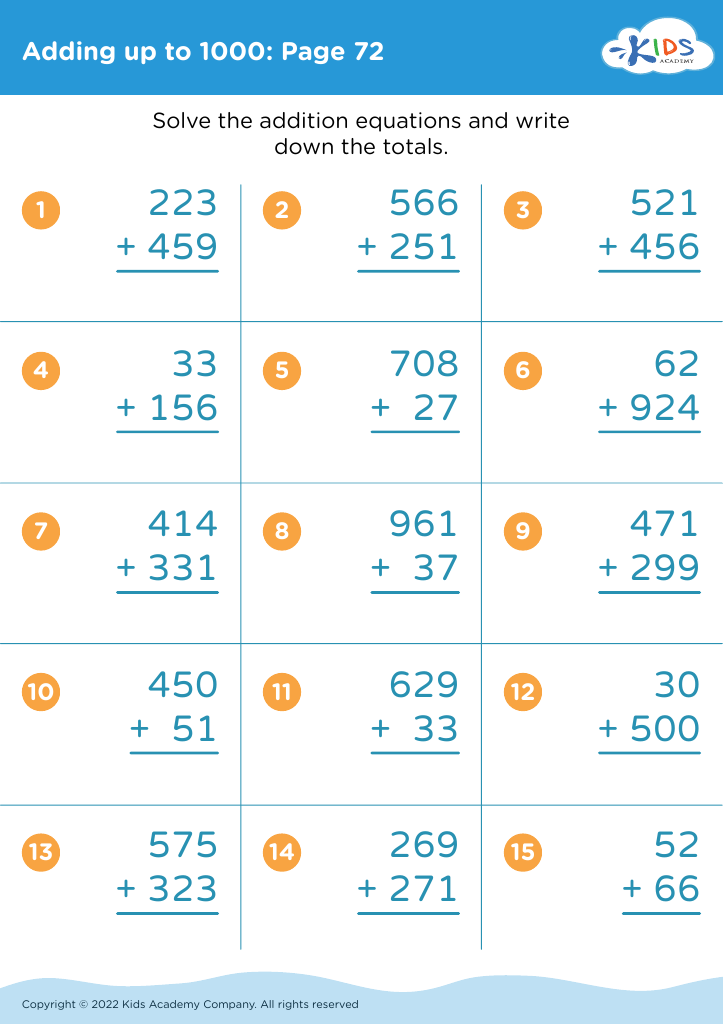



Parents and teachers should care about children identifying shapes and being able to add up to 1000 for several foundational reasons. Firstly, recognizing shapes is integral to a child's early spatial awareness and pattern recognition, which are vital building blocks for subjects like geometry and algebra. These shape identification skills also aid in better understanding and interpreting world around them through recognizing patterns, objects, and symbols in everyday life.
Additionally, being able to perform addition up to 1000 provides children with fundamental arithmetic skills. This ability is crucial not only for future mathematical learning but also for practical, day-to-day tasks like managing allowances or understanding quantities. Arithmetic proficiency helps build confidence in dealing with numbers, promoting critical thinking and problem-solving skills that extend beyond the classroom.
Overall, these abilities collectively support cognitive development by encouraging logical reasoning and numerical fluency. When parents and teachers focus on these aspects, they're not just gearing children towards academic success; they are equipping them with essential life skills that will benefit diverse aspects of daily life. Therefore, investing in teaching these core concepts enhances comprehensive development and offers kids a robust foundation for their educational journey and future capabilities.








