Understanding fractions Adding up to 1000 Worksheets for Ages 4-9 - Page 2
44 filtered results
-
From - To
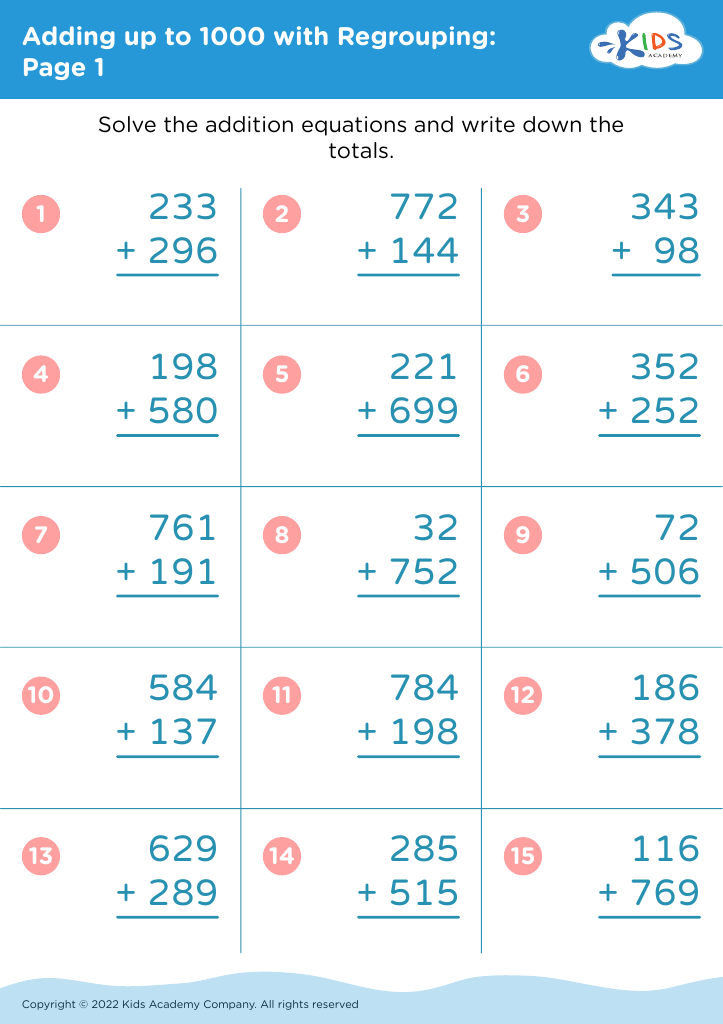
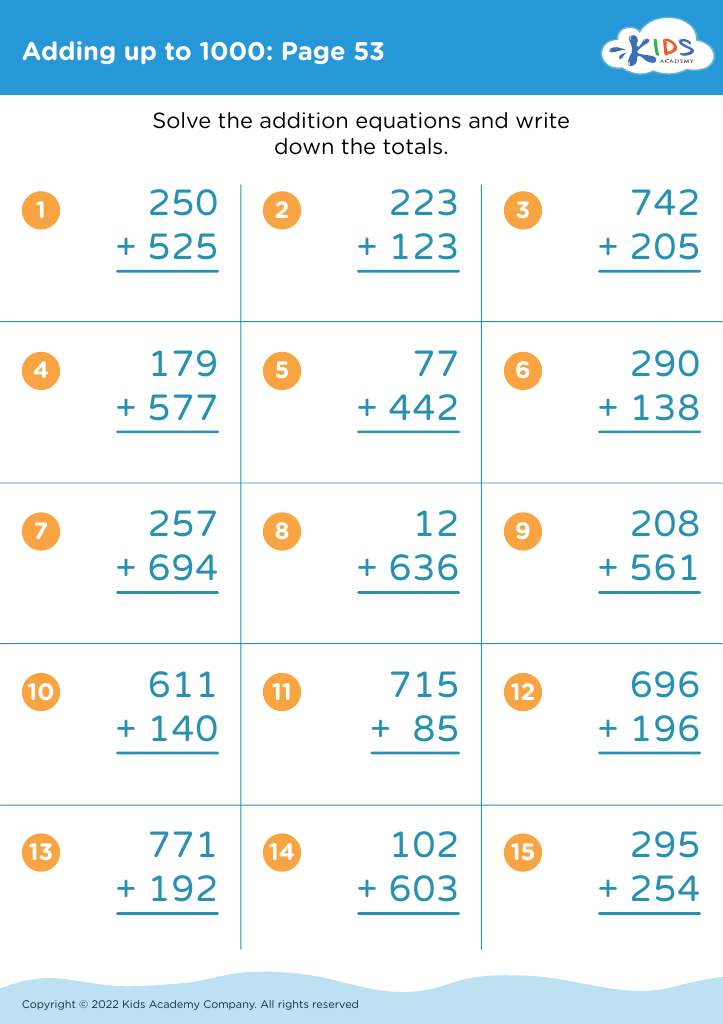
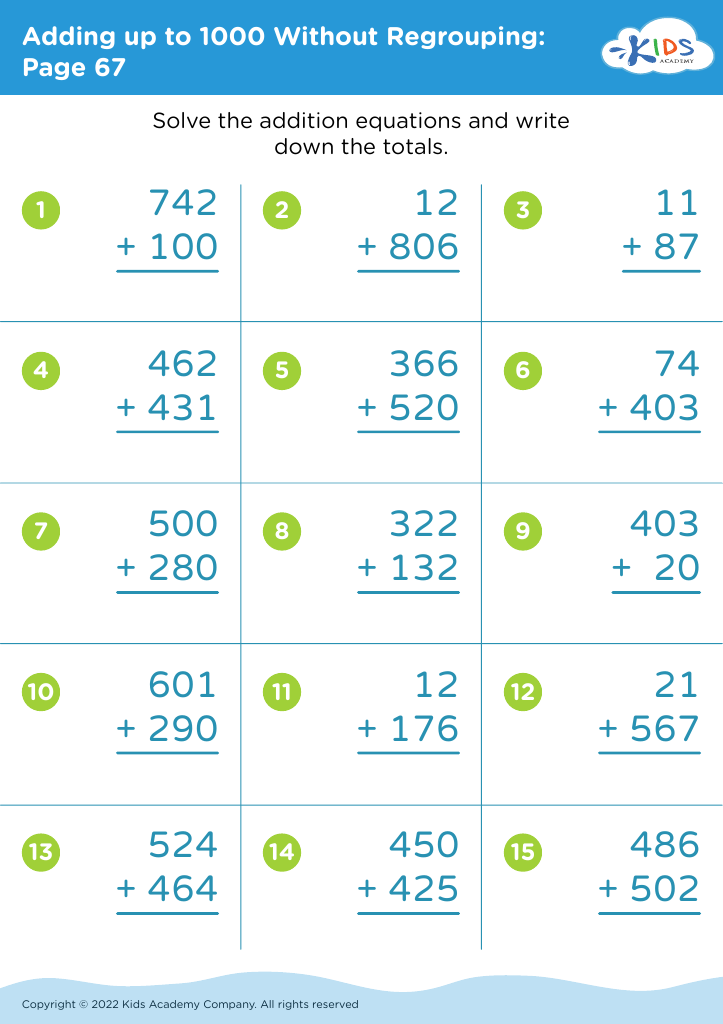
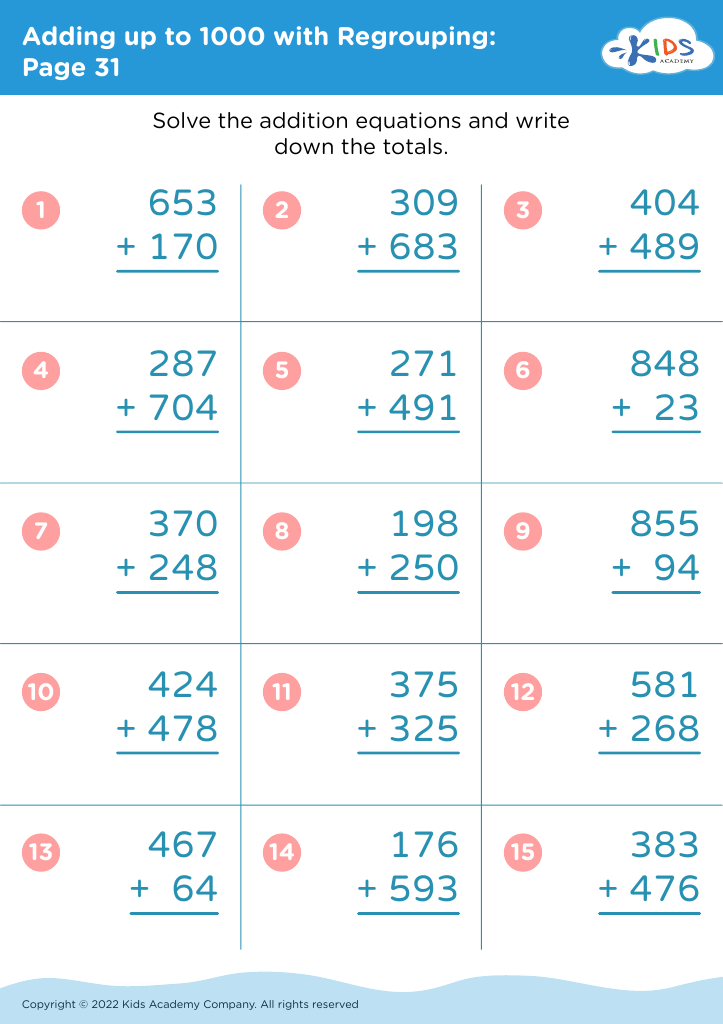
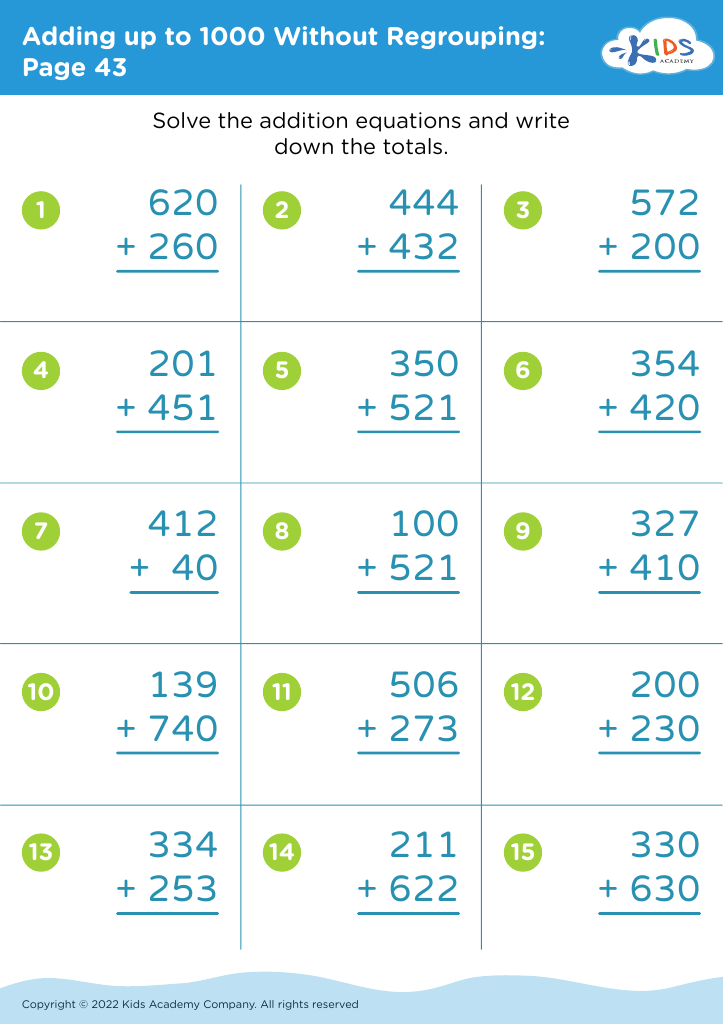
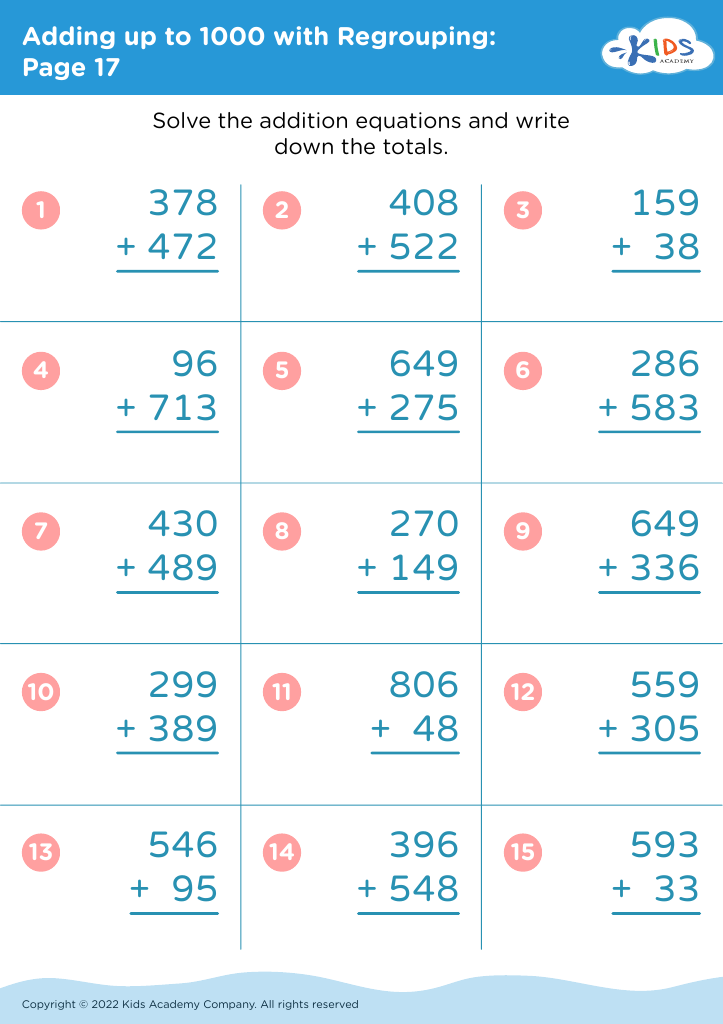
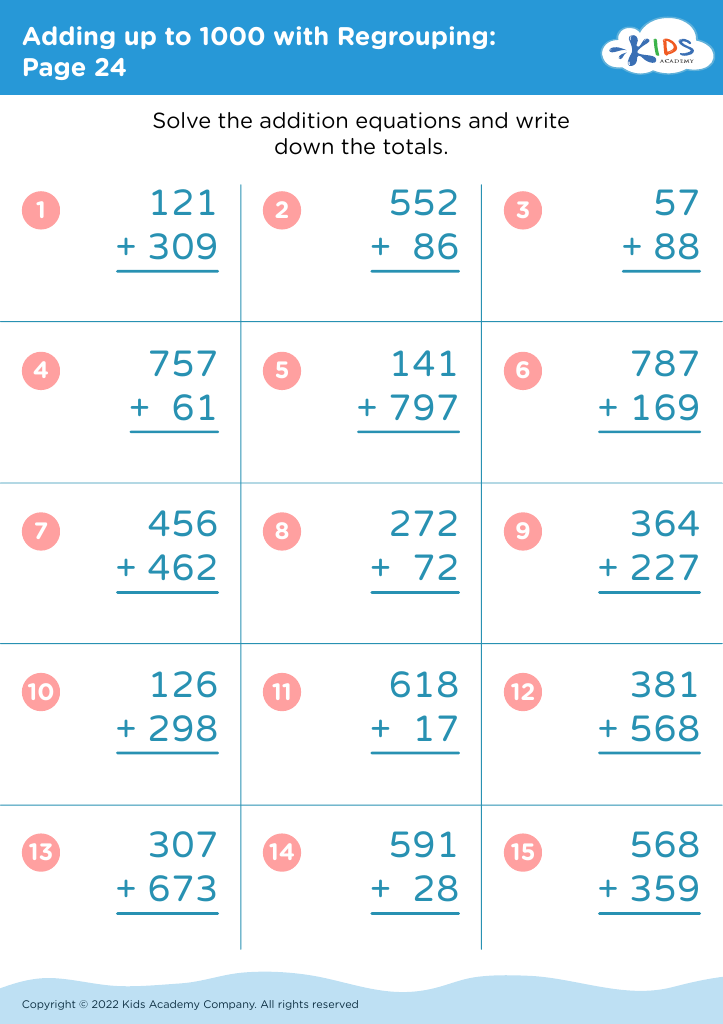
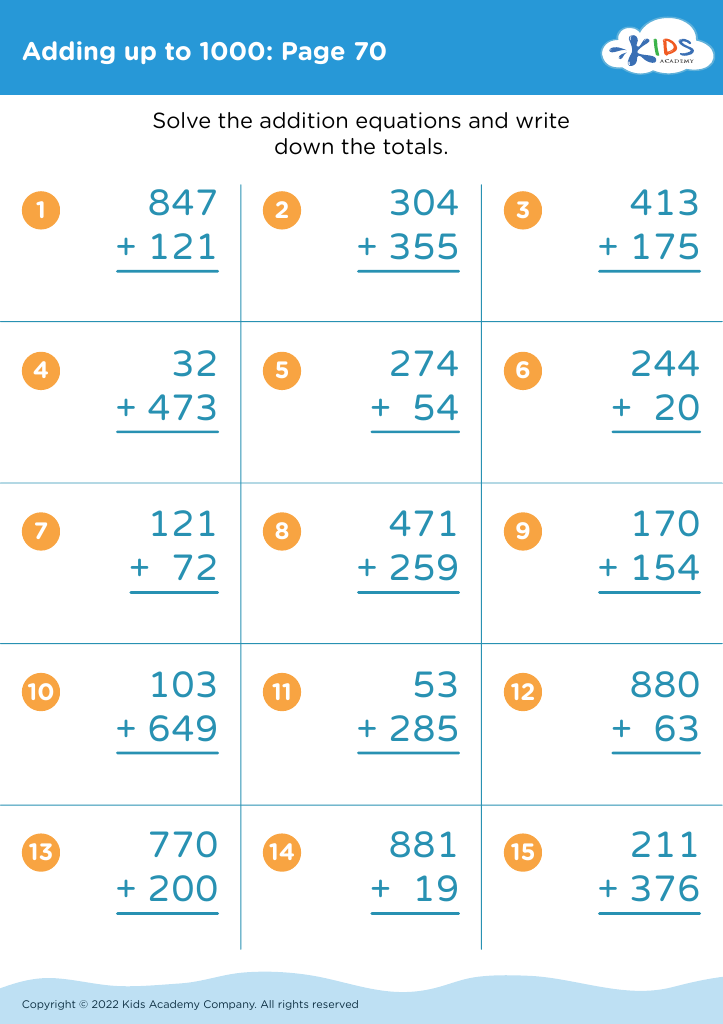
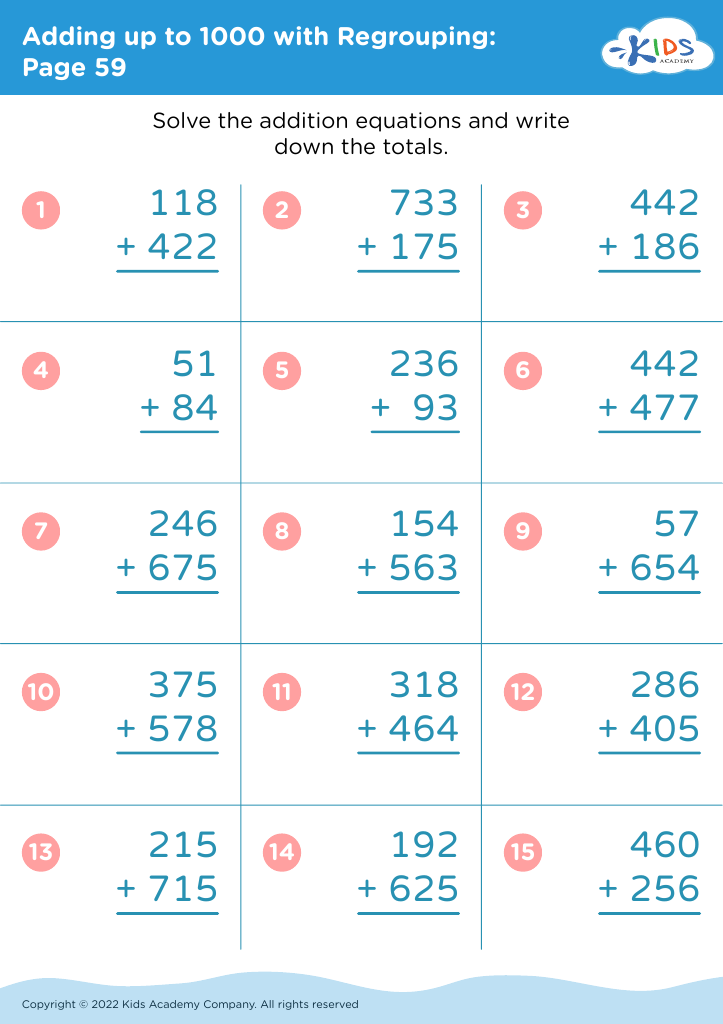
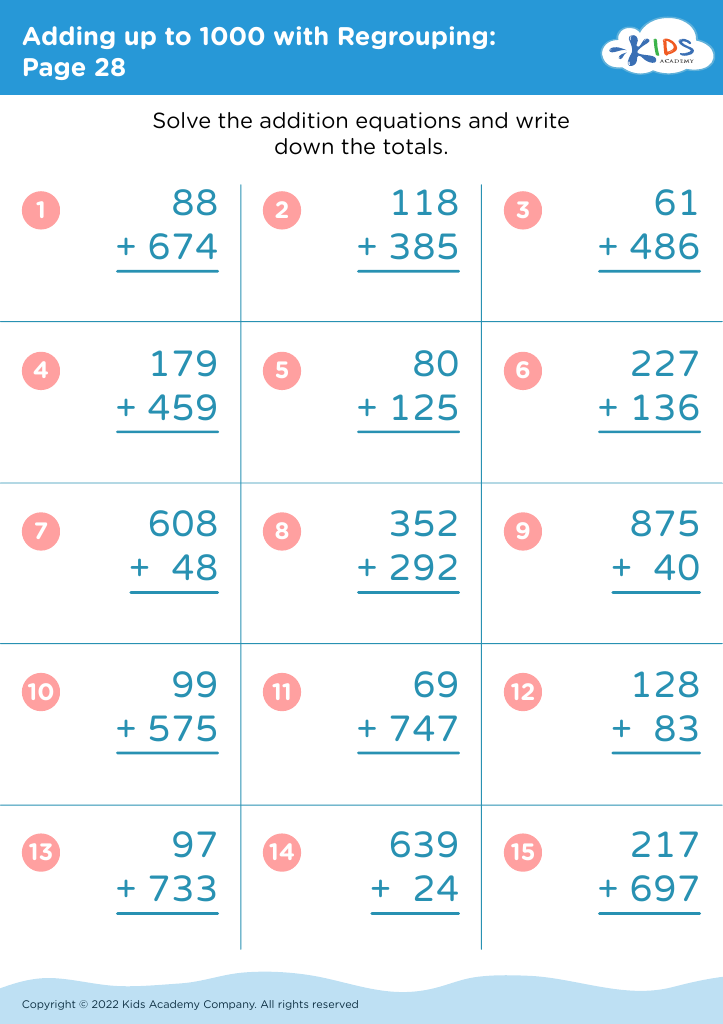
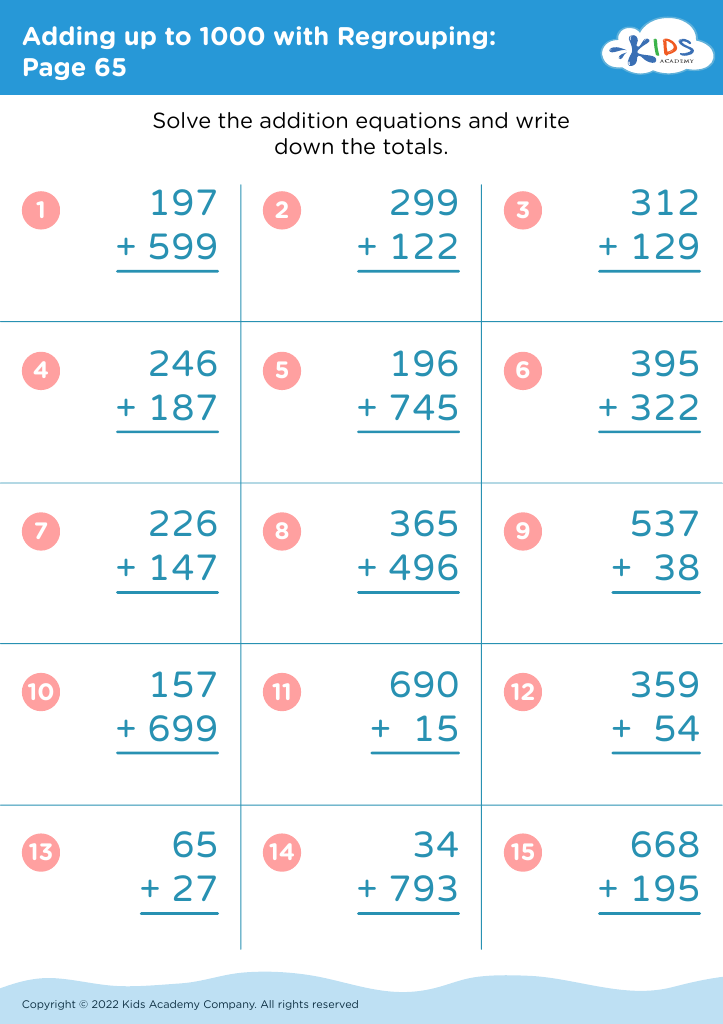
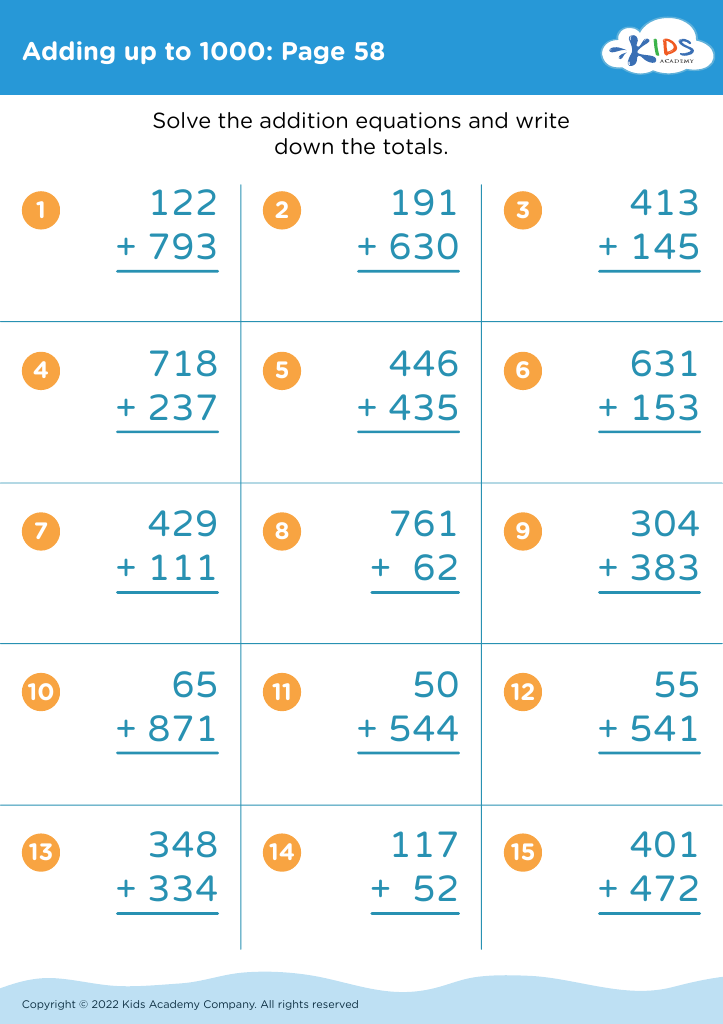
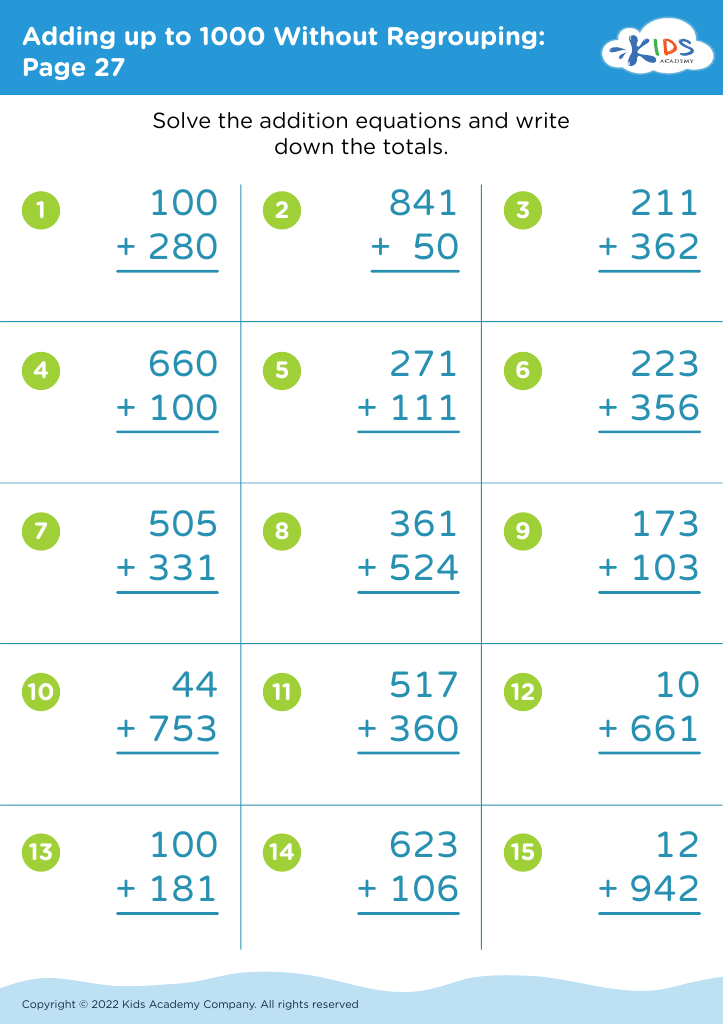
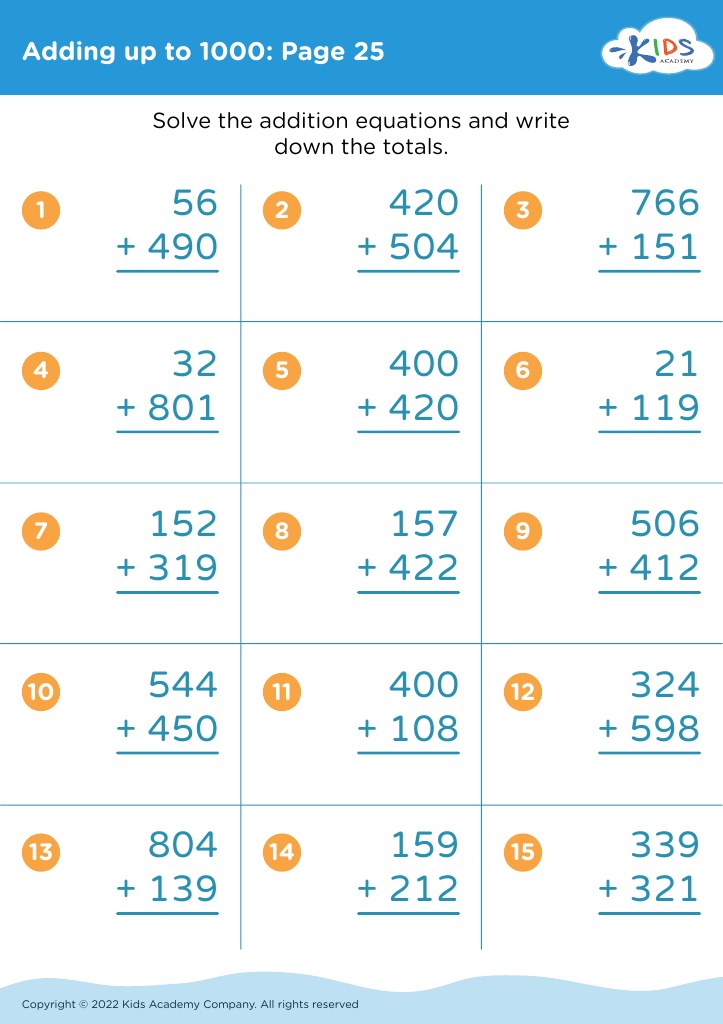
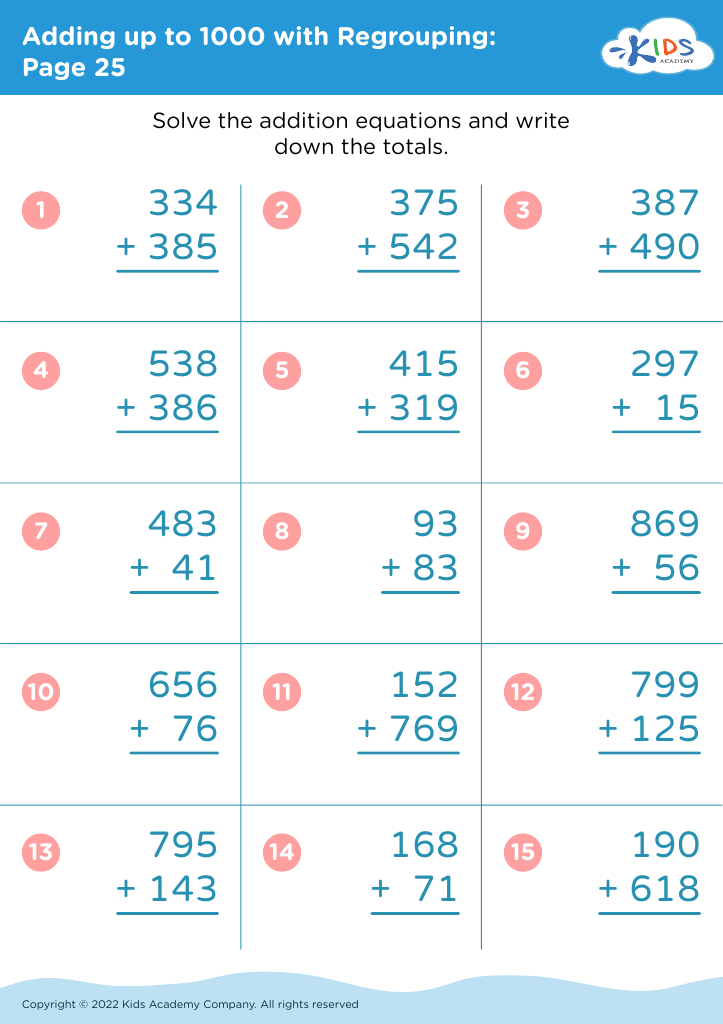
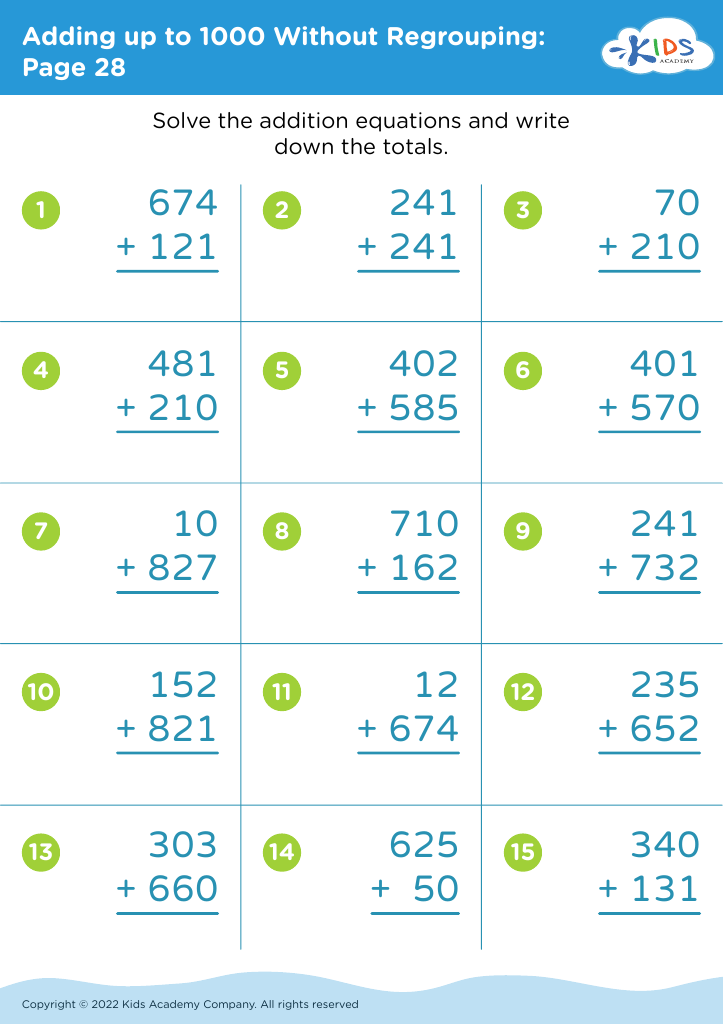
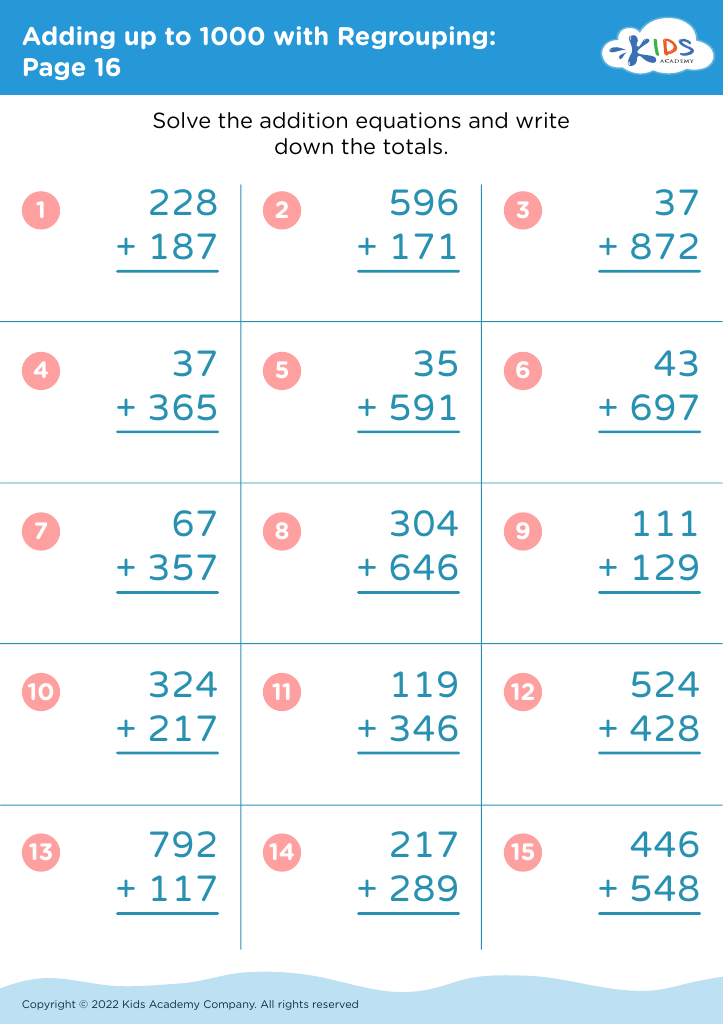
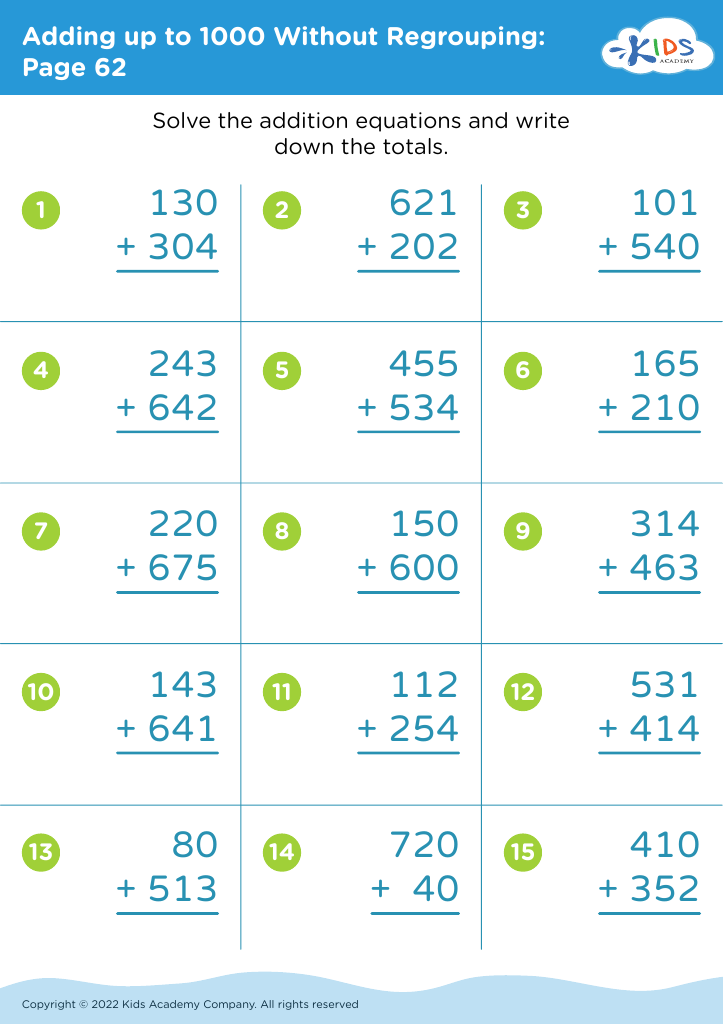
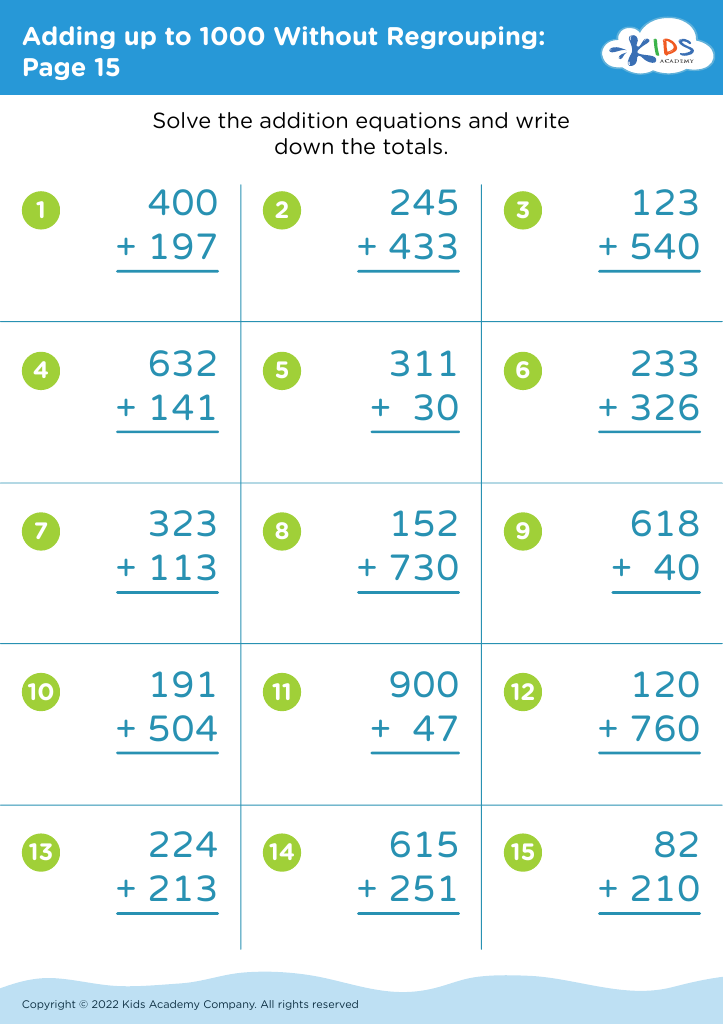
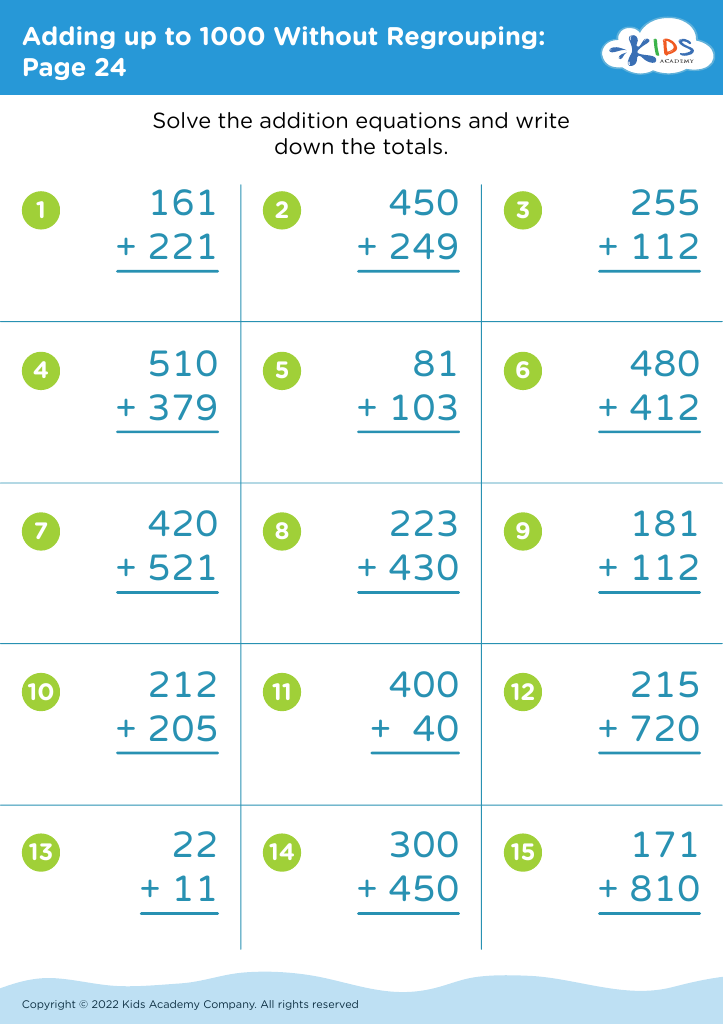




Understanding fractions, particularly the concept of them adding up to 1000, is vital for children aged 4-9 because it lays the groundwork for essential mathematical skills and critical thinking. At this age, children are developing their numeracy and problem-solving abilities, and introducing fractions helps them grasp more complex mathematical concepts later on.
Firstly, fractions can help children understand parts of a whole, making it easier to comprehend division and ratios in their future studies. By realizing that fractions can represent different parts (like 1/2, 1/3, etc.), they begin to visualize relationships between numbers. This forms the basis of more advanced calculations as they progress in school.
Secondly, combining fractions that total up to 1000 can also enhance their cognitive skills. It encourages logical reasoning, making connections, and develops an operational understanding, essential for tackling more complex mathematical tasks. Interactive and hands-on activities related to fractions engage young learners, making math less intimidating and more enjoyable.
Ultimately, fostering an understanding of fractions supports children's overall mathematical proficiency and confidence, ensuring they are equipped with the essential skills for academic success in mathematics and real-life applications. Engaging parents and teachers in this foundational learning is key for a supportive learning environment.








