Addition up to 5 Adding Up to 5 Worksheets for Ages 4-9
4 filtered results
-
From - To
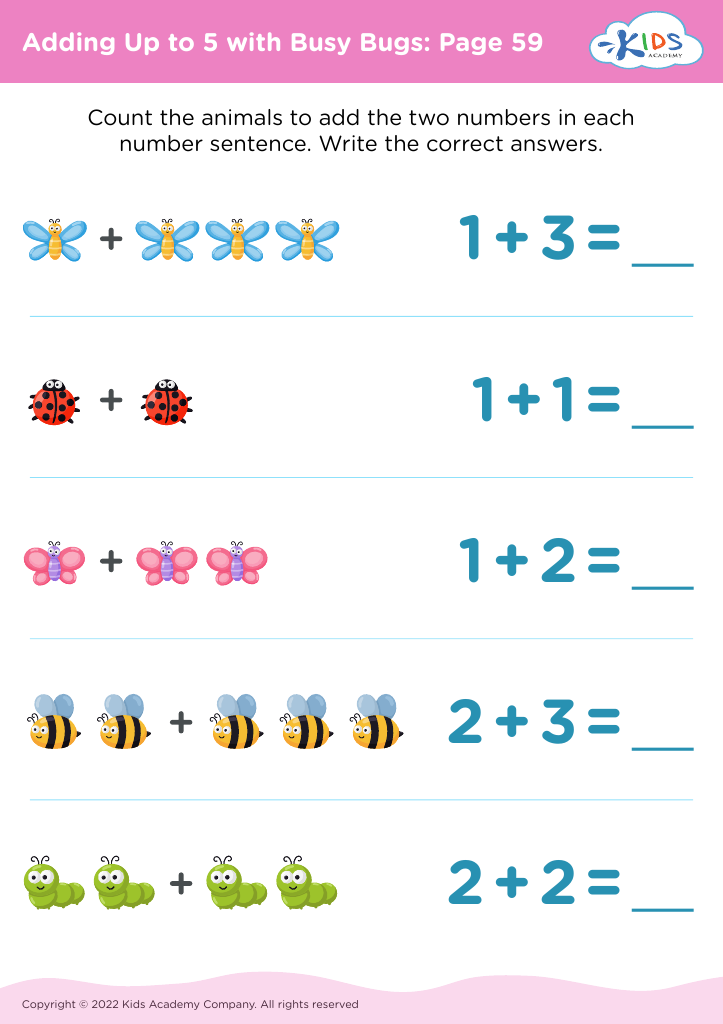
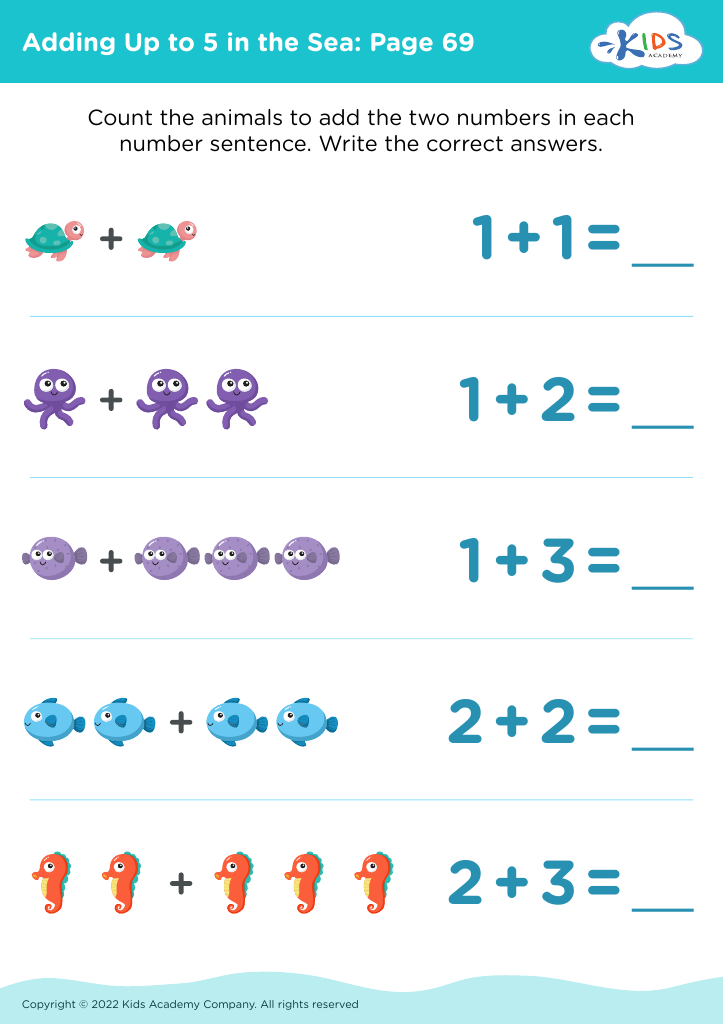
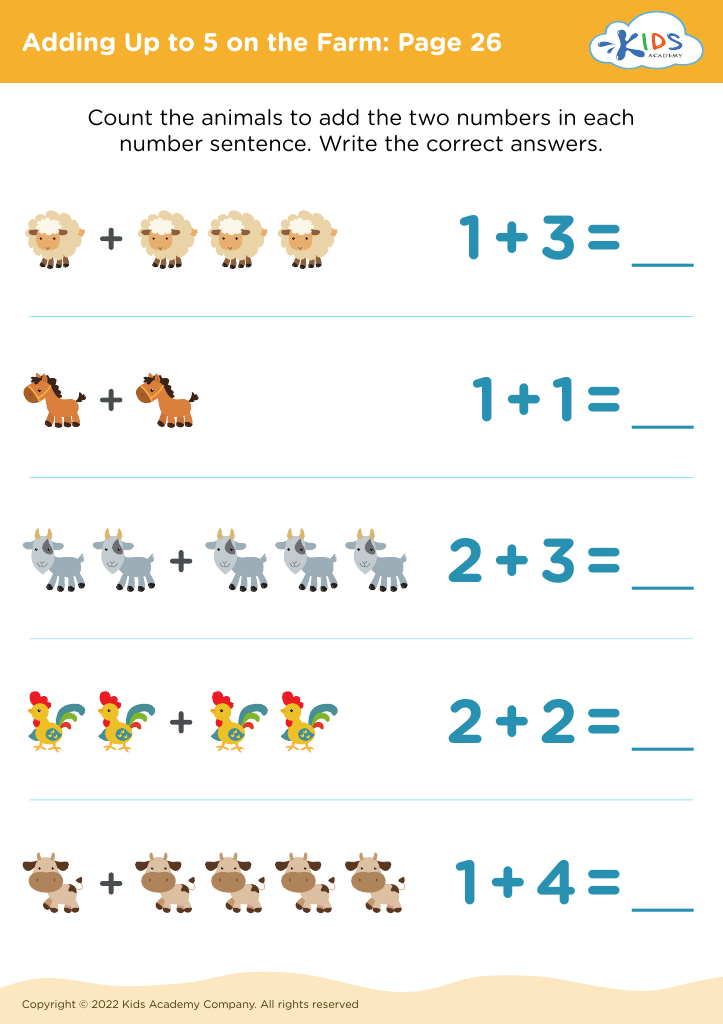
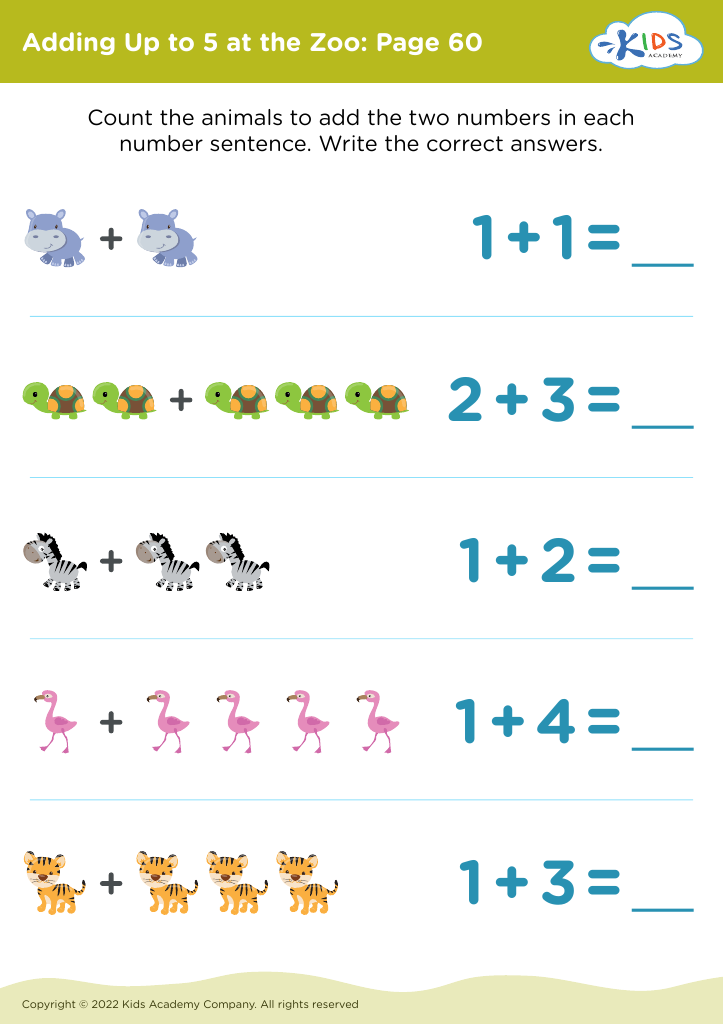
Welcome to our "Addition up to 5" worksheets designed for children aged 4-9! These engaging, age-appropriate resources help young learners master the basics of addition through fun exercises and colorful visuals. Each worksheet encourages kids to practice adding numbers up to 5, building confidence in their math skills while enhancing number recognition. Our meticulously crafted activities foster a love for learning, ensuring that every child grasp the foundational concepts of addition in an enjoyable way. Perfect for use in classrooms or at home, these worksheets are an excellent tool for parents and teachers to support early math education. Start adding today!






.jpg)

Parents and teachers should prioritize teaching addition up to 5 to children aged 4-9 because it lays a foundational understanding of mathematics critical for future learning. Mastery of simple addition promotes number sense, enhancing children's confidence and curiosity about math. This skill forms the cornerstone for more complex mathematical operations, reinforcing the importance of early intervention in educational settings.
Moreover, engaging children in addition up to 5 encourages cognitive development and problem-solving abilities. It allows children to visualize relationships between numbers, fostering logical reasoning skills crucial for everyday decision-making. By using manipulatives and interactive activities, such as counting objects or using visual aids, educators and parents can make learning fun and effective, catering to various learning styles.
Furthermore, cultivating these skills at an early age will ease the transition to more complicated concepts in later grades, ultimately contributing to academic success. In an increasingly quantitative world, ensuring children have a strong grasp of basic math promotes broader intellectual development and prepares them for the demands of higher education and life. By investing time in teaching addition up to 5, we contribute to building confident and capable learners who will thrive in their academic journeys.








