Filters

244 filtered results

Clear all filters
Favorites
With answer key
Interactive

244 filtered results

Difficulty Level

Grade


Check out this FREE Trial Lesson on Adding Up to 5 for age 4-9!

My Family

Favorites
With answer key
Interactive
  • 4-9
  • Basic Addition Skills
  • Adding Up to 5
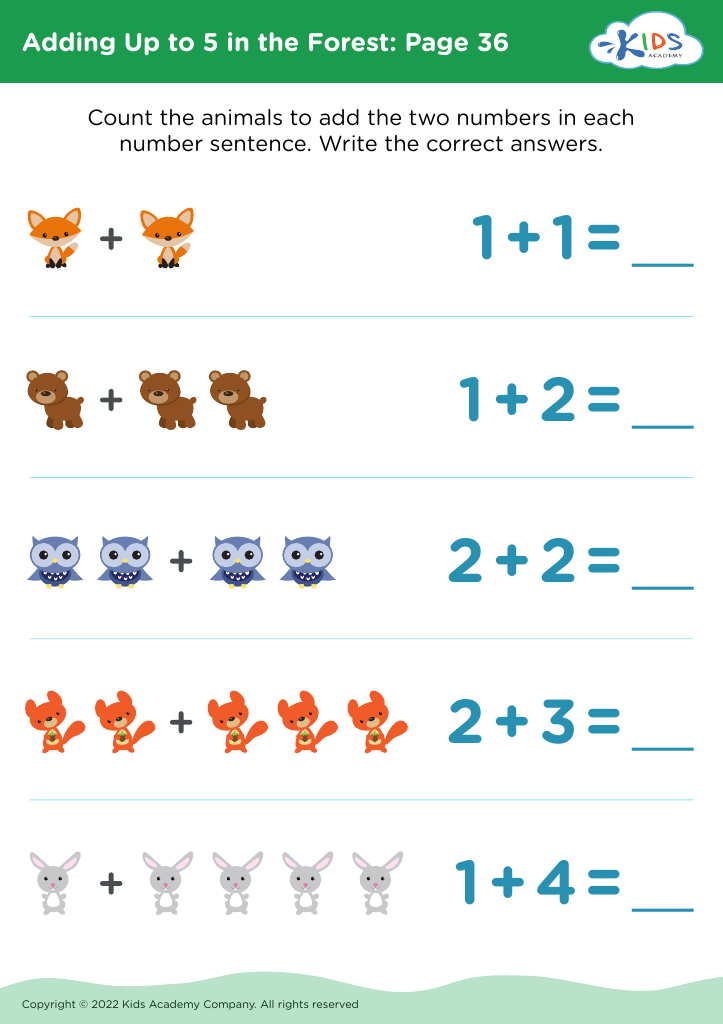
Adding Up to 5 in the Forest: Page 36
Worksheet
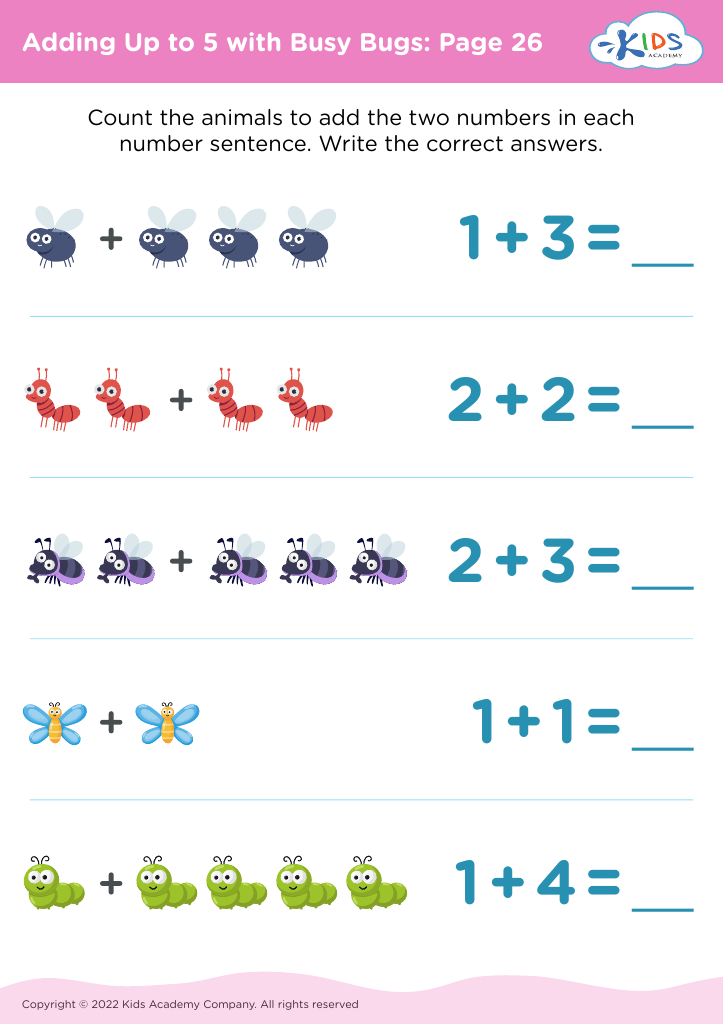
Adding Up to 5 with Busy Bugs: Page 26
Worksheet
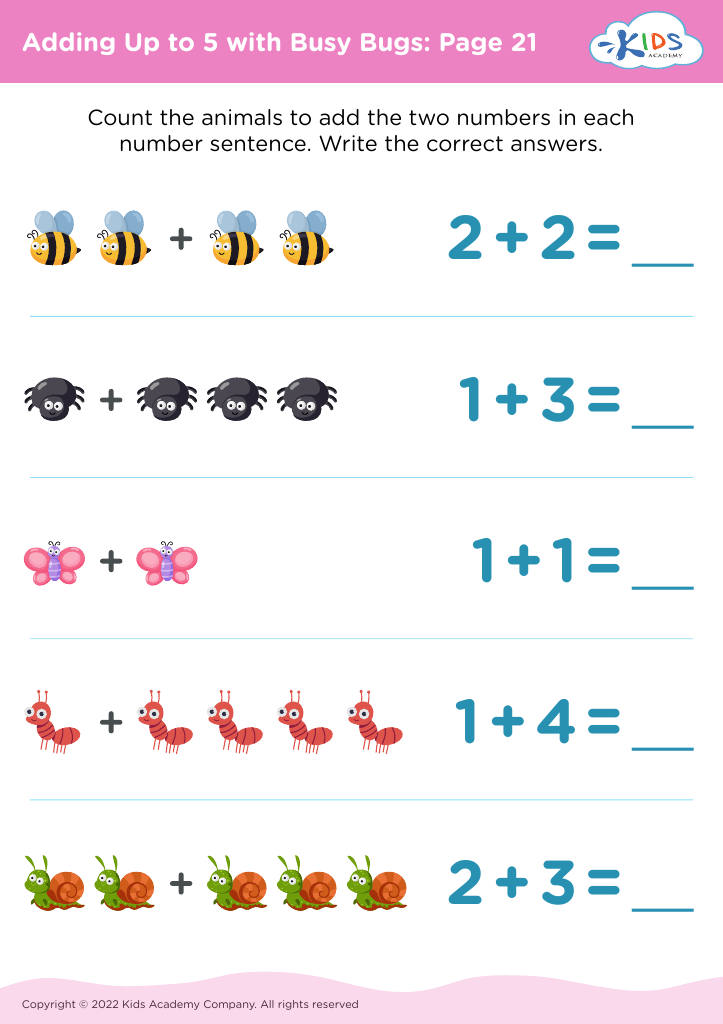
Adding Up to 5 with Busy Bugs: Page 21
Worksheet
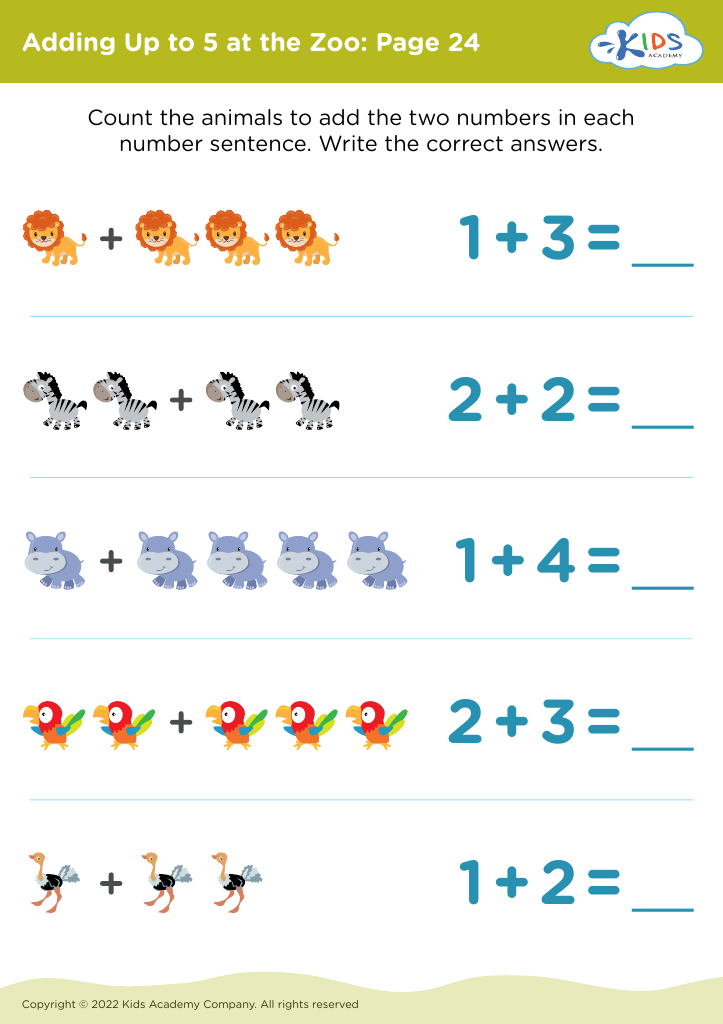
Adding Up to 5 at the Zoo: Page 24
Worksheet
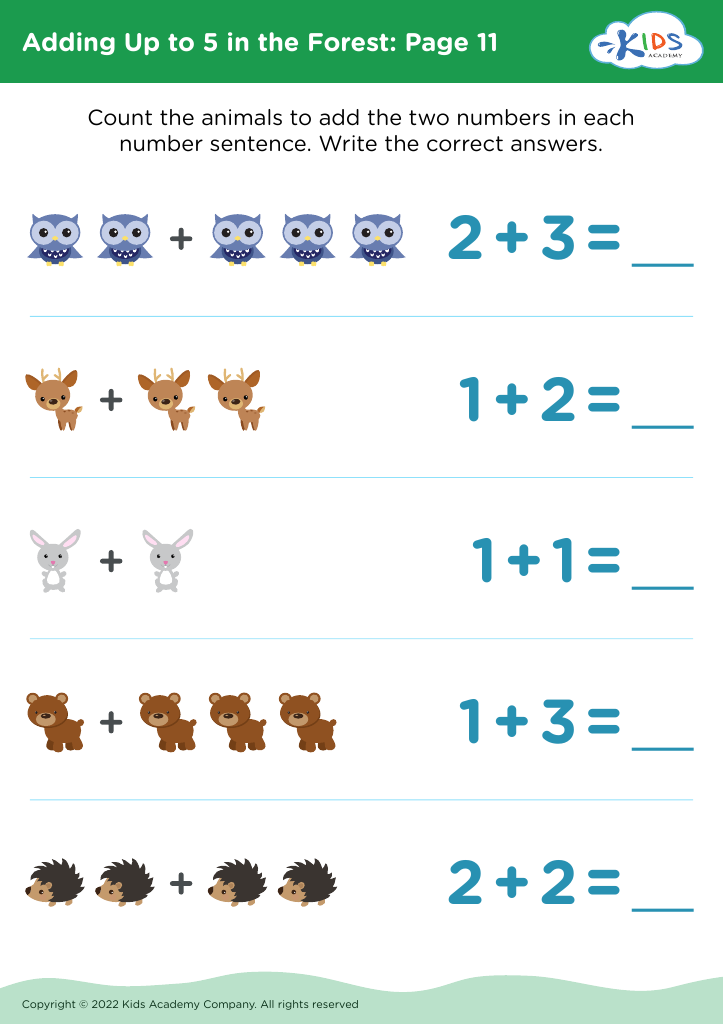
Adding Up to 5 in the Forest: Page 11
Worksheet
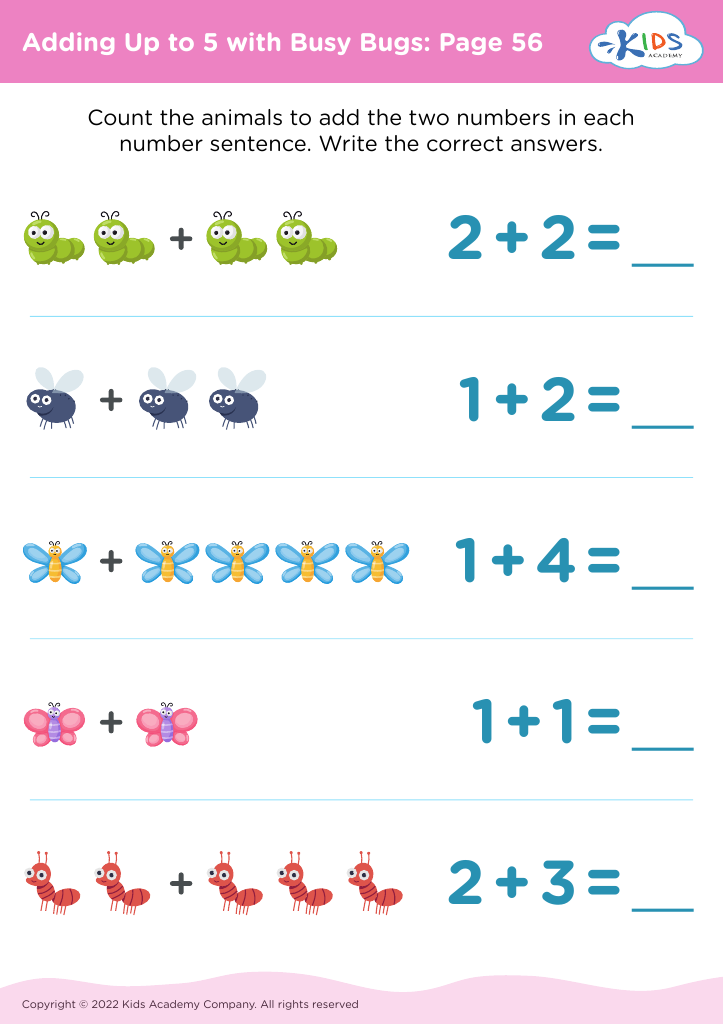
Adding Up to 5 with Busy Bugs: Page 56
Worksheet
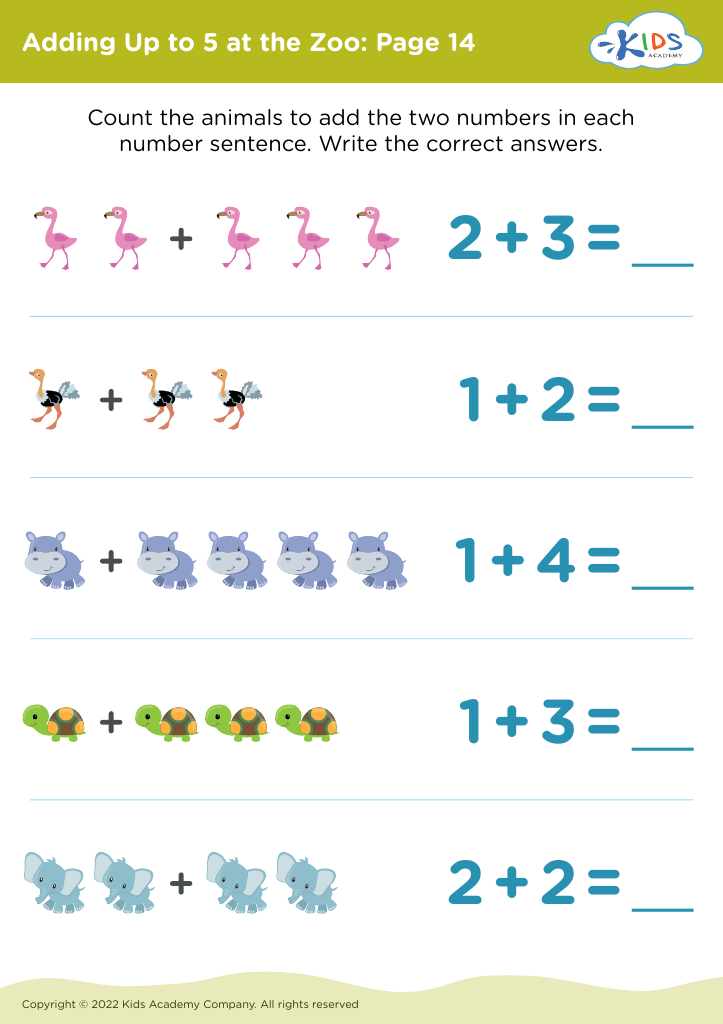
Adding Up to 5 at the Zoo: Page 14
Worksheet
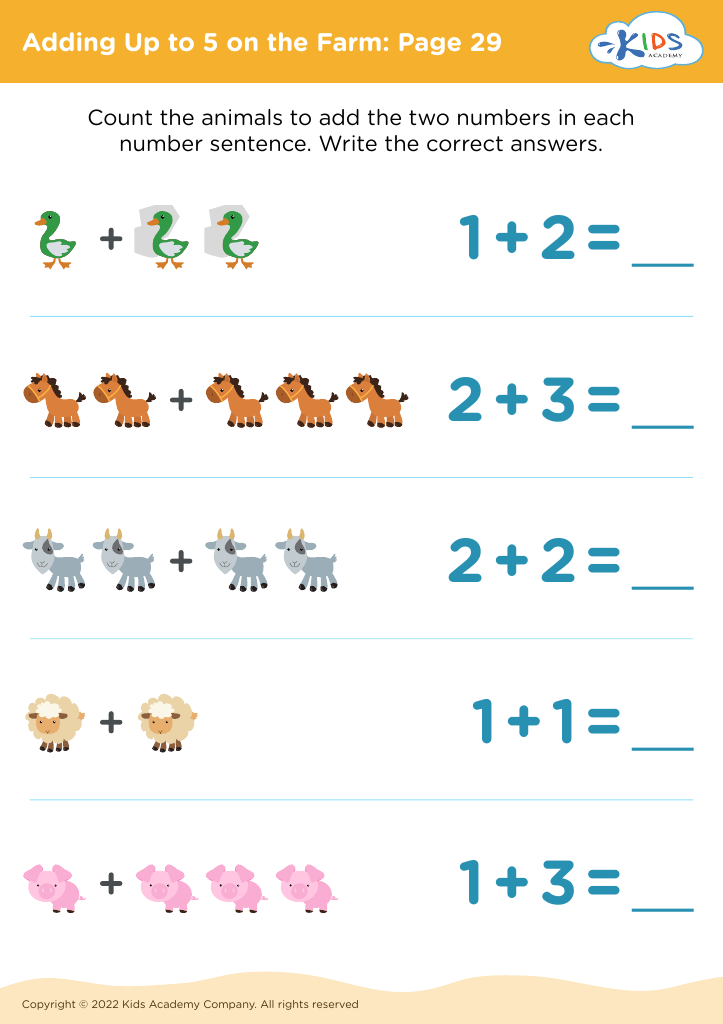
Adding Up to 5 on the Farm: Page 29
Worksheet
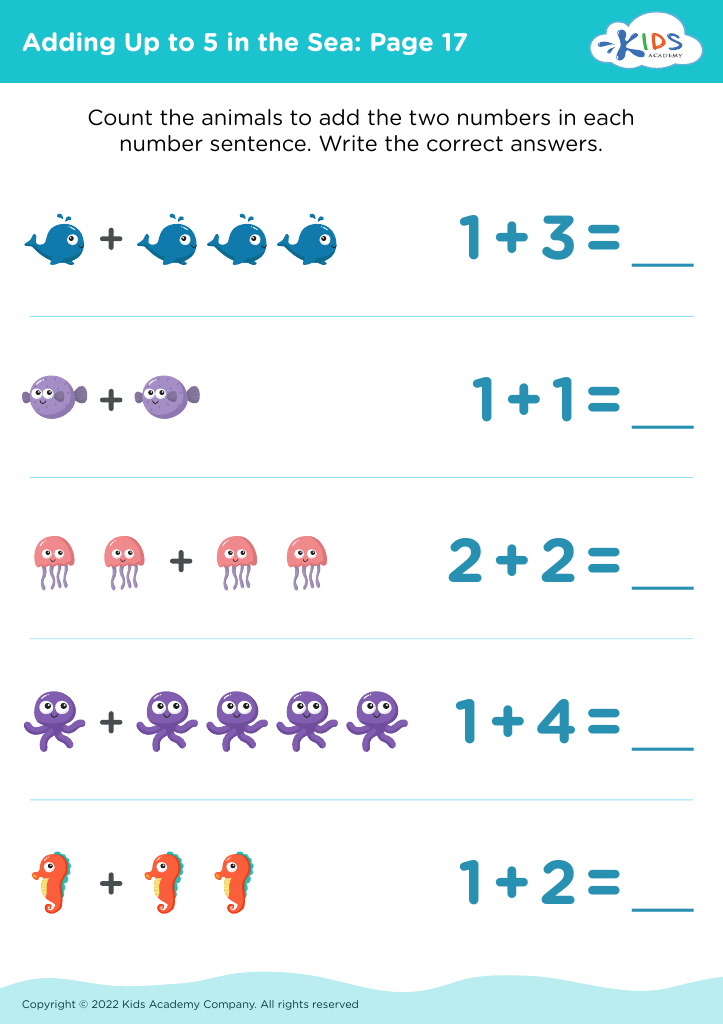
Adding Up to 5 in the Sea: Page 17
Worksheet
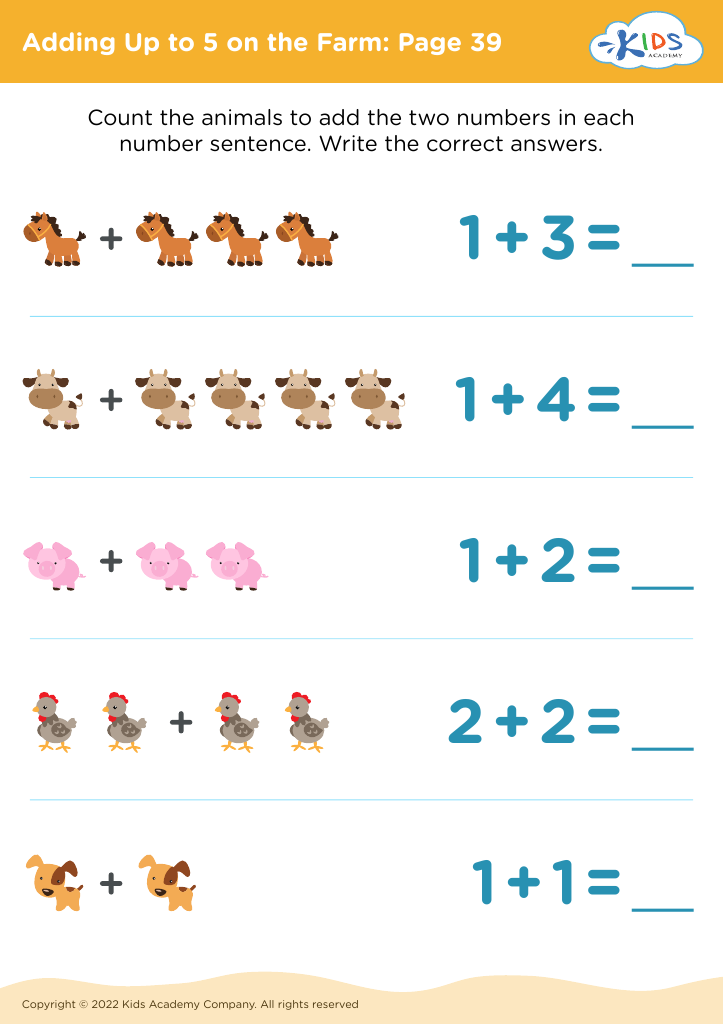
Adding Up to 5 on the Farm: Page 39
Worksheet
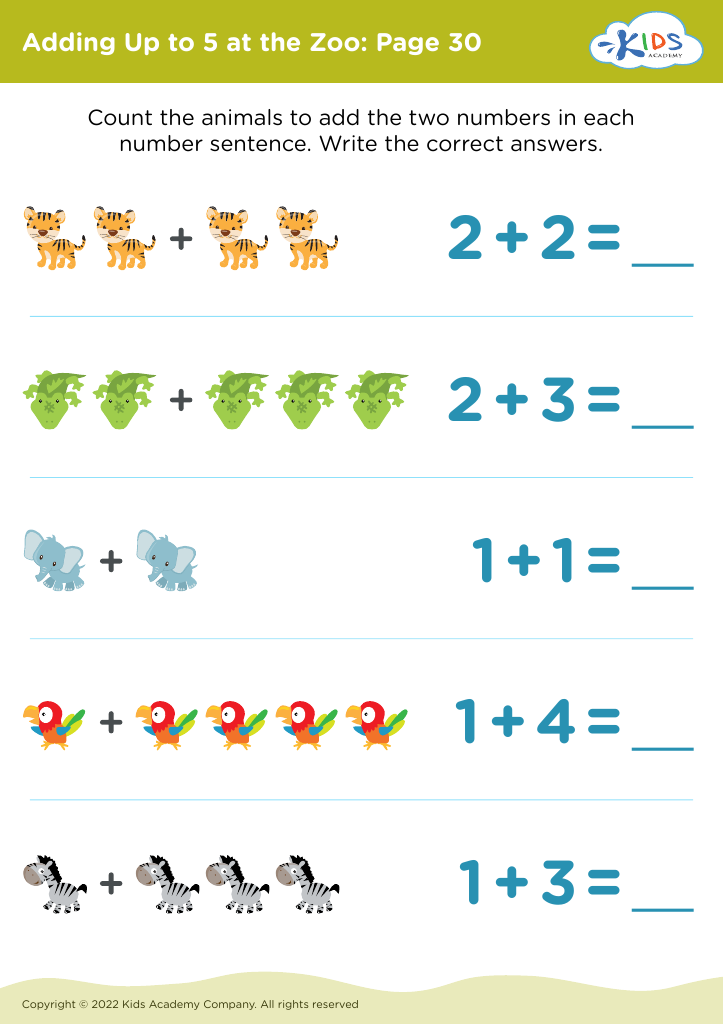
Adding Up to 5 at the Zoo: Page 30
Worksheet
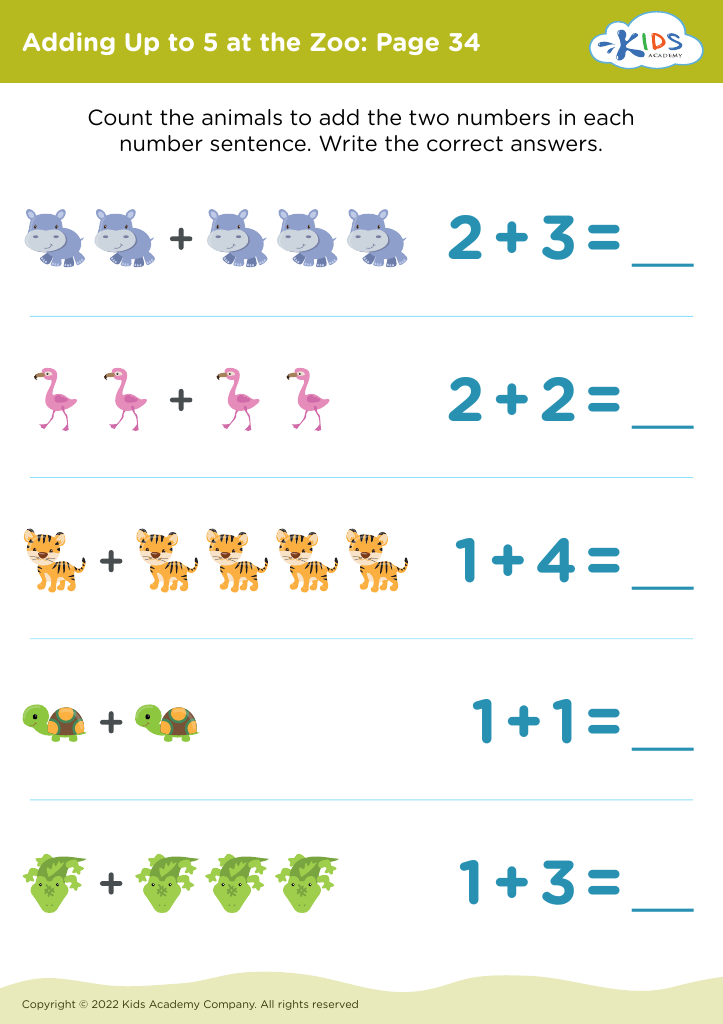
Adding Up to 5 at the Zoo: Page 34
Worksheet
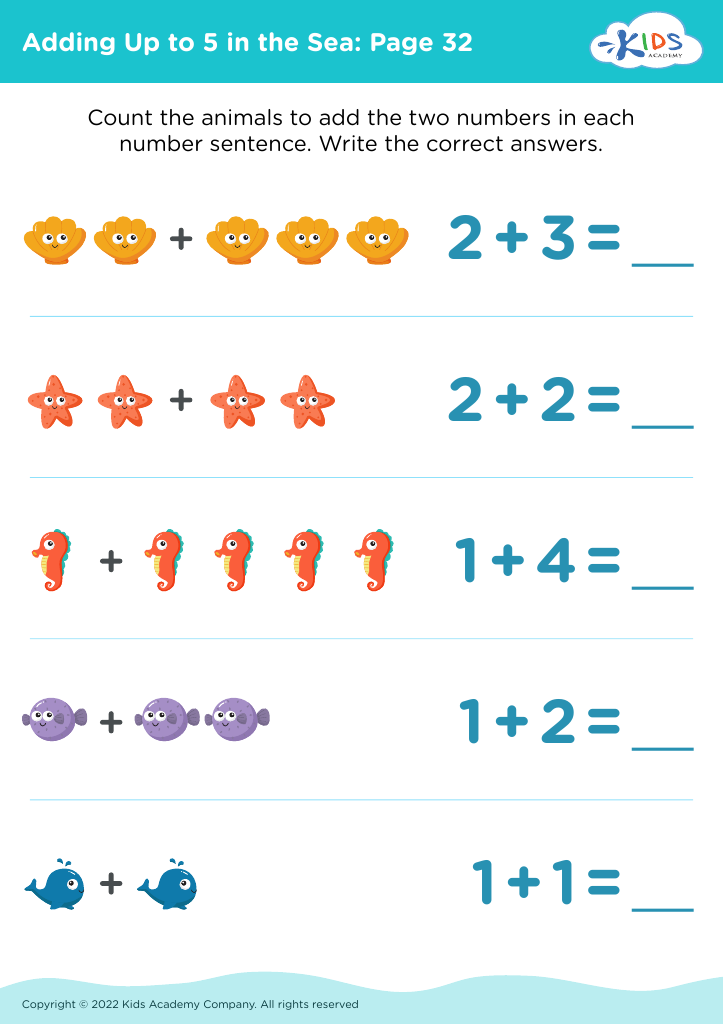
Adding Up to 5 in the Sea: Page 32
Worksheet
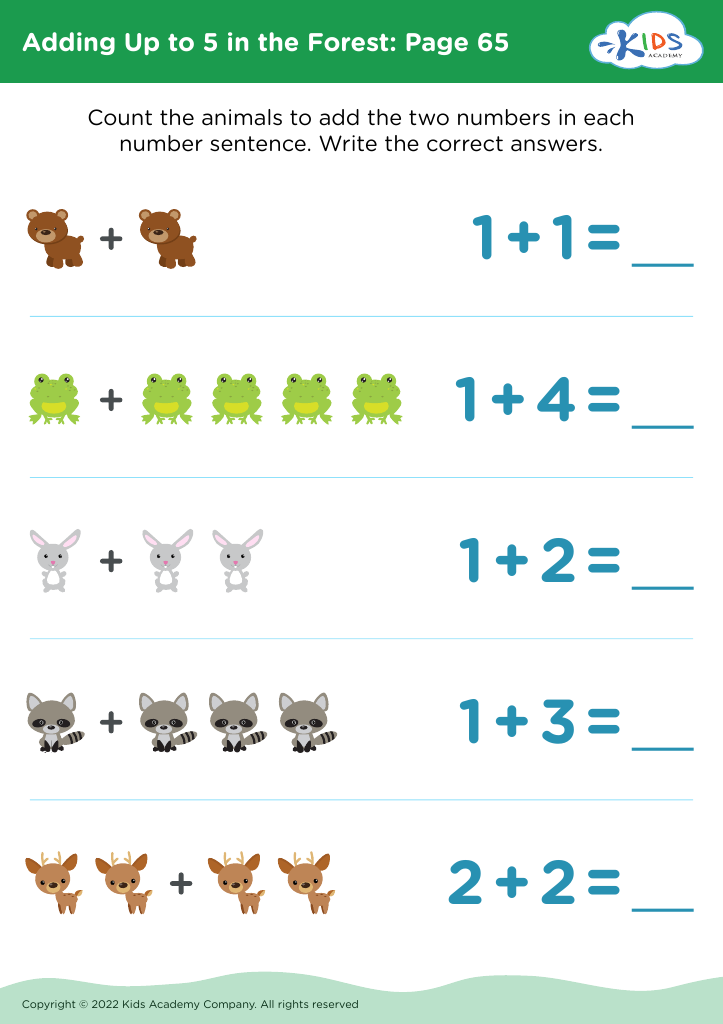
Adding Up to 5 in the Forest: Page 65
Worksheet
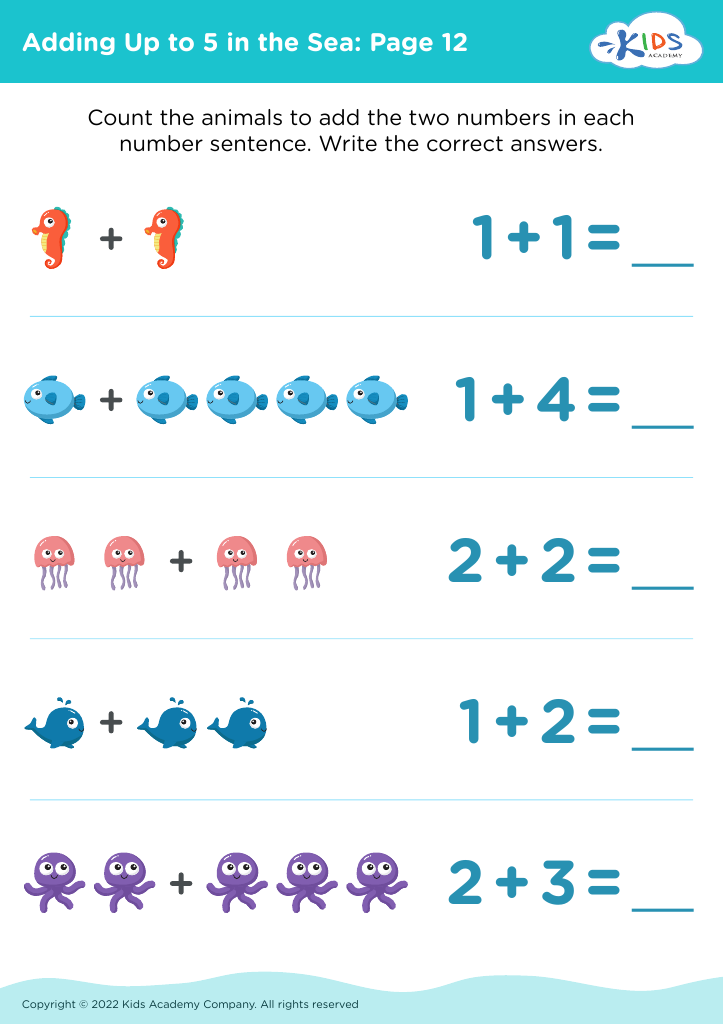
Adding Up to 5 in the Sea: Page 12
Worksheet
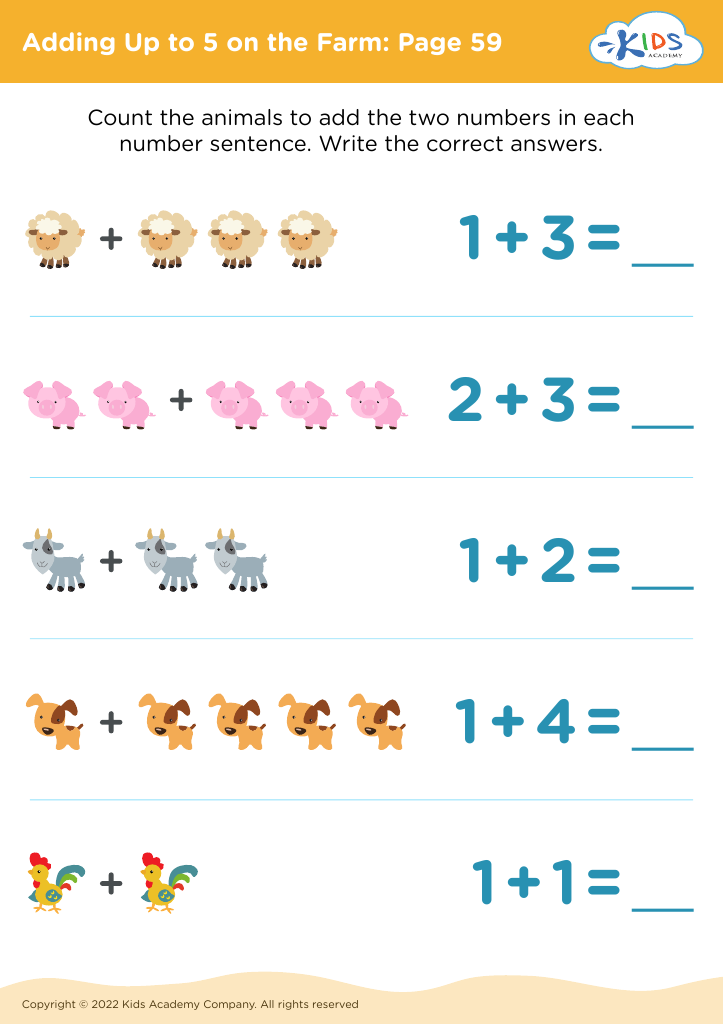
Adding Up to 5 on the Farm: Page 59
Worksheet
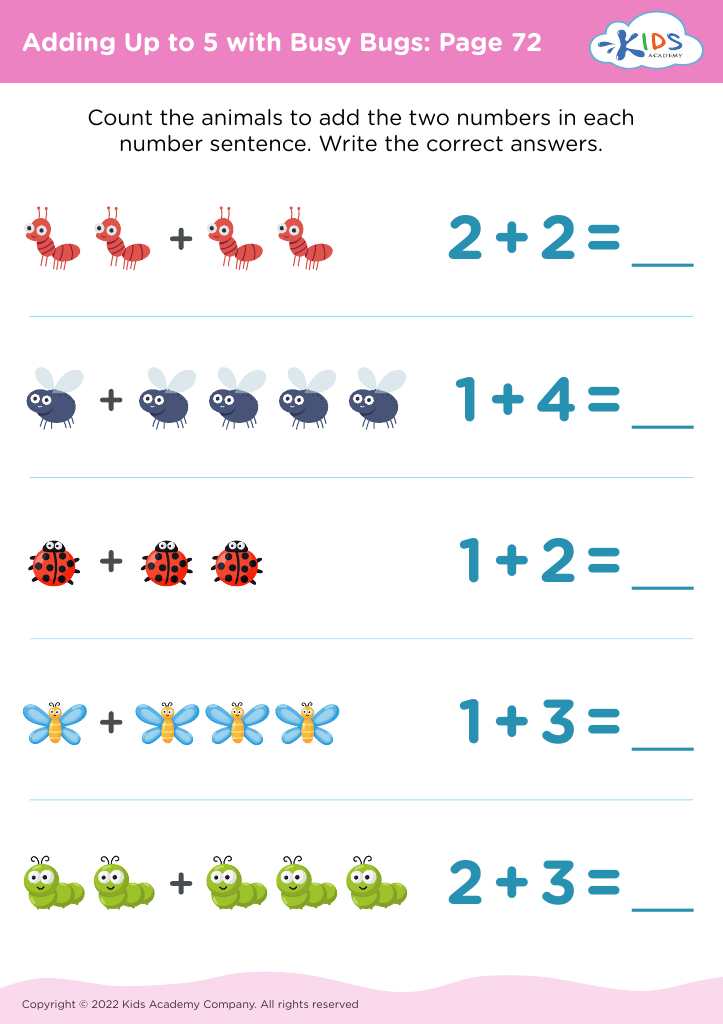
Adding Up to 5 with Busy Bugs: Page 72
Worksheet
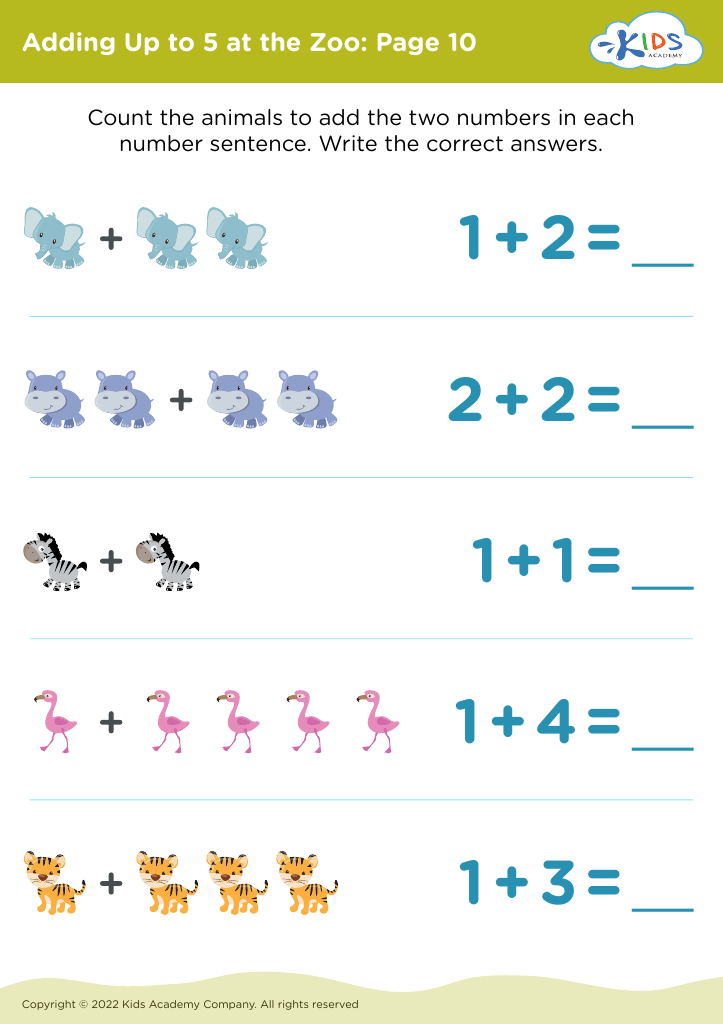
Adding Up to 5 at the Zoo: Page 10
Worksheet
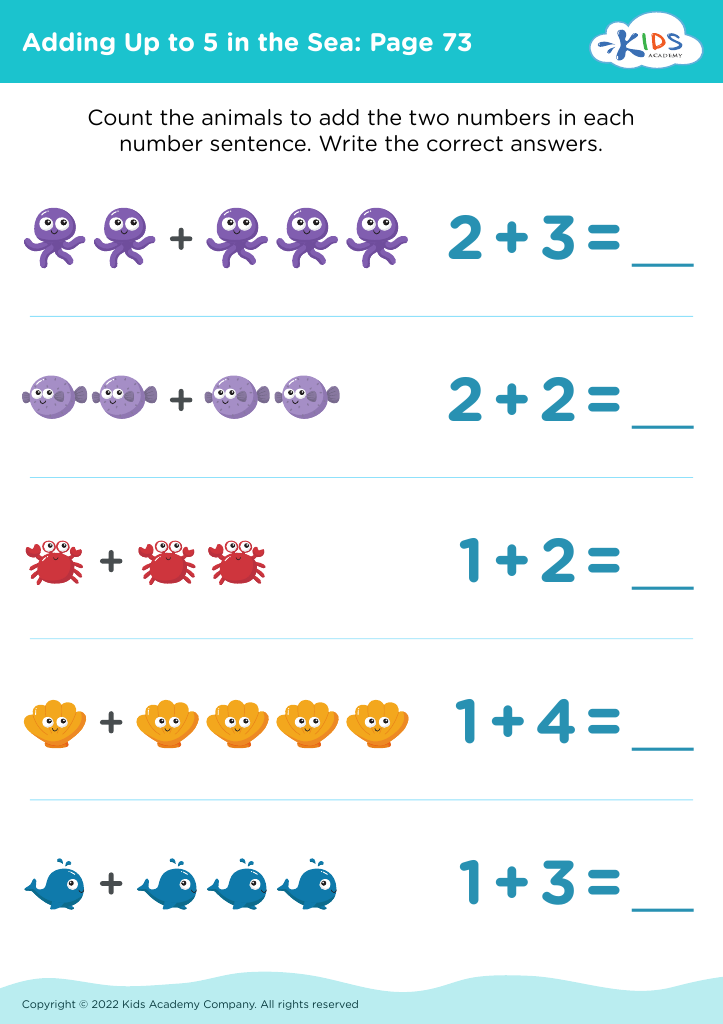
Adding Up to 5 in the Sea: Page 73
Worksheet
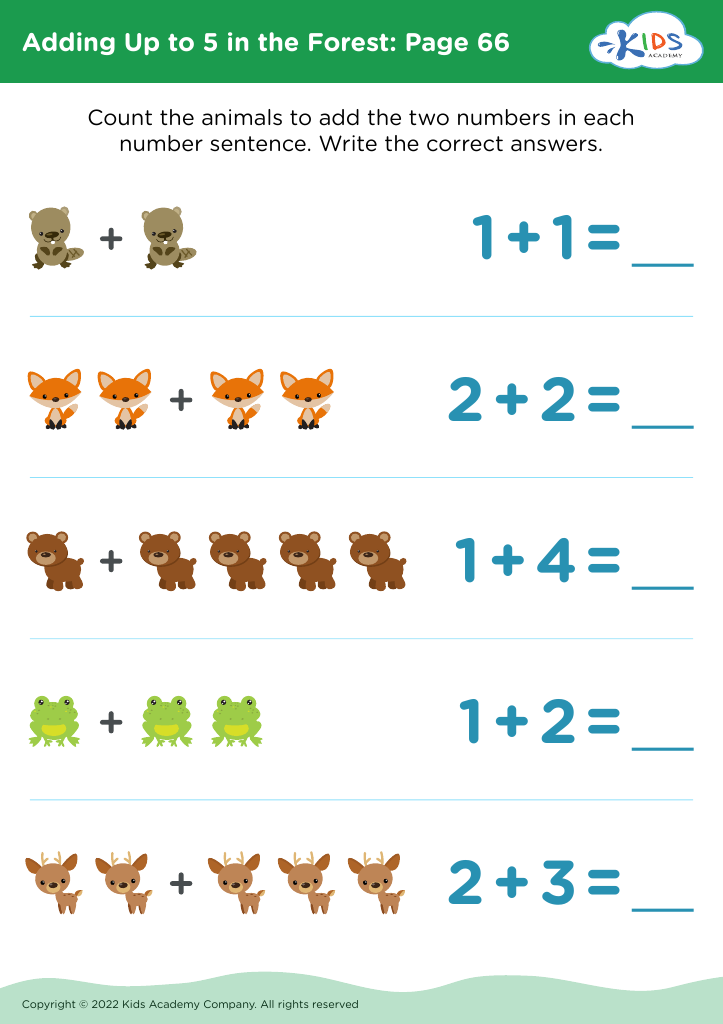
Adding Up to 5 in the Forest: Page 66
Worksheet
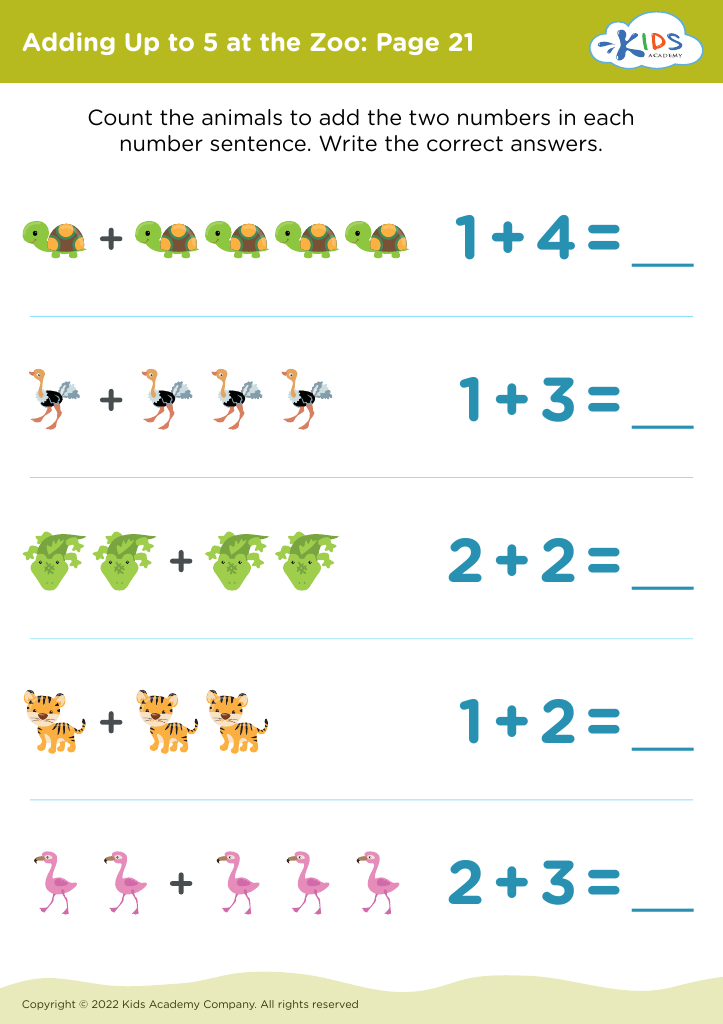
Adding Up to 5 at the Zoo: Page 21
Worksheet
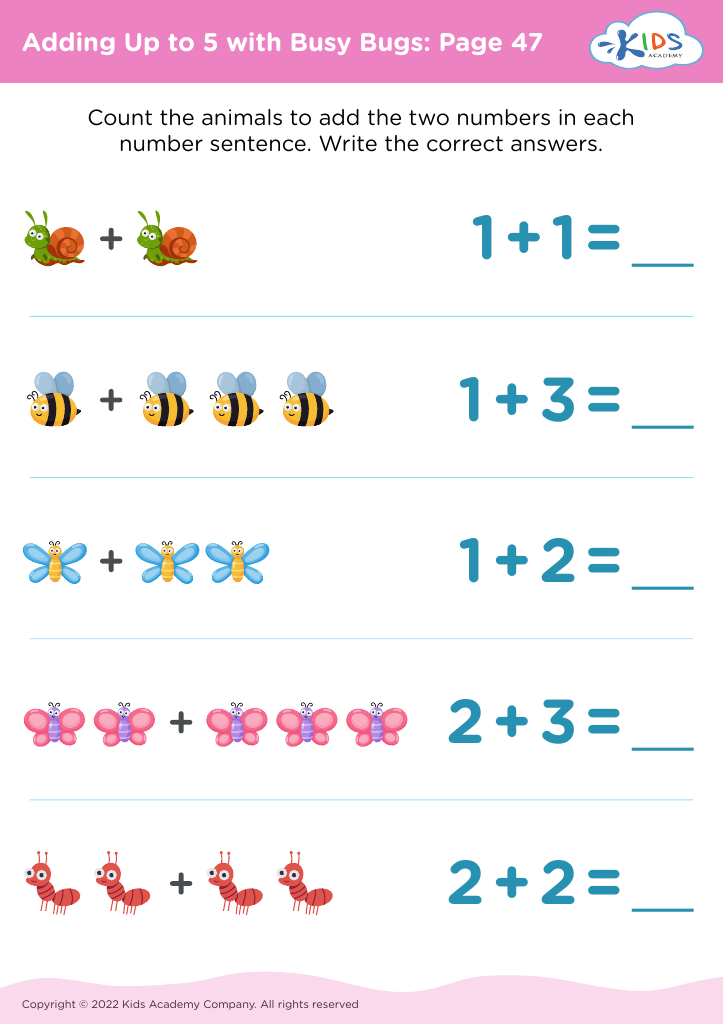
Adding Up to 5 with Busy Bugs: Page 47
Worksheet
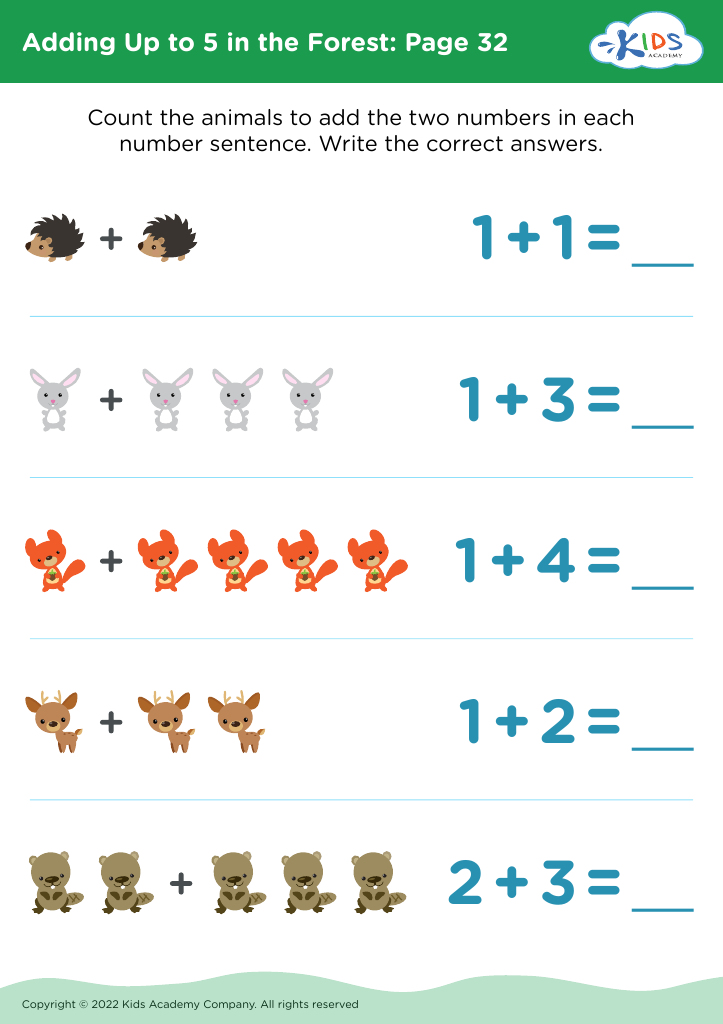
Adding Up to 5 in the Forest: Page 32
Worksheet
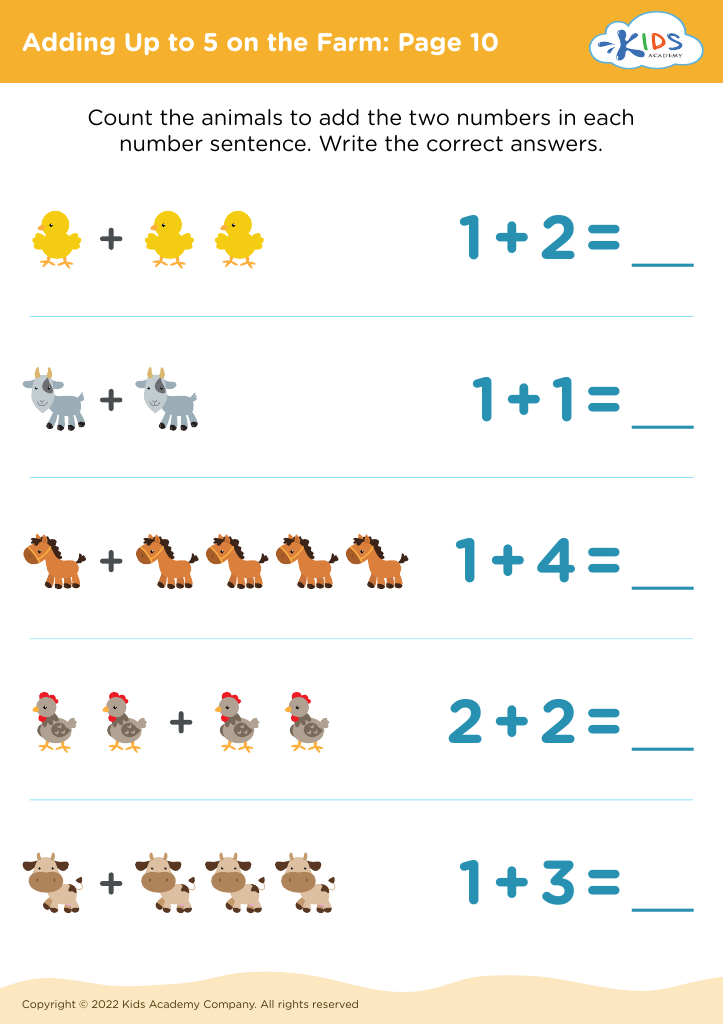
Adding Up to 5 on the Farm: Page 10
Worksheet


Ensuring that children aged 4-9 master basic addition skills, particularly addition up to 5, is crucial for their early mathematical development. At this age, children are just beginning to grasp numerical concepts, and building a solid foundation in addition helps pave the way for more complex mathematical learning. Understanding basic addition enhances their ability to solve everyday problems, boosting their confidence and fostering a positive attitude toward math.

Mastering addition up to 5 involves counting, recognizing numerical patterns, and developing mental math skills, all of which are fundamental components of early math literacy. This foundational knowledge supports their progression to more advanced arithmetic, such as subtraction, multiplication, and division, which are essential for future academic success across various subjects.

Moreover, early proficiency in addition fosters cognitive skills such as memory, attention, and logical reasoning. For teachers and parents, investing time in ensuring students grow comfortable with basic addition also promotes a lifelong love of learning. Interactive activities, games, and real-life examples can make learning addition fun and engaging, making the process more enjoyable and memorable. Building these skills early on is an investment in a child's overall educational journey and essential for success in everyday life activities where basic math is used.