Math problem-solving Adding Up to 5 Worksheets for Ages 4-9
3 filtered results
-
From - To
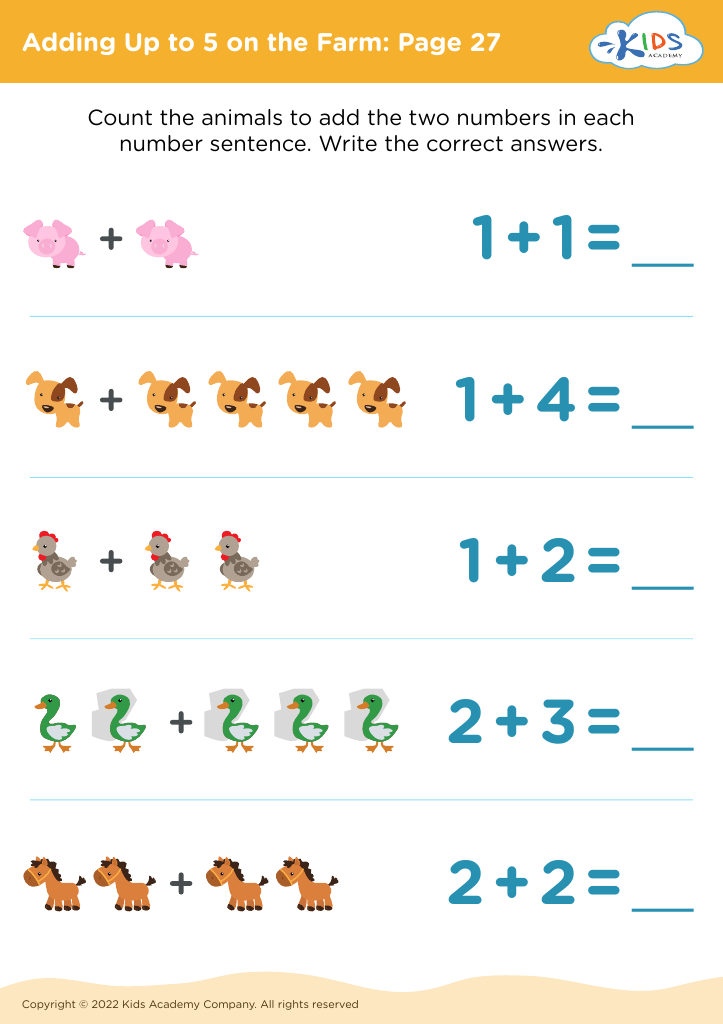
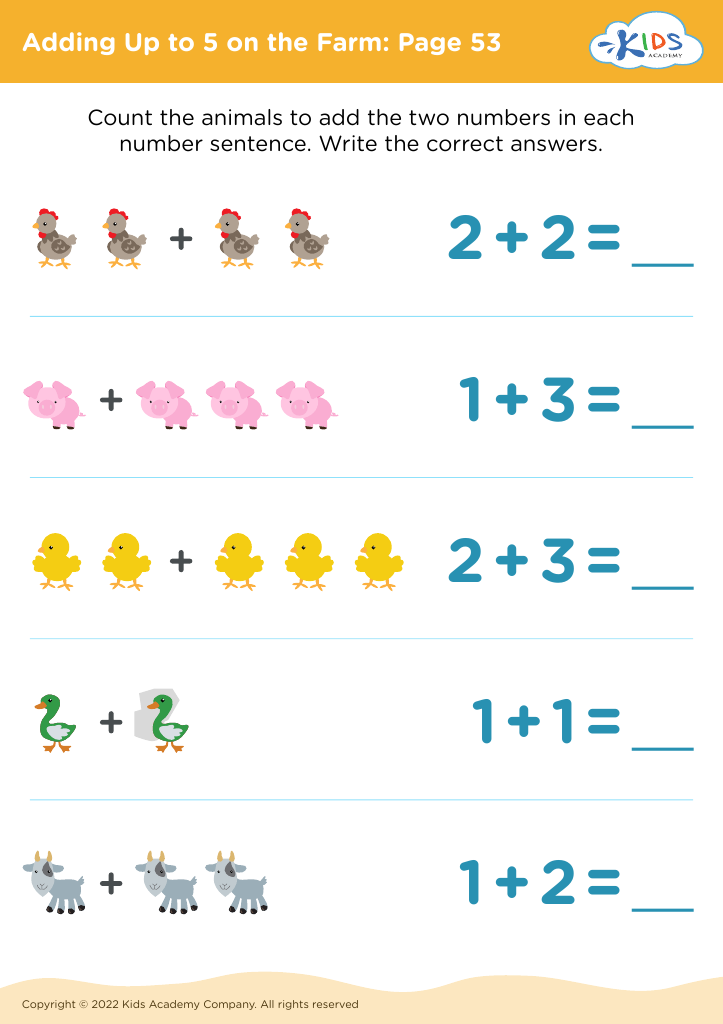
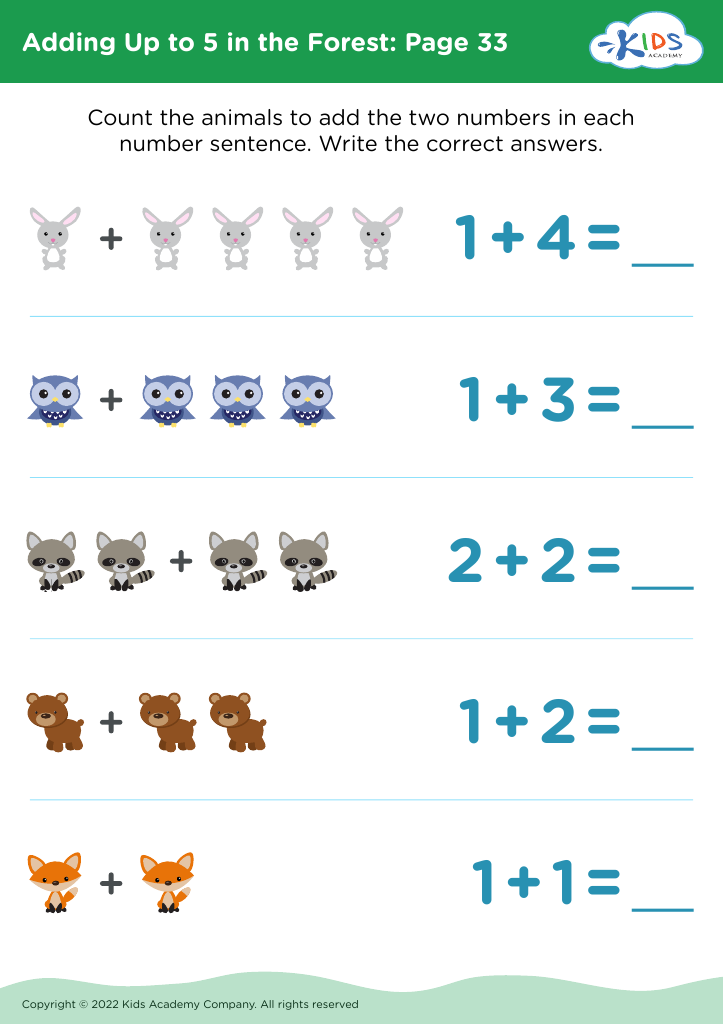
Explore our engaging "Math Problem-Solving Adding Up to 5 Worksheets," designed for children aged 4-9. These worksheets nurture essential math skills through fun, interactive activities that encourage young learners to practice addition in a playful way. Each worksheet offers a variety of exercises that promote critical thinking and problem-solving abilities while guiding students to master the concept of adding numbers up to 5. Ideal for classroom use or at-home learning, our resources are perfect for fostering a love of math. Help your child build confidence in their math skills with these captivating worksheets. Start learning today!








Parents and teachers should prioritize Math problem-solving, particularly strategies like "Adding Up to 5," for children aged 4-9 because foundational math skills are crucial for lifelong learning. Mastering simple addition fosters critical thinking, enhances cognitive development, and builds a strong mathematical foundation. Learning how to use numbers flexibly is essential. The skill of effectively breaking down problems helps young children recognize patterns and develop a deeper understanding of mathematics as they grow.
Engaging in problem-solving activities also promotes confidence and resilience. When children practice tackling math challenges, they become more willing to face difficulties and develop perseverance. Additionally, math skills are intertwined with daily life experiences, making them applicable beyond the classroom—whether in shopping, cooking, or budgeting in the years to come.
Moreover, constructing knowledge in a supportive environment encourages positive attitudes toward math, potentially combating future anxiety. Active involvement in math learning helps parents and teachers communicate the importance of education. Ultimately, fostering strong Math problem-solving skills during these critical early years equips children with the necessary tools to navigate both academic venues and real-world situations, enhancing their overall development and success.








