Nature appreciation Adding Up to 5 Worksheets for Ages 4-9
5 filtered results
-
From - To
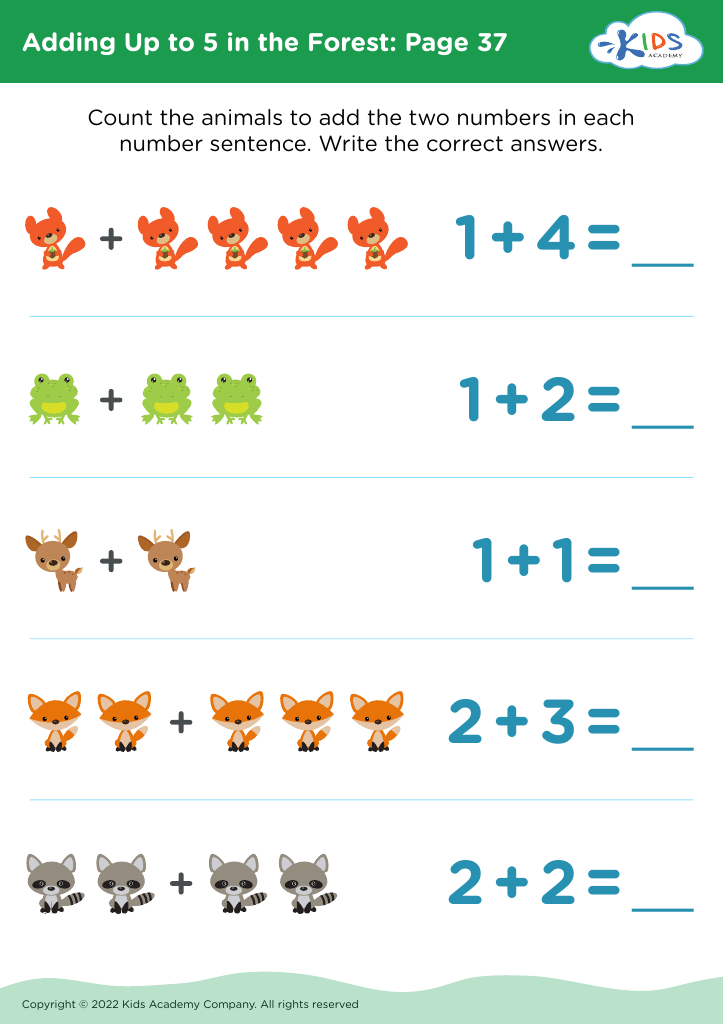
Introducing "Nature Appreciation Adding Up to 5 Worksheets for Ages 4-9" – perfect for young learners to combine math practice with a love for nature! These interactive worksheets help children aged 4-9 develop crucial addition skills while enjoying eye-catching nature themes. With engaging visuals and fun exercises, kids will effortlessly learn to add numbers up to 5, boosting their confidence and math proficiency. Enhance your child's learning experience by blending natural beauty with educational content, sparking joy and curiosity in mathematics. Ideal for both classroom use and homeschooling, dive into nature while mastering the basics of addition!
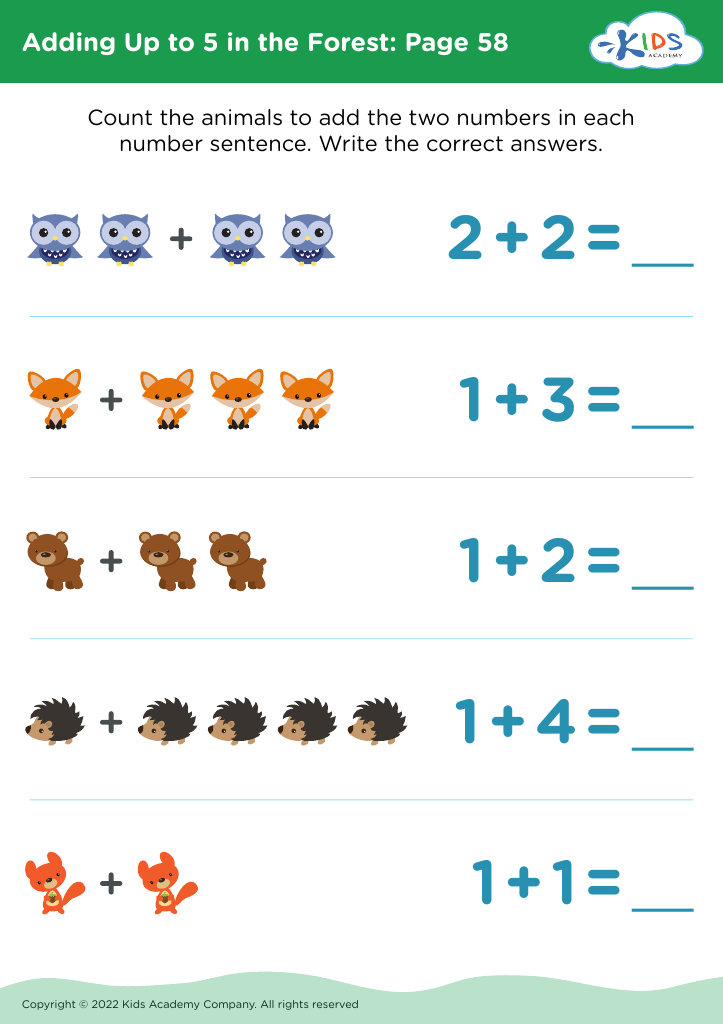
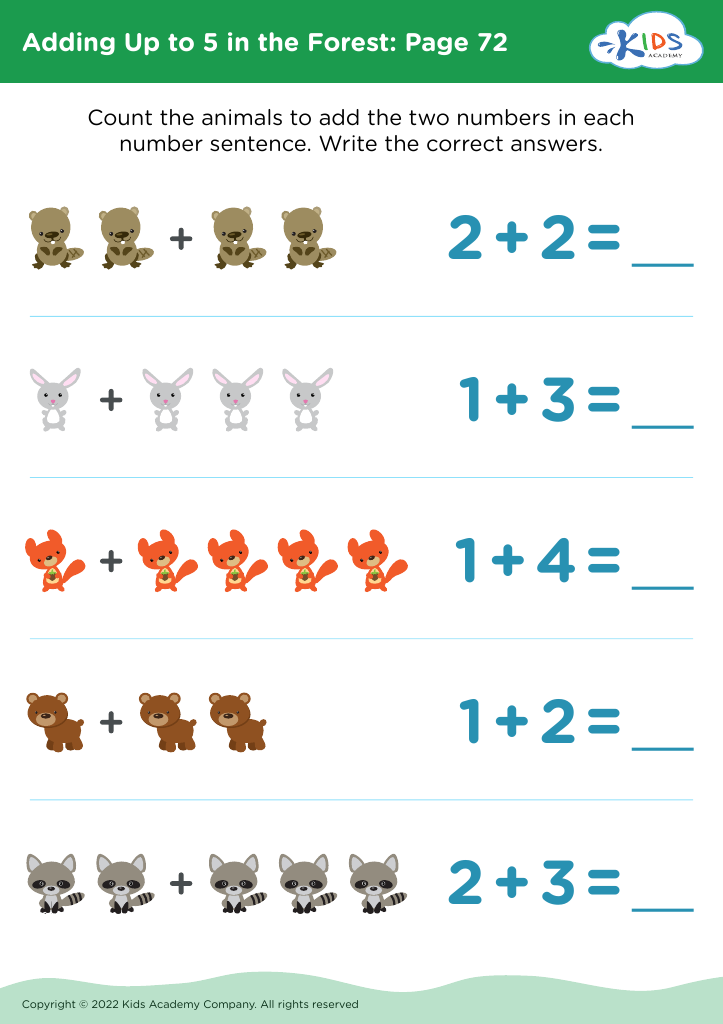
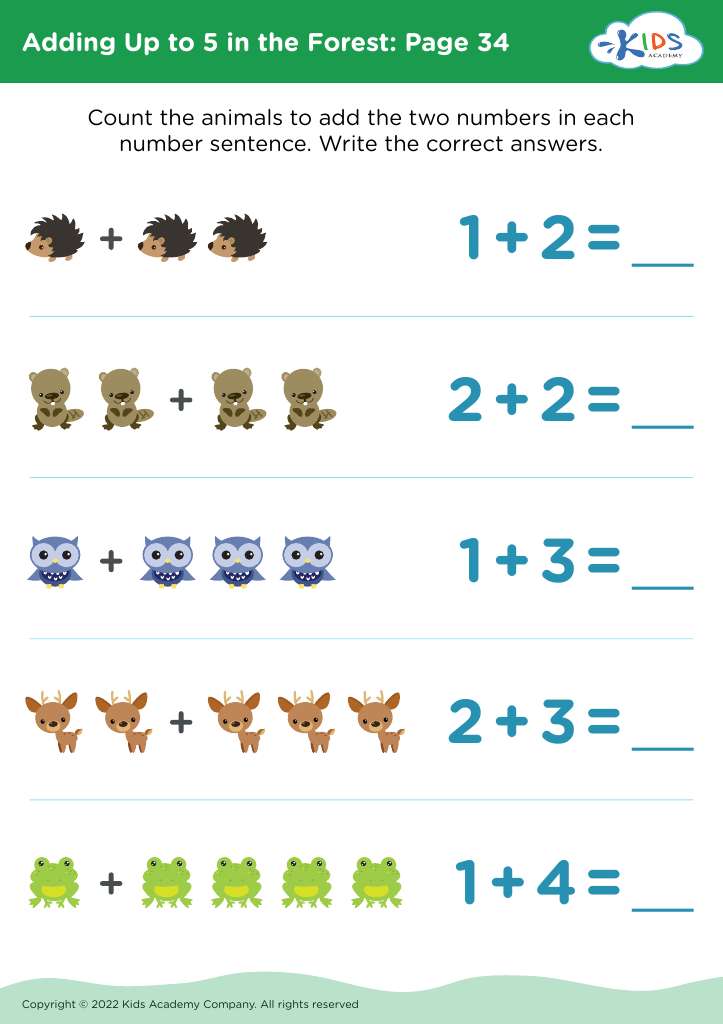
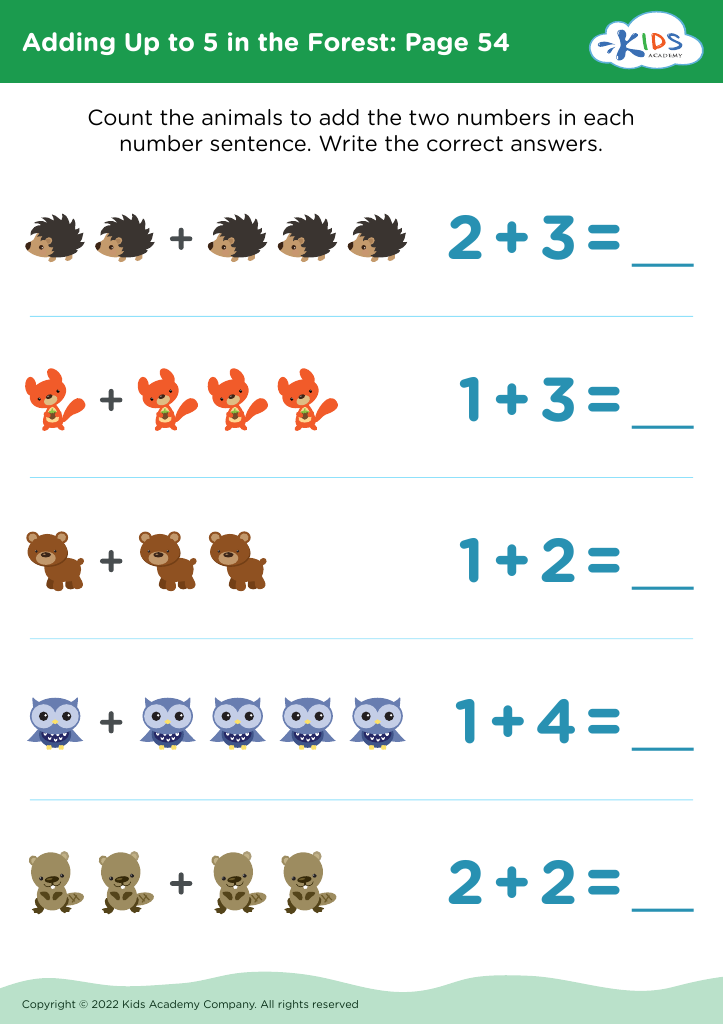




.jpg)


%20(1).jpg)
Nature appreciation in early education is essential for fostering a deep connection with the environment, promoting overall well-being, and enhancing learning experiences for young children aged 4-9. Introducing nature-themed activities, like "Adding Up to 5," can provide numerous benefits for both cognitive and emotional development.
Firstly, nature-based math exercises engage children's natural curiosity and make learning more enjoyable. For example, counting pebbles, leaves, or flower petals to add up to 5 not only reinforces basic arithmetic skills but also teaches them about the natural world, fostering a sense of wonder and appreciation.
Secondly, nature appreciation promotes physical health by encouraging outdoor activities. Active playtime in natural settings helps children develop their motor skills, boost their immune systems, and improve their overall fitness levels. Exposure to fresh air and sunlight (vitamin D) is also beneficial for their health.
Additionally, interacting with nature has been shown to reduce stress and anxiety in children, enhancing their emotional well-being. Through nature appreciation, children learn mindfulness and develop a sense of peace and relaxation, which is crucial for their mental health and resilience.
Lastly, fostering an early appreciation for nature instills important values of environmental stewardship and conservation.








