Sea creatures identification Adding Up to 5 Worksheets for Ages 4-9
3 filtered results
-
From - To
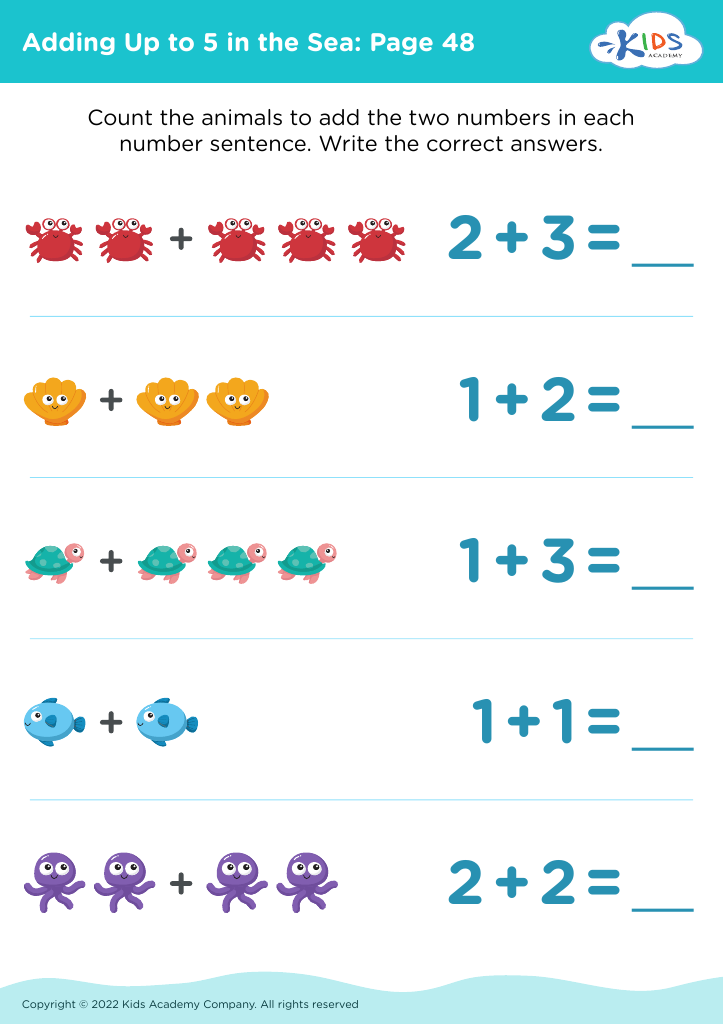
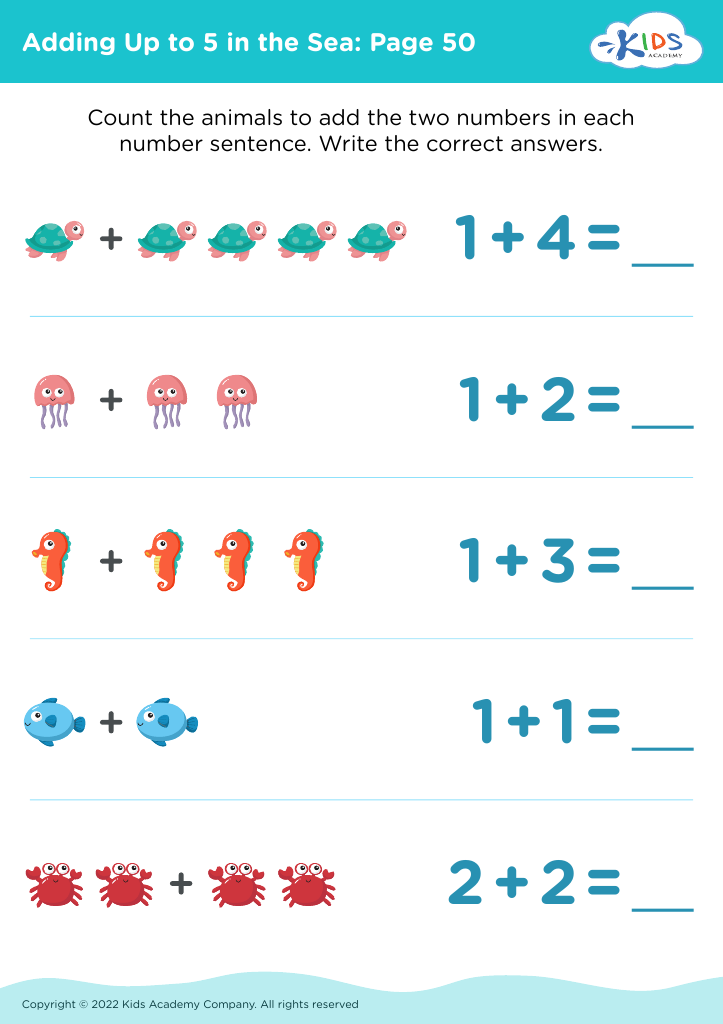
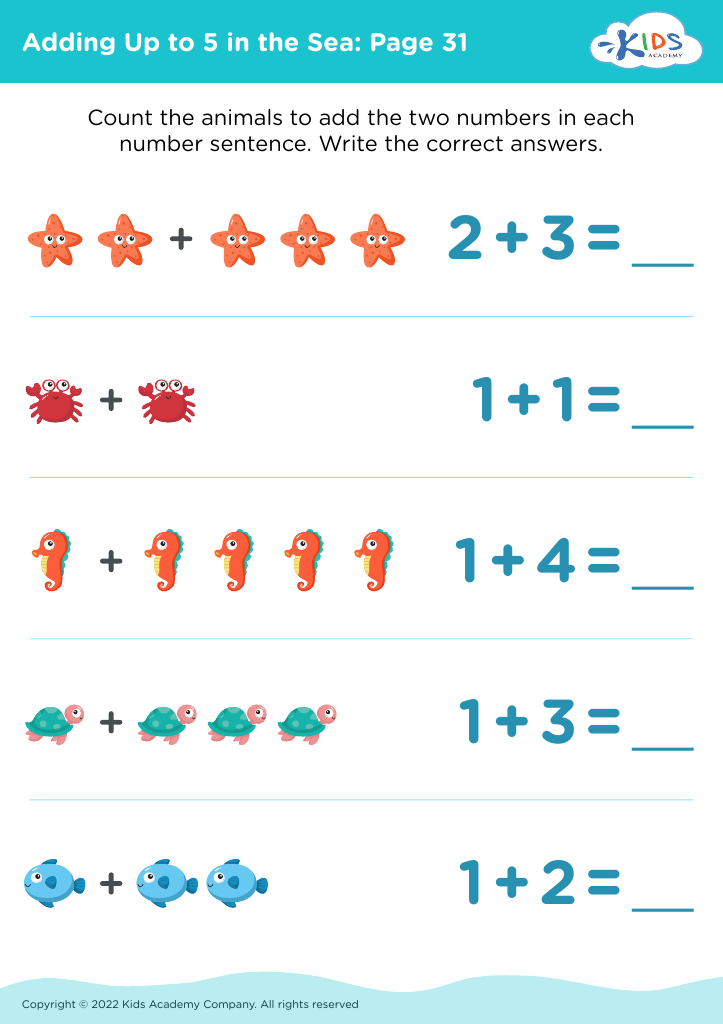
Explore the fascinating world of sea creatures with our "Sea Creatures Identification" worksheets, designed for children aged 4-9. These engaging activities will not only boost their math skills by focusing on addition up to 5, but also introduce them to a variety of marine life. Kids will enjoy identifying colorful sea creatures while practicing essential counting and addition skills. Perfect for educators and parents, these worksheets offer a fun, interactive way for young learners to discover ocean wonders while developing early math competencies. Download now to make learning a splash!






%20(1).jpg)
.jpg)
Understanding sea creatures is vital for young children, offering a foundation for ocean literacy and environmental awareness. For parents and teachers, teaching kids to identify sea animals fosters curiosity about the natural world and cultivates a sense of responsibility towards marine conservation.
-
Building Knowledge: Learning about various sea creatures enhances children’s vocabulary and understanding of ecology. They'll discover important species like dolphins, jellyfish, and seahorses, enriching their learning experience.
-
Encouraging Discovery: Sea creature identification inspires wonder! When children explore the ocean's biodiversity, they develop analytical and observation skills that are critical for their education.
-
Promoting Conservation: Instilling a sense of wonder about sea life encourages children to protect their environments. Awareness of endangered species and habitats may instigate future conservation efforts as they grow.
-
Interactive Learning: Activities like sorting pictures of sea animals stimulate engagement and fun. This active participation makes learning memorable.
-
Fostering Communication: Discussing sea creatures will help enhance children's communication skills, as they share their insights and create stories about marine life, connecting with others in the process.
In summary, sea creature identification is not just educational; it nurtures a generation of informed and environmentally-conscious individuals.








