Understanding number relationships Adding Up to 5 Worksheets for Ages 4-9
3 filtered results
-
From - To
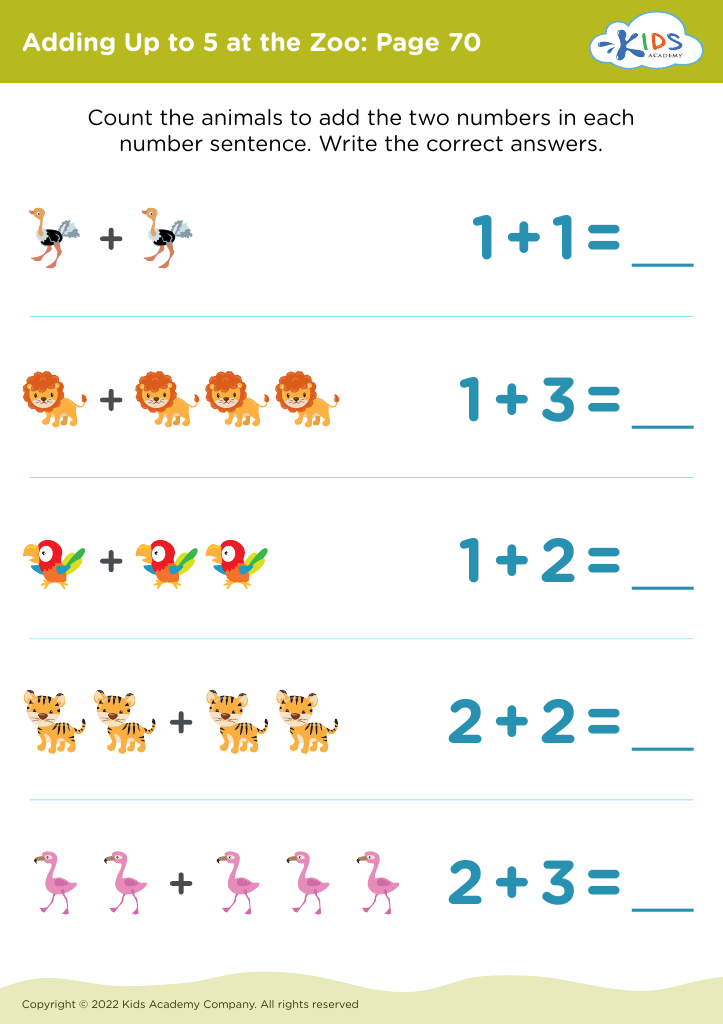
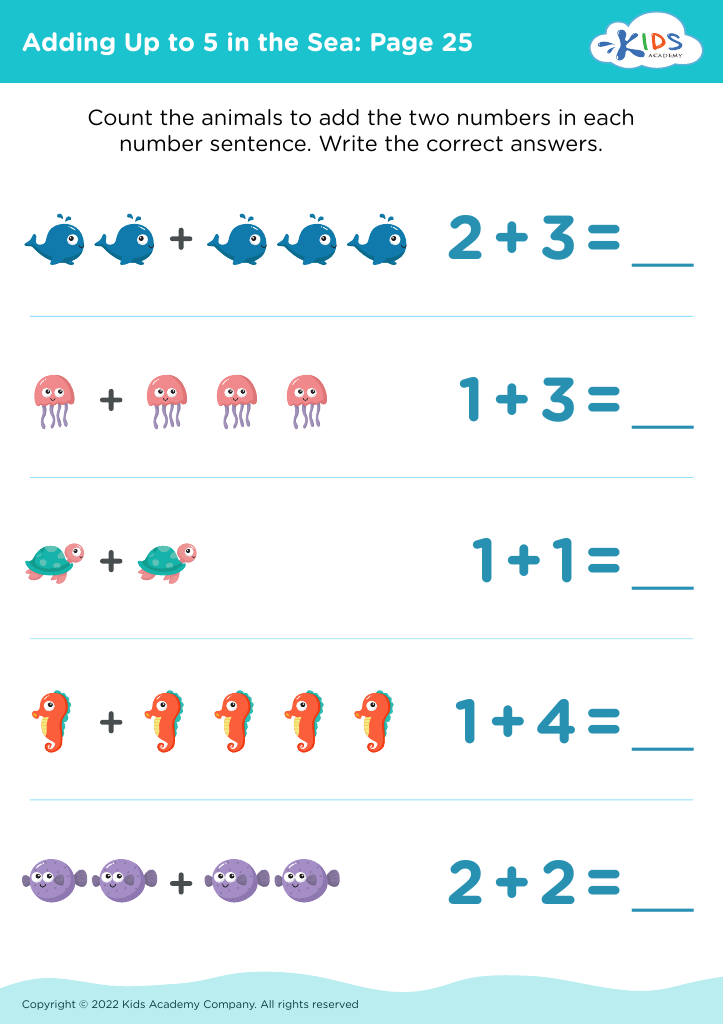
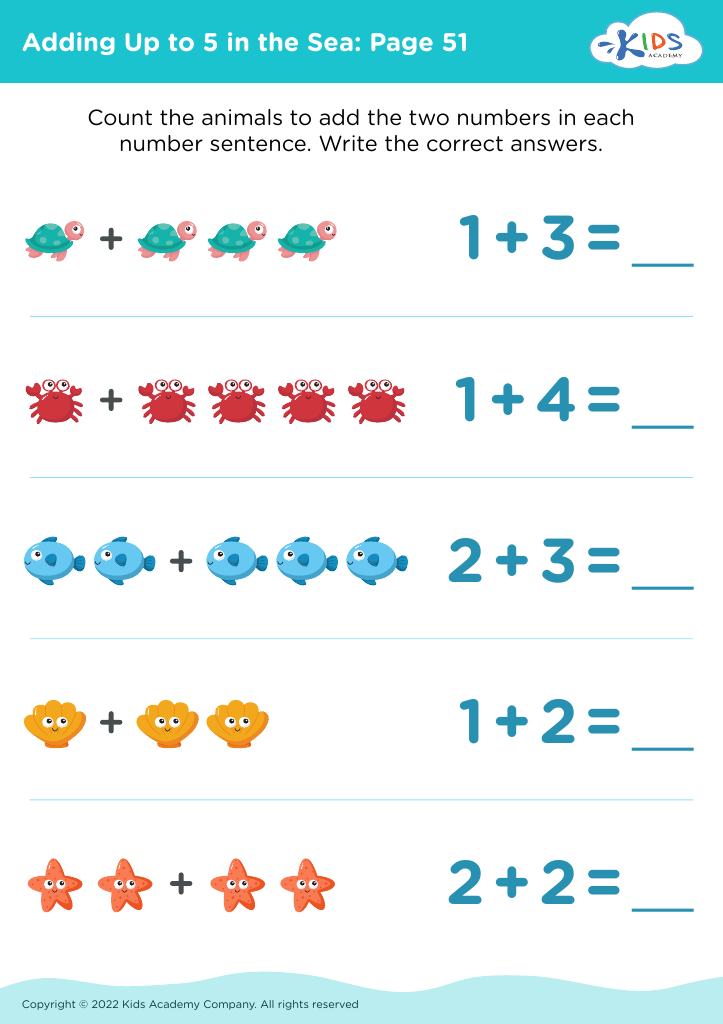
Unlock your child’s math potential with our "Understanding Number Relationships Adding Up to 5" worksheets designed for ages 4-9. Our engaging and educational worksheets help young learners build a strong foundation in basic arithmetic by focusing on adding up to 5. These worksheets foster key mathematical skills, such as number sense and addition fluency, through interactive activities and colorful exercises. Perfect for early learners, the exercises are tailored to support children at different learning stages, making math fun and accessible. Equip your child with the tools they need to succeed in math with these carefully crafted resources from Kids Academy.







%20(1).jpg)
Understanding number relationships and addition up to 5 for ages 4-9 is crucial for several reasons. First, number relationships are fundamental to the development of numerical literacy, which lays the groundwork for future mathematical learning and reasoning. At this young age, children are building their basic cognitive skills, and learning to add numbers up to 5 introduces them to the concept of combining quantities, fostering an understanding of addition.
Second, mastering these skills enhances children’s ability to solve everyday problems and builds a sense of confidence and achievement. Small numeric goals, like adding up to 5, are manageable and set the stage for tackling more complex mathematical tasks in the future.
Additionally, understanding these foundational concepts aids in the development of critical thinking. It encourages young children to think logically and recognize patterns, which are essential skills in math and beyond.
Moreover, developing these skills early mitigates future learning gaps and educational disparities. Early mathematical competency can influence overall academic success and long-term educational outcomes.
Lastly, fostering a positive attitude towards math from a young age is vital. If children find joy and success in mastering basic number relationships, they are more likely to develop a lifelong interest and proficiency in mathematics. This creates a solid foundation for educational growth, both inside and outside the classroom.








